


Toamasina, still widely known by its colonial name Tamatave, is Madagascar’s main east coast port and the practical hinge between Antananarivo, the Pangalanes Canal, and beach towns like Foulpointe and Mahambo. It is not a showpiece city, but for most travelers it is an unavoidable gateway. Understanding where to stay, how long to linger, and how to connect with boats and buses will make the difference between a stressful transit stop and a smooth launchpad for your east coast journey.
Orienting Yourself: Why Toamasina Matters
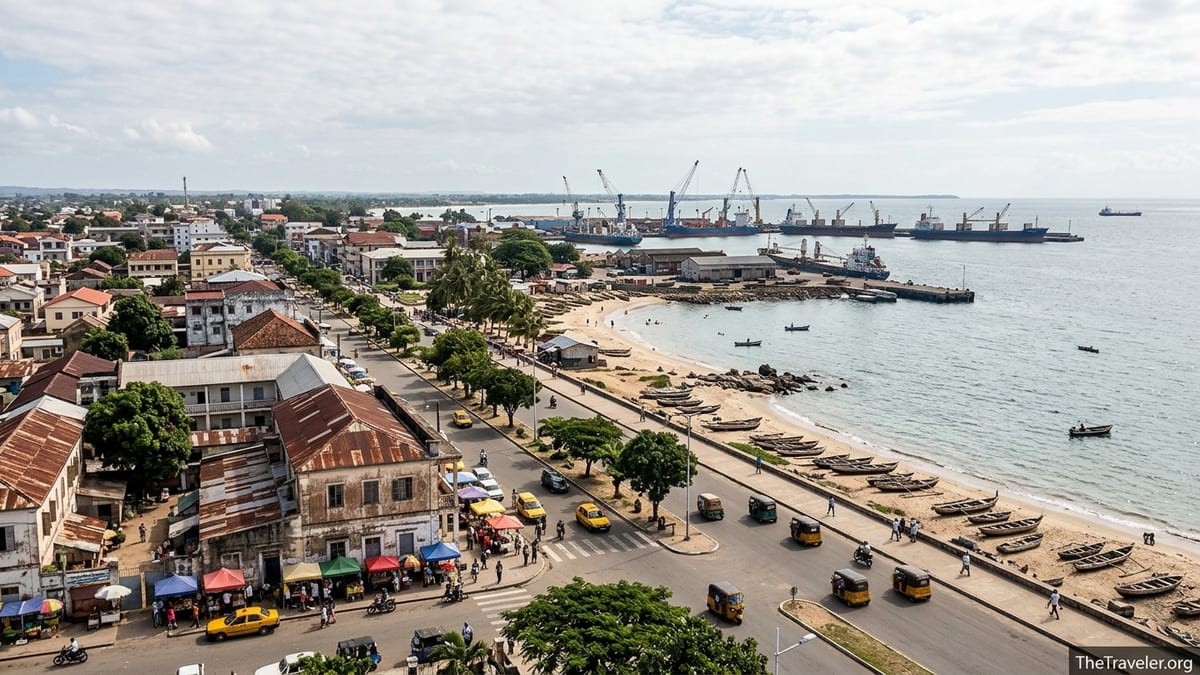
Toamasina sits about 350 kilometers east of Antananarivo and is the country’s primary commercial port as well as the northern anchor of the Canal des Pangalanes, a chain of lagoons and waterways that stretches more than 600 kilometers down the coast. Large cargo vessels and coastal barges share the waterfront with small passenger boats and local fishing pirogues, which makes the city a natural hub for anyone heading to the canal or continuing north along the shore.
For most visitors, Toamasina is where road, air, and water meet. Domestic carrier Tsaradia typically runs flights between Antananarivo and Toamasina in roughly 40 minutes, often costing the equivalent of a few hundred thousand ariary one way depending on season, while the RN2 road journey can take eight to ten hours by taxi brousse or private vehicle. Once you arrive, you are within reach of Pangalanes departures, day trips to Ivoloina Park, and onward taxi brousse routes to Foulpointe, Mahambo, and eventually the Sainte Marie ferry ports further north.
The city itself mixes colonial-era avenues and a busy central market with utilitarian port districts. It is not as instantly charming as some highlands towns or west coast beach villages, but it has a lived-in authenticity. This is where many Malagasy traders, long-haul drivers, and canal boatmen spend the night, and travelers who approach Toamasina as a working hub rather than a trophy destination tend to have a better time.
Planning-wise, most itineraries either pass through Toamasina in a single night en route to beaches or the canal, or they build in a full day to explore Old Toamasina and the markets before heading out. Deciding which pattern suits you depends mostly on what time you arrive and where you are going next.
Old Toamasina, Markets and the Waterfront
The historic core of Toamasina radiates from Boulevard Joffre and the streets that run toward the port. This is Old Toamasina, where low-rise colonial buildings, weathered balconies, and narrow side streets recall the city’s 19th and early 20th century French period. Staying or walking here gives you a feel for the city’s past without needing a formal sightseeing tour.
The main market area near the center is dense and energetic. Under corrugated metal roofs and makeshift awnings, vendors pile up lychees in season, vanilla bundles, cloves, fabric, and used clothing. You can expect to pay the equivalent of a few US dollars for a kilo of tropical fruit or a basic Malagasy meal at a market-side gargote. Visitors often combine a brief wander here with a coffee on Boulevard Joffre, watching pousse-pousse carts and tuk-tuks weave past.
Down toward the waterfront, the character shifts again. Parts of the seafront are industrial, with warehouses and port fences, while other stretches open to a breezier promenade with sea views and casual snack stalls. The ocean current and beach cleanliness mean Toamasina’s urban shoreline is not a prime swimming spot compared with Foulpointe or Mahambo, but it is an atmospheric place to walk at the end of the day and see cargo ships lining up offshore.
Safety-wise, central Toamasina is similar to other Malagasy cities. During daylight hours, walking between Old Toamasina, the market, and the waterfront is generally straightforward if you keep valuables discreet and avoid flashing phones. After dark, most travelers choose short taxi rides between hotel, restaurant, and bus station rather than walking through unlit streets.
Ivoloina Park and Nearby Excursions
One of the main reasons to stay at least a day in Toamasina is to visit Ivoloina Park, about 12 kilometers from the city center along a country road inland. The park is a conservation and education site where you can see several species of lemurs, including black and white ruffed and crowned lemurs, as well as chameleons and local flora along forested trails. It is not a deep wilderness experience, but rather a well-structured introduction to eastern Madagascar’s ecosystems.
In practical terms, reaching Ivoloina usually means arranging a taxi from your hotel for a half-day or full-day outing. Prices fluctuate, but travelers commonly report rounds between the city and the park that cost roughly the equivalent of 80,000 to 150,000 ariary depending on vehicle type, waiting time, and negotiation. Sharing the ride with other guests from your hotel can bring the per-person cost down significantly.
Facilities at the park are basic but usually include simple picnic areas and local guides who can lead you along the trails. The experience works well for families and for travelers who want a manageable nature break within reach of their lodging. Many visitors fly from Antananarivo to Toamasina, spend an afternoon in the city and a following morning at Ivoloina, then continue on toward the coast or Pangalanes without detouring far inland.
Beyond Ivoloina, the countryside around Toamasina offers glimpses of rice paddies and small villages, and some local operators can organize informal excursions along the early stretches of the Pangalanes or visits to rural communities. These options usually require advance communication with a local agency or your hotel, and they reinforce the idea of Toamasina as a convenient launch platform rather than a long-term base.
Where to Stay and Eat: Practical Neighborhood Choices
Accommodation in Toamasina clusters in three main areas: the central boulevard district, the waterfront, and the road leading toward Ivoloina and the airport. In the center, midrange hotels along Boulevard Joffre and adjacent streets place you close to banks, markets, and restaurants. Properties in this zone often occupy renovated colonial buildings and offer air conditioning, on-site dining, and small courtyards or terraces, which is useful if you want to walk to the taxi brousse stands or wander Old Toamasina on foot.
Along the waterfront and slightly north of the port, a handful of hotels and guesthouses trade proximity to the sea for a quieter atmosphere. These can make sense if you prefer sea breezes and do not mind taking a short taxi ride into town. At the higher end of the spectrum, beach-style hotels on the outskirts tend to offer larger rooms, pools, and garden settings, with prices running higher than simple city guesthouses but still moderate by international standards.
On the western side near the road to Ivoloina and the airport, small lodges and motels cater to travelers with early flights or those driving their own 4x4s. Staying here can save time if your primary goal is simply to catch a morning departure rather than explore the center. For example, someone landing on a late evening flight might pick a hotel within ten minutes of the airport, sleep, then move on by taxi brousse the next morning.
Food in Toamasina reflects its port status and coastal location. Casual Malagasy eateries serve plates of rice with fish or zebu for a few thousand ariary, while midrange restaurants in the central district may offer French-influenced menus with seafood, steaks, and decent house wine. Waterfront establishments are good spots for grilled fish and cold drinks; many travelers schedule dinner there while watching the sky fade over the Indian Ocean before heading back to their hotel by taxi.
Using Toamasina as Your Pangalanes Gateway
The Canal des Pangalanes begins its navigable stretch near Toamasina, and the city is the most logical starting point for multi-day trips south along the waterway or one-day outings into nearby lagoons. The canal itself is a patchwork of manmade cuts, rivers, and lakes, used daily by local pirogues transporting goods and passengers toward the port. For visitors, it is a slow, scenic route past villages, pandanus and traveler’s palm, and stretches of nearly roadless coastline.
In practical terms, most travelers arrange Pangalanes trips through local agencies or their Toamasina hotel before arrival, by email or messaging. Options range from simple day trips in motorized pirogues, including a picnic stop at a lakeside village, to overnight journeys that continue south to rustic lodges accessible only by boat. Prices vary widely based on comfort level, group size, and fuel costs, but it is common to see day excursions quoted per boat rather than per person, which makes costs more manageable if you share with others.
Departure points are usually along the southern edge of the city or a short drive away, where channels connect to the first lakes. On the morning of departure, boat operators may collect you directly from your hotel by car or tuk-tuk, then bring you to a small pier. It is wise to confirm the exact meeting time and transport details the day before, particularly if your boat has onward connections with lodging further down the canal.
For itineraries that link canal travel with beach time, some circuits now begin in Toamasina, follow the Pangalanes for one or two days, and finish near Foulpointe or another coastal town, where a vehicle meets you for the return to the main road. Building Toamasina into that pattern as a stocking-up point and briefing hub makes logistics smoother and gives you flexibility if weather or water levels affect boat schedules.
Onward Travel North: Foulpointe, Mahambo and the Sainte Marie Route
Heading north from Toamasina, the coastal road winds toward Foulpointe, also called Mahavelona, roughly 60 to 70 kilometers away. Foulpointe is the closest genuinely swimmable beach for most Toamasina visitors, protected by an offshore coral reef that calms the waves and creates a lagoon-like shoreline. The town also has a historic coastal fort and clusters of beachfront hotels and restaurants, making it a logical next step if you want a relaxed seaside break after time in the city.
Public transport usually means a seat in a taxi brousse from Toamasina’s northern bus stands. Travelers frequently report fares in the range of tens of thousands of ariary for the journey, with travel times around two and a half to three hours depending on road conditions, police checkpoints, and how fully the vehicle is loaded. Private taxis from Toamasina can complete the run in around one hour if traffic is light, but they cost significantly more and are most attractive for small groups splitting the bill.
Beyond Foulpointe, the road continues north to Mahambo, about 80 to 90 kilometers from Toamasina. Mahambo is a quieter village with surf breaks, simple bungalows, and a slower rhythm than Foulpointe. It is also one of the key staging points for travel to Île Sainte Marie (Nosy Boraha), although in recent years many scheduled ferries have shifted further north to ports like Soanierana Ivongo, so Mahambo’s role changes with seasons and operators. Travelers commonly report that boats to Sainte Marie are sensitive to weather and fill up around local holidays, so Toamasina is the place where you confirm your boat tickets and adjust your timing before heading north.
In practice, many itineraries now follow a pattern of flying or driving into Toamasina, spending one night to rest and organize, then heading by taxi brousse or private car to Foulpointe or Mahambo the next morning. From there, you can work your way up the coast toward your chosen Sainte Marie ferry point. This staged approach limits night driving, gives you margin for delays on the RN2 or minor road repairs, and lets you use Toamasina’s more reliable banking and communication services before venturing into smaller beach towns.
Transport Connections: Airport, Taxi Brousse and Local Taxis
Toamasina’s Ambalamanasy Airport lies a short drive northwest of the city center. Domestic flights are not as frequent as on some other routes in Madagascar, and schedules can shift with season and demand, so it is wise to double check times a few days before departure and allow for occasional delays. Many visitors plan a buffer night in Toamasina after landing or before flying out, rather than trying to connect directly with long road journeys or boat departures on the same day.
Within the city, short trips are handled by yellow taxis, tuk-tuks, and in some areas human-powered pousse-pousse carts. Taxis do not typically use meters, so fares are negotiated before you get in. As a reference point, a short ride within the central area might cost the equivalent of one or two euros, while longer runs to the airport, bus stations, or Ivoloina Park will be more, depending on time of day and bargaining. Having small-denomination notes in ariary makes these negotiations smoother.
Taxi brousse services connect Toamasina with Antananarivo along RN2 and with smaller towns north and south. Vehicles range from older minibuses to larger vans, often leaving when full rather than on strict timetables. Tickets are typically purchased directly at the station or at small ticket offices nearby, and travelers recommend arriving earlier in the day to secure better seats. While Cotisse-style premium buses are more common on other routes, the east coast corridor still relies heavily on classic taxi brousse operations, so expect crowded seating and slow progress but low fares.
For those with larger budgets or tight schedules, arranging a private car and driver from Antananarivo to Toamasina and onward to Foulpointe or Mahambo is an option. This can easily cost several times more than a taxi brousse ticket but provides door-to-door timing, the ability to stop for photos or meals at will, and greater comfort on sections of road that can be potholed and tiring in regular shared vehicles.
Should You Spend the Night in Toamasina or Just Transit Through?
Travelers often debate whether Toamasina deserves more than a practical overnight stop. The answer usually depends on your arrival time and interests. If you land or arrive by road in the late afternoon or evening, staying at least one night in the city is advisable. It gives you time to rest, adjust plans if a flight is delayed, and position yourself for an early taxi brousse, boat departure, or excursion to Ivoloina Park the next day.
Spending a full day and second night makes sense if you want to visit Ivoloina or explore Old Toamasina without rushing. For instance, one workable pattern is to arrive from Antananarivo in the evening, sleep in a central hotel, spend the next morning at the market and waterfront, head to Ivoloina after lunch, then enjoy dinner back in town and depart for Foulpointe the following morning. This rhythm balances low-key urban exploration with a taste of local nature.
If your goal is strictly beaches and you are already on a morning flight or early taxi brousse from Antananarivo, it can be realistic to transit through Toamasina in a few hours and continue straight to Foulpointe or Mahambo, especially with pre-arranged private transport. The risk is that any delay on the first leg of your journey can push you into driving after dark or arriving late and tired. Given the variable road conditions and the limited street lighting outside major towns, many repeat visitors prefer to keep driving hours to daytime and accept an extra night in Toamasina as a safety margin.
In short, Toamasina is rarely the star of an east coast itinerary, but used wisely it is a very useful hinge. Budget travelers and those relying on public transport often weave it into their route at least twice, once on the way to the coast and again on the return to Antananarivo, using the city’s services and connections as a buffer against the uncertainties of roads, weather, and boat schedules.
The Takeaway
Toamasina rewards travelers who see it as a working hub rather than a missed beach opportunity. Its strengths lie in its connections: a short domestic flight or long road from Antananarivo, proximity to Ivoloina Park, access to the northern reaches of the Pangalanes Canal, and onward links to lagoon-backed Foulpointe, laid-back Mahambo, and the ferry gateways to Île Sainte Marie.
By choosing a hotel in the right neighborhood for your needs, allowing at least one night to absorb schedule shifts, and pre-arranging canal or coastal transport where possible, you turn what might have been a chaotic changeover into a calm staging point. From the fruit stalls of the market to the busy taxi brousse stations and the early morning light over the port, Toamasina offers a glimpse of everyday Madagascar that many travelers miss when they rush through.
For most itineraries, the sweet spot is one or two nights: enough to organize, explore a little, and then move on. With realistic expectations and a flexible plan, Toamasina becomes your east coast gateway in the most practical sense, quietly underpinning the more obviously spectacular places that follow.
FAQ
Q1. Is Toamasina worth a full day, or should I go straight to the beach?
Most travelers find that one full day is useful to rest, visit Ivoloina or the markets, arrange canal or ferry tickets, and avoid rushing straight to Foulpointe or Mahambo after a long flight or road journey.
Q2. How many nights should I plan in Toamasina?
Plan at least one night if you arrive in the afternoon or evening, and consider two nights if you want to include Ivoloina Park, a Pangalanes day trip, or extra buffer time before a ferry or long road leg.
Q3. Is it safe to walk around Toamasina at night?
The central areas are generally fine by day, but at night it is safer to use taxis between your hotel, restaurants, and the bus station, keep valuables out of sight, and avoid poorly lit backstreets.
Q4. How do I get from Toamasina to Foulpointe or Mahambo?
You can take a taxi brousse from the northern bus stands, which is the cheaper option, or hire a private taxi or car with driver if you want more comfort, fewer passengers, and more control over departure time.
Q5. Can I organize Pangalanes Canal trips after I arrive, or should I book ahead?
Simple local outings can sometimes be arranged on the spot through your hotel, but for multi-day canal trips or peak season dates it is wiser to contact an agency or lodging in advance and reconfirm plans when you reach Toamasina.
Q6. Is Ivoloina Park suitable for children and short visits?
Yes, Ivoloina works well as a half-day trip from Toamasina, with short trails, lemur viewing, and picnic areas that are manageable for families and travelers who do not want a strenuous hike.
Q7. What kind of budget should I expect for hotels and food in Toamasina?
Simple guesthouses and basic meals can be relatively inexpensive, while midrange hotels and restaurants in the center or near the waterfront cost more but remain moderate by many international city standards.
Q8. Are there ATMs and mobile coverage in Toamasina?
Yes, Toamasina has banks, ATMs, and generally good mobile data coverage, which is why many travelers treat it as a place to withdraw cash, top up data, and make calls before heading to smaller coastal towns.
Q9. When is the best time of year to use Toamasina as a base?
The drier months tend to make road and canal travel more predictable, but Toamasina functions year-round; during the cyclone season you should keep extra flexibility in your schedule and track local weather updates.
Q10. Do I need to speak French or Malagasy to get around Toamasina?
Basic French is very helpful for taxis, markets, and hotels, while a few words of Malagasy are appreciated; in tourist-oriented places some staff speak limited English, but you should not rely on it everywhere.