


On a coastline better known for powerful surf and rough seas, Foulpointe, or Mahavelona, is a rare pocket of calm. Protected by a coral reef just offshore, this east coast resort north of Toamasina offers a sheltered lagoon, easy swimming and a low-key holiday atmosphere that draws Malagasy families and travelers looking for a relaxed beach stay without the cost or logistics of an offshore island. This guide explains what makes Foulpointe different, how to get there from Toamasina, where to stay and eat, and how long to plan for this gentle Indian Ocean escape.
Why Foulpointe Feels Different From The Rest Of The East Coast
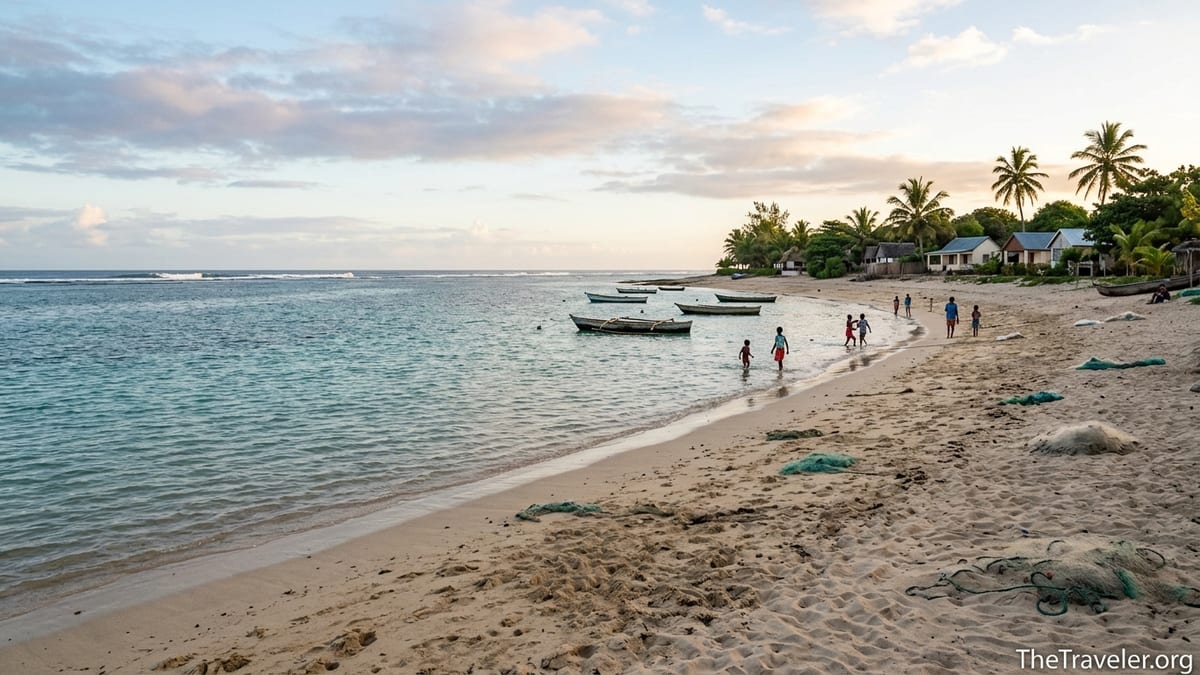
Most of Madagascar’s east coast faces the full force of the Indian Ocean. Towns such as Fénérive Est and the smaller villages along the RN5 often have beautiful beaches but heavy shore break, strong longshore currents and frequent red-flag days. Foulpointe, by contrast, sits behind a wide coral reef roughly 150 meters offshore, which acts as a natural breakwater and leaves the water close to the beach unusually calm for this part of the country.
That reef is the reason Foulpointe has become one of the most popular east coast beach resorts for domestic tourism. On weekends and holidays, large Malagasy families arrive from Toamasina and farther inland precisely because young children can splash in the shallows without being knocked over by waves. When the tide is high, the lagoon takes on a glassy, turquoise look more reminiscent of Nosy Be or Sainte-Marie, but with none of the added flight legs or boat transfers.
The atmosphere also sets Foulpointe apart. Instead of remote-island seclusion, the town feels like a classic seaside resort, with music from beachfront bars, kids playing football at sunset and vendors selling coconuts and grilled fish along the sand. For travelers who want a quick coastal break between national parks or business in Toamasina, that combination of calm water and easy, lived-in charm is hard to beat.
The Coral-Protected Lagoon: Swimming And Snorkeling
Foulpointe’s defining feature is its shallow lagoon. At mid to high tide, you can usually wade out 20 or 30 meters from shore and still be standing, which is ideal for nervous swimmers or families teaching children to swim. Water temperatures typically hover in the mid-20s Celsius for much of the year, so long sessions in the sea feel comfortable without a wetsuit.
Snorkeling here is generally gentle rather than spectacular. The fringing reef shelters patches of coral and reef fish, but this is not a top-tier dive destination like Nosy Tanikely or Salary Bay. That said, casual snorkelers will often spot parrotfish, butterflyfish and the occasional ray in the clearer sections. Local pirogue owners on the beach offer short boat trips out closer to the reef edge, where visibility tends to be better and currents are still manageable compared with fully exposed east coast sites.
For families and beginner snorkelers, this soft introduction to the underwater world is a major advantage. Instead of tackling deep channels or surge, you can float over shallow sand and seagrass a few strokes from shore or drift with a life jacket behind a guide’s pirogue. Parents commonly rent basic masks and fins from small kiosks near the main beach, though bringing your own gear from Toamasina or home offers better fit and hygiene.
Because the lagoon is tide-dependent, planning your day around the tides pays off. Morning high tide can mean fuller, waist-deep water for swimming, while lower tide in the afternoon may expose more of the reef flat and create ankle-deep paddling areas for toddlers. Hotel staff in Foulpointe are used to helping guests time swims and boat trips around the daily rhythm of the sea.
Fort Manda And The Story Behind The Resort
Just a short walk inland from the beach lies Fort Manda, sometimes called Mandan’i Mahavelona, one of the most tangible reminders that Foulpointe’s tranquil setting once played a serious defensive role. The circular fort, built in the early nineteenth century under King Radama I, was designed to control the strategic bay and protect the coast from naval attacks and rival powers trading in the region.
Today, visiting Fort Manda adds a cultural counterpoint to the beach. The entrance fee is modest, often quoted at only a few thousand ariary per person, and local guides are usually on hand to explain how coral blocks, lime and even egg-based mortar were used in the construction. Inside the thick walls, you can see remains of barracks, storage areas and viewpoints that once looked out over the same lagoon where visitors now swim.
Many travelers combine a morning swim with an hour or two at the fort before the midday heat. Walking from the central beach area typically takes around 15 to 20 minutes, or you can hire a tuk-tuk from your hotel if you prefer to avoid the sun. Because signage is limited, a guide helps bring the site to life, and their stories often delve into the darker episodes of slave trading and shifting colonial power that passed through Foulpointe’s harbor.
If you are traveling with older children or teens, Fort Manda can be an engaging way to connect the fun of the beach with Madagascar’s broader history. It turns a simple resort stay into a light introduction to how this coastline shaped trade and politics in the southwest Indian Ocean.
Where To Stay: Beachfront Bungalows And Local Guesthouses
Despite its popularity with Malagasy holidaymakers, Foulpointe remains relatively small in terms of built-up infrastructure. Accommodation ranges from simple family-run guesthouses a few streets back from the sand to established beachfront hotels that open directly onto the lagoon. Many properties cluster along the main beach road, so even if you are not right on the sand you are rarely more than a short walk from the water.
Beachfront hotels typically offer individual bungalows set in gardens, with shaded verandas and views over the lagoon. Some of the better-known options market themselves as places of calm, with tropical greenery between rooms and direct beach access, attracting couples and families seeking a quiet base. Expect mid-range prices by Malagasy standards: a comfortable en-suite double in high season might cost the equivalent of 40 to 70 US dollars per night, while simpler rooms without air conditioning can fall closer to 20 to 30 dollars.
Back from the beach, local auberges and basic hotels provide cheaper stays that still allow easy access to the lagoon. These often appeal to backpackers and independent travelers moving along the RN5. Rooms may be more functional, with fans instead of air conditioning and shared terraces instead of private verandas, but they offer a way to experience Foulpointe without stretching the budget. Some have small courtyards where Malagasy families cook over charcoal in the evenings, adding a homey atmosphere.
Wherever you stay, it is wise to confirm details such as 24-hour electricity, mosquito nets and whether hot water is available, as standards vary. If traveling during Malagasy school holidays or public holidays such as Easter or the November Toussaint long weekend, consider reserving ahead because popular beachfront properties can fill quickly with domestic visitors from Toamasina and Antananarivo.
Eating And Drinking: From Grilled Fish To Beachfront Sundowners
Foulpointe’s dining scene revolves around the sea. Beachfront restaurants and hotel dining rooms serve plentiful seafood, with grilled fish, prawns and crab among the staples. A typical lunch might involve a plate of grilled capitaine or dorado with rice and a tomato-onion salad, costing roughly the equivalent of 3 to 7 US dollars depending on the setting and portion size.
Many hotels offer full-board or half-board arrangements that bundle breakfast and dinner into the room rate, a popular option for families who prefer not to wander far after dark. Breakfast often features fresh baguette, seasonal fruit like lychee or mango in season, coffee and sometimes eggs. At dinner, menus tend to blend Malagasy dishes such as romazava (a beef and leafy greens stew) and ravitoto (crushed cassava leaves with pork) with simpler international plates like spaghetti, grilled chicken and omelets.
Independent travelers may enjoy trying the small, privately run eateries facing the lagoon. These simple open-sided structures typically have plastic chairs, chalkboard menus and a relaxed come-as-you-are feel. Cold local beer and fresh coconuts are widely available, and on busy weekends there may be informal grills on the sand serving brochettes and fried bananas into the evening.
Nightlife in Foulpointe is generally low-key, but it can be lively on holidays when music drifts from beach bars and karaoke venues near the main road. For most visitors, evenings are about strolling the promenade at sunset, buying snacks from vendors and listening to the waves lapping against the lagoon rather than seeking out late-night clubs.
Getting From Toamasina To Foulpointe
One of Foulpointe’s biggest advantages is how straightforward it is to reach from Toamasina, Madagascar’s main east coast port and the usual entry point for this part of the island. The town lies roughly 55 to 60 kilometers north along Route Nationale 5, and the first stretch of this road is paved and generally in better condition than the rougher sections farther north. That means you can leave Toamasina after breakfast and be swimming in the lagoon by late morning.
Public transport typically takes the form of taxi-brousse minibuses running between Toamasina and Foulpointe. Journeys are often quoted at around two hours, though times can vary with roadworks, weather and how long it takes to fill the vehicle before departure. Fares are usually modest, making this the budget choice for solo travelers and those comfortable with basic conditions and shared seating.
For more comfort or for families with luggage, many visitors arrange a private car or driver through their Toamasina hotel or a local agency. Prices depend on negotiation, vehicle type and whether the driver waits in Foulpointe or returns, but you might expect a one-way transfer for a small group to cost the rough equivalent of 40 to 80 US dollars. Private transfers generally cut travel time, allow for stops at roadside viewpoints over the ocean and avoid the crush of taxi-brousse depots.
If you are flying into Toamasina from Antananarivo, it is possible to connect directly onward to Foulpointe. The airport sits on the northern edge of the city, and some travelers pre-arrange for their Foulpointe hotel or driver to collect them from arrivals. In that case, you could land in Toamasina in the late morning and reach your beach bungalow in time for an afternoon swim, which is precisely the kind of easy coastal break that makes Foulpointe attractive.
How Long To Stay And Who Foulpointe Suits Best
Because access from Toamasina is so easy, Foulpointe works well for short breaks. Many travelers slot in two or three nights at the end of a business trip in Toamasina or between inland circuits that include Andasibe-Mantadia or the capital. That allows for a full day of swimming and relaxing on the beach, plus enough time to visit Fort Manda and perhaps take one boat trip over the lagoon.
If you have more time, a four or five night stay lets you slow down and use Foulpointe as a genuine rest period within a longer Madagascar journey. With several days, you can alternate between quiet mornings in a hammock, swims at different tide times and informal walks through the village markets and side streets, gaining a feel for everyday life beyond the beach strip.
Foulpointe particularly suits families with children and anyone who wants calm water without arranging domestic flights or boat crossings to islands. The lagoon’s shallow, gentle conditions appeal to non-swimmers and older travelers as well, while couples may enjoy the combination of beach walks and simple seafood dinners. Travelers who dislike crowds should avoid major Malagasy holiday periods, when the resort is at its busiest and weekend traffic from Toamasina is heaviest.
On the other hand, if you are primarily interested in advanced diving, multi-day trekking or remote-wilderness experiences, you may prefer to treat Foulpointe as a soft landing or final decompression stop rather than the centerpiece of your itinerary. It is a place to exhale, catch up on sleep and watch local families enjoy their own seaside escape as much as a classic adventure destination.
Planning Tips: Weather, Seasons And Safety
Foulpointe shares the general east coast climate: warm and humid for much of the year, with a pronounced rainy season. Conditions are usually most pleasant from roughly May to October, when temperatures tend to be a bit cooler and there is less heavy rain, although short showers can occur at any time. The main cyclone season typically runs from about January to March, when strong storms can affect sea conditions, road travel and local infrastructure.
Whenever you visit, sun protection is essential. The combination of reflection off the lagoon and time on the sand makes it easy to burn, and many visitors underestimate the strength of the sun, especially on breezy days when the air feels cooler. Bringing reef-safe sunscreen, a wide-brimmed hat and a light long-sleeved shirt will help you stay comfortable, especially if you plan to spend long mornings in the water.
In terms of safety, Foulpointe is generally considered a relaxed, low-crime destination, especially by day. Standard travel precautions still apply: keep valuables out of sight on the beach, use hotel safes where available and avoid walking alone late at night on unlit sections of the shore or road. In the water, obey local advice about currents and do not venture too close to the reef edge without a boat and guide, even if the lagoon appears calm.
Health-wise, pack any personal medications you might need, as pharmacies in town have more limited stock than in Toamasina. Insect repellent and effective mosquito protection are important, particularly around dusk. Many hotels provide mosquito nets, but checking their condition on arrival and traveling with a small repair kit or your own net can add peace of mind.
The Takeaway
For travelers looking at a map of Madagascar’s east coast and wondering where to find calm, swimmable sea without committing to an island detour, Foulpointe stands out. Its coral-protected lagoon softens the Indian Ocean into something gentle and approachable, while Fort Manda and the lived-in resort atmosphere add texture beyond the beach.
Whether you come for a weekend from Toamasina or fold several quiet days into a longer itinerary, Foulpointe delivers precisely what its reputation suggests: easy access, safe water for families and a simple, unpretentious seaside break. It is not Madagascar’s most dramatic coastline, but that is exactly its appeal. Here, the waves break far out on the reef, and life along the shore moves at a slower, more forgiving pace.
FAQ
Q1. How far is Foulpointe from Toamasina and how long does the journey take? Foulpointe lies roughly 55 to 60 kilometers north of Toamasina along Route Nationale 5. Travel time is typically about two hours by taxi-brousse or a bit less by private car, depending on traffic, roadworks and weather.
Q2. Is the sea at Foulpointe really calm enough for children? The water close to shore is usually much calmer than elsewhere on Madagascar’s east coast because a coral reef about 150 meters offshore breaks the waves. Conditions can still vary with tides and weather, but many Malagasy families choose Foulpointe specifically so young children can paddle and swim in shallow, relatively gentle water.
Q3. Do I need to be an experienced snorkeler to enjoy the lagoon? No, the lagoon is well suited to beginners and casual snorkelers. Much of the water is shallow and sheltered, and you can see small fish and coral patches without going far from the beach. For slightly better visibility and more marine life, local boatmen can take you closer to the reef edge in simple pirogues.
Q4. What kind of accommodation can I expect in Foulpointe? Accommodation ranges from simple guesthouses a few streets back from the beach to mid-range beachfront hotels with bungalow-style rooms in gardens. Facilities vary, so it is sensible to confirm details such as air conditioning, hot water and mosquito nets before booking, especially in the hotter months or during holiday periods.
Q5. Are there ATMs and reliable card payments in Foulpointe? Services are more limited than in Toamasina. You should not rely on finding multiple ATMs or widespread card acceptance in smaller establishments, so plan to bring enough cash in ariary for meals, local transport and activities. Some larger hotels may accept cards, but always check in advance.
Q6. When is the best time of year to visit Foulpointe? Many visitors prefer the drier, slightly cooler months from around May to October, when humidity tends to be lower and sea conditions are often more predictable. The main cyclone season, roughly January to March, can bring heavy rain and stronger winds, which may disrupt travel and affect the lagoon’s calmness.
Q7. Is Fort Manda suitable for a visit with children? Yes, Fort Manda is manageable for families, though younger children will need supervision around uneven ground and low walls. The site is compact, and a visit usually lasts under an hour. Local guides can adapt their explanations to keep children engaged with stories about the fort’s history.
Q8. Can I combine a trip to Foulpointe with other destinations nearby? Foulpointe is often combined with time in Toamasina itself or with inland excursions toward Andasibe-Mantadia National Park, which lies along Route Nationale 2 toward Antananarivo. Some travelers also continue farther up the coast along RN5 toward quieter villages, though conditions on the road become significantly rougher beyond the paved section.
Q9. Is Foulpointe a good alternative to island destinations like Nosy Be or Sainte-Marie? Foulpointe does not offer the same level of offshore-island scenery or high-end resort infrastructure, but it is far easier to reach from Toamasina and requires no extra flights or long boat transfers. For travelers who simply want a few days of calm sea, beach time and seafood without complex logistics, it is an appealing alternative.
Q10. How many days should I plan to stay in Foulpointe? A stay of two or three nights is enough to enjoy the lagoon, relax on the beach and visit Fort Manda without rushing. If you are looking for a longer rest between more demanding parts of a Madagascar itinerary, four or five nights will give you time to slow your pace, explore the town and settle into the rhythm of the coast.