


Mahambo is not just another palm-lined village on Madagascar’s east coast. Recognized by the national tourism board as one of the country’s notable surf hubs, this small community north of Toamasina (Tamatave) has quietly become a go-to base for travelers chasing Indian Ocean swells without the crowds. Expect reef breaks rather than gentle lagoon water, low-key surf culture rather than nightlife, and a pace that still feels more fishing village than packaged resort.
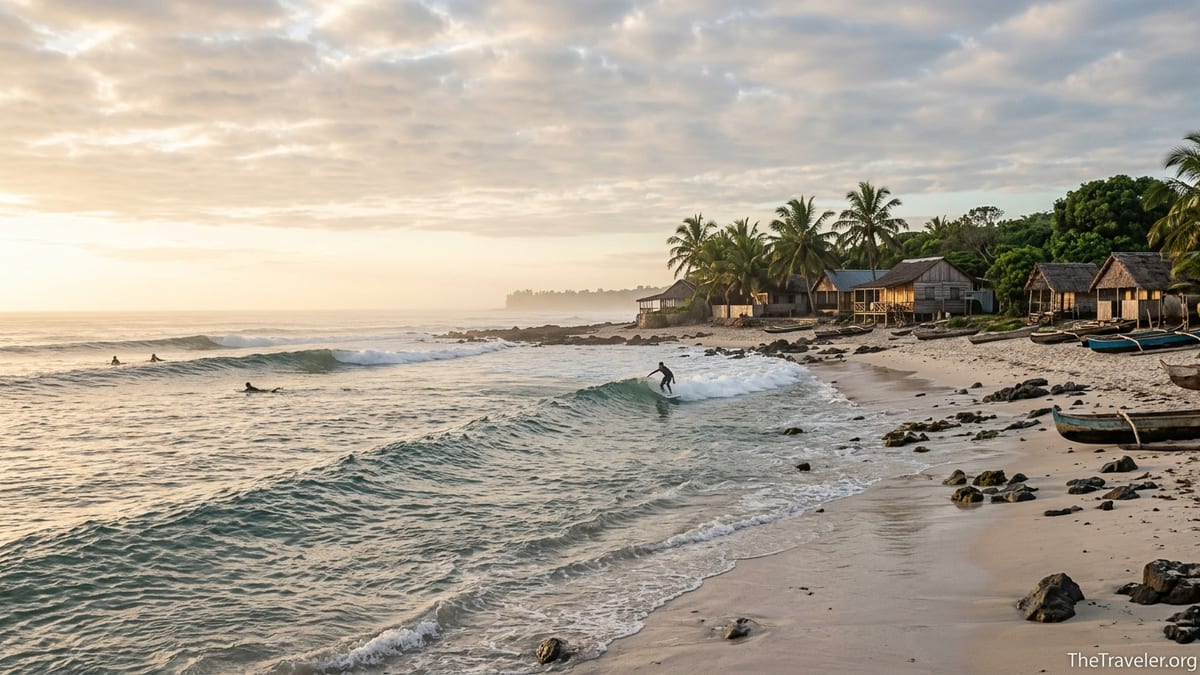
Mahambo at a Glance: Sleepy Village, Serious Swell
Mahambo sits on the Atsinanana coast about 90 kilometers north of Toamasina, facing directly into the Indian Ocean. The coastline here is far more exposed than in nearby Foulpointe, which is sheltered by an offshore reef system. That exposure is exactly why surfers pay attention: Mahambo picks up Indian Ocean swell that rolls in from far to the south, producing consistent waves in season that are powerful by Malagasy standards but still approachable compared to the reef passes of southwest Madagascar.
The village itself is compact and unhurried. You will find a cluster of small grocery kiosks, a market, simple eateries serving rice and seafood, and a handful of beachside guesthouses and surf‑minded lodges. Electricity and mobile data are present but not always perfectly reliable, and after sunset the atmosphere is quiet apart from the sound of the shorebreak and the occasional zebu cart rattling past. Travelers generally base themselves right on the beach so they can walk to the nearest peaks with a board under the arm.
Unlike some of Madagascar’s better-known resort areas, Mahambo remains focused on local life. Fishermen launch outrigger canoes through the shorebreak at dawn, kids play football in the sand between tides, and visiting surfers are still unusual enough to be greeted with curiosity. For surf travelers, that means you are operating in a place where tourism exists, but surfing has not yet been commodified into big camps and crowded lineups.
Waves & Conditions: What to Expect in the Lineup
Mahambo’s surf is defined by a series of reef and reef‑sand breaks spread along the coastline. Locally referenced spots include areas around Baie Maxime and the Ankarambe or “grand reef,” where the seabed transitions from shallow coral to deeper channels. These reefs help shape the swell into right and left peaks, with waves typically breaking over relatively shallow water before reforming as mellower shoulders closer to the beach. Most sessions involve paddling across inside whitewater and then sitting on a reef edge rather than surfing straight off a sandy beach.
Wave size is highly seasonal, but during the core surf months it is common to find chest‑ to head‑high sets with occasional overhead days when a stronger pulse hits. On small days, the waves peel gently enough for learners to ride foamies in the whitewater; on bigger swells, some of the outer sections can become punchy and fast, with hollow sections at low tide that require confident reef awareness. Wind is another key factor. Mornings are usually the cleanest, with light offshore or glassy conditions, while the trade winds tend to pick up by late morning or early afternoon and can ruffle the surface.
Water temperatures hover in the mid‑20s Celsius for much of the year, so a thin spring suit or even just boardshorts and a rash guard are usually sufficient. Visibility can be good enough to watch the coral heads below on clear days, which is beautiful but also a reminder to fall flat rather than diving headfirst. Because there are no formal lifeguards, surfers need to self‑manage rip currents and reef hazards. The currents are typically manageable, but on bigger swells there can be defined rips running along channels in the reef, which experienced surfers often use for easy paddling but which can be unsettling if you are not used to them.
Best Season for Surfing Mahambo
On Madagascar’s east coast, the most reliable surf for Mahambo aligns with the austral winter, roughly from May to September. During this period, more frequent and organized swell trains move up from the southern Indian Ocean, and air temperatures are marginally cooler and less humid. Travelers who visit in June, July or August often report the most consistent surf days, with multiple rideable sessions most weeks and the best chance of clean morning conditions.
Shoulder seasons around April and October can still bring surfable waves, often with fewer storms, but consistency drops compared with mid‑winter. During the peak of the cyclone season, typically January to March, Mahambo can receive very powerful, disorganized swell and heavy rain. There are occasional windows when a distant storm sends perfectly lined‑up sets, yet these periods are unpredictable and can coincide with strong onshore wind, dangerous currents and flooding on land. For most visiting surfers who want a mix of waves and manageable logistics, cyclone season is better avoided.
Within the surf season, daily timing matters. A common local pattern is to surf early: first light or shortly after sunrise often brings the glassiest faces before the trade wind builds. Planning your day around a dawn session, a long breakfast at your lodge and then a second, windier session if conditions allow is a realistic rhythm. Tide can significantly change the personality of Mahambo’s reefs, with higher tides softening the takeoff and low tides making some sections sharper and more critical. Checking with local surfers or lodge staff about how the current tide cycle affects the nearest breaks will help you choose the safest windows, especially if you are new to reef surfing.
Beginner vs Experienced Surfers: Who Is Mahambo For?
Mahambo can work for both beginners and experienced surfers, but expectations and spot choice are crucial. Total first‑timers are usually better starting on the inside reforms and whitewater sections at higher tide, ideally under the supervision of a local instructor. On small, clean days, these inside areas can feel surprisingly forgiving, with long rolling whitewater that allows learners to practice pop‑ups and stance without immediately being dragged over shallow coral. A soft‑top board and booties go a long way toward making that early experience more comfortable.
For intermediate to advanced surfers, the attraction is the outer reef peaks and more powerful sections that reel along the coral ledges. These spots are still relatively uncrowded, and on a decent swell it is possible to find rippable walls and short but punchy barrels, especially on right‑handers that break over slightly deeper water. The crowd is typically a mix of a few local Malagasy surfers, some staff from surf‑oriented lodges and a rotating cast of travelers on their way to or from Sainte Marie Island. The social dynamic is generally friendly and relaxed rather than hyper‑competitive, but normal surf etiquette applies.
That said, Mahambo is not the easiest place in Madagascar for someone who has never seen the ocean before. Travelers whose goal is simply to bob in gentle waves and learn the basics may be happier basing themselves on lagoon‑protected beaches such as Foulpointe or heading to better‑developed beginner hubs in other parts of the country. Mahambo makes the most sense if you either already surf and want to explore a less‑known coastline or if you are comfortable in the water and specifically excited by the idea of learning on real reef waves instead of a crowded sandbar.
Surf Lessons, Board Rental and Local Scene
Given Mahambo’s reputation within Madagascar’s small surf community, it is not surprising that surf lessons and board rentals are available, though not yet on the same scale as in major international surf towns. Several guesthouses and beach lodges keep a quiver of boards on hand, ranging from soft‑top longboards designed for beginners to shorter epoxy boards aimed at intermediate surfers. In practice, many visitors arrange lessons directly through their accommodation, with instructors who are either resident staff or local surfers brought in for sessions.
Rates are relatively modest by global standards but can vary. A common pattern is a flat fee that includes a board and one to two hours of instruction in the water, often run in small groups if several guests sign up on the same morning. Travelers should not expect a slick surf‑school storefront on every corner; instead, lesson logistics are more informal, with arrangements made the day before once the forecast is checked. Because the board stock in the village is limited, taller or heavier surfers who are particular about dimensions sometimes choose to bring at least one personal board, especially if they plan to stay for more than a few days.
Outside formal lessons, the local surf scene remains low‑key. You might see a handful of Malagasy teenagers sharing a single board in the shorebreak or a group of visiting surfers congregating around a beachfront bar after the evening session, but there are no big surf contests or brand‑sponsored events on a regular calendar. This intimacy has a practical upside: if you ask around about the best spot for your level on that specific tide and swell, you are likely to receive candid advice from people who surf these waves frequently and have no incentive to oversell conditions.
Reef, Safety and Practical Tips in the Water
Mahambo is a reef environment and requires a bit more preparation than padding out at a sandy beach resort. The coral here is a mix of living and dead sections, with some sharp limestone outcrops. Booties are strongly recommended for anyone planning to surf near low tide or who is not confident about navigating shallow reef. Even experienced surfers often choose to wear some kind of foot protection to avoid cuts when stepping off on the inside or if they misjudge a takeoff and end up in ankle‑deep water.
Because there are no formal lifeguards, safety comes down to self‑reliance and local knowledge. Before heading out, spend time watching the break from the beach to identify where waves are peaking, where they are closing out and where channels and rips sit. Many surfers use the channels as “moving escalators” to get back outside more quickly, but if you are new to the spot it is wise to ask someone onshore to point out how the current runs. On bigger days, sets can arrive in pulses with lulls in between; timing your paddle and not pushing beyond your comfort level is important.
Basic reef etiquette also applies. Avoid diving headfirst in shallow areas, fall flat when possible and always protect your head with your arms if you are pitched forward. Bring a small first‑aid kit in your luggage with disinfectant, reef‑cut ointment and sterile dressings. Mahambo has basic health services, but for more serious injuries you would likely need to return to Toamasina, so treating minor cuts seriously from the start is sensible. Finally, remember that conditions can change quickly with the tide and wind; a mellow mid‑morning session can feel very different two hours later.
Where to Stay: Mahambo Accommodation with Surfer Appeal
Accommodation in Mahambo is concentrated along or just behind the beachfront, ranging from simple bungalows to more polished seaside lodges. Many of these properties cater, at least informally, to surfers by offering board storage, flexible meal times around dawn patrol, or direct access paths to the sand. Rooms are often built in a traditional bungalow style with thatched roofs and mosquito nets, sometimes with shared bathrooms and sometimes with private facilities, depending on the price range.
Pricing tends to be accessible compared with major resort areas. Budget travelers can often find basic rooms or huts for a price that is attractive to long‑stay surfers, while mid‑range beachfront lodges usually charge more but offer better soundproofing, higher‑pressure showers and on‑site restaurants. Many accommodations serve set‑menu dinners with fresh fish, rice and seasonal vegetables, which can be a welcome convenience after a long day in the water when you do not feel like venturing far.
When booking, it is worth asking very specific questions: Is the property directly on the beach or across the road? Do they have lockable storage for surfboards? Is there a backup generator for power cuts, which are not uncommon in coastal Madagascar? If you plan to take lessons, ask whether they can arrange English‑ or French‑speaking instructors and confirm the approximate board sizes available. Clear communication before you arrive reduces surprises and helps ensure that your chosen lodge aligns with your surf expectations.
Getting to Mahambo from Toamasina
Toamasina, also known as Tamatave, is the main gateway to Mahambo. The city is reachable from Antananarivo by domestic flight or by road along Route Nationale 2 using long‑distance taxi‑brousse services or private transfers. From Toamasina itself, Mahambo lies roughly three hours north along the coastal road, although travel time can stretch depending on road conditions, weather and the number of stops your vehicle makes en route.
For many budget travelers, the typical route is to head to the taxi‑brousse station in Toamasina and look for vehicles bound toward Mahambo or Soanierana‑Ivongo, which pass through Mahambo on the way. These minibuses are usually inexpensive but can be crowded and slow, stopping to pick up passengers and goods along the road. Departures often cluster in the morning, and seats may fill early during local holidays, so arriving at the station ahead of time is advisable. Your guesthouse in Toamasina can often call ahead or send you with the name of a cooperative that regularly runs the route.
Travelers who prefer more comfort or who are transporting several surfboards may opt for a private car and driver arranged through a Toamasina hotel or local agency. Although more expensive, this option allows you to leave at a time that suits the tides and to stop for food or photos along the way. The coastal road sections can be scenic, with glimpses of palm groves, small villages and the occasional lagoon. Whichever mode you choose, keep in mind that night driving is generally discouraged in Madagascar due to a combination of road conditions, animals on the road and limited lighting, so plan to travel in daylight hours.
Mahambo vs Foulpointe: Which Base Should You Choose?
Foulpointe, officially known as Mahavelona, sits closer to Toamasina and has long been a favorite weekend and holiday beach spot for Malagasy families. Its key geographic difference from Mahambo is the presence of an extensive protective reef offshore that creates a calm lagoon near the beach. This lagoon significantly damps down incoming swell, making the water inside much safer for swimming, stand‑up paddling and casual snorkeling. As a result, Foulpointe tends to feel busier and more festive, with more non‑surf visitors, beach sellers and families paddling in the shallows.
For dedicated surfers, that same protective reef is both a blessing and a limitation. The lagoon conditions are ideal if you are traveling with non‑surfing companions or small children who want safe swimming water, but the moderated swell means you are less likely to find the sort of consistent, surfable waves that Mahambo offers. There are surfable sections on the outer reef in Foulpointe, but they are generally less accessible and less frequently surfed than Mahambo’s breaks, and they require boat access or long paddles that are not always practical for visiting surfers.
Mahambo, by contrast, is more exposed to the open ocean, with reef setups that are better suited to surfing but less forgiving for casual bathers. The village itself is quieter and more compact than Foulpointe, with fewer restaurants and a smaller range of accommodation, but it offers something Foulpointe does not: the ability to wake up, check the waves from your lodge and paddle out within minutes on most surfable days. If your main goal is surfing, Mahambo makes the stronger base; if you are primarily looking for calm water and a broader set of family‑oriented services, Foulpointe is likely the easier choice.
The Takeaway
Mahambo is one of Madagascar’s rare east‑coast destinations where surf rather than swimming takes center stage. Its position facing the open Indian Ocean, combined with a reef‑fringed shoreline, creates a series of breaks that can be playful or powerful depending on the season, all within a village that still feels authentic and unhurried. While the surf infrastructure is modest compared with global hotspots, the combination of manageable crowds, scenic coastline and local hospitality gives Mahambo a strong appeal for surfers who prefer discovery over convenience.
For beginners, Mahambo can provide a memorable introduction to reef surfing when approached with caution, local guidance and appropriate equipment. For experienced surfers, it represents a chance to sample Malagasy waves in a setting that remains off most international itineraries. Access from Toamasina is straightforward by local standards, and the contrast between Mahambo’s surf‑oriented coastline and nearby Foulpointe’s sheltered lagoon means travelers can tailor their base to their priorities. In short, if you want your time on Madagascar’s east coast to revolve around checking tides, reading swell charts and paddling out at first light, Mahambo deserves a firm place on your surf‑travel list.
FAQ
Q1. Is Mahambo suitable for complete beginner surfers?
Mahambo can work for beginners on small, calm days, especially on the inside whitewater at higher tide with an instructor, but the reef environment and lack of lifeguards mean it is better suited to people who are at least comfortable in the ocean. Absolute beginners who are nervous in the water may be more relaxed starting on lagoon beaches like Foulpointe before progressing to Mahambo’s waves.
Q2. Do I need to bring my own surfboard to Mahambo?
You can usually rent boards through surf‑friendly guesthouses in Mahambo, but stock is limited and may not cover every size or style. If you are particular about your equipment, surf a larger board or plan a longer stay, bringing at least one personal board and a spare leash is a good idea, using a well‑padded travel bag for the journey.
Q3. When is the best time of year to surf Mahambo?
The most consistent surf generally arrives during the austral winter months from about May to September, when Indian Ocean swells are more regular and air temperatures are slightly cooler. Shoulder seasons can still offer good sessions, but cyclone season from January to March brings more unpredictable and sometimes hazardous conditions that most visitors prefer to avoid.
Q4. How long does it take to get from Toamasina to Mahambo?
Travel time from Toamasina to Mahambo is typically around three hours by road in daylight, though this can vary with roadworks, weather and the number of stops your vehicle makes. Taxi‑brousse services tend to take longer than private transfers but are significantly cheaper and offer a more local experience.
Q5. Are there medical facilities near Mahambo for surf injuries?
Mahambo has only basic healthcare options and small pharmacies, which are suitable for minor ailments and simple reef cuts. For more serious injuries or illnesses, you would likely need to return to Toamasina, where medical services are more developed, so carrying a personal first‑aid kit and treating even small cuts carefully is important.
Q6. Can I learn to surf in Mahambo if I do not speak French or Malagasy?
Some instructors and lodge staff in Mahambo speak basic English, especially at properties that see more international guests, but French remains the most commonly used foreign language. If you do not speak French, it can help to arrange lessons in advance through your accommodation and to be patient with communication, using simple phrases and demonstrations in the water.
Q7. How does Mahambo compare in cost to other surf destinations?
Mahambo is generally less expensive than major surf hubs in Europe, North America or Southeast Asia, particularly in terms of accommodation and food. However, some logistical costs, such as private transfers, can feel relatively high for the distance involved due to local infrastructure, so budgeting a bit extra for transport while enjoying good value on lodging and meals is sensible.
Q8. Is it safe to swim at Mahambo if I am not surfing?
Swimming at Mahambo requires caution because the beach faces open ocean and is shaped by reef and currents rather than protected by a lagoon. On calm days and at higher tide, confident swimmers can enjoy the water close to shore, but it is wise to avoid going out alone, to stay within your depth and to move further up or down the beach if the shorebreak looks heavy.
Q9. Can I combine Mahambo with a trip to Sainte Marie Island?
Yes, many travelers use Mahambo as part of a broader east‑coast route that includes Sainte Marie Island, which is reached by boat from ports further north such as Soanierana‑Ivongo. It is common to spend a few days surfing and relaxing in Mahambo either before or after crossing to Sainte Marie, arranging road transport along the same coastal route.
Q10. Should I stay in Mahambo or Foulpointe if I travel with non‑surfing family members?
If your companions prioritize safe swimming, calmer water and a busier beach scene with more options for casual dining, Foulpointe is usually the better base. If surfing is your main focus and your group is happy with a quieter village atmosphere and more energetic waves, Mahambo offers more direct access to surfable breaks while still being close enough to visit Foulpointe on a side trip.