


Reaching the end of Madagascar’s legendary RN7 at Toliara is a milestone in itself, but for many travellers the real highlight begins where the asphalt stops. South of the city stretch remote fishing villages, coral lagoons and spiny forest, with dusty 4x4 tracks and boat crossings that can be confusing to plan alone. This guide compares the main southwest Madagascar circuits currently sold by operators, from simple beach extensions at Ifaty to multi day 4x4 and boat combinations linking Anakao, Tsimanampetsotsa and far flung Vezo communities, and helps you decide whether to arrange Toliara transfers independently or book an organised tour for the harder to reach sections.
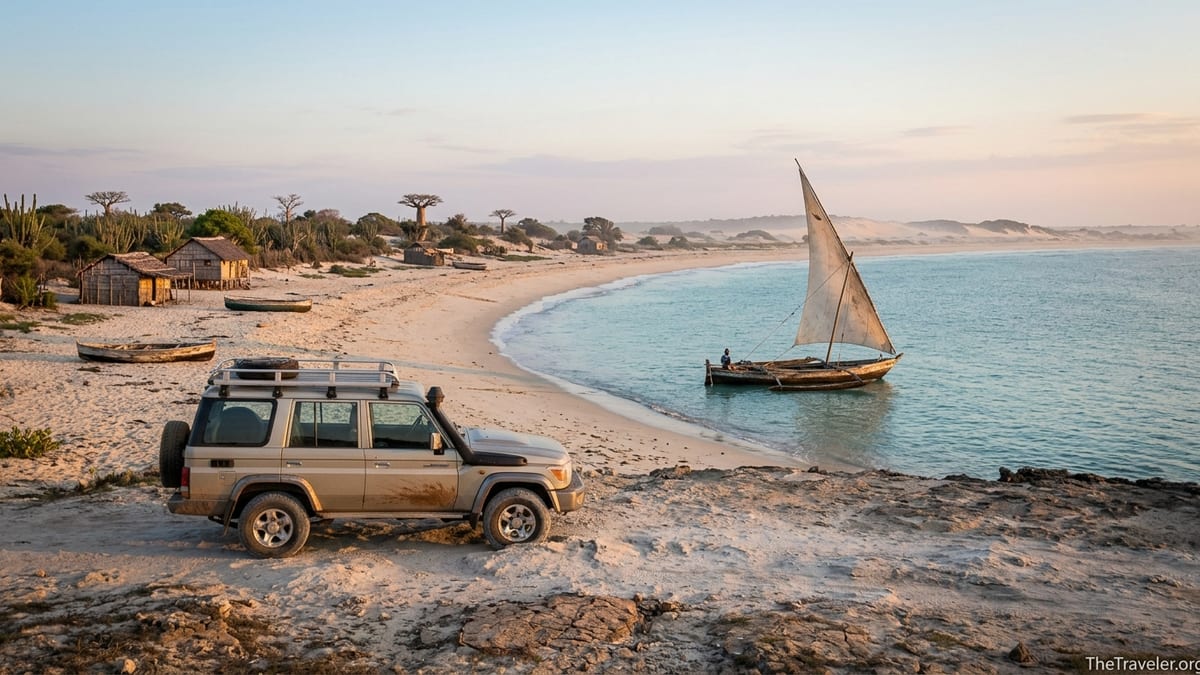
RN7 Beach Extensions: Classic Ifaty vs Wilder Anakao
Most international itineraries along the RN7 finish in Toliara after visiting Ranomafana and Isalo National Parks, with operators offering a short “beach extension” to either Ifaty or Anakao. Many French and European agencies package a 12 to 15 day Antananarivo to Toliara circuit with two or three nights in Ifaty at the end, sold as a relaxing finale with easy snorkeling on the barrier reef and simple logistics by road. A typical example is a 15 day RN7 itinerary marketed from around the low to mid four figures in euros per person in high season, including a standard or midrange hotel in Ifaty, breakfasts, a private vehicle and local guides in the parks.
Ifaty, sometimes called Mangily, lies about 27 kilometers north of Toliara on a paved section of the RN9 followed by a short sandy track. Most operators include this transfer in their RN7 package, usually in the same vehicle used from Antananarivo, which might be a 4x4 for two to four guests or a minibus for a small group. Travel time is roughly 1.5 hours from Toliara. Independent travellers can easily reach Ifaty by taxi brousse or private taxi arranged in town, which is why some budget visitors prefer to book only the RN7 land itinerary with a driver, then improvise the beach stay on arrival.
Anakao, by contrast, feels considerably more remote. It lies south of Toliara across the bay and is reached almost exclusively by speedboat from the city’s small port, on a crossing that usually takes 1 to 1.5 hours depending on wind and swell. Many tour operators now promote “RN7 plus Anakao” options, using shared or private boat transfers coordinated with beach lodges such as oceanfront bungalows and dive focused hotels. These packages typically cost more than the Ifaty version, largely because of the boat logistics, but reward you with broader empty beaches, strong Vezo fishing culture and comfortable midrange bungalow resorts that appeal to honeymooners and divers.
When choosing between Ifaty and Anakao as a simple RN7 extension, consider your priorities. If you want maximum relaxation with minimal transfers, Ifaty’s road access wins, and you can add a half day spiny forest walk or whale watching in season. If you value a quieter atmosphere and are interested in side trips to Nosy Ve or Tsimanampetsotsa, Anakao is the better springboard, though it involves committing to fixed boat schedules that are easier to manage with an operator than on your own.
Private 4x4 Circuits: Reaching Tsimanampetsotsa and Remote Beaches
Beyond the classic beach stops, several local agencies based in Antananarivo and Toliara now offer private 4x4 tours that push further into the southwest, often combining Anakao with Tsimanampetsotsa National Park and remote strips of coast such as Ambola, Salary Bay or even the RN10 corridor toward Itampolo and Faux Cap. These custom circuits are usually marketed as seven to ten day add ons after the RN7 or as stand alone “Grand Sud” adventures, and they use high clearance 4x4 vehicles with drivers familiar with sand tracks, tides and local security issues.
Tsimanampetsotsa National Park itself sits inland from the coast and is approached by sandy track that branches off the RN10 south of Toliara or from the coastal villages near Anakao. From Anakao most operators quote about two hours of driving in a 4x4 each way to reach the park entrance, but in practice this can vary with recent rains and track conditions. Because of the remoteness, day trips are long, and some agencies suggest overnighting near the park or using it as a stop on a multi day loop linking Anakao, the park and more southerly villages before circling back to Toliara.
These private 4x4 routes are rarely sold at rock bottom prices, in part due to the distances and the need for experienced drivers. While exact figures depend on season, car type and lodging level, many visitors report quotes that work out to several hundred euros per day for a fully organised circuit including vehicle, driver guide, fuel, accommodation and most meals in remote areas. Prices are usually lower if you start from Toliara rather than Antananarivo and if you choose simpler beach bungalows instead of upscale lodges. For couples or small groups sharing a vehicle, the per person cost can become more reasonable, while solo travellers face the steepest rates.
For travellers who like flexibility but are wary of navigating difficult tracks alone, a good compromise is to self arrange the RN7 with a freelance driver, then book a shorter two or three day 4x4 loop from Toliara that focuses only on Tsimanampetsotsa and one coastal stop. Local agencies in Toliara and online based Malagasy operators can quote these mini circuits on short notice, especially outside peak July to September holiday periods.
Beach and Wildlife Combinations: Ifaty, Anakao and Tsimanampetsotsa
Many southwest itineraries now advertise a “beach and wildlife” focus, combining spiny forest walks, lagoon snorkeling and birding in the same trip. In practice this usually means linking Ifaty or Anakao with at least one protected area such as Tsimanampetsotsa or the private spiny forest reserves behind Ifaty’s hotel strip. It is worth paying attention to the details, because the wildlife component can range from a short dawn walk near the village to a full day national park excursion with local specialist guides.
Ifaty’s main wildlife draw is its band of spiny forest containing baobabs and drought adapted shrubs, accessible via small private reserves just inland. Many RN7 tours include a pre breakfast walk here with a community guide, which offers a chance at endemics like long tailed ground rollers and sub desert mesites for keen birders, as well as closer looks at octopus trees and chameleons. The visit is typically a few hours long and returns to the beach in time for lunch, which makes it an easy add on during a seaside stay without extensive logistical planning.
Anakao based wildlife programmes tend to be more spread out. Boat trips to the offshore islet of Nosy Ve provide excellent seabird sightings and relaxed snorkeling over patch reefs, while 4x4 outings to Tsimanampetsotsa deliver a very different, arid landscape with flamingo lined alkaline lakes, caves and towering spiny forest. Because of distance and park regulations, Tsimanampetsotsa excursions often last a full day, with a picnic lunch included, and require advance coordination with the local park office. Some tour operators roll park fees and local guiding charges into the package price, while others list them separately and ask guests to pay in cash at the gate.
When comparing offers, ask exactly how much wildlife time you get and where. A circuit that spends three nights in Anakao with one full day in Tsimanampetsotsa and a half day at Nosy Ve can feel very different to an itinerary that simply labels Anakao as “wildlife rich” but only includes unstructured beach days. Both are valid depending on whether you want more relaxation or more time in the field, but understanding the breakdown will help you choose the right operator.
Diving and Snorkeling Packages in Ifaty and Anakao
The barrier reef off the southwest coast gives tour operators an opportunity to bundle diving and snorkeling into their circuits, especially around Ifaty and Anakao where established dive centers operate. Some RN7 packages offer optional half or full day snorkeling trips, while specialist agencies build full “dive and discover” itineraries that include several boat dives and equipment rental in the price. The quality of the underwater experience can vary with season, tides and local fishing pressures, so it pays to read recent reviews and talk with operators about current conditions rather than rely solely on marketing photos.
Ifaty’s lagoon is shallow and relatively accessible. Many hotels work with small local outfits that take guests to closer sections of the reef by traditional pirogue or small motorboat. Snorkeling there suits beginners and mixed groups, but visibility can be affected by wind and tides. Several visitors report that while fish life is present, coral condition is patchy in places, so it is best approached as a gentle add on rather than a dedicated world class diving destination. Most RN7 operators treat any dives or snorkeling as optional extras paid directly to the local provider, which keeps the base tour price lower but can lead to variable service quality.
Anakao has a stronger reputation among divers, thanks to a slightly deeper reef, access to outer drop offs and nearby sites reachable by speedboat. Dedicated dive lodges and centers in the village typically offer packages with a set number of boat dives, guided snorkeling and equipment included for guests, often marketed as a three to five night stay that dovetails with an RN7 land itinerary. These stays can also coincide with humpback whale season from roughly July to September, when boat trips with chances of surface sightings are possible if sea conditions allow.
Because sea and wind conditions influence boat departures, many travellers prefer to book diving focused packages through a tour operator or lodge rather than relying on last minute arrangements. When comparing offers, clarify how many dives are guaranteed, what happens in case of rough seas, whether marine park or conservation fees apply, and whether the package includes transfers to and from Toliara’s airport or city hotels so that you are not left arranging early morning boat connections yourself.
Transport, Boat Crossings, Guides and What Is Included
Southwest Madagascar’s infrastructure is improving slowly, but long distances, rough tracks and limited public transport still shape how tours are built. The RN7 itself runs about 980 kilometers from Antananarivo to Toliara, and recent traveller reports suggest that sections can be potholed or under construction, making realistic daily driving times longer than what digital maps indicate. For this reason, nearly all tour packages use a vehicle with driver rather than self drive hire, with 4x4s strongly recommended once you head off the main highway or plan to continue beyond Toliara.
Boat crossings are a key element for Anakao and some more remote beaches. Regular motor launches now link Toliara with Anakao, departing in the morning when seas are calmer. Many tour operators reserve seats on these scheduled boats for their clients, coordinating transfers from hotels in Toliara to the small port and ensuring luggage handling and paperwork are taken care of. In rough weather departures can be delayed or cancelled, so it helps to build some flexibility into your schedule and have the support of a local agent who can rebook or adjust plans if needed.
Guiding arrangements vary by operator and by region. Along the RN7 it is standard to travel with a driver guide who speaks French and often some English, while hiring specialist local guides inside national parks like Isalo, Ranomafana or Tsimanampetsotsa. The cost of these local guides and park entrance fees may be rolled into the tour price or charged on the spot; some agencies include all mandatory park fees in a higher headline rate to avoid surprises, whereas budget oriented offers quote only vehicle, driver, fuel and accommodation and leave guests to pay national park charges in cash during the trip. For planning, assume that park and guiding fees can add a noticeable amount to your total budget if not included.
As a rule, organised circuits in the southwest include accommodation, breakfasts, a private vehicle with driver, fuel for the published route, airport or hotel transfers at the start and end, and in remote areas sometimes dinners. Lunches, drinks, tips and optional activities such as diving, whale watching, quad biking or kite surfing are often excluded, as are domestic flights between Toliara and Antananarivo, which are ticketed separately. When comparing quotes, make a simple table showing what is and is not covered, and do not hesitate to ask operators to clarify grey areas such as boat transfers, equipment rental or supplementary fuel surcharges if the itinerary changes.
Accommodation Standards from Toliara to Remote Beaches
Lodging standards in southwest Madagascar range from simple beach bungalows with solar power and bucket showers to polished lodges attached to international tour networks. In Toliara itself you will find straightforward city hotels used mainly for overnight stops before or after flights, with air conditioned rooms, reliable Wi-Fi and restaurant service. Many RN7 tours place guests in midrange establishments in the capital and larger towns, then switch to more atmospheric boutique properties in Isalo and on the coast.
Ifaty offers a mix of budget huts, midrange beachfront hotels and a few more upmarket options with swimming pools and landscaped gardens. Many of the properties sit along the same strip of sand, so price differences often come down to room comfort, upkeep and how well managed the restaurant is. Power cuts and inconsistent hot water can still occur, but most packaged tours use accommodations that have their own generators or solar setups and can maintain at least basic comfort levels even during outages.
In Anakao the vibe is more isolated and rustic chic. Several lodges cluster along the main beach, some with sturdy bungalows built of local materials, good mosquito protection and shaded terraces. Higher end lodgings offer ensuite bathrooms, steady electricity for several hours per day and upgraded menus, yet the setting remains remote, with no paved roads and limited village infrastructure. Further afield, in tiny villages near Tsimanampetsotsa or along the RN10, accommodation may mean very simple guesthouses or community run huts with shared facilities, which is why only certain tour operators venture there and usually only with travellers who explicitly understand and accept the conditions.
When screening tour proposals, ask for the exact hotel names and room categories and look for recent guest feedback. Some agencies are happy to present tiered versions of the same circuit, for example a “standard” RN7 plus beach itinerary using reliable two or three star hotels, and a “comfort” or “charm” version substituting boutique lodges and seafront suites. Understanding these distinctions helps you compare prices fairly instead of assuming that all tours labeled with similar itineraries offer the same level of comfort.
Independent Toliara Transfers vs Booking Through an Operator
A recurring decision point is whether to handle the final southwest section independently once you reach Toliara or to book it through an operator along with the RN7. Independent travellers sometimes fly into or out of Toliara and then hire local taxis, arrange their own boat crossings to Anakao and negotiate prices with beach lodges on arrival. This approach can save money for flexible backpackers who speak some French, have time to absorb delays and are comfortable with changing schedules and informal arrangements.
For Ifaty, independent transfers are relatively straightforward. You can arrange a taxi from Toliara’s airport or town to the beach for a negotiable fare, occasionally sharing with other travellers to cut costs, and book accommodation directly with your chosen hotel. Some properties provide their own transfer vehicles if notified in advance, quoting a flat rate for the journey. If your plan is simply to relax on the beach and perhaps book short excursions locally, arranging this part on your own is realistic as long as you accept some variability in vehicle condition and timing.
For Anakao and any routes involving Tsimanampetsotsa or the RN10, working with an operator becomes much more attractive. Boat transfers to Anakao need to be reserved, paid for and coordinated with tides and weather, and connecting them smoothly with flight arrivals or long overland journeys can be tricky. 4x4 trips to Tsimanampetsotsa or beyond require drivers who know the tracks, carry enough fuel and water and are aware of any temporary security advisories. In these areas, a reliable operator does more than just provide a vehicle; they take responsibility for contingency planning and often maintain direct relationships with local communities and park staff.
A practical compromise for many visitors is to book a complete RN7 circuit including either an Ifaty or Anakao extension with a trusted operator, then add any extra beach nights or simple activities directly with the hotels once on site. This ensures that the more complex and time sensitive segments, such as inland drives, national park visits and boat crossings, are professionally managed, while still allowing room for spontaneous relaxation that does not require heavy logistics.
The Takeaway
Choosing a southwest Madagascar tour comes down to balancing comfort, remoteness, wildlife focus and your tolerance for logistical uncertainty. Ifaty extensions suit travellers who want an easy beach finale after the RN7 with modest additional costs and simple road transfers. Anakao extensions appeal more to those seeking quiet beaches, better diving and access to Nosy Ve and Tsimanampetsotsa, but hinge on boat logistics that favour working with a capable operator.
For travellers keen on deeper exploration, private 4x4 circuits linking Anakao, Tsimanampetsotsa and remote stretches of the RN10 corridor offer memorable encounters with spiny forest, flamingo filled lakes and traditional Vezo communities, at the price of higher daily budgets and simpler accommodation. Whatever you choose, insist on clarity about included park fees, guiding, boat transfers and meals, and verify hotel standards for each overnight stop.
In the end, a hybrid strategy often works best. Use an experienced operator for the more complex segments between Toliara, Anakao and Tsimanampetsotsa, then enjoy independent time in Toliara or Ifaty if you wish. With realistic expectations about road and sea conditions, and a clear understanding of what your tour includes, the southwest can deliver some of Madagascar’s most rewarding combinations of beach, wildlife and local culture.
FAQ
Q1. Is it better to end the RN7 at Ifaty or at Anakao?
Both work, but Ifaty is easier and cheaper to reach by road, while Anakao feels wilder and is better for combining beaches with day trips to Nosy Ve or Tsimanampetsotsa.
Q2. Can I arrange transfers from Toliara to Ifaty on my own?
Yes. You can usually hire a taxi or pre arrange a hotel transfer, and the drive is about 1.5 hours, making independent arrangements realistic for most travellers.
Q3. Do I really need a 4x4 to visit Tsimanampetsotsa National Park?
In practice yes. Access tracks are sandy and rough, and tour operators use high clearance 4x4s with experienced drivers who know the route and local conditions.
Q4. Are boat crossings between Toliara and Anakao safe?
Crossings are routine in calm conditions, but departures depend on tides and weather. Using an operator or lodge that manages reservations and safety gear is recommended.
Q5. What level of accommodation should I expect in Ifaty and Anakao?
Ifaty has everything from simple huts to comfortable midrange hotels, while Anakao focuses on rustic chic beach lodges with varying levels of generator power and amenities.
Q6. Are national park fees usually included in tour prices?
Midrange and higher end circuits often include park and local guide fees, but budget oriented offers sometimes exclude them, so always ask what is covered before booking.
Q7. Is southwest Madagascar suitable for families with children?
Yes, if you build in rest days and avoid very long track sections. Beach stays in Ifaty or Anakao combined with shorter wildlife walks can work well for active families.
Q8. When is the best time to combine beaches with wildlife in the southwest?
The dry season from roughly April to November brings better road conditions and clearer seas, with humpback whales often seen offshore from mid winter to late winter.
Q9. Can I travel the RN7 and southwest without speaking French?
It is possible with an operator that provides English speaking staff, but independent travel is much easier if you speak at least basic French for transport and hotel dealings.
Q10. How far in advance should I book southwest Madagascar tours?
For peak European holiday months and limited capacity lodges in Anakao, booking several months ahead is wise, while shoulder season trips can sometimes be arranged closer to departure.