


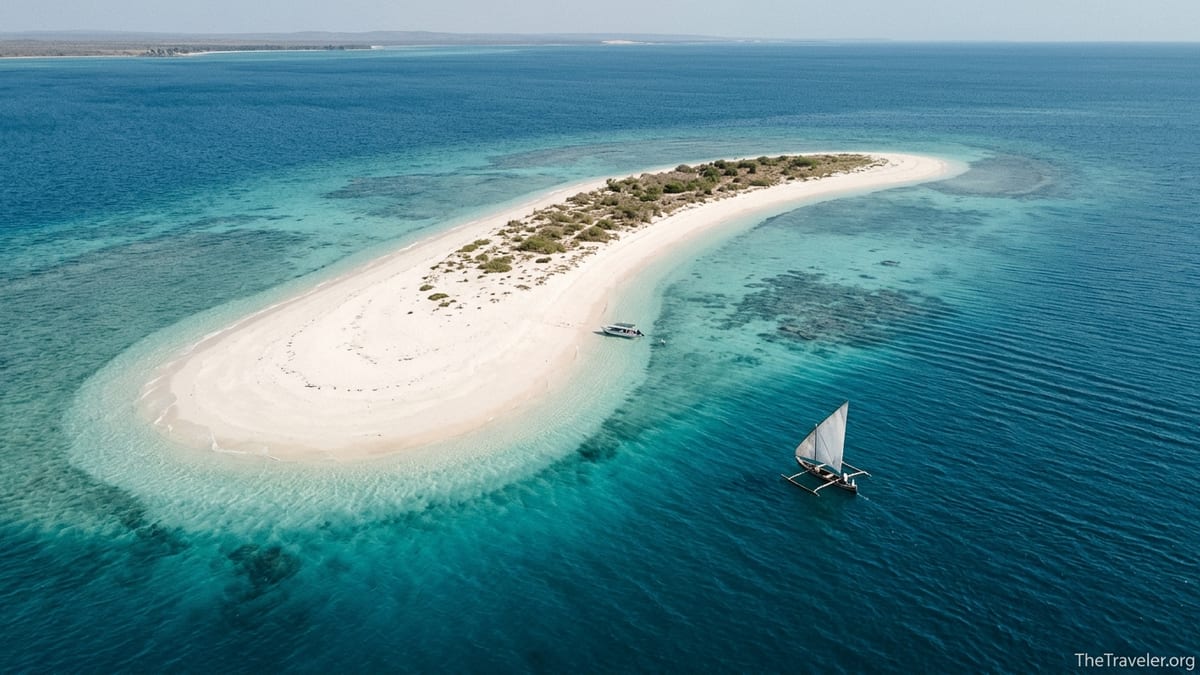
Just offshore from the Vezo fishing village of Anakao on Madagascar’s southwest coast, Nosy Ve is a low, sandy islet that feels far wilder than its modest size suggests. The crossing is short, but you step into a world of bright coral shallows, whispering seabirds and centuries-old local taboos that have helped protect both a remarkable red-tailed tropicbird colony and an important fringing reef. This guide explains how to visit Nosy Ve on a day trip from Anakao, how excursions typically work, and how to enjoy the island’s beaches and wildlife responsibly.
Understanding Nosy Ve and Why It Matters
Nosy Ve sits roughly a couple of kilometers off Anakao, a broad sandbar of coral sand and low scrub surrounded by shallow turquoise water. Official tourism and conservation material present Nosy Ve as a place of dual importance: its surrounding coral reef holds healthy patches of hard and soft corals with reef fish, while the island itself is one of Madagascar’s key nesting sites for red-tailed tropicbirds. In conservation circles, Nosy Ve is often cited as a rare example where a seabird colony has benefited from a blend of traditional taboos and modern protected-area status rather than suffered from tourism.
The island forms part of the wider Nosy Ve–Androka protected marine area, which covers offshore reefs and important coastal habitats in this arid corner of Madagascar. For visitors, that means you are not just heading to a beach; you are entering a fragile ecosystem with rules on where you walk, what you can take and how close you can approach nesting birds. Guides and boatmen in Anakao are used to these rules and will usually remind guests that the island is “fady,” or sacred, to the local Vezo people.
Practically, Nosy Ve is also one of the easiest marine excursions from Anakao. You can see the low white strip of sand from the village beach, so crossing times are short and seas are often manageable, even for travelers who are unsure about boats. That accessibility makes it a popular half-day or full-day trip for guests staying at lodges such as Prince Anakao, Peter Pan Hotel or small beach bungalows scattered along the shore.
Because the islet is uninhabited and largely undeveloped, there are no shops, no permanent shade structures and no jetty. You step down from a pirogue or motorboat directly into ankle-deep water. This simplicity is part of the charm, but it also means you need to arrive prepared, from sun protection to drinking water.
Getting from Anakao to Nosy Ve: Boats and Traditional Pirogues
Day trips start on the sand in Anakao, usually right in front of your lodge. You will find two main options for reaching Nosy Ve: motorboats, either fiberglass skiffs or larger wooden boats with outboard engines, and traditional Vezo pirogues, dugout canoes with outriggers that may be paddled, sailed or fitted with a small motor. Many lodges work with local fishermen to offer both choices, while independent travelers can negotiate directly with crews on the beach early in the morning.
A typical crossing by motorboat takes about 20 to 30 minutes, depending on sea conditions and the starting point along Anakao’s long beachfront. Operators such as Peter Pan Hotel describe Nosy Ve as around 12 kilometers from their stretch of coast and quote a travel time of roughly half an hour by boat, which matches what many recent travelers report. In calm morning seas, the ride feels short and straightforward, skimming over a shallow lagoon with a faint surf line breaking on the outer reef.
Traditional pirogues are slower but more atmospheric. Sitting low in the water on a narrow wooden hull, you feel every shift of wind and wave. With a small outboard motor, expect the crossing to take around 30 to 45 minutes; under sail or paddle alone, especially if there is a headwind or slack breeze, it can stretch closer to an hour. Operators sometimes describe their trips as “motorized traditional pirogue,” blending the look and feel of a Vezo canoe with the reassurance of a small engine. Travelers who have booked these combined options through local agencies or hotels in Anakao in recent seasons often pay slightly more than for a basic fisherman’s canoe but appreciate the added safety gear and communication with a lodge.
On price, there is a wide range depending on whether you are chartering privately or joining others. Recent reports from Anakao mention around 25,000 Malagasy ariary per person for a place in a local pirogue arranged through a guesthouse, sometimes including the park entry fee. More curated lodge excursions, which often bundle snorkel gear, lunch and guiding, can cost several times that, though published prices change with fuel costs and seasons. When you negotiate directly with fishermen, expect to hear figures quoted either per person or per boat, then clarify whether the fee includes park entry, snorkeling equipment and lunch.
What a Typical Half-Day Excursion Looks Like
Most Nosy Ve outings are sold as half-day trips, though they often feel pleasantly unhurried. A common schedule starts with a pickup on the beach between 8:00 and 9:00 in the morning, taking advantage of calmer seas and cooler air. Your guide or boatman will usually load masks, snorkels and fins before you step in, sometimes along with coolboxes of food if lunch is included. Once everyone is aboard, the boat turns directly toward the low white line of Nosy Ve ahead.
On arrival, boats anchor just off the beach on the island’s more sheltered side. You climb down a short ladder or over the side and wade ashore through ankle or knee-deep water. There is no pier, and at low tide you may walk 20 or 30 meters over firm sand. Once on land, most groups first walk to see the tropicbird colony while temperatures are still relatively mild, then either snorkel the reef or relax on the sand.
A typical pattern is a slow walk of 15 to 30 minutes behind a guide to the colony area, staying on established paths. You watch breeding red-tailed tropicbirds wheeling overhead and resting near burrows, then retrace your steps to the beach. After that, there is usually at least an hour set aside for swimming and snorkeling. Some trips include a simple grilled seafood lunch, prepared either by your crew directly on the beach or back in Anakao after your return. Others finish by late morning so that guests can eat at their lodge.
Most half-day tours return to Anakao by early or mid-afternoon, often before the afternoon wind, known locally as the “varatraza,” builds up. That avoids choppy seas in small boats and leaves the rest of the day free. If seas are glassy and the group is enjoying the island, it is common to extend the stay by an extra hour or two, provided you agree this with your boatman in advance.
Beaches, Snorkeling and Optional Fishing or Island Combos
Nosy Ve’s beaches are classic Madagascar southwest: blindingly white coral sand, a gentle slope into limpid turquoise water and almost no permanent structures. The main landing area near the usual anchorage is the most frequented, but it takes only a short walk along the shore to find quieter stretches. You might share the beach with a handful of other small groups and the occasional Vezo fisherman stopping briefly before heading back to sea.
Snorkeling is often the highlight of a Nosy Ve trip. The reef around the island sits close to the surface, so you can kick out from the sand and start seeing coral heads within a few fin strokes. Local operators describe the seabed as relatively untouched, with a mix of branching hard corals, boulder corals and scattered bommies hosting reef fish. In practice, what you see depends heavily on recent weather and tides, but many visitors report butterflyfish, parrotfish and occasional turtles in the shallows. Lodges and dive centers in Anakao offer guided snorkeling, providing equipment, short safety briefings and tips on where to look for the healthiest coral patches and gentlest current.
Fishing and island combos are often possible but need to be discussed carefully to avoid stressing sensitive areas. Some visitors ask boatmen to troll lines on the way to or from Nosy Ve for small pelagic species, or to include a circuit to another islet south of Anakao, such as Nosy Satrana, on a longer full-day trip. Local excursion providers around Anakao list motorized pirogue outings that combine snorkeling near a reef, picnic on a sand islet and sometimes shore fishing in deeper channels. If you want to do this, be explicit that you do not wish to fish near the seabird nesting beaches or inside clearly demarcated no-take sections of the reef.
For many travelers, the more rewarding combination is Nosy Ve plus extended snorkeling, without adding distant islets. Because the island sits inside a protected marine area, there is usually enough variety of coral and fish life within easy reach of the main anchorage to fill a full morning in the water. A common pattern is to snorkel one section of reef directly from the beach, rest on the sand, then ask your boatman to shift the boat a short distance so you can explore a slightly deeper or more sheltered patch before heading back.
The Red-Tailed Tropicbird Colony and Responsible Birdwatching
The main conservation draw of Nosy Ve is its colony of red-tailed tropicbirds, striking seabirds with white plumage, black eye masks and long red tail streamers. These birds nest on the ground or in shallow scrapes under low vegetation, which makes them vulnerable to disturbance. Nosy Ve hosts what ornithologists describe as Madagascar’s main or only significant colony of the species, and conservation reports over the past decade have noted both the importance of the site and the positive role of local protection measures.
Traditional Vezo beliefs have long considered the island sacred, discouraging hunting and limiting access. Modern conservation projects, coordinated with local communities and national authorities, have built on that foundation. For visitors, this translates into clear rules. Stay on marked paths, follow your guide’s instructions and avoid walking into the low scrub away from established viewing points. Nests are often hard to see until you are almost on top of them, so even a few extra steps off-trail can crush eggs or chicks hidden under sparse vegetation.
Responsible birdwatching on Nosy Ve means enjoying close views without forcing birds to change their behavior. A practical rule of thumb used by many guides is to stop approaching if birds begin calling loudly, shuffling away from nests, or repeatedly flying low overhead. These are signs they feel threatened. Use binoculars or a zoom lens to appreciate details instead of edging closer for a phone photo. If you travel with a birding group, rotate viewing positions so that not everyone crowds the same nest at once.
Feeding birds, collecting feathers or taking eggs is strictly off-limits. While this might sound obvious, some visitors may be tempted to pick up molted tail feathers as souvenirs. Guides and conservation signage generally ask you to leave everything where it lies, so that feathers continue to serve their ecological role and the site retains its natural appearance. The same goes for shells and coral pieces on the beach; Nosy Ve’s protection depends in part on minimizing extraction of natural material.
What to Bring: Sun, Sea and No Facilities
Nosy Ve has almost no permanent infrastructure. There are no kiosks, no toilets, no freshwater showers and very limited natural shade. A few scattered shrubs and low bushes offer partial relief from the sun, but for the most part you are exposed to strong tropical light and reflected glare from white sand and water. Operators sometimes set up temporary shade with a beach umbrella or a simple canvas tarp, but you should not rely on this.
At a minimum, plan to bring a wide-brimmed hat that will not blow away on the boat, high-SPF reef-safe sunscreen, sunglasses with good UV protection and a light long-sleeved shirt or rash vest for extra coverage. Many travelers find that wearing a thin long-sleeve top in the water is more comfortable than reapplying sunscreen repeatedly. Footwear such as sandals or neoprene booties is helpful for walking over shells and small bits of coral near the waterline.
Water and snacks are essential. Some lodge-organized excursions include bottled water and a picnic lunch, typically grilled fish with rice and salad. If you are arranging a trip directly with fishermen, assume nothing is included unless clearly agreed. Carry more water than you think you will need, especially in the hot season from roughly October to March, when air temperatures and humidity rise. A small dry bag is useful for keeping phones and cameras safe during wet boardings and landings.
Because there are no toilets on Nosy Ve, be prepared for basic conditions. Some groups coordinate discreet bathroom breaks in the sea before landing or behind vegetation well away from nesting areas, always following your guide’s advice. Pack out all trash, including fruit peels and biodegradable waste, as these can still attract unwanted animals and alter the nutrient balance in such a small ecosystem.
Choosing Between Pirogue and Motorboat
Deciding whether to cross to Nosy Ve in a pirogue or a motorboat is about more than romance versus speed. Each option has distinct practical implications. Motorboats generally offer more stability and a faster trip, which is helpful if you are prone to seasickness or traveling with children. They also make it easier to adjust your schedule around wind and tide, since a powerful engine can push through choppy seas that might challenge a small sailing canoe.
Pirogues, on the other hand, give you a closer look at Vezo maritime culture. These narrow outrigger canoes are the everyday workhorses of coastal fishing communities, and traveling in one is a memorable experience. You might sit low enough to trail your hand in the water, feel the balance shift as the outrigger meets small waves and listen to the creak of the wooden hull. For many visitors, that intimacy with the sea is a highlight in itself. However, pirogues can be wet, cramped and less comfortable in wind. There is usually minimal shade, and seating may be simple wooden planks.
Whichever you choose, ask a few concrete questions before committing. Does the boat carry lifejackets for everyone, and will they be worn during the crossing? Is there a radio or phone contact with someone onshore? How many people will share the boat, and is the quoted price per person or for the entire vessel? Reputable hotels in Anakao tend to work with a small network of trusted boatmen and can answer these questions in advance, while fishermen soliciting trips directly on the beach may require more negotiation.
On cost, pirogues without motors are often the cheapest option but involve the most uncertainty about timing. A fair approach for budget travelers is to accept a slightly slower, simpler boat in exchange for a lower price, while insisting on basic safety gear and clear agreement about what is included. Families or those on tight schedules may find that paying extra for a lodge-organized motorboat excursion offers peace of mind, clearer communication and better adherence to conservation guidelines on the island.
Combining Nosy Ve with Other Experiences
Nosy Ve works well as a stand-alone half-day or full-day trip, but many travelers in Anakao look to combine it with other experiences to make the most of their time on the coast. One simple combination is Nosy Ve plus a reef stop closer to Anakao itself. Some dive centers and lodges offer snorkeling on a nearby coral patch in the morning, then a relaxed beach lunch back at your accommodation, followed by an afternoon boat to Nosy Ve timed to catch softer light and cooler air for birdwatching.
Another option is to extend the Nosy Ve trip into a full day that includes a detour for catch-and-release fishing in deeper channels away from the island and its protected nearshore reef. In practice, this often means leaving Anakao slightly earlier, visiting the tropicbird colony first, then spending several hours fishing from the boat on the return leg. Responsible operators will avoid sensitive areas and use simple handlines to reduce bycatch. If you are not comfortable with fishing in a protected marine environment, you can instead ask your boatman to spend extra time moving between different snorkeling spots.
A few Anakao-based operators also promote trips to other islets such as Nosy Satrana, a small sand island to the south that is popular for its wild, empty beaches. Combining Nosy Ve and another island in a single day is theoretically possible in calm weather and with a fast motorboat, but it can be rushed. You might end up shortchanging either the reef snorkeling or the tropicbird viewing, both of which benefit from patience and good light. For many visitors interested in both, a better approach is to dedicate one day to Nosy Ve and another to a separate island or coastal excursion.
Whichever combination you choose, try to avoid packing so many activities into one outing that you lose flexibility. Sea conditions, especially the strength and timing of afternoon winds, will shape what is realistically possible on the day. A loose plan that prioritizes Nosy Ve and its reef, with optional extras if the weather cooperates, makes for a more relaxed and responsible trip.
The Takeaway
Nosy Ve is small, close to shore and deceptively simple, yet it concentrates many of the qualities that make Madagascar’s southwest coast special. Within a short boat ride of Anakao you can swim over shallow coral heads, watch rare seabirds at close range and step onto a beach governed as much by traditional taboos as by modern conservation law. That combination of reef and birdlife is exactly what regional tourism campaigns now highlight when promoting the Nosy Ve–Androka marine area to visitors.
A successful visit hinges on a few concrete choices. Decide whether a motorboat or a traditional pirogue suits your comfort and schedule, clarify what your excursion includes and pack as if you are heading to a remote, unserviced island, because you are. Once there, move slowly, follow your guide’s instructions and give the tropicbirds and corals the space they need. In return, Nosy Ve will reward you with a day that feels both adventurous and quietly respectful.
For travelers passing through Anakao, it is worth planning at least one morning or day around this offshore speck of sand. Not every destination still offers clear evidence that community traditions and careful tourism can work together to protect wildlife. On Nosy Ve, that balance is tangible in every wheeling tropicbird and every healthy patch of reef.
FAQ
Q1. How long does the boat trip from Anakao to Nosy Ve usually take?
The crossing typically takes around 20 to 30 minutes by motorboat and 30 to 45 minutes, sometimes up to about an hour, by traditional pirogue depending on wind and sea conditions.
Q2. Is it better to visit Nosy Ve on a half-day or full-day trip?
Most visitors find a half-day sufficient for the tropicbird colony and snorkeling, but a full day allows a slower pace, longer time in the water and the possibility of visiting more than one snorkeling spot.
Q3. Are there any facilities, shops or restaurants on Nosy Ve?
No, Nosy Ve is uninhabited and has no permanent facilities, so there are no toilets, shops or restaurants. You must bring all water, snacks and sun protection with you.
Q4. Do I need to book a Nosy Ve excursion in advance?
In the high season it is wise to reserve through your lodge or a local operator at least a day in advance, especially if you prefer a specific boat type or want a guided snorkeling tour with equipment included.
Q5. What should I wear and bring for a day trip to Nosy Ve?
Wear a swimsuit under light clothing, bring a wide-brimmed hat, reef-safe sunscreen, sunglasses, sandals or reef shoes, plenty of drinking water, a towel, and if possible your own mask and snorkel.
Q6. Is snorkeling at Nosy Ve suitable for beginners?
Yes, the reef begins in shallow water close to shore, so confident swimmers who are new to snorkeling can usually enjoy it, especially if they join a guided tour and use flotation aids when needed.
Q7. How close can I get to the red-tailed tropicbirds?
You should stay on marked paths and stop approaching if birds show signs of stress such as calling repeatedly or moving away from nests, using binoculars or a zoom lens for closer views rather than walking nearer.
Q8. Can I combine Nosy Ve with fishing or another island in one trip?
It is possible in calm conditions with a fast motorboat, but doing too much in one day can feel rushed. Many travelers prefer to focus one day on Nosy Ve and plan separate outings for fishing or other islands.
Q9. Are children able to visit Nosy Ve safely?
Children can visit as long as they are comfortable on small boats, wear lifejackets during the crossing, are closely supervised near the water and are reminded not to run into the bird nesting areas.
Q10. Do I need any permits or to pay fees to land on Nosy Ve?
Visitors normally pay a small entry or conservation fee, often collected through boat operators or guides. Confirm whether this fee is included in your excursion price when you book.