


Northern Madagascar has become the island’s most popular “first timer” circuit, and for good reason. In less than two weeks you can combine rainforest hikes in Amber Mountain, tsingy canyons in Ankarana, the photogenic Red Tsingy, the windswept bays of Diego Suarez and a relaxed beach finish on Nosy Be. Tour operators have responded with a growing menu of private 4x4 circuits, guided wildlife trips and Diego to Nosy Be combinations, which can be confusing to compare. This guide breaks down what these tours actually look like on the ground, how the main circuits differ, and what you should check before you send a deposit.
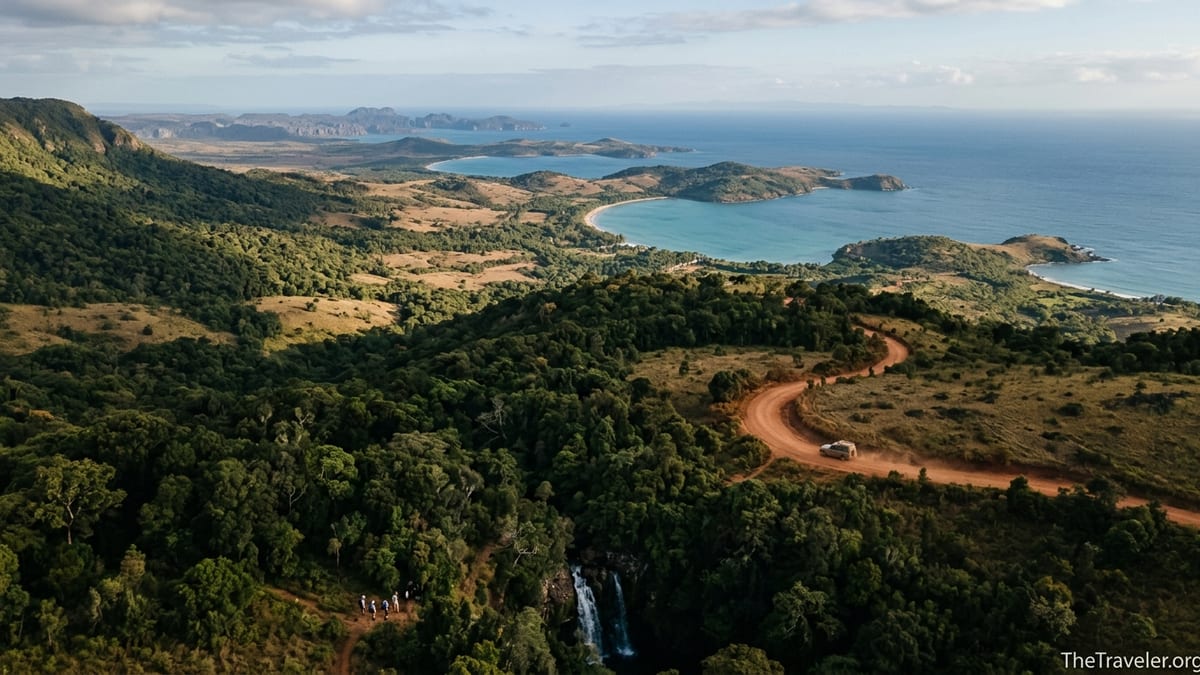
The Classic Northern 4x4 Circuit in Practice
When operators talk about a “northern circuit,” they usually mean a loop that connects Diego Suarez (Antsiranana), Amber Mountain National Park, the Red Tsingy formations, Ankarana National Park and the port of Ankify, often with a boat link to Nosy Be. Many travelers either start in Diego Suarez after a domestic flight from Antananarivo, or begin on Nosy Be and travel inland before returning to the island. Typical examples include 7 to 12 day trips sold by European and Malagasy agencies that follow a similar backbone: Diego Suarez and the three bays, one or two days in Amber Mountain, Red Tsingy as a scenic stop, then two days of hiking and cave visits in Ankarana before heading toward Nosy Be.
Most northern circuits are run as private 4x4 tours with an English or French speaking Malagasy driver guide. Operators such as RijaTours, Mada Assist and several Diego based agencies specify that they use Toyota Prado or Hilux style vehicles with a maximum of four guests per car, fuel included and luggage on a roof rack or in the rear. On rougher laterite sections around Red Tsingy and between Ankarana and Ankify, this kind of high clearance 4x4 is not a luxury but almost essential, especially in the rainy season from about December to March.
Pricing reflects this private setup. As of mid 2026, a 10 day Diego to Nosy Be circuit including Amber Mountain, Red Tsingy and Ankarana with mid range hotels often starts around 1,600 to 2,000 euros per person when two people travel together, dropping slightly per person if three or four share the vehicle. Shorter 4 to 6 day circuits that begin and end on Nosy Be, like those marketed by Nosy Be based agencies, are usually cheaper because they cut out internal flights and include fewer national park days, though you should still budget at least several hundred euros per person for a fully supported private tour.
Group departures do exist, particularly with European operators that charter fixed date trips with 8 to 12 participants, but these are rarer in the north than in Madagascar’s more established southern RN7 route. In practice, many “group” dates only go ahead if a minimum number of travelers book, and are converted into private trips if numbers stay low. If your priority is flexibility for photography or birding, a private circuit is easier to arrange and will not cost dramatically more once split between two or three people.
What Actually Happens at Amber Mountain
Amber Mountain National Park, known locally as Montagne d’Ambre, is often the first wildlife stop on a northern circuit after Diego Suarez. The park protects a cool, montane rainforest on a volcanic massif above the dry lowlands, and tours usually include at least one full day and one night there. After a 45 minute to one hour drive from Diego up to the small town of Joffreville, most operators book small lodges or guesthouses such as simple bungalows or converted colonial houses, then use park licensed guides for day walks.
A standard Amber Mountain day on a tour combines 3 to 5 hours of walking on park trails with frequent stops to look for wildlife. Guides focus on easy to reach waterfalls and crater lakes where crowned lemurs, Sanford’s brown lemurs and various chameleons are commonly seen, along with leaf tailed geckos and endemic frogs. On a typical itinerary, you leave the lodge after breakfast, drive a short way to the park entrance, then walk a loop trail before returning mid afternoon for a late lunch or coffee in Joffreville. More active hikers can extend this to longer circuits that take in higher viewpoints and more remote waterfalls.
Night walks are one of Amber Mountain’s main selling points, and most tour packages either include one in the price or list it as an optional extra. Local practice varies, but often the night walk is just outside the formal park boundary along the access road, where guides use headlamps to find mouse lemurs, chameleons and other nocturnal species in the roadside forest. The experience can feel busy in peak season because several groups use the same stretch of road, so private circuits sometimes arrange a slightly earlier or later start to avoid the main crowd.
In terms of inclusions, operators usually cover the park entrance fee, mandatory local guide, and packed lunch or picnic, while drinks and tips for guides are extra. It is worth checking how many guided walks are actually included, since some cheaper circuits offer only one morning in the park before pushing on to Red Tsingy, which can feel rushed if wildlife is a priority. Ask your operator to specify walking hours and difficulty, and mention if you want slower photography focused guiding or child friendly options.
Red Tsingy and the Road Between Diego and Ankarana
The Red Tsingy, or Tsingy Rouge, is a compact but highly photogenic stop between Diego Suarez and Ankarana. Rather than a national park, it is a landscape of eroded red laterite pinnacles reached by a rough side track off the main road near the village of Sadjoavato. Most northern circuits schedule Red Tsingy as a half day detour during a longer driving day, leaving Diego after breakfast, reaching the site in late morning, then continuing on toward Ankarana in the afternoon.
At the site itself, visitors usually park at an upper viewpoint for a panoramic look over the pinnacles, then descend on foot to walk among the formations at the base. Paths are short and suitable for most fitness levels, though they can be dusty and slippery after rain. Tours led by both local agencies and foreign operators tend to spend one to two hours here, enough time for photos in different light and a slow wander through the formations. Because the access road can become muddy, some itineraries mention that this stop is “weather permitting,” and operators may skip it in heavy rain to avoid getting stuck.
Transport between Diego, Red Tsingy and Ankarana is almost always by private 4x4 with driver in organized tours. Public taxis brousse do connect these points but are slow and uncomfortable, and many travelers on tight schedules find that a chartered vehicle is the only realistic way to include Red Tsingy. When comparing tour offers, check whether your quote includes the detour fee and local entrance charges at Tsingy Rouge, which some agencies keep separate from their headline price.
Accommodation on this leg of the journey is usually either one more night in Diego Suarez, or a simple hotel in or near Ankarana if the group prefers to push through in one day. A common pattern is to leave Diego, visit Red Tsingy for a few hours, then reach a rustic lodge on the edge of Ankarana by late afternoon. These lodges might have basic en suite bungalows, mosquito nets and a restaurant, but power is often from generators and hot water can be intermittent, something that more polished brochures do not always stress.
Ankarana: Tsingy, Caves and Wildlife Circuits
Ankarana National Park, also known as Ankarana Special Reserve, is the centerpiece of many northern tours thanks to its dramatic grey tsingy limestone formations, sinkholes and cave systems. Once based at a lodge on the park fringe, tours usually allocate at least one full day of guided hiking inside the park, and better quality itineraries include two days to allow time for both short and longer loop trails. Park management requires the use of local guides, and most operators arrange these in advance or on arrival, adding porter support for longer or hotter walks.
On a typical first day in Ankarana, guides lead groups along relatively gentle trails to viewpoints over the tsingy and to suspension bridges that cross razor sharp limestone pinnacles. Wildlife sightings can include crowned and Sanford’s brown lemurs, various chameleons and ground dwelling birds, though the scenery is often the main focus. Temperatures are significantly hotter than Amber Mountain, especially around midday, so tours often start early, rest at camp restaurants in the heat of the day, then resume short walks in late afternoon.
Many itineraries also offer cave visits where the terrain allows. Some caves in Ankarana house bat colonies and sacred sites for local Antankarana communities, so guides may explain cultural rules such as removing hats or not pointing at certain formations. Travelers should be prepared for humid conditions, low ceilings and the need to watch their step, but tour operators usually match cave visits to the fitness and comfort levels of their guests. If you are claustrophobic or have knee issues, it is essential to say so in advance so that your guide can select the right circuit.
Accommodation styles around Ankarana range from basic bungalows with shared facilities to mid range lodges with private bathrooms and a pool. Some European marketed tours name specific properties in their downloadable itineraries, while others use phrases like “lodge near the park” and retain the flexibility to switch suppliers. If reliable power, mosquito screening and bed quality are important to you, ask your operator for recent photos and check independent traveler reviews for the exact lodge they plan to use, since standards can vary considerably even within the same price band.
Diego Suarez and Diego to Nosy Be Routes
Diego Suarez itself is not just a transit hub. Most northern circuits spend at least one night in this colonial era port town, now officially called Antsiranana, to explore its spectacular bay and nearby viewpoints. Typical tour inclusions are a half or full day excursion to the “three bays” east of town, visiting Sakalava Bay, Pigeons Bay and Dunes Bay with views of the Sugar Loaf islet, and sometimes a boat or pirogue trip on the Emerald Sea lagoon when weather allows. Travelers can expect simple seaside lunches, time for swimming and beach walks, and short off road drives to reach viewpoints.
Several operators also offer day hikes on Montagne des Français, a limestone hill with dry forest and lookout points over the bay. This is often sold as an optional half day activity from Diego, appealing to hikers who want extra walking beyond the main circuit parks. For travelers who value cultural context, some Diego based agencies add short city walks that take in the old colonial buildings, local markets and Antankarana neighborhoods, though these are rarely highlighted in international marketing and may need to be requested.
The overland link between Diego Suarez and Nosy Be is now one of the most requested routes in the north. It typically involves driving south through Ambilobe and the Sambirano valley to Ankify, then taking a 30 to 45 minute boat across to Nosy Be. Many published itineraries schedule this travel day after a final night near Ankarana, making the most of the paved sections while accepting that potholes and occasional delays are part of the experience. Companies like Madagascar Circuits and Détours Madagascar spell out that they provide private 4x4 transport with fuel and driver included up to Ankify, with only the boat crossing and Nosy Be transfers handled separately.
Some Nosy Be based outfits sell the same route in reverse as a one week Diego and Nosy Be combination, beginning with several days on the island then continuing to Ankarana and Amber Mountain before returning to Nosy Be or flying out from Diego. In all cases, travelers should examine whether park entrance fees, guiding, and the boat transfer to Nosy Be are in the base price or listed as extras. Boat conditions and safety standards can vary, so it is reasonable to ask which type of vessel is used, whether life jackets are provided and if departures are rescheduled in rough seas.
Hiking Focused Itineraries and Wildlife Specialist Trips
While many northern circuits are designed for general interest travelers with moderate fitness, a growing number of operators promote more hiking focused or wildlife specialist itineraries. These trips often add extra days in Amber Mountain and Ankarana, include lesser visited reserves such as Montagne des Français, or extend east toward Marojejy and Daraina for serious trekkers and birders. A sample 12 to 14 day “northern explorer” program might spend three nights in Joffreville with full day hikes in Amber Mountain, two or three days walking in Ankarana, and an extra day dedicated to birdwatching or nocturnal species with specialist guides.
On the ground, hiking focused tours differ in pace more than in route. Instead of combining long drives with short walks every day, they cluster longer walks and keep driving days distinct, which reduces fatigue. For example, a hiking trip might schedule a full 7 to 8 hour day on one of Amber Mountain’s longer circuits to remote waterfalls, followed by a quiet transfer day, and then a day of cave and tsingy exploration in Ankarana that uses more adventurous paths and ladders. These itineraries also tend to emphasize early starts, picnic lunches carried in daypacks, and more detailed briefings about trail conditions.
Wildlife specialist circuits in the north commonly target chameleons, leaf tailed geckos, lemurs and sometimes specific birds. Operators that cater to photographers or naturalists often book named guides in Amber Mountain and Ankarana who have a track record with these interests, while building in repeated visits to the same habitats to improve chances of sightings. Night walks can be doubled, for example one around Joffreville and another near Ankarana, and itineraries might avoid the busiest local holiday periods when trails are crowded. Prices for such specialist trips are usually higher because of additional guiding fees, longer park stays and, where relevant, extra internal flights to reach remoter trekking areas beyond the core northern loop.
If you are considering a hiking or wildlife specialist circuit, it is important to be candid about your fitness, experience with heat and rough terrain, and any injuries. Northern Madagascar trails can be steep, rocky and hot, and many are not equipped with railings or boardwalks. Before booking, ask the operator for daily walking distances and elevation gains expressed in hours and meters, not just in broad labels like “easy” or “challenging,” and request that they confirm these details in writing in your final itinerary.
Nosy Be and Beach Extensions from Northern Circuits
Almost every modern northern circuit either starts or finishes on Nosy Be, the volcanic island off the northwest coast known for its sheltered beaches and island hopping. Tour operators usually position Nosy Be as a decompression stop after several days of driving and hiking. A classic pattern is one week on the mainland between Diego, Amber Mountain and Ankarana, then three to four nights on Nosy Be or nearby islands such as Nosy Komba or Nosy Tanikely, staying in a beach hotel or small resort.
Beach extensions vary widely in style and price. Budget friendly tours may include simple bungalows on the sand near Ambatoloaka or Madirokely beaches, with breakfast only and optional day trips for snorkeling or whale watching sold locally. Mid range and higher end circuits often incorporate more secluded lodges with half board or full board, pools and organized excursions such as diving in the Nosy Tanikely marine reserve or boat days to white sand islands like Nosy Iranja. Some European operators quote separate price supplements for specific properties, letting clients decide how much of their budget to allocate to the Nosy Be portion.
Most mainland based operators include only the transfer to Ankify and the boat crossing in their northern circuit price, then either hand clients over to a Nosy Be partner agency or leave hotel choice open. When reviewing offers, be sure to check whether airport transfers on Nosy Be, local tourism taxes and marine park fees are included. These extras can add noticeably to the final bill. It is also worth confirming whether you can shorten or extend the beach segment without penalty, especially if you are using Nosy Be as a base for diving courses or family visits.
Weather and seasonality play a large role in beach extensions. The driest, sunniest period around Nosy Be is typically from about late April to November, with calmer seas and better underwater visibility. Christmas and New Year weeks see higher accommodation prices and heavier demand, while parts of January to March can bring heavy rain and cyclones that affect both sea conditions and inland roads. Reputable tour operators will advise against certain crossings or reschedule boat departures if safety is a concern, so it pays to work with agencies that have up to date local knowledge rather than relying solely on static brochures.
What Is Usually Included and How to Compare Offers
At first glance, many northern Madagascar tours look similar, but their inclusions and conditions can differ in important ways. In general, reputable operators include private 4x4 transport with driver, fuel, accommodations on a bed and breakfast or half board basis, and the services of local park guides on scheduled walks. National park entrance fees are sometimes bundled into the price, particularly in mid range and higher end packages, but some budget and Nosy Be based circuits list them as “paid locally,” which can be a surprise cost once converted from Malagasy ariary.
Internal flights, such as Antananarivo to Diego Suarez or Antananarivo to Nosy Be, are often excluded or quoted separately due to fluctuating fares. When comparing offers, always note whether domestic flights are included in the headline price, and if not, which airline and typical fare range the operator assumes. Accommodation descriptions deserve careful reading too. Terms like “standard hotel” or “lodge” can mean anything from a simple, fan cooled room with cold water to an upmarket eco lodge with reliable hot showers. Ask for the exact property names and a clear explanation of room categories to avoid mismatched expectations.
Meal plans can also lead to confusion. Some northern circuits include dinners in remote areas like Joffreville and Ankarana, where there are few alternative restaurants, but switch to bed and breakfast only in Diego and Nosy Be where there is more dining choice. If you prefer to avoid surprise meal bills or have dietary requirements, request that your operator specify in writing which meals are included each day. For drinks, tips and optional activities like extra night walks or boat excursions, it is safer to assume they are excluded unless clearly indicated otherwise.
Contract terms matter as much as the itinerary itself. Before booking, ask about payment schedules, refund policies, and what happens if domestic flights are rescheduled or a road becomes impassable. Some agencies provide alternative activities or route changes at no extra cost in such cases, while others charge supplements. Insurance for medical evacuation and trip interruption is almost always your responsibility as the traveler and should be arranged independently, but a good operator will confirm that they have emergency contacts, communication tools and contingency plans in the north, where infrastructure can be fragile.
Private vs Group Travel and Key Booking Checks
Choosing between a private 4x4 circuit and a group departure in northern Madagascar mainly comes down to flexibility, budget and tolerance for compromise. Private tours offer the freedom to set your own pace on walks, stop for photos when you want and adjust the program on the fly within reason. They also work well for families and couples who prefer consistent guiding and vehicle comfort. The main drawback is cost per person when traveling solo or as a pair, since vehicle and driver expenses do not scale down easily.
Group departures, when available, spread these fixed costs among more people and can create a social atmosphere, but they operate on fixed dates and usually cannot deviate from the published schedule. In a mixed ability group, hikes will default to the slowest pace, and activities like night walks might be limited to what suits everyone rather than what a keen photographer or birder might prefer. Some international operators combine a group format in the mainland portion with free time on Nosy Be, giving a halfway option between structure and independence.
Whatever format you choose, there are several key points to check before booking. First, verify that your operator is physically based in Madagascar or works with a clearly identified local partner, since on the ground knowledge is crucial in a region where road and weather conditions change quickly. Second, ask how experienced the driver guide is on the exact route you are booking, and whether you will have the same vehicle and driver throughout. Continuity makes a big difference to both safety and enjoyment on rough roads.
Third, seek clarity about language skills, especially if you need fluent English rather than basic guiding phrases. Fourth, confirm the maximum number of passengers per vehicle in a group tour and whether there is space for luggage without cramping the seating. Finally, request a detailed day by day program that spells out driving hours, main activities and what is included on each day. Having this level of detail in writing not only helps you compare different offers like for like, but also protects you if the delivered trip later diverges significantly from what you were sold.
FAQ
Q1. How many days do I need for a northern Madagascar circuit with Nosy Be?
Most travelers allow 9 to 12 days to combine Diego Suarez, Amber Mountain, Red Tsingy, Ankarana and a short Nosy Be beach break. If you have only a week, you can still visit Amber Mountain and Ankarana then finish with one or two nights on Nosy Be, but you will need to accept some long driving days.
Q2. What is the best time of year to visit northern Madagascar?
The most comfortable period is generally from about late April to November, when roads are drier, temperatures are moderate and sea conditions near Nosy Be are calmer. December to March brings heavier rain, higher humidity and greater risk of cyclones, which can affect both park access and boat crossings.
Q3. Are private 4x4 tours much more expensive than group trips?
Private 4x4 tours do cost more per person, especially for solo travelers, but when two or three people share a vehicle, the price gap with small group tours narrows. Many so called group departures in the north anyway run with low numbers and operate almost like private trips, so it is worth asking agencies how they handle small group sizes before deciding.
Q4. Do I need to be very fit to hike in Amber Mountain and Ankarana?
Most standard circuits use moderate walks of 3 to 5 hours on well used trails that are manageable for reasonably active travelers. However, paths can be steep, rocky and hot, especially in Ankarana, and longer or more remote circuits require better fitness. If you have knee, heart or balance issues, speak up early so your operator can choose easier routes and allow extra time.
Q5. Can I book national park visits locally instead of through a tour operator?
It is possible to arrange park visits on your own once you are in Diego Suarez or Joffreville, hiring a local driver and guide for Amber Mountain or Ankarana. However, public transport is slow and information can be patchy, so most travelers on limited schedules prefer to pre book at least their 4x4 transport and a basic framework of accommodation to avoid losing days to logistics.
Q6. What type of accommodation should I expect on a northern circuit?
Outside Nosy Be and Diego Suarez, accommodation is generally in small lodges or bungalow style hotels with simple but comfortable rooms, mosquito nets and private bathrooms. Power may come from generators, and hot water or air conditioning is not guaranteed at lower price points. In Diego and Nosy Be, you can choose from a wider range, from basic guesthouses to boutique beach resorts.
Q7. Are park fees and guides usually included in tour prices?
Mid range and higher end northern circuits often include park entrance fees and compulsory local guides in Amber Mountain and Ankarana within the package price. Some budget oriented offers leave these as extras to be paid in cash on site. Always ask your operator to list clearly what is included and roughly how much you should budget for any excluded park costs.
Q8. Is it safe to travel between Diego Suarez, Ankarana and Nosy Be?
These routes are well used by both locals and tourists, and most visitors complete them without incident when using reputable operators and daylight driving. The main risks are road conditions, occasional delays and minor theft in crowded places, so standard precautions like keeping valuables out of sight and not traveling at night on remote stretches still apply.
Q9. How far in advance should I book a northern Madagascar tour?
For travel in the main dry season between June and October, it is wise to book three to six months in advance, especially if you want specific lodges or a particular Nosy Be resort. Shoulder season trips in May or November can sometimes be arranged closer to departure, but domestic flights and small lodges still fill up during holiday periods.
Q10. What should I ask a tour operator before paying a deposit?
Key questions include the exact day by day itinerary, what vehicle will be used, maximum group size, which accommodations are planned, what is included and excluded, and how they handle disruptions such as flight changes or impassable roads. You should also ask about payment terms, refund conditions and whether they work directly with local guides and drivers or subcontract the entire trip to another agency.