


Northern Madagascar has quietly become one of the country’s most rewarding road trip regions. A newly improved highway now links the port city of Diego Suarez with the cacao country around Ambanja and the ferry point for Nosy Be at Ankify, turning what was once a punishing overland slog into a manageable itinerary that combines rainforests, limestone massifs, red canyons and island gateways. This guide focuses on the RN6 corridor between Diego Suarez, Ankarana, Ambilobe, Ambanja and Ankify, with practical advice on driving conditions, 4x4 needs, fuel, drivers, and where to sleep along the way.
Understanding the RN6 Corridor Today
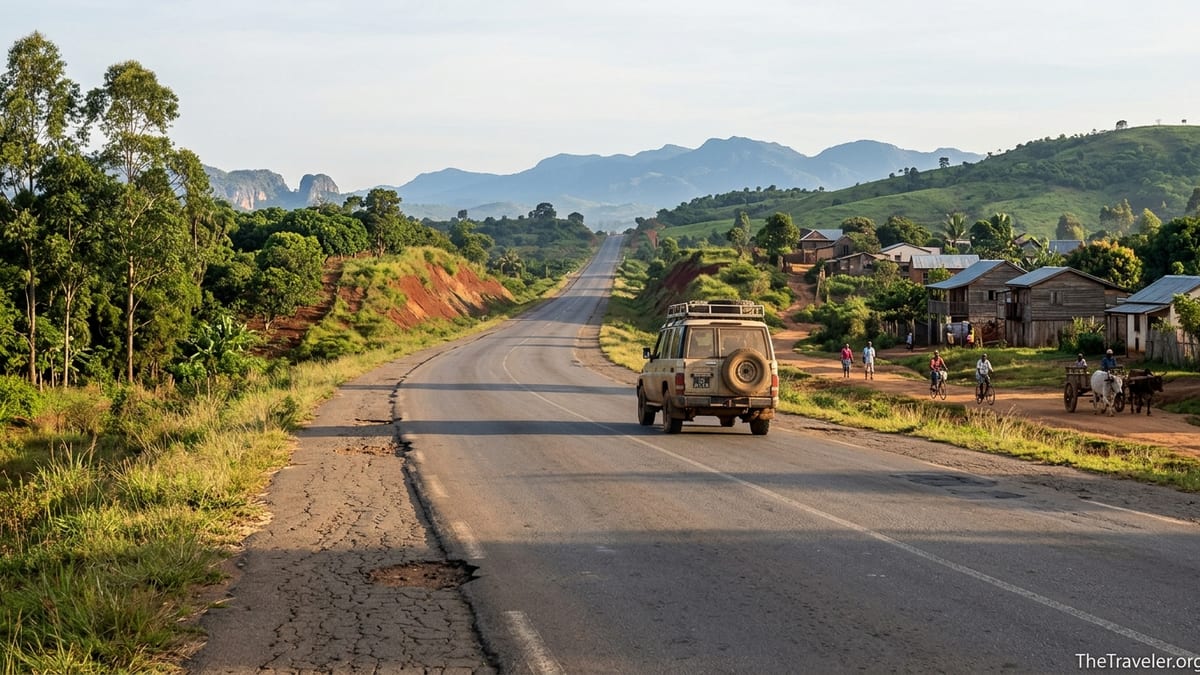
The RN6 remains the backbone of any northern Madagascar road trip. It runs roughly 700 kilometers from Antsiranana (Diego Suarez) south to Ambondromamy, but most travelers focus on the northern section between Diego, Ankarana, Ambilobe, Ambanja and Ankify. Over the past few years, large sections of this highway have been resurfaced, and by late 2025 local authorities were reporting that around 90 percent of the Ambanja to Diego stretch was covered with new or good-quality bitumen. In practice, this means far fewer axle-breaking potholes than in the early 2020s, and a realistic average of 50 to 60 km/h on the better segments in the dry season.
Even with improvements, you should still think of the RN6 as a remote African highway rather than a European-style express road. Heavy trucks, zebu carts and pedestrians share the tarmac, and some sections between Ambilobe and Ankarana remain scarred by old potholes and ongoing repairs. Following a major cyclone in 2024, bridges over rivers between Ambanja and Ambilobe were damaged, and while temporary solutions and ferry crossings keep traffic flowing, these bottlenecks can still add delays and seasonal complications. It is essential to check the latest local advice in Diego or Ambanja before committing to long drives, especially at the tail end of the rainy season.
By contrast, the spur road from the RN6 to Ankify has seen a marked upgrade. Instead of the old route that zigzagged through Ambanja town and muddy plantations, a newer paved road now branches off north of Ambanja and cuts through cacao estates and mangroves to reach Ankify. This has transformed access to the Nosy Be ferry. Where the journey from Diego to Ankify might once have been broken into three grueling driving days, confident drivers can now realistically cover Diego–Ankify in one very full day in the dry season, or in a more comfortable two days with an overnight at Ankarana or Ambanja.
Route Overview and Realistic Driving Times
Driving times on the RN6 vary with the season, daylight and the vehicle you use. In the cool, dry months from June to September, a private 4x4 with an experienced driver can cover Diego Suarez to Ankarana in around 4 to 5 hours of steady driving, including the detour to Amber Mountain or the Red Tsingy if planned smartly. From Ankarana to Ambilobe is usually 1.5 to 2 hours, and Ambilobe to Ambanja often takes 3 to 4 hours depending on the current state of river crossings and any temporary works. The last paved leg from Ambanja to Ankify is roughly 40 to 60 minutes on the improved road, more if you stop in the cacao plantations and roadside villages.
Public transport is slower but gives a more local experience. The standard option is the taxi brousse, a shared minibus or pickup that only departs when full and can stop frequently to load cargo. A run from Ambanja to Diego Suarez that might take 6 hours in a private vehicle can easily stretch to 8 or more hours by taxi brousse, especially if you travel near market days when minivans fill slowly and stop often. For travelers on tight itineraries, it is wise to treat public transport times as approximate and add a full buffer day when connections to domestic flights or Nosy Be ferries are involved.
Driving at night is strongly discouraged. The RN6 is poorly lit, livestock often graze at the roadside, and local trucks may run without reliable rear lights. Plan your days so you leave Diego or Ankify soon after sunrise, build in a long lunch stop around Ambilobe or Ankarana, and aim to be at your next lodge before dusk. As an example, a sensible two-day northbound itinerary might see you leave Ankify at 8 a.m., reach Ambanja by mid-morning, pause in Ambilobe for lunch, and arrive at an Ankarana lodge by late afternoon. The next day you could explore the park in the morning and continue to Diego in time for sunset over the bay.
Diego Suarez as a Northern Hub
Diego Suarez, still widely known by its colonial-era name, is the natural starting or finishing point for northern road trips. Its deep natural harbor, wide bay and colorful downtown make it more than a simple transit stop, and the city has a broader range of hotels and services than anywhere else in the region. Mid-range stays like waterfront guesthouses near the harbor or small boutique hotels uphill from the main market typically charge moderate nightly rates and can arrange airport transfers, currency exchange guidance and early-morning departures along the RN6.
Diego is also where you can organize side trips to the Emerald Sea, the Three Bays and the heavily forested plateau of Amber Mountain National Park. Many travelers choose to base themselves in Diego for two or three nights, hire a local driver-guide for a full-day excursion to Amber Mountain, then set out along the RN6 toward Ankarana on the following morning. Several tour companies in town offer combined packages that include a 4x4, driver, national park entrance fees and a picnic lunch, which can be convenient if you are acclimating to Madagascar’s driving conditions or arriving from a long-haul flight.
For self-drivers, Diego is the place to stock up. Supermarkets and neighborhood shops carry dry goods, snacks, bottled water and basic car supplies such as engine oil and coolant. Smaller fuel stations in Diego are more likely to have reliable supplies of both gasoline and diesel compared with roadside pumps further south, so many travelers refuel to a full tank here before heading towards Ankarana and beyond. You can also ask hotel staff or local guides for up-to-date information on any disruptions south of Ambilobe, such as ferry operating hours or temporary load limits on bridges.
Side Trips: Amber Mountain and the Red Tsingy
Amber Mountain National Park sits about 30 kilometers south of Diego Suarez on a side road off the RN6, and the access road is one of the more forgiving in the region. The turnoff is signposted and the paved road climbs steadily into cooler, misty forest. A standard high-clearance vehicle can usually reach the main park entrance without difficulty in the dry season. Many visitors arrange a day trip from Diego, leaving around 7:30 a.m., entering the park by mid-morning for guided walks through the rainforest and crater lakes, and returning to Diego by early evening.
The Red Tsingy, by contrast, requires more preparation. These vivid red and orange sandstone pinnacles lie off a rough track that branches from the RN6 roughly 45 kilometers south of Diego. The access road is about 15 to 20 kilometers of unpaved track that can become deeply rutted or muddy after rains, with a few small watercourses and sandy sections. Local authorities and operators still recommend a 4x4 for this segment, and many self-drive rental contracts specify that only certain vehicle classes are allowed on this type of track. A typical visit from Diego involves 2 to 3 hours of driving each way plus 1 to 2 hours on site, where basic picnic shelters and viewpoints have been installed.
Combining Amber Mountain and the Red Tsingy in a single day is usually too ambitious by road, especially if you want time for walks and photography. A more comfortable plan is to dedicate one full day to Amber Mountain from Diego, then schedule the Red Tsingy as a stop on your southbound journey to Ankarana. For instance, you might leave Diego around 7 a.m., reach the Red Tsingy track by mid-morning, explore for a couple of hours and still arrive at an Ankarana lodge before dark. Factor in extra time if you are driving yourself and unfamiliar with Malagasy road signs and unmarked junctions.
Ankarana, Ambilobe and Ambanja: Life Along the RN6
The limestone plateau of Ankarana is one of northern Madagascar’s main drawcards, known for its grey tsingy pinnacles, caves, underground rivers and rich populations of lemurs and chameleons. The main park entrance lies just off the RN6, and a small cluster of lodges and simple hotels has grown up nearby. Most are spread along side roads leading toward the park, offering a mix of thatched bungalows and basic rooms. It is common to stay here for two or three nights, using one full day for shorter walks closer to the entrance and another for a longer circuit to suspension bridges or viewpoint ridges.
Ambilobe, further south, feels more like a working junction town than a tourism hub. It sits near the intersection with the RN5A that leads east toward the less-visited northeast coast. The town itself is busy and dusty, with markets, a few basic hotels and informal eateries. For many travelers, Ambilobe acts as a service center rather than a scenic base: a place to top up fuel, withdraw cash from a bank ATM if functioning, and buy fruit or fresh bread for the onward journey. Because of damaged bridges near the town following recent cyclones, travel times between Ambilobe and Ambanja can fluctuate, with temporary ferries sometimes replacing fixed crossings during repair phases.
Ambanja marks the transition into cacao country and has a distinctly greener feel. Low hills around the town are laced with plantations that supply beans for export and for artisanal chocolate producers in Madagascar and abroad. Several guesthouses and small hotels in Ambanja offer comfortable overnight stops for travelers who want to break the journey between Diego and Ankify, and some arrange half-day excursions by car or on foot into nearby plantations and villages. If you are traveling southwards, Ambanja is also the last sizable town before Ankify, making it a good place to confirm ferry schedules, buy snacks and check on any updates regarding the Ankify causeway or Nosy Be crossings.
Ankify and the New Connection to Nosy Be
Ankify is a small port village on a finger of land reaching out toward Nosy Be, and in road-trip terms it is your last stop before you switch from tarmac to sea. The road linking Ambanja and Ankify used to be notorious for potholes and muddy ruts, especially where it skirted mangroves, but recent improvements have dramatically shortened travel times and made the drive more predictable. Today, most of the route is paved and in fair to good condition, with only occasional rough patches as you approach the port area.
This more reliable road has reshaped northern itinerary planning. Where many visitors once flew in and out of Nosy Be and rarely ventured onto the mainland, it is now increasingly common to land in Nosy Be, take the one-hour boat crossing to Ankify, meet a driver at the port and continue by road to Ambanja, Ankarana and Diego. The reverse direction works just as well: arriving by domestic flight to Diego, exploring Amber Mountain and Ankarana over several days, then driving to Ankify and crossing to Nosy Be for a few days of beach time. The smoother Diego–Ankify connection means you can realistically combine rainforest, tsingy and islands in a 10- to 14-day trip without excessive time lost to transfers.
In Ankify itself, accommodation is limited but atmospheric. A handful of small beachside lodges and bungalows fringe the shore between the main jetty and nearby coves, offering simple rooms with mosquito nets, ceiling fans and often direct access to the sand. Rates are moderate by regional standards, and many places include dinner of freshly caught fish or prawns. Because ferry schedules to Nosy Be can shift with weather and demand, it is smart to plan at least one night in Ankify either before or after your crossing, rather than relying on a same-day overland drive and boat transfer to match a domestic or international flight.
Self-Drive Versus Private Driver
Choosing between self-drive and hiring a private driver is one of the biggest decisions for travelers tackling the RN6. Self-drive offers flexibility and a sense of adventure, but Madagascar’s roads can be demanding. Potholes, livestock, sudden speed bumps at village entrances and limited signage all require constant attention. If you opt for self-drive, a robust diesel 4x4 with high clearance is strongly recommended, especially if you intend to visit the Red Tsingy or explore minor side roads to remote lodges. Some international and regional operators with offices in Antananarivo or Diego specialize in rental 4x4s prepared for local conditions, often complete with basic tools and recovery gear.
A private driver remains the more popular option for most visitors. Daily rates for a vehicle with driver are higher than a bare rental car but usually include the driver’s accommodation and meals when booked through local agencies. This arrangement takes the stress out of navigating unmarked junctions, negotiating crossings if bridges are under repair and dealing with any police checkpoints along the RN6. It also lets you enjoy the scenery and keep a flexible schedule; if the driver learns that a ferry crossing is congested or that roadworks are causing a delay, they can often suggest alternative stopovers or adjust departure times.
Insurance and responsibility are also easier with a driver. Many self-drive rental contracts in Madagascar exclude coverage for damage on unpaved tracks or restrict access to certain regions, particularly in the wet season. If you damage a vehicle on a side road to the Red Tsingy, for example, you may be liable for the full cost of repair. With a driver from a reputable local agency, any such risks are usually factored into the contract, and the driver will be better able to assess whether a track is safe on a given day. For first-time visitors or those with limited French or Malagasy, hiring a driver for at least the first week in the north can be a wise compromise between independence and security.
Fuel, Supplies and Practical Safety Tips
Fuel is generally available along the RN6, but supply is not always guaranteed at smaller stations and informal roadside vendors. Diego Suarez, Ambilobe and Ambanja have official fuel stations where both diesel and gasoline are usually available, although short-lived shortages can occur. The best practice is to keep your tank at least half full whenever possible, especially before leaving Ambanja for Ankify or Ankarana for Diego. If you are driving a diesel 4x4, consider carrying a small, approved jerrycan as a backup, but be conscious that some rental agencies restrict how fuel can be transported.
Outside the main towns, services are basic. Simple roadside restaurants serve rice dishes, grilled meat or fish and seasonal vegetables, while small stalls sell fruit, biscuits and bottled drinks. These are fine for lunch stops, but they may not meet all dietary needs or hygiene expectations. Many travelers stock up on snacks, water purification tablets and any specialty items in Antananarivo or Diego before heading north. Pharmacies in Diego and Ambanja carry a limited range of medications, but you should bring any personal prescriptions and a compact first-aid kit from home.
Security on the RN6 has generally been better than on some western and southern routes, but normal caution is still important. Attempt to drive only during daylight, lock your vehicle in towns and do not leave valuables visible when you park. Police checkpoints are a routine feature of long-distance driving in Madagascar; drivers should carry all vehicle papers, and foreign passengers should keep passport copies handy alongside their originals. When in doubt, having a local driver who understands procedures and language can simplify these encounters considerably.
Where to Sleep Along the RN6
Accommodation standards along the RN6 vary widely, from characterful eco-lodges near national parks to basic town hotels that cater more to local traders than to tourists. In Diego Suarez, you will find the broadest spread, including mid-range hotels with air-conditioned rooms, small pools and harbor views, as well as budget guesthouses clustered around the town center. Booking at least your first and last nights in Diego ahead of time is recommended, particularly in the July to September peak when both domestic tourists and international visitors converge on the region.
Near Ankarana, several lodges have positioned themselves as nature-focused bases, with bungalows set in dry forest or on the edge of tsingy outcrops. These often include half-board meal plans given the lack of independent restaurants nearby, with dinner menus featuring local chicken, zebu steaks and fresh vegetables. Electricity can be limited to generator hours in the evening, and some properties rely on solar power, so charging electronics during the afternoon may require planning. Despite the rustic setting, these lodges are often the highlight of a northern itinerary, offering early-morning walks and night walks with local guides.
Ambilobe and Ambanja provide simpler but useful overnight options. In Ambilobe, basic town hotels offer en-suite rooms with fans and mosquito nets, suitable for a one-night stop when road conditions or bridge repairs delay progress. Ambanja has a few more comfortable guesthouses with garden courtyards and shaded verandas, popular with travelers pausing before or after Ankify. In Ankify, expect small-scale seaside lodges where power supply can be intermittent but sunsets over Nosy Be compensate. Given the variability in comfort and reliability, it is wise to read recent traveler reports or ask your operator for updated recommendations rather than relying on outdated guidebook listings.
The Takeaway
The RN6 corridor between Diego Suarez, Ankarana, Ambilobe, Ambanja and Ankify is no longer the punishing route it was a decade ago, but it still rewards patience and realistic planning. Progressive upgrades have made the Diego–Ankify connection significantly smoother, opening up new possibilities for itineraries that combine mainland parks and island beaches without complicated flight schedules. Yet this remains a region where weather, bridge repairs and local rhythms can reshape your plans, so flexibility and extra time are as valuable as a good 4x4.
For many travelers, the sweet spot is a mixed approach: a private driver for the main RN6 legs, allowing you to focus on scenery and wildlife, combined with a few short self-guided walks in parks and villages to experience daily life up close. Whether you start in Diego and drive south or land on Nosy Be and work your way north, the combination of Amber Mountain’s misty forests, Ankarana’s otherworldly tsingy and Ankify’s mangrove-fringed shorelines makes northern Madagascar a standout road trip destination. With sensible caution, up-to-date local advice and a willingness to slow down when the road demands it, the journey itself becomes as memorable as the places you stop.
FAQ
Q1. Do I really need a 4x4 to drive the RN6 between Diego and Ankify?
In the dry season a standard vehicle can usually manage the main RN6 itself, but a 4x4 is strongly recommended if you plan to visit the Red Tsingy, tackle rougher detours, or travel soon after heavy rains when potholes and muddy sections become more challenging.
Q2. How many days should I budget for a Diego to Ankify road trip?
A comfortable minimum is four to six days, allowing one night in or near Ankarana, one night in Ambanja or Ankify, and at least a full day for either Amber Mountain or the Red Tsingy, with extra time if you want longer hikes in the parks.
Q3. Is it safe to self-drive in northern Madagascar?
Experienced drivers used to rough roads can self-drive safely if they avoid night driving, keep speeds moderate and stay alert for livestock and pedestrians, but many visitors still prefer hiring a local driver who understands the road conditions, language and police checkpoints.
Q4. What is the best season for a northern Madagascar road trip?
The best period is typically from late May to October, when rainfall is lower, humidity is more manageable, and unpaved side roads to sites such as the Red Tsingy are more likely to be passable without deep mud or flooding.
Q5. Can I rely on finding fuel easily along the RN6?
You can usually refuel in Diego Suarez, Ambilobe and Ambanja, but smaller stations may occasionally run low, so it is wise to top up whenever your tank falls below half and ask locally about any temporary shortages before long stretches.
Q6. Are there ATMs and card payments available along the route?
ATMs are present in Diego Suarez and Ambanja and may be available in Ambilobe, though cash withdrawals are not always guaranteed; most lodges outside towns still prefer or require cash payments in local currency.
Q7. How do recent road improvements change planning around Nosy Be?
The upgraded road from Ambanja to Ankify has made it much easier to combine Nosy Be with mainland highlights, allowing travelers to land on the island, cross to Ankify and drive to Ankarana or Diego within a day or two instead of losing several days to unreliable transfers.
Q8. Is it possible to visit both Amber Mountain and the Red Tsingy on a tight schedule?
You can see both in three or four days by basing in Diego for Amber Mountain, then stopping at the Red Tsingy on your southbound drive to Ankarana, but each site deserves at least half a day on foot to be worthwhile.
Q9. What kind of accommodation should I expect near Ankarana and along the RN6?
Near Ankarana you will find simple but atmospheric lodges with bungalows, while Ambilobe and Ambanja offer basic town hotels and guesthouses, and Ankify provides small seaside lodges with limited but charming facilities.
Q10. Do I need to book accommodation and drivers in advance?
In the peak months of July to September and around local holidays it is advisable to book key lodges and drivers several weeks ahead, especially near Ankarana and in Ankify, while in shoulder seasons it is often possible to arrange services a few days in advance from Diego or Nosy Be.