


The Emerald Sea of northern Madagascar is one of those rare places that really does look like the postcards: a huge, shallow turquoise lagoon protected by coral reef, reached only by wooden boats that leave from the fishing village of Ramena and the port of Diego Suarez. Planning the trip, however, can be confusing, especially when local agencies also promote a separate “Three Bays” excursion on land. This guide explains, in practical detail, how Emerald Sea boat trips work, what to expect on the sandbanks and reefs, how to choose between private and shared excursions, and which questions to ask before you hand over any ariary.
Emerald Sea at a Glance
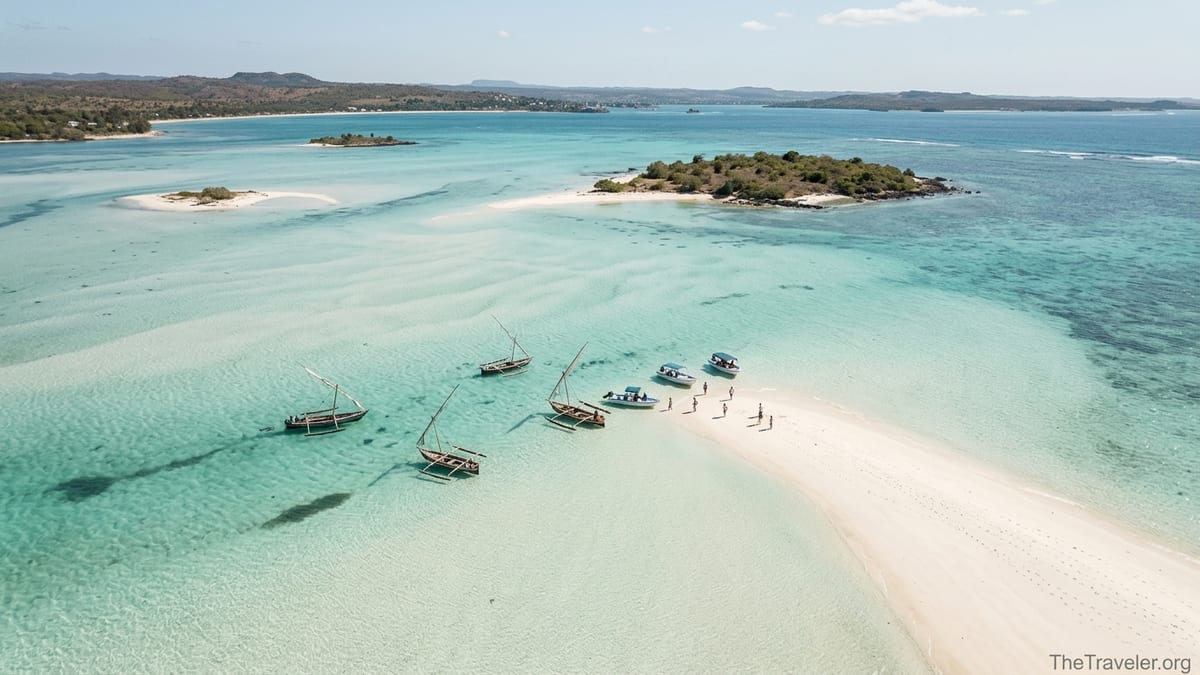
The Emerald Sea, known locally as Mer d’Emeraude, is a wide lagoon at the mouth of Diego Suarez Bay in northern Madagascar. Shallow water, a pale sandy bottom and a protecting coral barrier reef combine to create the distinctive milky turquoise color that gives the lagoon its name. The area is still relatively undeveloped, with only a few simple structures on the small islands and sandbanks, so most visitors come on a day trip by traditional sailing pirogue or small motorboat.
The lagoon lies north of the town of Antsiranana, still widely called Diego Suarez, and just offshore from Ramena, a small fishing and beach village about 20 minutes by road from town. Boats to the Emerald Sea depart from both Diego and Ramena, but Ramena is by far the most common starting point. From Ramena, the crossing to the lagoon takes around 45 to 60 minutes in a traditional wooden boat in normal conditions, passing through a narrow channel where the open Indian Ocean meets the bay.
Because the water is shallow and the seabed is largely sand, the Emerald Sea is known more for swimming, sandbanks and easy snorkeling than for deep reef diving. Expect ample time to wade, float and explore on foot between sandbars at low tide. The lagoon is also a popular playground for kitesurfers on windy days, especially from nearby kite lodges in Sakalava and Baie des Dunes, which often arrange special Emerald Sea excursions for their guests.
Trips run year-round, but the experience changes with seasons and wind. The drier, windier months, roughly May to October, bring stronger breeze and sometimes choppy crossings, while the wetter months can mean calmer seas but occasional heavy showers. In all seasons, departures are tied to the tides, which is why local operators will confirm your exact pick-up time only a day or two in advance.
How to Reach the Emerald Sea from Diego Suarez and Ramena
Most travelers base themselves either in Diego Suarez town or on Ramena Beach. From Diego, it is around 18 to 20 kilometers to Ramena along a paved coastal road. Small three-wheeled tuk-tuks (often called bajaj) and taxis run the route, and many guesthouses can arrange a car or shared transfer. Travel time is about 20 to 30 minutes depending on traffic and road works. If you are staying in Ramena already, you simply walk along the beach to meet your boat crew at the agreed landmark, often near the central fishing area or a known beachfront restaurant.
Several hotels and lodges in Diego Suarez, Ramena and Sakalava Bay work with the same pool of local boatmen. For example, a kite lodge in Sakalava Bay may include transfer by car to Ramena, then a traditional sailing boat onward to the Emerald Sea, with lunch on one of the islands. In one recent example, such a package from a kite resort included a car transfer to Ramena, around a 50 minute sail to the lagoon, and a grilled fish picnic, all bundled into a single day rate. This is typical of how local partners package the experience for guests.
If you prefer to arrange things independently, you can negotiate directly with boat captains on Ramena Beach. They typically cluster near the middle section of the beach where the fishing pirogues are pulled ashore. You might find a captain offering you a seat on a shared boat for roughly 50,000 to 80,000 Malagasy ariary per person for a full day, including a simple grilled fish lunch and non-alcoholic drinks. Rates vary widely with season, fuel prices and your bargaining, so think in ranges rather than hard numbers, and confirm exactly what is included in your price.
Travelers who want a more structured experience may book via a local agency in Diego Suarez. Several agencies quote approximate day-trip prices in euros, for example around 35 to 45 euros per person including lunch and equipment for snorkeling. These packages usually include hotel pick-up in town, the transfer to Ramena by car, the outbound and return boat ride, a fresh fish meal on an island and basic gear. The advantage is predictability and a guide who can translate, at a higher but still moderate cost compared with European prices.
Typical Day-Trip Structure: From Departure to Return
To plan your day, it helps to understand the rough shape of a standard Emerald Sea excursion. Operators set departure times according to tide and wind, but as a rule of thumb you depart Diego Suarez around 7:00 to 8:00 in the morning by car or tuk-tuk, reach Ramena half an hour later, and then board your boat. After a safety briefing that is usually informal rather than scripted, the crew pushes off and raises the sail or starts the engine for the lagoon crossing.
The first section of the trip skirts the coast before you reach the inlet where the bay narrows into a channel. This is often the bumpiest stretch, especially when strong trade winds blow in from the Indian Ocean and push against the outgoing tide. Some captains will pause near coral heads or calmer patches of water to let guests take their first swim or snorkel. Others head straight across and prioritize reaching the islands early, then schedule snorkeling stops later, when the light is higher and the water warmer.
Once inside the lagoon itself, the water turns a luminous turquoise and flattens out. Boats spread out among the islets, including small islands like Nosy Suarez and nearby sandbars that emerge at low tide. Here the day slows down. Your crew will typically set up a simple camp on the beach: a makeshift table, basic shade using a sail or palm branches, and a charcoal grill. While they clean and cook fish, lobsters or squid bought that morning at Ramena, you have free time to swim, walk around the island, or snorkel from shore over sea grass and scattered coral patches.
After lunch there is usually more free time. Some crews organize short walks to viewpoints on the small islands, where you can look back over the lagoon and see windsurfers and kites aloft in the distance. In the mid-afternoon, once the tide and wind are favorable, everyone reloads the boats for the return to Ramena. The way back can feel more adventurous, with chop and spray if the afternoon wind has strengthened. Many travelers describe the relief of passing back into the sheltered bay, followed by a slow glide into Ramena as the sun lowers over the coastline. Either your driver will be waiting to take you back to Diego Suarez, or you linger on the beach for a drink as the day cools.
Swimming, Snorkeling, Sandbanks and Meals
Water activities on an Emerald Sea trip are relaxed rather than highly technical. The lagoon is shallow; in many spots adults can stand with the water at waist or chest height, and you can walk between sandbars at low tide. This makes it suitable for families and less confident swimmers, though children should always wear life jackets when the boat is moving and be closely supervised near any current or deeper channel.
Snorkeling is usually done either directly off the beach of Suarez Island and neighboring islets, or from the boat over coral fingers near the channel. Expect to see colorful reef fish, sea cucumbers, occasional rays and, if you are lucky, a sea turtle cruising by. Water clarity depends on recent wind and swell. On very windy days, sediment can cloud the shallows so visibility drops. Simple masks and snorkels are often included in the excursion price, but quality varies. Keen snorkelers are better off bringing their own well-fitting mask and a rash vest to protect from sun and jellyfish stings.
One highlight for many travelers is the emergence of gleaming white sandbanks when the tide falls. Boats may anchor in knee-deep water and let you step straight onto a patch of sand that feels like a desert island, surrounded by brilliant turquoise. Because the tide schedule shifts daily, not every excursion will hit the exact low tide at the right moment, so ask your operator the day before if a stop at “the sandbank” is realistic for the day of your trip.
Lunch is simple but memorable when done well. A typical meal includes whole fish grilled over charcoal, sometimes lobster or prawns if requested in advance and available, served with rice, tomato and cucumber salad, and local condiments flavored with lime and chili. Most operators include at least drinking water and soft drinks, and some throw in rum-based punch. Hygienic standards vary, but on the main islands that regularly host excursions, crews are used to cooking for visitors. Vegetarians or travelers with allergies should clearly communicate needs in French or Malagasy through their guesthouse or agency before the trip, as last-minute substitutions on a remote island are difficult.
Private vs Shared Excursions and What They Cost
Travelers usually choose between a shared boat excursion and a private charter. Shared trips are the norm if you book through small hotels or via boatmen on the beach. These boats might carry anywhere from four to ten guests, sometimes combining different groups to fill spaces. The price is generally quoted per person, such as around 50,000 to 80,000 ariary including lunch and basic gear. Shared boats are the most economical choice and also the easiest way for solo travelers to join an excursion without paying a heavy premium.
Private excursions can be arranged through higher-end lodges, specialist kitesurf resorts or directly with a captain if you are a group of friends or family. These are usually priced as a flat rate for the boat and crew. For example, a family of four might negotiate a private traditional pirogue including lunch and drinks for the equivalent of 150,000 to 250,000 ariary total, depending on season and whether you depart from Ramena or need a transfer from Diego Suarez. Some resorts that cater to international guests price in euros, perhaps around 35 to 45 euros per non-kitesurfer for a full-day Emerald Sea visit with added comforts like hotel pick-up, snorkeling equipment and more substantial shade on the beach.
The key advantage of a private outing is flexibility. On a private boat you can choose when to linger over snorkeling, when to move to a quieter sandbank away from crowds, or whether to return early if wind and waves become tiring. Couples looking for a more secluded experience or photographers seeking particular light often find the extra cost worthwhile. Meanwhile, budget-conscious backpackers staying in Ramena regularly join shared boats arranged directly with captains or through casual beachfront restaurants, accepting less control in exchange for lower prices.
Regardless of format, it is sensible to pay a deposit or full payment only once you have seen the boat and confirmed details. In Ramena, some visitors negotiate in restaurants that act as informal agents and collect payments on behalf of boatmen. This can work well, as in one common scenario where guests arranged an 80,000 ariary per person trip through a beachside restaurant that bundled together pick-up, the boat, lunch and drinks. Others prefer to pay the captain directly in cash on the beach the morning of departure, which is also common practice. Card payments are still rare outside larger hotels and agencies in Diego Suarez.
Sea, Wind and Safety: Conditions to Expect
The Emerald Sea is sheltered compared with the open Indian Ocean, but conditions still matter. Northern Madagascar is influenced by the trade winds, so from roughly May to October expect stronger, more consistent wind, which kitesurfers love but which can make the channel crossing to the lagoon more energetic. In this season you may encounter choppy waves and spray when leaving or returning via the narrow pass, particularly on afternoon returns when the breeze peaks.
From about November to April, including the cyclone season, the weather can be more humid, with intermittent rain and lighter winds punctuated by stronger systems offshore. On calm days the lagoon can be glassy and transparent, ideal for snorkeling and photography. However, if a tropical depression is nearby, operators may cancel trips entirely for safety, or restrict them to more sheltered areas. Reputable agencies and hotels track weather forecasts and will advise if it is wise to postpone an excursion by a day.
Safety standards are basic but evolving. Many traditional wooden pirogues are seaworthy but rustic, with simple wooden benches, shade from a stretched tarp or sailcloth, and an outboard motor as backup to the sail. It is important to check that your boat carries life jackets for every passenger, including children, and that the captain keeps them accessible rather than buried under gear. If you do not see life jackets when you board, ask clearly for them before departing, or request another boat.
Sun exposure is the hidden hazard of Emerald Sea trips. The combination of intense tropical sun, reflection from white sand and water, and hours at sea easily leads to sunburn and dehydration. Long-sleeved UPF clothing, a wide-brimmed hat secured with a strap, high SPF reef-safe sunscreen and plenty of drinking water make the day more comfortable. Simple dry bags help protect cameras and phones from spray during the crossing, especially on windy days when waves may break over the bow.
Questions to Ask Before You Book
Because details vary widely between operators, the smartest thing you can do is ask very specific questions before you commit. If booking through a hotel or local agency in Diego Suarez, clarify the total price per person or for the group, what currency you will pay in, and whether transfers between town and Ramena are included. Ask if the price covers lunch, drinking water, soft drinks, snorkeling equipment, and any park or community fees for island access.
Timings are another key point. Ask your operator what time you will be picked up from your accommodation, when you are likely to arrive at Ramena, how long the crossing is expected to take that day given wind and tide, and when you will probably be back at your hotel in the evening. While no one can guarantee exact timings in a place with variable conditions, a professional operator should be able to give a clear outline. If you must catch a late afternoon flight or onward taxi-brousse, it is safer to schedule the Emerald Sea trip for a full free day rather than your departure day.
For those with dietary needs or health concerns, be explicit. If you do not eat fish or seafood, ask what alternative can realistically be provided for lunch in a remote setting. If you or your children are nervous swimmers, ask about shallow spots and whether the boat can carry extra flotation aids. Anyone prone to seasickness might request a boat with a motor that can power more quickly through the choppy channel, reducing the time spent bobbing in waves under sail alone.
Finally, ask whether your excursion will be a shared or private trip, how many passengers the boat is licensed to carry, and roughly how many people they expect on the day you plan to travel. You may find that paying a moderate supplement transforms a crowded shared excursion into a semi-private outing with only one or two other couples, especially in shoulder seasons when visitor numbers are lower. Clear communication at the booking stage sets expectations and reduces surprises on the beach the next morning.
Emerald Sea vs Three Bays: What Is the Difference?
Visitors to Diego Suarez often hear about two signature outings: the Emerald Sea excursion and the Three Bays excursion. They are very different experiences, and it is important not to confuse them when you plan. The Emerald Sea trip is a boat-based day out on a lagoon north of Ramena, focusing on sailing or motoring to sandbanks and islands, swimming in shallow turquoise water, snorkeling, and eating lunch under temporary shade on a beach reached only by boat.
The Three Bays excursion, by contrast, is a land and coastal walk or 4x4 tour that visits three separate bays east of Diego Suarez: typically Baie des Sakalava, Baie des Pigeons and Baie des Dunes. You travel by car from Diego or Ramena to the first bay, then either hike along the coastline on foot between the bays, or follow sandy tracks by vehicle. It is about scenery, beaches, walking and sometimes picnicking onshore, not about sailing to sandbanks. Swimming is possible in calm conditions but there is no large enclosed lagoon like the Emerald Sea.
In practical terms, an Emerald Sea excursion means boarding a traditional pirogue or small boat and committing to several hours on the water, with all the joys and limitations that implies. The Three Bays outing involves more time walking on fine white sand, exploring viewpoints over the Indian Ocean and Diego Bay, and perhaps combining with a visit to nearby sites like the Montagne des Français. You are never as far from the mainland as you are during an Emerald Sea trip, and you do not cross the same tidal channel that defines the entry to the lagoon.
Because both excursions are sold from Diego Suarez and Ramena, and both involve beaches and turquoise water, some agencies advertise them side by side in laminated sheets or on chalkboards. When you speak with a guide or hotel receptionist, make sure you are clear which you are booking by asking a simple confirmation: does this trip go to the lagoon called Mer d’Emeraude by boat, or is it the coastal tour of Baie des Sakalava, Baie des Pigeons and Baie des Dunes by car and on foot. Knowing the difference ensures you reserve the experience you actually want, or plan two separate days to enjoy both.
The Takeaway
Planning an Emerald Sea excursion from Diego Suarez or Ramena is as much about asking the right questions as it is about choosing a particular captain or agency. Once you understand that trips are tide-dependent, usually depart from the fishing beach at Ramena, and typically include a simple grilled fish lunch on a nearby island, it becomes easier to compare offers and choose the balance of price and comfort that suits you. Although exact figures shift with season and negotiation, expecting a per-person price somewhere in the low tens of thousands of ariary for a shared boat, and a higher flat rate for a private charter, will help you recognize reasonable quotes when you hear them.
Most importantly, think about your own priorities. If you love sailing and do not mind spray and wind, opt for a traditional pirogue and a day that mirrors local life on the water. If you prefer more comfort or travel with young children, favor boats with reliable motors, plentiful shade and life jackets that fit. And if you are also tempted by the Three Bays land excursion, treat it as a complementary experience to the Emerald Sea, rather than a substitute. With a bit of planning and realistic expectations, your day on the lagoon can easily become the highlight of a trip to northern Madagascar.
FAQ
Q1. How long does the boat trip from Ramena to the Emerald Sea take?
In normal conditions the crossing from Ramena Beach to the Emerald Sea lagoon takes roughly 45 to 60 minutes in a traditional wooden boat, a bit less in a fast motorboat and slightly longer if wind and tide are against you.
Q2. Is the Emerald Sea suitable for children and non-swimmers?
Yes, the lagoon is shallow in many areas and there are calm spots where children and cautious adults can stand, but everyone should wear life jackets on the boat and be supervised closely, especially near the tidal channel where currents can be stronger.
Q3. What should I bring for an Emerald Sea day trip?
Bring sun protection such as high SPF reef-safe sunscreen, a hat with a strap, sunglasses, and long-sleeved clothing, along with swimwear, a towel, a dry bag for electronics, any personal snorkeling gear if you have it, and enough cash in small bills to pay tips or buy extras.
Q4. Are snorkeling masks and fins provided by the operators?
Many boat crews and agencies provide basic masks and snorkels, sometimes fins as well, but the quality and fit can be inconsistent, so serious snorkelers and those with sensitive faces are better off bringing their own equipment for comfort and hygiene.
Q5. How much does an Emerald Sea excursion usually cost?
Prices vary by season, departure point and what is included, but travelers commonly report paying the equivalent of around 50,000 to 80,000 Malagasy ariary per person for a shared boat with lunch, and higher per-group flat rates or euro-priced packages for private or more comfortable excursions.
Q6. Can I book an Emerald Sea trip on the same day?
In low or shoulder seasons it is sometimes possible to arrange a place on a shared boat the afternoon before or even early the same morning in Ramena, but because departures depend on tides and crews must shop for food, it is safer to book at least a day in advance, especially in busier months.
Q7. What is the main difference between the Emerald Sea and the Three Bays excursion?
The Emerald Sea is a boat-based lagoon trip focused on sailing to sandbanks and islands for swimming and snorkeling, while the Three Bays excursion is a land and coastal outing by car and on foot that links beaches such as Baie des Sakalava, Baie des Pigeons and Baie des Dunes without entering the Emerald Sea lagoon.
Q8. When is the best time of year to visit the Emerald Sea?
The Emerald Sea can be visited year-round, but many travelers prefer the drier months roughly from May to October for clearer skies, keeping in mind that trade winds can make the channel crossing choppier, while the wetter months bring calmer water on many days but higher humidity and occasional heavy showers.
Q9. Do I need to be concerned about safety standards on the boats?
Boats are generally seaworthy but basic, so you should always check for sufficient life jackets, ensure the crew has an engine or spare fuel in addition to sail, and avoid boarding if the boat seems overloaded or in poor repair, particularly when conditions are windy or the tide is running fast.
Q10. Is it possible to combine an Emerald Sea excursion with other activities in one day?
Because the Emerald Sea outing typically fills most of the day from early morning until mid or late afternoon, it is best treated as a standalone trip, with other activities like the Three Bays excursion, Montagne d’Ambre or the Red Tsingy planned on separate days to avoid rushing and to allow for weather-related changes.