


The Central Highlands of Madagascar are where many trips to the island quietly begin, but more and more operators now sell the region as a stand-alone destination. Rolling rice terraces, red-earth villages and volcanic lakes make the highlands around Antananarivo, Itasy, Ankaratra and Antsirabe ideal for slow travel. This guide compares the main types of organized tours, explains what is typically included, and highlights concrete examples so you can book the right highlands experience with confidence.
Understanding Madagascar’s Central Highlands as a Touring Region
The Central Highlands stretch roughly from Antananarivo south through the Ankaratra range to Antsirabe and west toward Lake Itasy. Elevations around 1,200 to 1,600 meters mean cooler temperatures than the coast, with misty mornings, bright dry-season days and chilly nights, especially from May to August. For many visitors the highlands are their first impression of Madagascar as they drive out of Antananarivo on the RN1, RN7 or smaller paved roads.
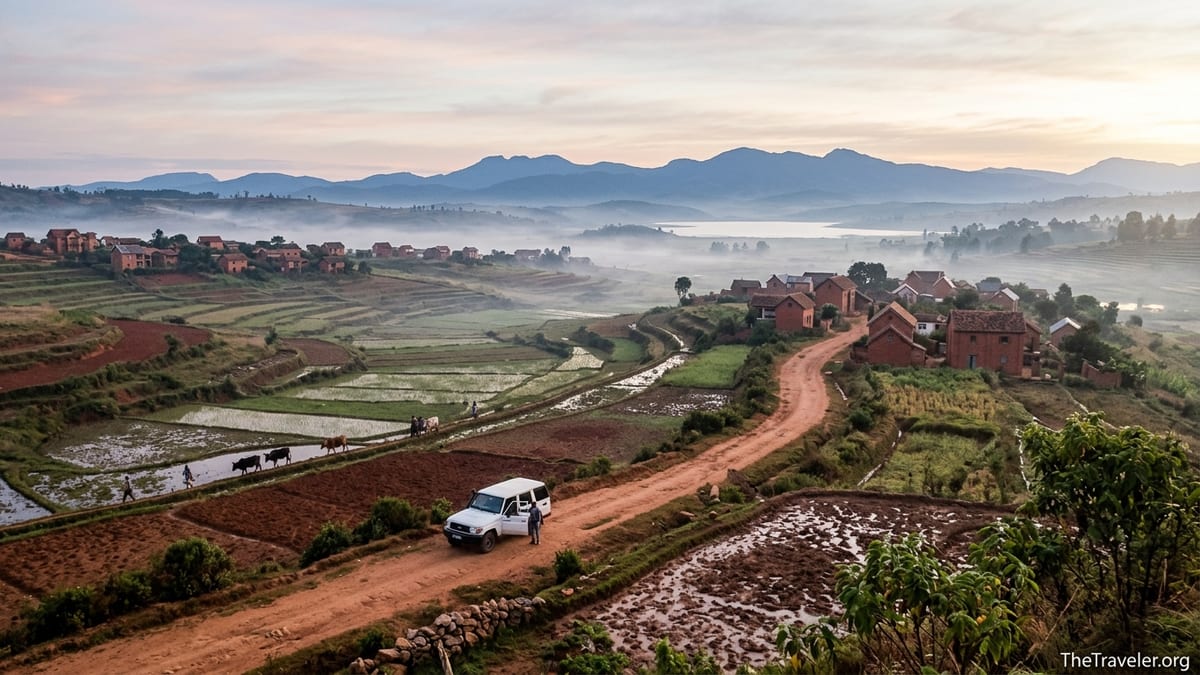
This region is heavily cultivated, with patchworks of rice paddies, vegetable plots and eucalyptus groves cut by red laterite tracks. Villages of the Merina and Betsileo ethnic groups cluster on ridges, often dominated by churches and traditional brick houses. Tour operators use this dense network of roads and settlements to build itineraries that mix scenery with everyday life: market visits, village walks, roadside food stops and short hikes around volcanic craters or waterfalls.
Because distances are moderate compared with the long hauls to the coast or deep south, the highlands lend themselves to shorter organized circuits of 2 to 5 days, as well as to extensions at the start or end of longer island-wide itineraries. A number of domestic and international agencies now advertise “Highlands” packages or clearly highlight the highland legs of their RN7 and west-coast trips, often using Antananarivo, Antsirabe and Ampefy (Lake Itasy) as key hubs.
Road conditions in the highlands are better than in many parts of Madagascar, but they are still slow. Expect average speeds of 40 to 60 kilometers per hour on paved sections and less on side roads. That makes a dedicated driver-guide a central feature of most organized tours here, with agencies marketing the safety and flexibility of private vehicles compared with crowded public minibuses known as taxi-brousse.
Main Tour Formats: Cultural Circuits, Drivers, Treks and More
Operators tend to package Central Highlands travel into a handful of recognizable formats. The most common is the cultural circuit by private vehicle and driver, often combined with short walks. For example, Mada Holiday Tours markets a 4-day “Highlands” circuit running Antananarivo – Andasibe – Antsirabe – Ampefy – Antananarivo, with a car, driver and English-speaking guide included, plus visits to Antsirabe’s craft workshops and the royal hill of Ambohimanga near the capital.
Another format is the classic RN7 road trip south that uses the highlands as its scenic opening act. Companies like Madagascar Circuits, Madagascar Explorer and several European adventure brands all describe a first or second day where an experienced driver takes guests from Antananarivo through the Ankaratra foothills to Antsirabe. Along the way, stops in Behenjy for foie gras or Ambatolampy for aluminum pot foundries have become almost standard inclusions on these cultural-driving circuits.
More specialized operators also sell trekking-focused highlands itineraries. One example is a “Hiking of the Highlands” style trip promoted by local agencies, which specifically targets the rural valleys west of the Ankaratra massif and the volcanic landscapes of the Itasy region. Over the course of a week, hikers overnight in simple guesthouses or village lodges and walk between hamlets, rice terraces and crater lakes, supported by a vehicle that moves luggage between stages.
Finally, some agencies experiment with cycling segments, especially on quieter back roads near Antsirabe and around Lake Itasy, where rolling hills and moderate traffic make day rides feasible. These cycling add-ons are usually marketed to confident riders as part of tailor-made trips, with a support vehicle and driver following behind. They are still a niche product, but worth asking about if you enjoy active travel.
Cultural Circuits around Antananarivo, Itasy and Antsirabe
Short cultural circuits are ideal for travelers with limited time or those adding a highlands taste to a beach or wildlife-focused holiday. A typical 2-day “Nature Tour of Ampefy” itinerary marketed through international platforms starts in Antananarivo and heads west to Lake Itasy, stopping at viewpoints over terraced hills before reaching a lakeside hotel. On day two, guests visit the Lily Waterfall and take a boat to the small island known as Ilot de la Vierge before returning to the capital in the late afternoon.
Three-day Ampefy getaways sold through online marketplaces follow a similar pattern, but often include a full free day by the lake for optional activities such as canoeing, extra hikes or hot-spring visits. These trips usually include private car and driver, accommodation in mid-range lakeside lodges, breakfasts and some dinners, and site entrance fees such as the ticket for the Analavory geysers. Lunches are commonly left at the traveler’s expense, giving flexibility to eat in simple village restaurants or lodge dining rooms.
In the opposite direction, many city-based agencies in Antananarivo run 2 to 3 day loops to Antsirabe, often marketed to expatriates and cruise passengers. These circuits combine the drive through the highlands with a city tour of Antsirabe’s colonial avenues, visits to artisan workshops producing miniature rickshaws and zebu-horn crafts, and excursions to nearby volcanic lakes like Tritriva and Andraikiba. A typical pattern is one night in Antsirabe in a comfortable guesthouse such as Chambre du Voyageur or a 3 star hotel, with breakfast included and optional dinner arrangements.
Because these cultural circuits are close to the capital, they are often operated on a private basis even when booked through large online platforms. A couple or small group might pay a per-person price in the region of a few hundred euros or dollars for a 3-day private package, though exact rates vary between operators, season and hotel choice. Travelers should confirm whether entrance fees to sites like Ambohimanga, the Lily Waterfall or the crater lakes are included, since some budget-friendly offers only cover transport and accommodation.
Private Car-and-Driver Tours vs Group Departures
The dominant product in the Central Highlands is the private tour with car-and-driver. Agencies such as Mada Holiday Tours, Nature Tour Madagascar, Mada Car Drive and numerous Antananarivo-based inbound operators emphasize that they provide a 4x4 or minivan with a driver who also acts as a basic guide, sometimes supplemented by local specialist guides at particular stops. This format gives flexibility to adjust departure times, make photo stops in villages and adapt walking distances to the group’s energy each day.
In practical terms, private tours usually include the vehicle, fuel, driver’s salary, driver accommodation and sometimes road tolls. Some also roll in airport transfers and city hotel pick up. What is often not included are lunches, drinks, tips and optional excursions. For example, a 4-day “Highlands” itinerary might advertise “full board” and cover all meals, while another 3-day Ampefy loop may only include breakfasts, leaving guests to pay for lunches at roadside eateries. Clarifying this before booking prevents surprises.
Group tours in the highlands are less common but do exist, especially as part of longer north-south traverses that include the RN7 and sometimes the west coast. An example is a 9 day group tour promoted by Nature Tour Madagascar where guests share a vehicle from Antananarivo through Andasibe and Antsirabe, continuing to Morondava and Baobab Alley. Here, the highlands leg is one segment of a broader adventure, and the per-person price benefits from economies of scale, though departure dates are fixed.
For travelers, the choice between private and group travel in the highlands usually comes down to budget and desired flexibility. Private car-and-driver circuits cost more per person for solo travelers or couples, but offer a tailored pace, the ability to stop in specific villages or markets, and easier last-minute changes. Group tours are cheaper per person but travel on rigid schedules and may not focus deeply on the highlands, using them more as a scenic corridor on the way to coastal highlights.
Village Experiences, Trekking and Cycling in the Highlands
Beyond road-based sightseeing, several operators now build village life and light adventure into their Central Highlands products. Trekking-focused itineraries around Ankaratra and Itasy often use a loop model: guests spend the first and last nights in Antananarivo or Antsirabe and then head into the countryside for 3 to 5 days of village-to-village walking. One recent “Hiking of the Highlands” style program describes a succession of agricultural valleys west of the Ankaratra massif, with daily walking stages adapted to participant fitness.
Accommodation on these trekking circuits is generally simple: rural guesthouses, community lodges or basic hotels in small towns. Showers may be cold, and electricity can be intermittent, though agencies try to select the best options available. Meals are usually included and based on local produce, with rice, vegetables, eggs and occasionally chicken or zebu. A support vehicle or porters move the main luggage, allowing guests to hike with only a daypack. Local guides from the region often join or lead the walks, providing cultural context and translation.
Village experiences without multi-day trekking are also common as optional activities on car-based tours. Around Antsirabe, drivers often propose half-day walks through surrounding villages, visits to small farms or school visits arranged in cooperation with community associations. Around Lake Itasy and Ampefy, village canoe trips, fishing demonstrations and informal markets can be added on. These activities are sometimes priced locally in cash and are not always prominently featured in tour brochures, so asking your operator in advance will help integrate them ethically and transparently.
Cycling in the highlands is typically offered as tailor-made, single-day experiences rather than fixed departures. Some Antsirabe-based agencies rent mountain bikes and arrange guided rides on quiet back roads to Tritriva crater lake or around rural plateaus. Experienced operators insist on a support vehicle for safety, especially as traffic can be unpredictable near main roads. Helmet quality and bike maintenance standards vary, so travelers should confirm details and consider bringing their own cycling shorts or pedal accessories.
Highlands Extensions within Longer Madagascar Itineraries
For many visitors, the Central Highlands form the spine of a longer Madagascar journey. RN7 itineraries that run from Antananarivo to the southwest coast at Toliara or Ifaty almost always include Antsirabe as an overnight stop. Descriptions from agencies like Madagascar Explorer, Mada Voyages and several European tour brands highlight this section as a chance to meet Merina and Betsileo farmers, see terraced rice fields cut into hillsides and browse markets filled with seasonal produce.
Westbound routes toward the Tsiribihina River and the Tsingy de Bemaraha often use the highlands as their first two days as well. Programs published by operators like Zaha Soa and Madagascar Azur show day 2 drives Antananarivo – Antsirabe – Miandrivazo, with scenic stops before dropping down from the plateau toward the river. In these itineraries, the highlands experience is embedded but still significant; some agencies even encourage adding an extra highlands day at the beginning to avoid rushing.
Northbound or eastbound itineraries can also include highland segments. Multi-week circuits that link Antananarivo, Antsirabe and Fianarantsoa with coastal areas such as Morondava, Tulear or the Pangalanes Canal still describe the highlands as a distinct phase of cooler climate and agricultural scenery. A 14 day west-focused trip from Mada Car Drive, for instance, explicitly mentions the terraced fields and highland villages accompanying the drive to Antsirabe before continuing toward baobab country.
Because these mixed itineraries typically bundle many regions and parks, travelers should pay close attention to how many actual full days are spent in the highlands. Some programs advertise “Highlands discovery” but in practice devote only a couple of half days to the area as guests transit between coastal and rainforest zones. If village life and cooler-climate hiking are key priorities, it is worth asking the operator to build in extra nights in Antsirabe, Ankaratra or Itasy.
What Is Included: Transport, Accommodation, Guides and Meals
Comparing organized tours in the Central Highlands means looking closely at what is included. Transport is usually by private vehicle with driver, ranging from compact sedans for one or two people to 4x4s or minibuses for small groups. Agencies marketing multi-day Highlands or RN7 tours often specify that fuel, driver accommodation and basic vehicle maintenance are built into the package price, and some mention air conditioning. For rougher stretches or rainy-season departures, a 4x4 is preferable, even though the main highland roads are paved.
Accommodation standards vary from simple guesthouses to comfortable 3 star hotels and character lodges. Middle-range highlands tours, including those labeled “comfort” by Madagascar-based agencies, commonly use mid-range properties in Antananarivo, Antsirabe and Ampefy, with private bathrooms and hot water, though hot water may be time-limited in smaller establishments. Budget options may rely on simple hotels with basic furnishing, while higher-end tailor-made itineraries can upgrade to boutique hotels in Antananarivo and charming lodges in the countryside.
Guide involvement is another differentiating factor. Some tours include only a driver who speaks basic English or French and provides logistical support, while others add a professional guide who travels with the group throughout. In addition, national or community guides are mandatory at certain cultural sites and protected areas, such as the royal hill of Ambohimanga or local reserves along the RN7. Premium “Highlands” packages sometimes advertise an “English-speaking expert guide for all visits and excursions,” which in practice means more consistent interpretation and help with translation in villages.
Meal plans range from bed-and-breakfast only to full board. A typical cultural circuit around Lake Itasy might include breakfasts and two dinners at the lakeside hotel but leave lunches open. In trekking programs, full board is more common because rural areas have limited restaurant options. Entrance fees to waterfalls, crater lakes, heritage sites and reserves are sometimes included in package prices, particularly on higher-end tours, but budget-leaning offers may list them as excluded. When comparing quotes, travelers should add the approximate cost of entrances and meals to understand the realistic total.
Key Booking Questions to Ask Highlands Tour Operators
The Central Highlands are generally considered one of the safer and more accessible regions of Madagascar, but booking the right tour still requires clear communication. Before paying a deposit, travelers should ask exactly what vehicle will be used and whether it is a sedan, minivan or 4x4. On routes that dip into side roads near Lake Itasy or into small valleys around Ankaratra, a higher clearance vehicle can make a real difference, especially in the rainy season. Clarifying whether air conditioning works and windows open properly can also matter, as dust can be significant on unpaved stretches.
It is also important to ask about the driver’s role and language abilities. Some agencies provide a driver who has limited English and mainly focuses on driving, relying on local guides at individual sites for explanations. Others provide fully bilingual driver-guides who engage throughout the journey. For travelers who want in-depth cultural discussion and flexibility to explore village life, paying extra for a dedicated guide can be worthwhile. Confirming whether the same driver will stay with you throughout the circuit, or whether there will be changes, can help set expectations.
Another key area is accommodation details. Rather than accepting generic labels like “mid-range hotel” or “charming guesthouse,” travelers should request the provisional hotel list for each night in the highlands, along with room categories. In Antsirabe, for example, some itineraries may use centrally located mid-range hotels with private bathrooms, while others choose guesthouses slightly outside town with more garden space but fewer services. Around Lake Itasy, properties range from simple lakeside bungalows to more polished eco-lodges, and the price difference is reflected in room comforts.
Finally, travelers should ask tour operators about seasonal factors. From December to March, heavy rains can affect smaller roads and make certain treks muddy or unsafe, while from June to August nights in Antsirabe and Ankaratra can be very cold, requiring warm clothing even if hotels provide blankets. Asking how the itinerary is adapted to the month of travel, including backup plans if a particular village trail becomes impassable, will give a sense of the operator’s experience and responsiveness.
The Takeaway
The Central Highlands of Madagascar are far more than a transfer corridor between the capital and the coasts. With a growing number of operators selling dedicated “Highlands” packages and clearly described highland segments within longer itineraries, travelers can now choose from a spectrum of organized experiences, from 2 day cultural loops around Lake Itasy to week-long treks between Ankaratra villages. Private car-and-driver tours remain the backbone of highlands travel, but options for group trips, community trekking and occasional cycling add variety.
When comparing organized Madagascar Highlands tours, the most useful questions concern the route, level of guide support, vehicle type, accommodation standard, meal plan and included entrance fees. Concrete examples show that itineraries with similar names can offer quite different experiences in practice: one “Highlands” tour might focus on comfortable lodges and scenic drives, while another emphasizes simple village stays and daily hikes. By asking for detailed day-by-day descriptions, provisional hotel lists and clear inclusion breakdowns, travelers can secure a tour that matches both their expectations and budget.
Whether you have three days to escape Antananarivo or three weeks to cross the island, building time in the Central Highlands rewards you with cool air, human-scale landscapes and some of the most accessible cultural encounters in Madagascar. With realistic expectations, careful operator selection and a willingness to travel slowly, the rice terraces, crater lakes and red-brick villages of the highlands can become a highlight of any Madagascar journey.
FAQ
Q1. How many days do I need for a dedicated Madagascar Highlands tour?
Most travelers find that 3 to 5 days is enough for a focused highlands circuit, covering Antananarivo, Antsirabe and either Lake Itasy or a section of the Ankaratra region. Shorter 2 day trips are possible but feel rushed, while adding extra nights allows more village walks and relaxation.
Q2. What is the best time of year to visit the Central Highlands?
The dry season from roughly May to October offers the most comfortable conditions, with cooler temperatures, greener fields early in the season and less rain on rural roads. The rainy months from December to March can still be rewarding but bring muddy tracks, occasional road disruptions and afternoon storms.
Q3. Are private car-and-driver tours worth the cost in the highlands?
For most visitors the convenience and safety of a private car-and-driver justify the added cost compared with public transport. Distances are not huge, but traffic is unpredictable and local knowledge helps with route choices, language and security. Private tours also allow flexible stops in villages, markets and viewpoints that would be hard to organize independently in a short timeframe.
Q4. What level of accommodation can I expect on a mid-range Highlands tour?
A typical mid-range package uses comfortable guesthouses and 2 to 3 star hotels in Antananarivo and Antsirabe, plus simple but pleasant lodges at Lake Itasy or in rural areas. Rooms normally have private bathrooms and hot showers, though hot water may be limited at busy times, and heating is rare, so warm clothing is important in the cool season.
Q5. Are meals and entrance fees usually included in tour prices?
In the highlands, breakfasts are almost always included, dinners may be included at rural lodges, and lunches are often at your own expense. Trekking itineraries are more likely to include all meals. Entrance fees to sites like Ambohimanga, crater lakes and waterfalls may or may not be bundled, so it is important to ask for a detailed inclusion list when comparing offers.
Q6. How difficult are trekking routes around Ankaratra and Itasy?
Most organized treks in the highlands are designed for travelers with reasonable fitness who can walk for several hours on undulating terrain. Trails can be steep and slippery in places, especially after rain, but itineraries are usually adaptable, with vehicle support or shorter walking options available. Operators can often tailor daily distances to your comfort level.
Q7. Is cycling in the Central Highlands safe for visitors?
Cycling is best done on quieter back roads around Antsirabe and Lake Itasy, ideally with a local guide and support vehicle. Traffic on main highways can be fast and unpredictable, and road conditions vary, so cycling is recommended mainly for experienced riders. Checking bike quality, helmet availability and planned routes with the operator in advance is essential.
Q8. Can I easily add Highlands days to a longer Madagascar itinerary?
Yes, most RN7, west-coast and multi-region itineraries naturally pass through the highlands, and operators are accustomed to adding extra nights in Antsirabe, Lake Itasy or nearby rural areas. Discuss your priorities before booking so that the highlands are treated as a destination in their own right, not just a transit leg between coastal attractions.
Q9. What should I pack specifically for a Highlands tour?
Essential items include a warm fleece or jacket for cool evenings, a light rain layer, sturdy walking shoes, a hat and sunscreen for daytime sun, and any personal medications. For trekking or village stays, a small daypack, refillable water bottle, basic first aid kit and a headlamp are useful, as rural electricity can be limited.
Q10. How do I check if a Highlands tour operator is reliable?
Look for operators with a physical presence in Madagascar or long-standing partnerships with local agencies, clear day-by-day itineraries and transparent inclusion lists. Recent traveler reviews, responsiveness to questions about vehicles, guides and seasonal conditions, and a professional attitude toward safety and community relations are all good indicators of reliability.