


High in Madagascar’s central highlands, the small town of Ambositra has become synonymous with intricate woodcarving and inlaid marquetry. Look closer, and you discover it is also the practical gateway to Zafimaniry country, a network of mountain villages where a remarkable woodcrafting tradition recognized by UNESCO as Intangible Cultural Heritage is still woven into everyday life. This guide explains how to use Ambositra as your base, how to reach the Zafimaniry villages around Antoetra, and how to experience both the crafts and the highlands landscapes in a way that is safe, realistic and respectful.
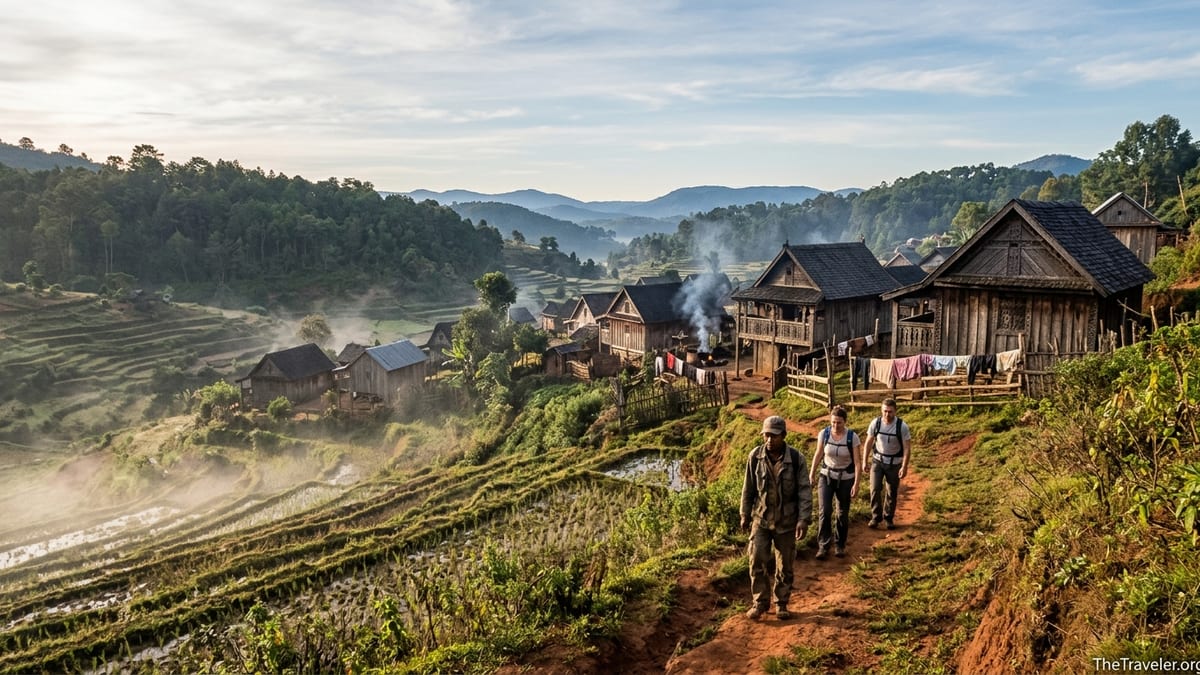
Ambositra: Capital of Malagasy Woodcraft and Gateway to Zafimaniry Country
Ambositra sits along Madagascar’s main RN7 highway, roughly a day’s drive south of Antananarivo, and has long been known as the country’s woodcarving capital. Workshops line the streets around the compact center, where craftsmen carve doors, chests, furniture and small boxes decorated with geometric motifs. Many of these artisans are of Zafimaniry heritage or trained in Zafimaniry style, which has helped turn Ambositra into a commercial showcase for the tradition.
Travelers usually arrive in Ambositra by private car with driver or taxi brousse from Antananarivo or Antsirabe. The journey from the capital typically takes six to seven hours by road, depending on traffic and roadworks, and from Antsirabe around three hours. Most visitors spend at least one night in simple local hotels or guesthouses in town before continuing east into the hills that lead to Zafimaniry villages such as Antoetra and Ifasina.
What makes Ambositra appealing as a base is the combination of accessibility and atmosphere. You can walk between workshops, visit the central craft market and get a feel for Betsileo highlands life while arranging guides, permits and transport for village treks. Several tour operators, both local and Antananarivo based, routinely route their itineraries through Ambositra specifically to connect travelers with the Zafimaniry region for one or more days of trekking.
Madagascar’s official tourism messaging frequently presents Ambositra as the starting point for discovering Zafimaniry culture. In practice, that means you can handle logistics, make last minute gear purchases such as rain ponchos or hiking snacks, and then head onto the rougher tracks and footpaths beyond the town with a realistic understanding of the conditions.
UNESCO, Zafimaniry Woodcraft and What Makes It Unique
The Zafimaniry people, a highland community living in about one hundred villages and hamlets scattered across the southeastern highlands, have developed a sophisticated body of woodcraft knowledge over generations. This includes forest management, house building, and fine carving techniques that cover almost every wooden surface in their homes, from doors and shutters to granaries and stools. UNESCO recognized this knowledge as Intangible Cultural Heritage in the early 2000s, highlighting that the Zafimaniry are now the sole remaining custodians of a woodcraft culture that was once widespread in Madagascar.
In practical terms for travelers, this recognition means that when you enter a Zafimaniry village house you are stepping into a living museum of motifs and construction techniques. Traditional houses are assembled with mortise and tenon joints rather than nails, and geometric patterns carved into pillars and doorframes carry symbolic meanings relating to family, community and spirituality. You might see repeating diamonds, crosses or stepped lines, each associated by local carvers with ideas such as fertility, protection or continuity, and your guide can often explain these in simple terms during a visit.
Importantly, UNESCO’s focus is not on individual carved objects but on the knowledge system behind them. That is why there is a crucial difference between buying a carved box in Ambositra and visiting a remote hamlet like Ifasina. In Ambositra, you are encountering the objects primarily as commodities. In the villages, you see how they fit into an architecture, a landscape and a rhythm of life that depends on the surrounding forest and on intergenerational teaching of skills from elders to apprentices.
Because this living tradition faces pressures from deforestation, out migration and mass produced souvenirs, many guides emphasize low impact tourism. Simple practices such as sticking to established footpaths, avoiding firewood collection during treks, and paying local guides and hosts directly help support the communities that maintain the craft and the knowledge behind it.
Woodcarving and Marquetry in Ambositra: Workshops, Markets and What to Expect
Ambositra’s center is compact enough to explore on foot, and most travelers spend a half or full day drifting between family run workshops. You might step into a small atelier where three generations share a single workbench, with a grandfather carving door panels, an adult son cutting and fitting slivers of differently colored woods into a marquetry pattern, and children learning to sand and polish finished pieces. Typical motifs include stylized zebu heads, rice fields seen from above, or abstract geometric designs inherited from Zafimaniry traditions.
Prices in town vary widely according to size and complexity. A palm sized marquetry box might cost the equivalent of a few euros or dollars, while a large, elaborately carved chest or door panel can easily run into the hundreds. Negotiation is common but usually polite, and it is worth paying more for pieces that clearly show hours of handwork and come from workshops where you can actually watch the process. In some streets you will find near identical tourist pieces in multiple stalls, a sign they may be partially machine assisted or produced outside the region.
Several hotels and guesthouses in Ambositra also display carved furniture in their lobbies and rooms, often for sale. This can be a gentler buying experience than the busy craft market, and staff will usually be happy to explain which village or family created a particular piece. Larger purchases, such as doors or heavy chests, can sometimes be shipped to Antananarivo to coordinate export and freight, though shipping costs and formalities can quickly exceed the price of the item itself.
Spending time in Ambositra’s workshops before heading into Zafimaniry country has a practical benefit. Once you have seen a variety of styles and levels of finish, you are better placed to recognize genuine village work later and to understand what you are seeing in the architecture. It also gives you some vocabulary for talking with carvers, even if you share only a few words of Malagasy or French.
Reaching Antoetra and the Zafimaniry Villages: Transport and Trail Basics
From Ambositra, the usual entry point into Zafimaniry country is Antoetra, a hilltop village located roughly 35 to 40 kilometers to the east. The connection is not on a paved highway but on a dirt track that can become deeply rutted, muddy or waterlogged in the rainy months. In the dry season, local drivers in sturdy vehicles cover the distance in about two hours. After heavy rain, the same journey can take considerably longer, and at times it may be practically impassable for a standard car.
Independent travelers typically arrange either a private 4x4 with driver from Ambositra or join a small group tour that includes the transfer. Prices fluctuate with fuel costs, but hiring a vehicle and driver for a day is often quoted in the range of what you would expect to pay for a day’s guided excursion in other parts of Madagascar, and can be shared among several travelers. Some budget travelers attempt the journey by local truck or on the back of motorbikes, but these options can be uncomfortable and unreliable when conditions deteriorate.
Once in Antoetra, the real travel happens on foot. Footpaths fan out in multiple directions along ridgelines and down into valleys towards smaller Zafimaniry villages such as Ifasina, Sakaivo and Faliarivo. Trails are not usually signposted in any systematic way, which is one reason why hiring a local guide in Antoetra is considered standard. Guides help you navigate rice terraces, forest patches and steep, sometimes slippery slopes, and can adjust the itinerary if clouds close in or afternoon storms threaten.
Even short walks can feel demanding at altitude for travelers not used to hilly terrain. Paths are often narrow earth tracks with loose stones, and after rain they turn slick. Simple but solid hiking shoes with good grip, a rain jacket and a small backpack for water and snacks are essential. Many visitors who underestimate the terrain end up relying on borrowed flip flops from villagers or struggling over muddy sections, which can be awkward for both guest and host.
Guided Walks, Overnight Stays and Trail Difficulty
Most travelers start with one of the classic loop walks from Antoetra. A common option is a day hike to Ifasina, which many guides describe as a picture book Zafimaniry village with dense clusters of carved wooden houses and a dramatic mountain backdrop. The walk can take around two hours each way at a moderate pace, not counting stops. Parts of the path follow ridge lines with open views over terraced fields, while other sections dip into small patches of secondary forest or bamboo.
For more committed hikers, multi day circuits link Antoetra with villages such as Sakaivo, Faliarivo or Ambohimitombo, with simple overnights in village houses or community lodges. Daily walking distances on such routes might range from 10 to 20 kilometers, with total elevation gains that feel very real when you are carrying your own pack. Trails are usually classed as moderate in terms of technical difficulty, but they can feel strenuous over multiple days, especially under strong sun or in humidity after rain.
Overnight accommodation in the villages is basic but rewarding. Expect shared pit latrines, bucket washes and simple mattresses on wooden floors, sometimes with mosquito nets. Evening meals are almost always built around rice, sometimes accompanied by beans, leafy greens or small portions of meat when available. Many travelers describe evenings spent around the hearth as the highlight of their trip, listening to stories, asking questions through the guide, or watching older carvers work on small pieces by firelight.
Guides and porters are usually recruited directly in Antoetra or occasionally from Ambositra. A typical arrangement might include a main guide who speaks Malagasy and French plus limited English, and one or more porters for groups who carry shared food and cooking gear. Fees are often agreed per day, per person, with extra for overnight stays and village contributions. It is wise to clarify early who is being paid, how much is earmarked for the host family, and whether any village association fee is expected on arrival.
Respectful Interaction and Buying Crafts in Villages vs Ambositra
Travel in Zafimaniry country is as much about people as it is about scenery. Simple gestures can make a big difference to how your presence is experienced. Greetings are important in Madagascar; a friendly “salama” or “manao ahoana” as you pass people on the path sets a respectful tone. In villages, wait for your guide to introduce you to elders or household heads before stepping onto verandas or into houses, and always ask before photographing people or the interior of carved homes.
When it comes to crafts, the experience of buying in Ambositra and in the villages is very different. In Ambositra, you are likely standing in a workshop lined with shelves, surrounded by dozens of similar pieces. The relationship is primarily commercial, and negotiation is expected. In a village like Ifasina, a carver might bring out a small selection of boxes, panels or spoons that were made between farming tasks, and you are physically surrounded by the carved architecture that inspired them. Prices tend to be lower than in town, but it is worth resisting the urge to push for the lowest possible bargain. Paying a fair price directly to the maker helps keep the practice viable.
Many travelers choose to buy one or two substantial pieces in Ambositra, where they can find designs suited to home décor and possibly arrange for shipping, and then add smaller items such as spoons, small panels or jewelry from the villages. This approach respects village producers while recognizing that serious export logistics are easier to manage from a town. It also reduces the pressure some visitors feel when asked to buy more than they can realistically carry at the end of a long hike.
There are also social expectations around giving and donations. Children in villages that see frequent visitors may ask for sweets, pens or coins. While it is understandable to want to give something, guides and community leaders often prefer that visitors contribute in other ways, such as paying for handicrafts, using local accommodation, or making a small contribution to a village association that supports communal projects. Before the trip, talk with your guide about culturally appropriate ways to give and let them lead in these interactions.
Planning, Seasons and Safety in the Highlands
The Zafimaniry region sits at highland elevations, which means temperatures can be surprisingly cool at night, even in the dry season. Days from May to October are often clear, with strong sun and cool breezes, making this period popular for trekking. Nights can drop low enough that you will appreciate a warm sweater, socks and perhaps a thin sleeping bag liner in simple village houses. In the wetter months from roughly November to March, heavy rains can turn trails into mud and make the track from Ambositra to Antoetra treacherous, which is why some operators avoid multi day treks at this time.
Security conditions can evolve, but the Ambositra to Antoetra corridor and the core Zafimaniry trekking routes are generally considered accessible for visitors who take normal precautions. Hiking with a local guide, sticking to known trails, and avoiding walking after dark between villages are common sense measures. It is also prudent to leave passports and most cash securely stored in Ambositra and carry only what you need for the trek, spread between money belt and daypack.
From a practical health perspective, trekking here is comparable to hiking in other rural parts of Madagascar. Carry enough bottled or treated water for each walking segment, and consider a simple water purification method such as tablets or a filter bottle if you plan multiple days in the hills. Basic first aid supplies for blisters, small cuts and stomach upsets will be much easier to manage than hoping a remote village has what you need. There are small clinics in some larger settlements, but more serious care usually means returning to Ambositra or onward to larger towns along the RN7.
Insurance that covers trekking and remote evacuation is sensible, especially if you plan multi day routes. While helicopter evacuations are rare and logistically difficult in the region, having coverage for vehicle based evacuation and hospital treatment in Antananarivo or larger regional centers reduces the risk that an injury or illness becomes financially overwhelming.
The Takeaway
Using Ambositra as your gateway to Zafimaniry country allows you to combine the ease of a small highland town with the depth of a living cultural landscape. In town, you can wander from workshop to workshop, compare styles of marquetry, and understand how Zafimaniry motifs have been adapted for wider markets. In the hills beyond Antoetra, you encounter the same motifs embedded in a way of life where carved doors still swing open on mortise and tenon frames and stories are told by firelight beneath patterned beams.
Travel here is not about ticking off sights as quickly as possible. The rough road to Antoetra, the unmarked footpaths and the simple overnight stays all slow you down in ways that often become the highlight of the journey. With realistic expectations about trail difficulty, an appreciation for basic conditions, and a commitment to respectful interaction, a few days around Ambositra and the Zafimaniry villages can become one of the most meaningful segments of a Madagascar itinerary.
Above all, remember that UNESCO’s inscription of Zafimaniry woodcraft is a recognition of knowledge and community rather than just of beautiful objects. Each carved panel in Ambositra’s craft market and each patterned granary in a mountain hamlet is a trace of that knowledge. Traveling thoughtfully through this region helps sustain the people who keep it alive, and offers you a rare chance to see a highland cultural landscape still shaped by wood, story and shared work.
FAQ
Q1. How many days should I plan for Ambositra and the Zafimaniry villages?
Most travelers find that two nights in Ambositra and one or two nights in the villages allow enough time to explore workshops, reach Antoetra, and complete at least one substantial hike without rushing.
Q2. Can I visit Antoetra and a Zafimaniry village as a day trip from Ambositra?
It is possible in the dry season to drive from Ambositra to Antoetra, hike to a nearby village like Ifasina, and return the same day, but it makes for a long and sometimes tiring outing, so many visitors prefer to stay at least one night in or near Antoetra.
Q3. Do I really need a 4x4 to reach Antoetra from Ambositra?
A high clearance vehicle with an experienced driver is strongly recommended, especially during or after rains, because the track can become deeply rutted and muddy, making travel slow and sometimes impossible for standard cars.
Q4. Is it safe to trek independently without a guide in Zafimaniry country?
While the region is not generally considered dangerous, trails are often unmarked and cross private and communal lands, so hiring a local guide is the norm and helps with navigation, translation, and respectful interaction with communities.
Q5. What level of fitness is required for the hikes around Antoetra?
You should be comfortable walking several hours on uneven, sometimes steep and muddy paths, but you do not need mountaineering experience; guides can usually adapt routes to your pace and fitness level.
Q6. What should I pack for an overnight stay in a Zafimaniry village?
Pack sturdy walking shoes, a light rain jacket, warm layers for cool nights, basic toiletries, a headlamp, personal medication, and a sleeping bag liner or lightweight sheet to supplement the bedding provided.
Q7. How can I make sure my spending benefits local communities?
Hiring local guides and porters, staying in village based accommodation, buying crafts directly from makers, and paying agreed community fees are straightforward ways to ensure your money supports the people hosting you.
Q8. Are credit cards accepted in Ambositra or the villages?
Ambositra is largely cash based and village economies are almost entirely so, which means you should bring enough local currency from larger towns for accommodation, food, guiding and craft purchases.
Q9. Can I visit during the rainy season?
You can, but heavy rain can make the track to Antoetra difficult or unsafe and trails can be very muddy, so itineraries in the rainy months often shorten treks or base activities closer to the main road.
Q10. Is it acceptable to photograph people and houses in Zafimaniry villages?
Photography is usually welcomed if you ask permission first, avoid intrusive close ups, and respect any reluctance; your guide can help you request consent politely and indicate when photography is not appropriate.