


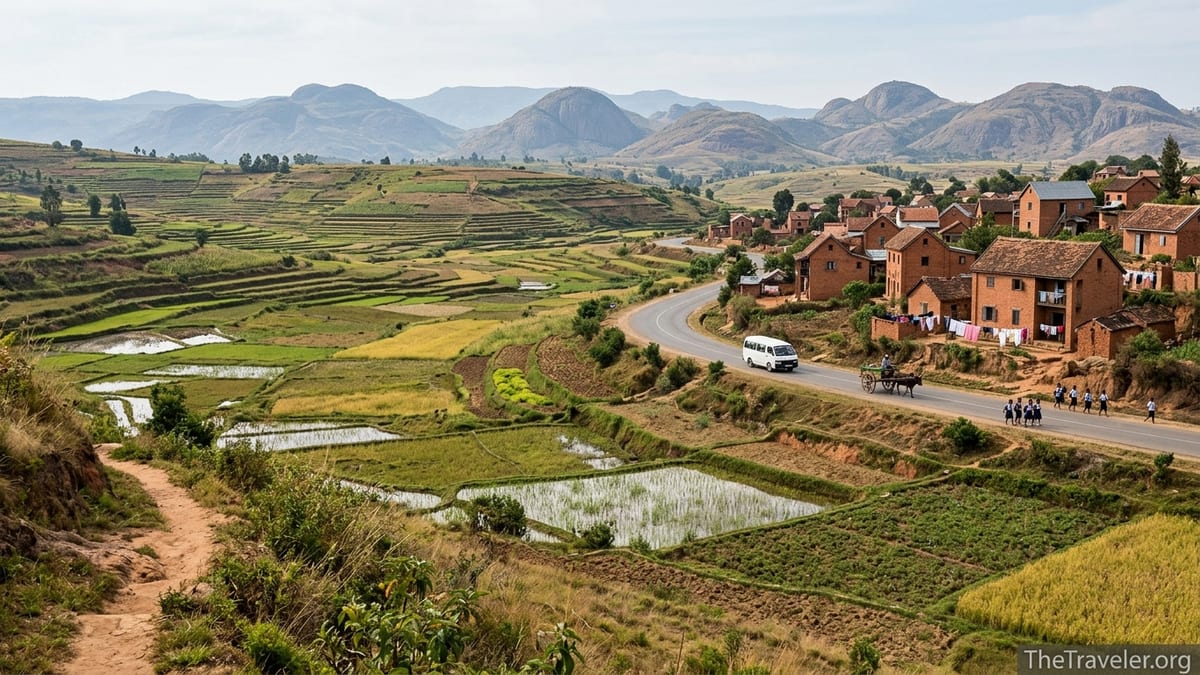
The Central Highlands of Madagascar are often treated as a corridor between the island’s better-known coasts and rainforests, yet for many travelers this high plateau becomes the most memorable part of the journey. Villages built of red brick cling to terraced hillsides, rice paddies shimmer in the valleys, and cool evenings invite you to swap the beach sarong for a fleece. For first-time visitors, understanding this region is the key to planning a rewarding route along the RN7 highway and deciding which highland towns are worth more than just a quick overnight stop.
Understanding Madagascar’s Central Highlands
The Central Highlands, sometimes called Imerina after the historic Merina kingdom, form a broad spine running down the middle of Madagascar. This high plateau generally lies between about 1,000 and 1,500 meters in elevation, rising higher in some volcanic and granitic massifs. Antananarivo, the capital, sits near the northern edge of this highland belt, while towns such as Antsirabe, Ambositra and Fianarantsoa string southward along the RN7, the country’s main north–south highway linking the capital to the southwest coast at Toliara.
Geographically and visually, the Highlands feel very different from the coastal zones. Instead of humid jungle or dry baobab plains, the landscape is one of rolling hills, terraced rice paddies and patchwork fields of maize, cassava and vegetables. In many valleys you will see brick kilns and houses of sunbaked red clay, their color almost merging with the eroded hillsides. Between Antananarivo and Fianarantsoa, a typical road day on the RN7 means passing through dozens of small farming villages where zebu cattle pull wooden carts, children walk to school in uniform, and roadside vendors sell bananas, peanuts and grilled corn.
Culturally, the Highlands are the historic heartland of the Merina and Betsileo peoples, whose political power shaped the modern Malagasy state. Royal complexes, mission churches and hilltop tombs dot the countryside, and traditions around ancestor veneration and rice cultivation still structure daily life. Compared with coastal regions where fishing villages dominate, the Highlands feel more agricultural and inward-looking, with a strong sense of identity and a slower, more rhythmical pace.
For travelers, the Central Highlands are also the backbone of many classic itineraries. Almost every overland trip that runs from Antananarivo towards the south or southwest begins by following the RN7 through Ambatolampy, Antsirabe, Ambositra and Fianarantsoa before dropping to the coast or branching into rainforest parks. Understanding what each of these stops offers helps you decide whether to simply overnight or to linger for extra hikes, craft visits or cultural experiences.
How the Highlands Differ from Coasts and Rainforests
Visitors often arrive in Madagascar expecting tropical heat, beaches and lemur-filled rainforests. The Highlands deliver something else entirely. The climate is cooler and drier, especially from May to September, when night temperatures in Antsirabe or Fianarantsoa can drop into the single digits Celsius. In practical terms, that means you may need a fleece or light down jacket and even a hat for evening dinners on terraces, while coastal travelers at the same time of year are still in T-shirts after dark.
The scenery also contrasts strongly with the lush eastern rainforests. Around Andasibe, east of the capital, the road runs under a closed canopy of humid green. By comparison, the RN7 south from Antananarivo quickly opens onto bare hills with checkerboard rice terraces in the valleys. Near Betafo and south towards Fianarantsoa, the paddies rise in intricate steps that are particularly beautiful in the late afternoon when irrigation water reflects the sky and farmers lead zebu teams home. Instead of dense forest sounds, you hear distant church bells, radios playing Malagasy pop and the clatter of hooves on paved roads.
Economically, coastal regions often revolve around fishing and informal beach tourism, while the Highlands are dominated by small-scale agriculture and crafts. Around Ambositra you will visit workshops carving intricate rosewood boxes or inlaying marquetry panels, while in Ambatolampy the main attraction is a cluster of small foundries that recycle scrap aluminum into cooking pots used across the country. These are real working places, not staged shows, and you are likely to see workers barefoot on charcoal-fired furnaces or polishing pots with improvised machinery.
Finally, the Highlands feel more densely settled than much of rural Madagascar. From the car window between Antananarivo and Antsirabe you rarely go more than a few kilometers without passing a village or small town. That means more frequent fuel stations, basic guesthouses and roadside eateries serving rice with laoka (sauces) of meat or vegetables. While standards vary, it also makes independent travel somewhat simpler than in the remote west or deep south where services can be many hours apart.
Antananarivo and the Royal Hill of Ambohimanga
Most journeys into the Highlands begin in Antananarivo, commonly called Tana, a city of about two million people spread across steep hills and rice-filled valleys at around 1,200 meters. The capital can feel chaotic at street level, with heavy traffic, informal markets and visible poverty. Yet its upper neighborhoods reveal another face: colonial villas, church towers, and views over terraced paddies. Many travelers choose one or two full days here at the start or end of a trip, staying in midrange guesthouses in neighborhoods like Isoraka or Ivandry and exploring on foot with a local guide.
From Tana, the most important highland excursion is to Ambohimanga, about 20 km northeast. This fortified royal hill, now a UNESCO World Heritage site, was a political and spiritual center of the Merina kingdom for centuries. A visit usually combines the stone gates and palace buildings with a walk around ritual spaces and tombs, where local pilgrims still come to make offerings. In practical terms, you can hire a car with driver for a half-day trip from Antananarivo; as of 2026, many visitors report paying the equivalent of roughly 30 to 50 US dollars for the vehicle and driver, plus modest entrance and guide fees paid in local currency.
For a first-time visitor, Antananarivo itself rarely justifies more than two or three nights unless you have a special interest in urban life or photography. Pollution and traffic can quickly become tiring, and the real visual charm of the Highlands lies in the countryside. Treat the city as your logistical base for money exchange, SIM cards and arranging a driver along the RN7, then look forward to the quieter highland towns to the south.
Ambohimanga, by contrast, is worth half a day even on a tight schedule. If you have only one full day in the Highlands before heading east to rainforests or flying to the coast, a city orientation in the morning followed by Ambohimanga in the afternoon gives you at least a glimpse of royal Merina history and the classic rice-terraced scenery that surrounds the hill.
Volcanic Lakes and Rural Calm at Ampefy and Lake Itasy
West of Antananarivo, Ampefy and Lake Itasy offer a different introduction to the Highlands, one focused on volcanic landscapes and lakes rather than the RN7 corridor. Ampefy is a small town on the shores of Lake Kavitaha, with Lake Itasy, Madagascar’s third-largest lake, spreading out nearby at over 1,200 meters elevation. The region is known for its rolling green hills, patchwork fields and clusters of crater lakes, including one where a small island crowned with a statue of the Virgin Mary provides a panoramic viewpoint over the water.
Travelers typically reach Ampefy by car in around 2.5 to 3 hours from Antananarivo, using a combination of the RN1 and a regional paved road. Many local tour operators package the trip as a one- or two-night extension from the capital, with stays in lakeside lodges that cost roughly what a midrange hotel in Tana would, depending on season. Activities include boat trips on the lake, walks to waterfalls such as the Chutes de la Lily, and exploratory drives across the volcanic plateau to fumaroles and hot springs.
Compared with the RN7 corridor, Ampefy feels more self-contained and less of a through-route. You do not come here on the way to somewhere else; you come for quiet, cool evenings, short hikes and rural landscapes. For some travelers, especially photographers and couples, Ampefy deserves at least two nights, giving one full day to explore the lakes and waterfalls without rushing. Others, particularly those focused on lemur-rich rainforests or the classic RN7 parks in the south, may choose to skip it, as it adds driving in a different direction from the main highland axis.
If your time in Madagascar is limited to about two weeks and your priority is to reach Ranomafana or Isalo via the RN7, then Ampefy is probably best reserved for a future visit. If, however, you have three weeks or more or are combining a work trip in Antananarivo with a weekend escape, Ampefy and Lake Itasy are one of the easiest ways to experience the highland countryside without committing to a longer road journey.
RN7 North: Ambatolampy, Antsirabe and Betafo
The classic route into the southern Highlands follows the RN7, a roughly 950 to 1,000 km highway from Antananarivo to Toliara. The first stretch from the capital to Antsirabe is considered one of its smoother segments, and many itineraries treat it as a gentle introduction to long-distance travel in Madagascar. Expect around 3 to 4 hours of driving for the 170 km between Tana and Antsirabe, depending on traffic and photo stops.
About 70 km south of the capital lies Ambatolampy, a small town known nationally for its aluminum foundries. These are not industrial-scale factories but modest family workshops where molten aluminum, often recycled from scrap, is poured into sand molds to make cooking pots. Many RN7 tours stop here for an hour, giving you a chance to watch the process up close and to buy a small pan or ladle as a practical souvenir. Ambatolampy itself rarely justifies an overnight, but the visit breaks the journey and offers a glimpse into everyday industry in the Highlands.
Further south, Antsirabe stands at about 1,500 meters, making it one of the coolest major towns in Madagascar. Historically a spa resort for French colonials, it retains broad avenues, thermal bath buildings and a slightly faded European feel. Today, travelers use Antsirabe as both a stopover and a base for countryside excursions. You can hire a pousse-pousse (colorful rickshaw) to tour the town’s colonial center, artisan workshops and lakes, or arrange outings to nearby volcanic craters such as Lake Tritriva and Lake Andraikiba. Many midrange hotels charge moderate rates compared with coastal resorts, and you can often find comfortable rooms with hot water, a garden and on-site restaurant for the price of a basic guesthouse in more remote regions.
Just 20 km west of Antsirabe, Betafo offers some of the prettiest terraced rice landscapes in the Vakinankaratra region. The small town combines missionary churches, thermal springs and access to volcanic lakes with surrounding valleys carved into intricate steps. Several local agencies in Antsirabe organize half- or full-day walks in the Betafo area, including village visits and lunch in a family compound. While few travelers overnight in Betafo itself, the area adds real depth to an Antsirabe stay. If you enjoy soft hiking and rural photography, consider spending two nights in Antsirabe so that one full day can be devoted to a Betafo circuit rather than rushing straight onward on the RN7.
RN7 South: Ambositra, Betsileo Country and Fianarantsoa
South of Antsirabe, the RN7 enters a more mountainous and winding section as it navigates through the Highlands toward Betsileo country and Fianarantsoa. Road conditions can vary year to year, but recent travelers typically report around 3.5 to 4 hours for the 150 km from Ambositra to Fianarantsoa, with potholes and slow trucks adding to the journey time. That makes thoughtful planning of overnight stops increasingly important to avoid exhausting days.
Ambositra, at roughly 1,300 meters, is known across Madagascar as the capital of woodcarving and marquetry. The town’s main street features workshops and boutiques selling carved furniture, inlaid boxes and panels decorated with geometric patterns traditional to the Zafimaniry people in the surrounding hills. Many visitors stop for a long lunch and shopping on the way south, while others choose to stay one or two nights to allow time for a side trip to Zafimaniry villages, where intricate wooden houses with carved shutters and posts have earned UNESCO recognition for their intangible cultural heritage. Simple village overnights can be arranged through local guides and bring you closer to Betsileo and Zafimaniry daily life.
Continuing south, the road passes through a landscape that feels more deeply carved and intensively terraced. Around Fianarantsoa, the unofficial cultural capital of the Betsileo, hills are covered in rice paddies, tea fields and vineyards. The upper town, perched on a ridge, preserves stone churches, traditional Betsileo houses and viewpoints over the lower districts. Photographers in particular appreciate late afternoon walks here, when warm light catches the tiled roofs and the valleys fill with smoke from cooking fires.
Fianarantsoa is also the main staging point for trips to the rainforest national park of Ranomafana to the east and to granite massifs and community reserves south toward Ambalavao. In practice, many travelers allocate two nights here, using one full day for exploring the old town or making a side excursion, then continuing along the RN7 towards the south or circling back north after Ranomafana. If your schedule is tight, you can overnight in Fianarantsoa mainly as a practical stop between Antsirabe or Ambositra and the parks, but rushing through means missing an important center of Betsileo culture.
Culture, Climate and Crafts: What Makes the Highlands Special
Beyond individual towns, it is the combination of cultural depth, cooler climate and distinctive crafts that sets the Central Highlands apart from the rest of Madagascar. In many villages you will notice family tombs more elaborate than the houses nearby, reflecting the importance of ancestors in Merina and Betsileo worldviews. Seasonal famadihana ceremonies, when families rewrap the remains of ancestors in new cloth and hold multi-day gatherings, are still practiced in some highland communities; travelers should only attend such events if invited through a local intermediary and with great respect.
The climate shapes everyday routines. In July or August, mornings often begin crisp and misty, with villagers wearing knit hats and blankets around their shoulders. By late morning the sun is bright and the air dry, ideal for walking or cycling. Hotel rooms in Antsirabe and Fianarantsoa often provide extra blankets, and midrange lodges sometimes add small space heaters or fireplaces in common areas. Compared with the humid heat of coastal towns such as Morondava or Toliara, many visitors find the Highlands more comfortable for active days on foot.
Crafts are another hallmark. In addition to woodcarving in Ambositra and aluminum casting in Ambatolampy, you will encounter embroidery, silk weaving and straw-work throughout the highland towns. In some Betsileo villages near Fianarantsoa, small cooperatives produce wild silk shawls dyed with natural pigments, sold at prices that feel modest by international standards but fair within the local economy. When buying, it is worth asking your guide to explain how long a piece took to make and how the income is shared, as this gives a more grounded sense of the craft’s value and encourages responsible purchases.
Food in the Highlands carries subtle differences too. Rice remains the staple, but side dishes may feature more cabbage, carrots, potatoes and local cheese, reflecting the cooler climate’s produce. Around Antsirabe, you will see vendors selling fresh yogurt and cheese at markets, and roadside stalls along the RN7 often offer seasonal apples or peaches, a surprise for travelers expecting only tropical fruits. Simple restaurants in highland towns frequently serve generous rice plates for the equivalent of just a few US dollars, making everyday meals relatively affordable compared with imported Western-style dining in upscale city hotels.
Planning Your Route: Which Highland Stops Deserve Time?
For first-time visitors, one of the key planning decisions is how many nights to devote to the Central Highlands before continuing toward rainforests or the coast. With around 10 to 14 days in Madagascar and a focus on the classic RN7, many travelers opt for something like: one or two nights in Antananarivo, one or two in Antsirabe, one or two in Ambositra or nearby villages, and one or two in Fianarantsoa before heading on to Ranomafana or Isalo. Within that structure, you can adjust stays depending on your interests.
If you are most excited about landscapes and gentle hiking, consider prioritizing Antsirabe with a full day in the Betafo area, plus at least one full day around Fianarantsoa, where some agencies organize guided walks through Betsileo rice terraces and traditional hamlets. In this case, Ambositra may serve mainly as a craft-shopping stop and potential one-night base if you wish to visit a Zafimaniry community.
Travelers more focused on cultural encounters and crafts might choose to spend extra time around Ambositra, arranging a village stay or extended workshop visits, while keeping Antsirabe as a brief pause to break the journey. For them, the Highlands become the main attraction, with rainforest parks treated as a separate stage. With three weeks or more, you could even combine both approaches: two nights in Antsirabe, two in or near Ambositra, and two in Fianarantsoa, with side trips to Ranomafana and the granite massifs near Ambalavao.
If your Madagascar visit is shorter than 10 days and includes both the Highlands and another region such as the eastern rainforests, you may have to be more ruthless. In that case, it can be sensible to limit yourself to Antananarivo, Ambohimanga and one major highland town on the RN7, typically Antsirabe or Ambositra, then fly or drive on. The important point is to avoid trying to see every stop on the map in a rush. Slow days in two or three well-chosen highland bases usually yield deeper impressions than a long sequence of one-night transits.
The Takeaway
The Central Highlands of Madagascar are far more than a road to somewhere else. This region, stretching from Antananarivo through Antsirabe, Ambositra and Fianarantsoa, offers its own rich set of experiences: terraced rice landscapes, volcanic lakes, red-brick villages, Merina and Betsileo traditions, and a pleasant, cooler climate ideal for walking. For first-time visitors, investing several days here transforms the RN7 from a simple transfer into a highlight of the trip.
By understanding the character of each stop – the royal history of Ambohimanga, the volcanic countryside of Ampefy, the spa heritage and rural hikes around Antsirabe and Betafo, the craft workshops of Ambositra, and the cultural depth of Fianarantsoa – you can tailor a route that matches your interests and rhythm. Whether you linger over tea on a hotel veranda watching evening descend on the rice fields, or join a guide for a day of visiting artisans and highland villages, the Highlands have a way of anchoring your sense of Madagascar as a lived-in, complex place.
Ultimately, the decision of how much time to spend in the Highlands depends on your wider itinerary and priorities, but very few travelers regret giving this region space in their plans. With thoughtful pacing and realistic distances, the Central Highlands become not just the backbone of a classic RN7 journey but a destination in their own right, offering a human-scale window into the island’s heart.
FAQ
Q1. How many days should first-time visitors spend in Madagascar’s Central Highlands?
For a classic RN7 route, many travelers find that five to seven days between Antananarivo, Antsirabe, Ambositra and Fianarantsoa allows time for key sights without rushing, while shorter trips can focus on just one or two major stops.
Q2. Is the RN7 road through the Highlands safe to travel?
Conditions change over time, but in recent years the RN7 between Antananarivo and Fianarantsoa has generally been passable, with some potholes and slow sections; traveling in daylight with an experienced local driver is the usual and safest practice.
Q3. Do I need a 4x4 vehicle for the Central Highlands?
For the main RN7 and paved access roads to towns like Antsirabe, Ambositra and Fianarantsoa, a standard car with good clearance is usually sufficient, while 4x4 vehicles are mainly needed for side tracks and more remote villages.
Q4. What is the best season to visit the Highlands?
The coolest and driest months from roughly May to September are often ideal for highland travel, with clear skies and comfortable daytime temperatures, though nights in places like Antsirabe and Fianarantsoa can be quite chilly.
Q5. Are the Central Highlands a good area for budget travelers?
Yes, the Highlands offer many budget-friendly guesthouses and simple restaurants where filling rice-based meals cost the equivalent of only a few US dollars, though private car hire or guided tours will add to daily costs.
Q6. Can I visit Ampefy and the RN7 Highlands in the same short trip?
It is possible but involves backtracking; with less than two weeks in Madagascar most visitors choose either an Ampefy and Lake Itasy loop from Antananarivo or the RN7 route south, rather than trying to do both.
Q7. Is Antsirabe worth more than a quick overnight stop?
If you enjoy countryside walks, volcanic lakes and small-town atmosphere, two nights in Antsirabe can be very rewarding, especially if you include a full day excursion to the terraced landscapes around nearby Betafo.
Q8. What makes Ambositra special compared with other highland towns?
Ambositra is renowned for its woodcarving and marquetry linked to Zafimaniry traditions, with many workshops and the option of visiting nearby villages, making it the best single stop for travelers interested in highland crafts.
Q9. Should I stay in Fianarantsoa or go directly to Ranomafana?
Staying at least one night in Fianarantsoa lets you explore Betsileo culture and the historic upper town, while those with very limited time sometimes drive directly to Ranomafana to maximize days in the rainforest.
Q10. Do I need a guide to explore the Central Highlands?
You can move between main towns independently, but hiring a driver-guide for the RN7 and local guides for walks around places like Betafo, Zafimaniry villages or Fianarantsoa’s old town greatly enriches the experience and simplifies logistics.