


The 170 kilometer run from Antananarivo to Antsirabe is one of Madagascar’s classic first journeys into the Highlands. On the map it looks like a quick hop, yet almost every traveler is surprised by how long it takes. This guide unpacks realistic travel times, compares private drivers, rental cars and shared taxis, and highlights worthwhile stops along the RN7 so you can decide whether to treat the trip as a simple transfer or turn it into a full sightseeing day.
Understanding the RN7 from Antananarivo to Antsirabe
The RN7 is Madagascar’s main southbound highway, linking Antananarivo with Antsirabe and continuing on toward Fianarantsoa and Toliara. The stretch between the capital and Antsirabe is roughly 170 kilometers, but speed limits, town traffic, heavy trucks and patches of damaged tarmac mean that travel is closer to four or even five hours than the two and a half you might expect looking only at distance. Road works in recent years have improved some segments, yet drivers still report sections with potholes and construction zones that slow traffic.
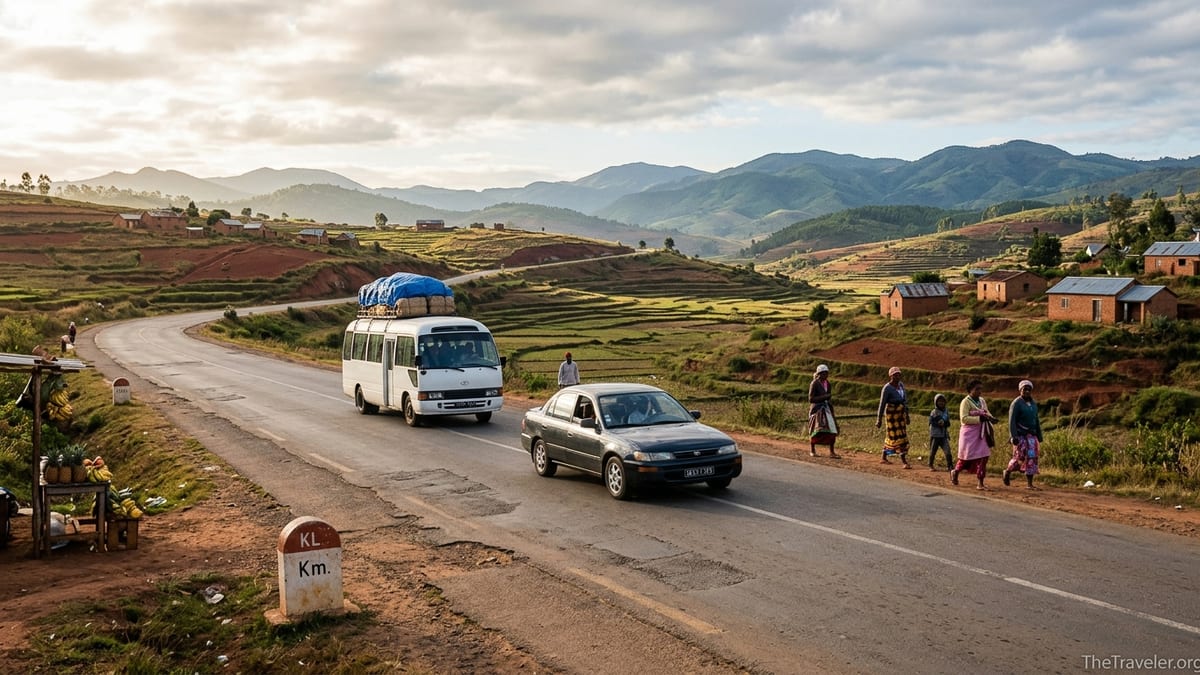
For visitors arriving from Europe or North America, the RN7 often serves as a first real introduction to Madagascar’s Highlands. Leaving Antananarivo you pass brick-making villages, rice paddies and red earth hillsides, watching the landscape shift gradually as altitude increases. Although this is a national highway, expect a two-lane paved road with occasional narrow bridges, local herders at the roadside and frequent speed bumps at village entrances. Average speeds around 40 to 60 kilometers per hour are normal even for experienced local drivers in daylight.
Because conditions can change with the rainy season and ongoing maintenance, timing is always approximate. In dry season months, many private drivers schedule three and a half to four hours of pure driving time, not counting coffee breaks. In the rains, or if you hit rush hour leaving Antananarivo, the same run can easily stretch to five hours. This variability is why it makes sense to treat the Antananarivo to Antsirabe leg as a half day or full day in your itinerary, not a short transfer squeezed between other activities.
Private Driver: Comfort and Flexibility on the RN7
For most visitors with mid range or higher budgets, hiring a private car with driver is the most comfortable way to travel between Antananarivo and Antsirabe. Several Antananarivo based agencies quote day rates that typically bundle the vehicle and driver together, with fuel either included or charged separately. Recent sample prices for a one day Antananarivo to Antsirabe transfer in a standard sedan or small 4x4 often fall somewhere between 80 and 160 euros, depending on vehicle type, whether the car is returning empty, and whether you add in sightseeing stops.
In practice, many agencies price by the day rather than per kilometer. A reputable operator might charge around 200,000 to 300,000 ariary for a day’s use of a basic car with driver, excluding fuel, while a 4x4 with a professional driver can sit higher. Fuel for the 170 kilometer run might add the equivalent of roughly 25 to 40 euros depending on pump prices and vehicle consumption. These figures are illustrative rather than fixed, but they give you a realistic sense of the order of magnitude and why a private transfer feels more like a modest tour cost than a cheap taxi ride.
The main advantage of a private driver on this route is flexibility. You can leave Antananarivo after a relaxed breakfast, ask to avoid the most chaotic rush hour arteries, stop for photos when the rice terraces catch the light, or linger over lunch in Ambatolampy without worrying that your seat will be sold. A professional driver familiar with the RN7 will also handle police checkpoints, road works detours and tricky overtaking of heavy trucks, which can feel stressful for newcomers unused to Malagasy traffic habits.
Travelers with bulky luggage, camera gear or surfboards appreciate the extra space and control over the luggage situation that a private vehicle provides. Most drivers will work with you to secure bags inside the car rather than on the roof for better security, and you can keep day packs within reach. For groups of three or four, splitting a private transfer can bring the per person cost close to what independent travelers might spend piecing together taxis across the city and a taxi brousse seat, while remaining much more comfortable.
Self Drive Rental Car: Independence with Important Caveats
Self drive car rental in Madagascar exists, but it is far less common than hiring a car with driver, and many agencies either discourage it or restrict it to experienced drivers. On paper, driving yourself from Antananarivo to Antsirabe might look straightforward. The RN7 is paved and signposted, and at 170 kilometers the distance appears manageable. In reality, visitors must consider urban traffic leaving Antananarivo, unpredictable potholes, livestock occasionally straying onto the road, and local driving styles that include sudden braking and overtaking on narrow stretches.
Rental prices for self drive vehicles often do not differ dramatically from the cost of hiring a car with a driver, particularly once you add in insurance and the higher deposit that agencies demand when handing the keys directly to foreigners. Several operators quote daily rates that are only modestly lower for self drive than for a car plus driver. When you factor in the driver’s wage, local knowledge and ability to handle minor mechanical issues, the financial advantage of driving yourself on the RN7 is frequently smaller than first time visitors expect.
If you do choose self drive, allow even more generous journey times than the typical four hours that a local driver might plan. Without experience in Malagasy road etiquette, you will likely drive more cautiously and stop more often to check directions or take breaks. It is wise to plan for five hours between Antananarivo and Antsirabe during daylight, leaving extra margin to avoid ever driving this route after dark. Night driving combines unlit roads, occasional pedestrians and animals on the carriageway, plus trucks with dim or glaring headlights, making conditions far riskier.
Before committing to self drive, honestly assess your comfort with right hand driving on the left side of the road, manual gearboxes, and navigating unfamiliar cities where GPS coverage may be partial. In many cases, couples who imagined they would enjoy complete independence on the RN7 come away relieved they chose instead to sit back behind a local driver, especially on the first leg out of Antananarivo when jet lag and unfamiliarity are at their peak.
Shared Transport: Taxi Brousse and Shuttle Options
For budget travelers or those who enjoy local experiences, the classic way to travel from Antananarivo to Antsirabe is by taxi brousse, Madagascar’s network of shared minibuses. Services heading south generally depart from the Fasan’ny Karana station in the southern part of the capital. From there, multiple companies run vehicles along the RN7 with Antsirabe as an early major stop before continuing toward destinations such as Ambositra and Fianarantsoa. Seats for Antsirabe are usually sold as far as demand requires, and departures tend to be more frequent in the morning.
Recent price surveys put a one way taxi brousse ticket between Antananarivo and Antsirabe in the range of roughly 25,000 to 40,000 ariary per person, depending on company and how much competition operates on your travel day. This makes shared vans significantly cheaper than a private car. The trade off comes in comfort and predictability. Vehicles depart when full, which can mean a short wait or a frustrating delay if you arrive at the wrong time. Interior space is tight, and luggage often rides on the roof, tied down under a tarpaulin. Journey times for taxi brousse typically hover around four to five hours, though breakdowns, unscheduled stops to pick up extra passengers and traffic leaving Antananarivo can extend this further.
Some higher end shuttle style services have appeared in recent years, offering more comfortable seats and slightly more structure than classic taxi brousse travel. These may operate from specific agencies rather than the main bus station, sometimes using modern minibuses with limited capacity. Fares sit higher than the cheapest shared vans but remain well below private car rates. For solo travelers or couples on a moderate budget, these services can strike a good balance, providing a scheduled departure, more reliable journey times and the ability to reserve seats in advance through a hotel or local agent.
Whichever shared option you choose, keep valuables in a small day pack that stays on your lap or at your feet, not on the roof. If you are carrying large backpacks, expect to pay a small supplement for luggage. It is also worth planning your arrival time in Antsirabe so that you are not walking from the bus station to your accommodation late at night. Many guesthouses can send a tuk tuk or car to collect you if you let them know your approximate arrival time and the company you are using.
Realistic Journey Times, Departure Planning and Safety
For planning purposes, visitors should treat Antananarivo to Antsirabe as a half day minimum, and ideally a flexible day, no matter which transport mode they choose. If you are traveling by private car on a clear dry season weekday, leaving central Antananarivo between 7:30 and 8:30 in the morning usually allows you to clear the worst rush hour traffic and reach Antsirabe in the early afternoon, around 12:30 to 14:00, depending on how often you stop. Travelers who leave after midday risk hitting heavier truck traffic and may find themselves approaching Antsirabe in the dark, which is best avoided.
Taxi brousse users should factor in additional time to reach the southern bus station from their hotel, which, in city traffic, can easily take 45 minutes or more. On top of this, add waiting time for the vehicle to fill and possible stops along the route. In practice, many backpackers leaving Antananarivo early in the morning find that they do not check into their guesthouse in Antsirabe until mid or late afternoon. For this reason, it rarely makes sense to schedule onward private transfers or domestic flights on the same day as a southbound bus journey.
Safety on the RN7 between Antananarivo and Antsirabe is generally good by regional standards, especially in daylight. The main risks are road related: potholes, sudden slowdowns, livestock and unlit obstacles rather than banditry. Nevertheless, most local operators strongly recommend avoiding night driving wherever possible. If you are arriving on an international flight into Antananarivo in the evening, consider spending at least one night in the capital and traveling to Antsirabe the next morning rather than attempting to push through directly after dark.
Weather can influence both journey time and comfort. In the cool dry winter months, the altitude of Antsirabe means you may arrive to a noticeably cooler climate than Antananarivo, especially after sunset. In the rainy season, intense downpours can reduce visibility and create standing water in potholes, forcing drivers to slow significantly. Having a flexible plan, with no tight connections, is the best insurance against both weather and traffic surprises along this route.
Stopovers and Sights: Ambatolampy and Highland Viewpoints
One of the best arguments for turning the Antananarivo to Antsirabe journey into a sightseeing day is the presence of interesting stops along the RN7, particularly around Ambatolampy. This highland town, roughly midway between the two cities, is known for its aluminum workshops that cast traditional Malagasy cooking pots and other household items. Many private drivers routinely pause here for a coffee break or an early lunch, and some will arrange brief factory visits where you can see the casting process and browse simple souvenirs.
A typical example might involve leaving Antananarivo around 8:00, stopping in Ambatolampy around 10:30 for an hour to stretch your legs, visit a small workshop and enjoy a meal in a roadside restaurant, then continuing on to arrive in Antsirabe between 14:00 and 15:00 after additional scenic stops. Along the way, there are several points where the RN7 crests ridges with views over patchwork rice fields and red brick hamlets. Your driver will usually know safe lay bys where you can pull over briefly to take photos without blocking traffic.
Beyond Ambatolampy, smaller roadside markets sell seasonal produce such as fruits, peanuts and local snacks. While facilities remain simple, these stops offer a glimpse into daily life and a chance to chat with vendors or simply observe. Travelers interested in photography often appreciate being able to pause when the morning haze lifts or when late afternoon light warms the hills, something that is nearly impossible if you are on a packed taxi brousse schedule where the driver decides when and where to stop.
If you prefer a quieter, more direct ride, you can certainly limit yourself to one or two short breaks for fuel and restrooms. Even then, allowing time for a short visit in Ambatolampy usually enriches the day without adding excessive hours to the journey. Communicate your preferences clearly to your driver at the start of the day so they can plan fuel and meal stops accordingly.
Luggage, Comfort and Practical Tips for the RN7
Luggage management is a key consideration on the Antananarivo to Antsirabe run, particularly if you are traveling beyond Antsirabe into more remote parts of the RN7 later on. In a private car, try to keep all large bags in the trunk and smaller day packs with valuables inside the passenger compartment. Avoid leaving electronics or passports visible when the vehicle is parked in busy areas. Many professional drivers are accustomed to tourists carrying cameras and laptops and will suggest where to park so that the car stays in sight during meal stops.
In taxi brousse and shared vans, luggage is more exposed. Large backpacks typically go on the roof, where they are lashed down with ropes and covered. This system works reasonably well in dry weather, but you should still use a rain cover or plastic liner for additional protection. Keep at least one set of warmer clothes easily accessible, since Antsirabe’s higher altitude can make evenings feel cool after a warm day on the road. Inside the vehicle, carrying a light jacket or scarf is useful because windows may be open for ventilation and temperatures fluctuate as you climb into the Highlands.
Regardless of your transport choice, bring water and snacks for the road. While there are roadside stalls and basic restaurants in Ambatolampy and other towns, options between stops can be sparse. Hand sanitizer and pocket tissues are useful in case roadside restroom facilities are limited. If you are prone to motion sickness, talk to your doctor before travel about suitable medication, as the RN7 includes some winding sections and sudden braking can be frequent in traffic.
Payment for small purchases and informal services along the RN7 is overwhelmingly in cash. Keep a mix of small denomination ariary notes for toilet fees, market snacks and tip money. Larger service payments such as private car hire are normally settled in advance by transfer or cash in Antananarivo. Clarify with your driver or agency whether meals and accommodation for the driver are included in the quoted price, especially if your itinerary continues beyond Antsirabe over several days.
Direct Transfer or Full Sightseeing Day: How to Choose
Deciding whether to drive directly from Antananarivo to Antsirabe or to stretch the journey into a sightseeing day depends on your overall itinerary, budget and energy levels. If your time in Madagascar is short and you have a tight schedule heading further south toward Ranomafana or Isalo, you may prefer to treat this leg as an efficient transfer. In that case, a private car leaving early in the morning, with just a single coffee stop in Ambatolampy, will usually get you into Antsirabe by early afternoon with enough daylight left to explore the town’s central lake or check into your hotel and rest.
On the other hand, many travelers find that slowing down on their first RN7 segment pays dividends for the rest of the trip. Using a private driver or flexible shuttle, you can build in an hour at an aluminum workshop in Ambatolampy, a stop at a hilltop viewpoint over rice terraces, and perhaps a relaxed lunch at a local restaurant. You might then arrive in Antsirabe later in the afternoon feeling that the day has been a worthwhile part of the journey rather than dead travel time. This approach is particularly attractive for families or photography enthusiasts, as the Highlands around Ambatolampy offer classic Malagasy rural scenes.
Budget travelers relying on taxi brousse have less control over stops, so the decision is often more about how much energy and time you want to devote to this leg. Since shared vans already take most of the day door to door, there is usually little value in artificially extending the trip further. Instead, you can focus on choosing a morning departure, securing a good seat and keeping your day pack accessible so you can enjoy views as they appear through the window. Once in Antsirabe, you can then plan separate half day excursions by pousse pousse or hired car into the surrounding countryside, where you are free to stop as often as you like.
Whichever strategy you choose, the crucial point is to avoid underestimating the time needed. Treat Antananarivo to Antsirabe as a stand alone travel block. Trying to add a long hike, a complex city tour or a domestic flight on the same day can turn a pleasant Highland drive into a stressful race against the clock. Building in margin, especially on the first few days of your Madagascar trip, will help you absorb delays calmly and enjoy the distinct rhythm of travel along the RN7.
The Takeaway
The 170 kilometer journey from Antananarivo to Antsirabe is much more than a simple line on a map. It is a four to five hour immersion into Madagascar’s Central Highlands, where traffic, roadworks and village life all blend into the rhythm of the RN7. Travelers who plan realistically for the time involved and choose transport that fits their comfort level tend to arrive in Antsirabe far more relaxed than those who treat the route as a quick hop.
Private cars with drivers offer the most flexibility and comfort, especially if you want to enjoy stops in Ambatolampy and at rural viewpoints. Taxi brousse and shared shuttles remain the backbone of local and budget travel, but they require patience and a willingness to accept uncertain departure and arrival times. Self drive is possible yet better suited to confident drivers with experience on similar roads. In every case, scheduling your departure in the morning, keeping luggage secure and compact, and avoiding night driving will make your first encounter with the RN7 safer and more enjoyable.
If your itinerary allows, consider turning the transfer into the beginning of your Highlands experience rather than a hurdle to clear. By doing so, the journey from Antananarivo to Antsirabe becomes a memorable part of your Madagascar story, not just the distance you had to cover to get there.
FAQ
Q1. How long does it really take to travel from Antananarivo to Antsirabe?
Most travelers should expect around four to five hours door to door, depending on traffic leaving Antananarivo, roadworks along the RN7 and the number of stops you make.
Q2. Is the RN7 between Antananarivo and Antsirabe safe to drive?
In daylight the RN7 is generally considered safe, with the main risks coming from potholes, livestock and unpredictable traffic rather than security issues, but night driving is best avoided.
Q3. What is the typical cost of a private car with driver on this route?
Recent examples suggest that a one day Antananarivo to Antsirabe transfer in a car with driver often falls somewhere between 80 and 160 euros, depending on vehicle type and whether fuel is included.
Q4. How much does a taxi brousse ticket cost between Antananarivo and Antsirabe?
Taxi brousse fares on this route commonly range from about 25,000 to 40,000 ariary per person, varying by company, season and competition on the day you travel.
Q5. Where do taxi brousse services to Antsirabe depart in Antananarivo?
Shared minibuses heading south along the RN7 usually depart from the Fasan’ny Karana bus station in the southern part of Antananarivo, reached by local taxi from most city hotels.
Q6. Should I plan any stopovers between Antananarivo and Antsirabe?
Many travelers enjoy a mid journey break in Ambatolampy to visit aluminum workshops or have lunch, and some ask their driver to stop briefly at scenic Highland viewpoints along the RN7.
Q7. Is self drive a good option for this route?
Self drive is possible but less common, as local agencies often recommend hiring a car with driver due to traffic in Antananarivo, potholes and unfamiliar driving styles along the RN7.
Q8. What time of day is best to leave Antananarivo for Antsirabe?
Leaving between 7:30 and 8:30 in the morning usually helps you avoid the worst congestion and arrive in Antsirabe by early or mid afternoon while it is still light.
Q9. How should I manage luggage on taxi brousse services?
Large backpacks typically go on the roof under a cover, while valuables should stay with you in a small day pack that you keep on your lap or at your feet.
Q10. Is it better to use this journey as a direct transfer or a sightseeing day?
If time is tight, travel directly with minimal stops, but if your schedule is flexible, turning the day into a relaxed drive with a stop in Ambatolampy often makes the journey more rewarding.