


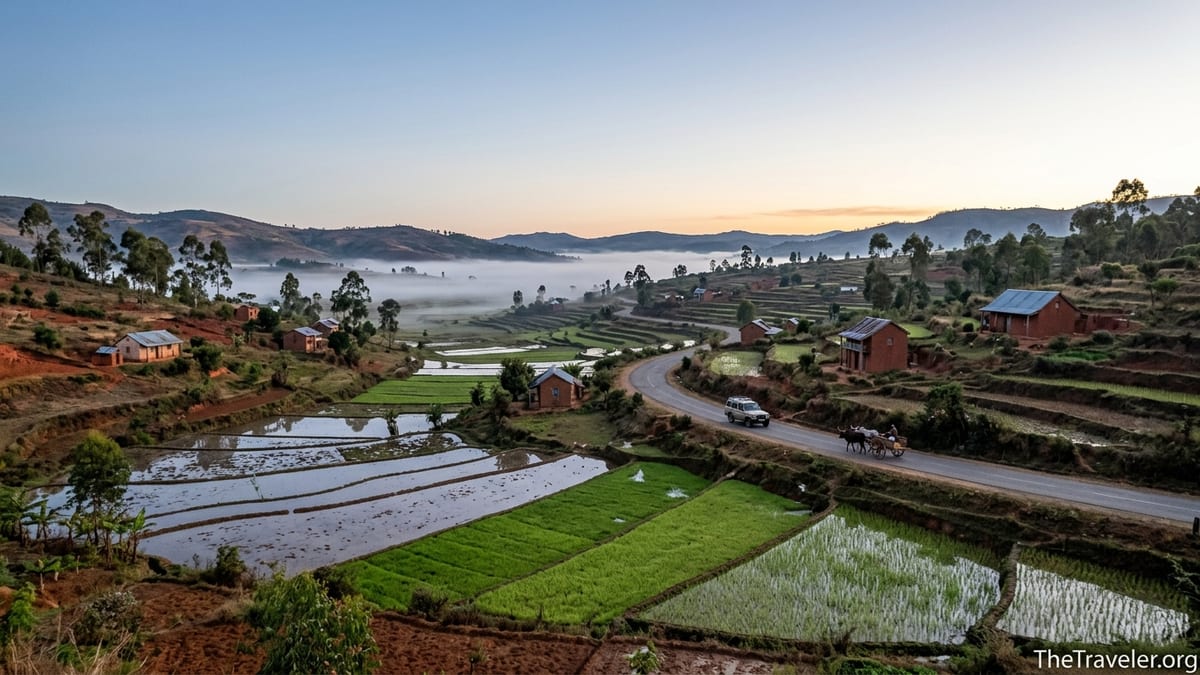
Madagascar’s central highlands feel like a different country from the tropical coasts. Antananarivo, Antsirabe and Fianarantsoa sit on a cool plateau where misty mornings, terraced rice paddies and red-earth villages define the landscape. Choosing the right season here is less about beaches and more about road quality, night-time cold, rice cycles and visibility in the mountains. This guide focuses specifically on the highlands and the RN7 corridor, helping you decide when to come for road trips, trekking, rice-field scenery and village travel.
Understanding the Highlands Climate
The Madagascar highlands stretch roughly from Antananarivo south through Antsirabe, Ambositra and Fianarantsoa toward the granite massifs near Andringitra National Park. Elevations often range between 1,200 and 1,600 meters, with peaks above 2,000 meters near Andringitra. At these altitudes the climate is markedly cooler than on the coasts. Antananarivo, for example, has mild dry winters and warm, rainy summers, while Antsirabe has recorded winter night temperatures below freezing, around 0 to minus 1 degrees Celsius, some of the coldest readings in the country. Even in the main rice-growing season the highlands show a large day–night temperature range of around 10 degrees or more, which you feel as warm afternoons followed by sharp evening chills.
The year divides into two broad patterns. From about November to March the warm rainy season dominates, with heavier downpours from January into March. From April to October conditions are generally drier, with the core cool season from June to August. Within this, April to June and September to October sit on the seasonal “shoulders,” mixing residual rains or early storms with increasingly clear skies. The key for travelers is that the highlands dry out earlier and cool down more than low-lying coastal regions, so what feels like summer on the beach can be a crisp, jacket-weather day in Antsirabe.
Because of this altitude effect, highland nights can surprise visitors who have packed only for the tropics. In June or July it is common to see local residents in Antsirabe or Fianarantsoa wrapped in thick scarves and beanies at dawn, even while visitors arriving from coastal towns like Tulear or Toamasina are still in T-shirts and sandals. Around the highest trekking areas in Andringitra, where trails climb from about 700 meters up to more than 2,600 meters, pre-dawn temperatures can feel close to alpine conditions, especially when wind and cloud roll in.
The climate also shapes agriculture, and in particular the rice terraces that make the highlands so photogenic. The main rice season in the highlands runs roughly from October to May, with seedlings transplanted as the rains establish and harvests completed by the end of the wet season. Around the Betsileo country south of Fianarantsoa, where terraced paddies march up steep valley sides, different fields within a valley can be at different stages of the cycle, creating a patchwork of flooded mirrors, bright green shoots and golden heads. This agricultural calendar, combined with the weather, strongly influences what you will actually see on a given journey.
April to June: Fresh Green Landscapes and Improving Roads
From April into early June, the highlands transition from the wet, storm-prone summer to the cool dry season. Rainfall decreases, especially by May, but the landscape still holds a lot of moisture from previous months. Rice paddies are typically nearing harvest or being cut, depending on local microclimates and altitude. Around Ambalavao and the approaches to Andringitra, you may see farmers bundling golden rice stalks in fields that were lush green only weeks before. The hillsides stay vivid after months of rain, so road trips along the RN7 feel framed by saturated red earth, fresh pasture and waterlogged paddies.
For road trips, April is still a shoulder month. The main RN7 between Antananarivo, Antsirabe and Fianarantsoa is paved, but heavy summer rains can leave potholes and short muddy detours, and some riverside sections may have suffered erosion. By May, however, conditions usually improve significantly. Travelers driving a hired Toyota Land Cruiser with driver out of Antananarivo often report that by late May the asphalt is mostly dry, with only occasional water-filled potholes. Access tracks that branch off the RN7, such as the dirt road toward Andringitra’s park entrance south of Ambalavao, can still be greasy after showers, so a 4x4 and conservative driving remain advisable.
For trekking, April and May offer a balance of clear spells and lingering waterfalls. In Andringitra National Park, guides often recommend April through November as the main hiking season, with April and May combining comfortable daytime temperatures with relatively full rivers and cascades. Daytime highs on popular routes like the summit trek to Imarivolanitra often sit in the mid-teens to low twenties Celsius, while nights can drop close to single digits at higher camps. In practice that means hiking comfortably in a light base layer and fleece, but sleeping under thick blankets or in a three-season sleeping bag.
Photographers and culture-focused travelers will find April to June rewarding. Villages along the highlands often devote this period to harvesting and drying rice, stacking sheaves on the paddies’ stone banks and spreading grain to dry on woven mats in front yards. In Antsirabe’s countryside, ox-drawn carts carry sacks of rice along laterite lanes, and the morning air is cool enough that breath can be visible. For those planning to continue south on RN7 to the drier regions near Isalo and Tulear, starting in late April or May means leaving the highlands while they are still green and reaching the southwest as that region shifts into its sunny, dry-season peak.
June to August: Cold, Dry Winter in the Highlands
June, July and August bring the highland winter, a cool, dry period that coastal Madagascar visitors sometimes underestimate. Around Antsirabe, which sits at about 1,500 meters, average daytime temperatures in these months hover in the mid-teens Celsius, but clear skies allow night temperatures to fall close to or below freezing. Antsirabe holds the record for the lowest temperature recorded in Madagascar, around minus 1 degree Celsius, and sub-zero nights in July are not unheard of. In Fianarantsoa, slightly lower in elevation, evenings are also cold, and hotel staff routinely lay out heavy blankets and sometimes hot-water bottles for guests.
For road trips, winter is the best season for reliability along the highlands section of the RN7. With rain rare, long stretches of the route are dry and dust replaces mud on side tracks. Visibility is excellent on most days, with crisp, clean air and blue skies. Drivers covering the Antananarivo to Fianarantsoa run often manage the distance in a long day with regular photo stops, though many travelers wisely break the journey with a night in Antsirabe or Ambositra to explore local craft markets. The main winter nuisance is morning fog, especially in basins near Antananarivo, which can slow traffic until mid-morning.
For trekking, winter is prime time if you can tolerate the cold. Trails in Andringitra, the Anja Community Reserve near Ambalavao, and smaller highland hills around Antsirabe tend to be firm and not waterlogged, reducing the risk of leech encounters and muddy slips. However, at altitude the combination of cold and wind can be biting. On popular overnight treks to Andringitra’s Imarivolanitra summit, guides often recommend down or synthetic insulated jackets for evenings, gloves and beanies, and base layers for sleeping. Frost on grass around high camps in July is a realistic possibility, something that can surprise travelers who associate Madagascar exclusively with tropical beaches.
The cold, clear air of winter also favors photographers. Sunrise over terraced paddies near Fianarantsoa or in the Betsileo country south of the city often reveals layers of mist settled in valleys, burning off by mid-morning to reveal sharply defined ridgelines and stone-walled fields. Because most rice has already been harvested, many paddies stand as reflective pools or bare earth rather than green carpets. The aesthetic shifts from lush to sculptural: brown earth geometry, grazing zebu cattle, and women carrying firewood along ridge paths. For cultural touring, winter is a calm period when farmers switch to secondary activities such as brickmaking near Antananarivo and Antsirabe, and village life is less dominated by planting or harvest rush.
September to October: Warmer Days and Rice Fields Coming to Life
By September and October, temperatures in the highlands start to climb again, although nights remain cool enough to require a sweater or light jacket. Days in Antananarivo and Antsirabe often reach the low to mid-twenties Celsius, making it pleasant to walk through markets or explore surrounding countryside without the bite of winter wind. Rains are still relatively infrequent but increase toward late October as the wet season begins to build. Skies remain mostly clear in September, lending a soft, hazy quality to afternoon light that works well for landscape photography.
This period coincides with the beginning of the new rice cycle in many highland valleys. Farmers prepare paddies at the end of the dry season, then seedlings are sown or transplanted as the first reliable rains arrive, usually from October onwards. In practice, that means that by late October you may see flooded terraces shimmering like mirrors, with people working barefoot in the mud to plant rows of bright green seedlings. Around Ambositra and the Zafimaniry country, terraced slopes begin to show a patchwork of early growth stages, and the countryside feels busy but not yet overwhelmed by peak-season rains.
For road trips on RN7, September and October link the dry dependability of winter with a return of green to the landscape. The route remains mostly dry, and access tracks to villages or trailheads, such as the rough track toward Andringitra or smaller roads to Betsileo hamlets, are usually near their most passable before the rains arrive. This is a good period for self-drive travelers willing to hire a sturdy 4x4, as river levels are typically low and fords manageable. Fuel stops, though still spaced irregularly, are more predictable when roads are not cut by weather.
For trekkers, September and October bring more comfortable night temperatures while keeping trails relatively dry. Day hikes around Antsirabe to crater lakes like Lac Tritriva or Lac Andraikiba are enjoyable in light clothing, with only a fleece needed at dusk. Longer treks in Andringitra benefit from extended daylight and lower risk of heavy afternoon storms compared with the full rainy season. Culturally, villages feel active: children walk to school in the brisk mornings, markets bustle with dry-season produce, and travelers can combine trekking with homestays without the logistical disruptions that storms can bring.
November to March: Warm Rains, Rice Season and Travel Disruptions
The November to March rainy season brings a very different feel to the highlands. Temperatures rise, with daytime highs regularly into the mid and upper twenties Celsius in Antananarivo and Fianarantsoa. Nights become milder, and cold snaps are rare. For many farmers this is the vital growing season: paddies are green, rivers swell, and hillsides look intensely lush. Travelers driving RN7 in December or January will notice that almost every valley floor between Antsirabe and Fianarantsoa shines with rice terraces in various shades of green, from neon seedlings to darker maturing plants.
However, these rewards come with real travel challenges. Heavy rains, particularly from January to March, can cause landslides, washouts and pothole formation on the RN7 and surrounding roads. While the main highway generally remains passable, sections may slow to a crawl after storms, and delays of an hour or more due to roadworks or temporary closures are not unusual. Dirt tracks to highland attractions, such as the approach to Andringitra National Park, can become sticky mud that only high-clearance 4x4s with experienced drivers should attempt. In extreme cases, local authorities or park staff may advise against travel into certain areas until conditions improve.
For trekking, the rainy season is the least predictable period. Trails can be slippery and leech-prone, cloud cover can arrive quickly to erase views, and afternoon thunderstorms are common. Andringitra’s granite peaks often sit inside a cloak of cloud for days at a time, making summit attempts less rewarding. Local guides sometimes steer visitors toward shorter valley walks or waterfalls rather than multi-day high-altitude treks. On the other hand, the combination of warm air, heavy clouds and green fields gives photographers atmospheric scenes, particularly at lower elevations where rice paddies, wooden houses and mist create moody compositions.
Culturally, the rainy months are central to highland life. Villages are busy in the fields, transplanting or weeding rice. Travelers who are less focused on covering long distances and more on staying several days in one place, such as near Fianarantsoa or in the countryside around Ambositra, can still have rewarding stays by timing activities between showers and working closely with local guides. In practice, this might mean spending mornings walking between terraced paddies and afternoons under shelter in a village house, drinking hot tea while rains drum on metal roofs. For anyone planning to continue south on RN7 to the far southwest, it is important to remember that while Tulear and surrounding beaches may be hot and sunny, sections of the inland route you must cross can still be affected by storms and swollen rivers.
What to Pack for Altitude and Season
Packing for the Madagascar highlands requires a different approach from the coast, even if you are visiting both on the same trip. In winter, particularly from June to August, you will need clothing suitable for near-freezing nights in towns like Antsirabe and potentially colder conditions at alpine camps in Andringitra. That typically means a warm fleece or lightweight down jacket, a thermal base layer, long trousers, wool socks, and a beanie and gloves. Many mid-range hotels in Antsirabe and Fianarantsoa, including simple guesthouses, provide thick blankets but may not have central heating, so sleeping in warm pajamas is advisable.
Footwear for road trips and light walks can be simple trainers or sturdy walking shoes, but trekkers should bring broken-in hiking boots with good grip, especially for the rocky paths of Andringitra and the sometimes muddy trails around villages. A compact rain jacket is useful year-round, not only in the rainy season. Even in July, weather can change quickly at altitude, and a passing shower combined with wind can chill you fast. During the rainy season, quick-drying trekking pants, gaiters and even a lightweight poncho become valuable for anyone planning serious walking.
For sun and altitude exposure, pack sunglasses and a hat for all seasons. The winter sun at 1,400 to 2,000 meters can be surprisingly strong, particularly with light reflected off pale rice paddies or granite slopes. Sunscreen with at least SPF 30 is recommended, even for days that start cloudy. At the same time, evenings often call for layers: you might spend an afternoon in a T-shirt photographing Betsileo farmers in bright light, then need a fleece jacket an hour later when the sun drops and a chill settles across the valley.
For travelers continuing south on RN7, packing must also account for climate contrast. Leaving the highlands in July, you can depart Antsirabe in a beanie and jacket, drive through cool Fianarantsoa, and arrive in Tulear in late afternoon heat above 30 degrees Celsius. Having both warm layers and light coastal clothing in an easily accessible day bag is more practical than burying one set at the bottom of your luggage. A small dry bag for electronics is wise if you drive during the rainy season, when sudden downpours or roof leaks in older vehicles are common.
Best Seasons by Travel Style
For cultural touring, including village visits, market days and craft workshops, April to June and September to October are ideal. In these months, rural life in the highlands is fully active, but rain is either tapering off or has not yet reached its peak. You can walk between rice paddies near Ambositra to watch Zafimaniry woodcarvers, visit weaving cooperatives around Fianarantsoa, or ride a pousse-pousse in Antsirabe without dealing with constant downpours. Winter months are also good culturally, but the early-morning cold can make outdoor village life feel quiet until the sun has warmed the air.
Photographers often prefer the dry season from June to August for clarity, followed by September and October for a blend of good light and returning greenery. In winter, landscapes offer strong contrast and long views, perfect for capturing the geometry of terraces and the texture of laterite hills. If your goal is scenes of vivid green rice paddies, late November to early February usually offers the richest color, albeit with a risk of clouds and rain obscuring a carefully planned shot. A compromise window is April or May, when valleys may still hold pockets of green and gold rice, but skies are more cooperative.
Trekking enthusiasts will get the most consistent conditions from April through October, with June to August the driest but coldest period. If you dream of standing on Andringitra’s summit under clear stars, consider scheduling for July or August, accepting freezing nights in exchange for reliable weather. If you feel the cold strongly but still want to hike, April, May, September and October bring milder nights while keeping most trails in decent condition. During the rainy season, short day hikes near Antsirabe or in the lower hills around Fianarantsoa are sometimes still possible, but multi-day treks to high ridges or peaks are best avoided unless you are very flexible and have local guidance.
For travelers continuing south along RN7 to Isalo National Park and the coast near Tulear, the overall best period is May to October. During these months, you benefit from the highlands’ dry roads and clear air, while the southwest bask in dry-season sunshine. A typical itinerary might leave Antananarivo in early June, spend a night in Antsirabe, visit Zafimaniry villages from Ambositra, continue through Fianarantsoa to Ambalavao and Anja Community Reserve, detour into Andringitra for a trek, then descend to the sandstone canyons of Isalo and finally the beaches near Tulear. Attempting the same journey in January could mean negotiating washed-out sections, flooded detours and possible schedule disruptions if tropical storms affect the route.
The Takeaway
Choosing the best time to visit Madagascar’s highlands is about matching your priorities with the plateau’s distinctive climate. If you value clear skies, reliable roads and mountain trekking, the cool dry winter months from June to August are hard to beat, provided you pack serious warm layers for nights around Antsirabe, Fianarantsoa and high camps. If you are more interested in rice landscapes at their greenest and everyday village life centered on agriculture, the shoulder seasons of April to June and September to October give you animated scenes with more manageable weather than the peak rains.
Road-trippers following the RN7 and trekkers heading into Andringitra should plan conservatively around the rainy season from November to March, when local advice and flexible schedules become essential. At any time of year, remember that the highlands are cooler than the coasts, and that a simple fleece, rain jacket and good footwear can make the difference between shivering through a highland evening and comfortably absorbing the rhythms of life in Madagascar’s elevated heartland.
FAQ
Q1. What is the single best month to visit the Madagascar highlands?
Many travelers find June the best compromise, with mostly dry roads, clear skies for trekking, cooler but not yet icy nights, and lingering green in the landscape after the wet season.
Q2. How cold does it really get at night in Antsirabe and Fianarantsoa?
In mid-winter, especially July, Antsirabe can approach or dip slightly below 0 degrees Celsius on some nights, while Fianarantsoa is usually a few degrees milder but still cold enough to require a warm jacket and blankets.
Q3. Is it safe to drive the RN7 through the highlands during the rainy season?
The main RN7 usually remains passable, but heavy rains from January to March can cause potholes, short closures and slow, muddy detours. It is safer to travel with a local driver, a high-clearance vehicle and a flexible schedule in those months.
Q4. When are the rice terraces around Fianarantsoa and Ambalavao at their greenest?
Rice terraces in the highlands are typically at their most vivid green between roughly December and early February, depending on altitude and local planting times, when plants are actively growing in flooded paddies.
Q5. Do I need serious hiking gear for treks in Andringitra National Park?
For multi-day treks and summit attempts in Andringitra, sturdy hiking boots, warm layers including a fleece or insulated jacket, a hat, gloves and a good-quality sleeping bag are strongly recommended, especially between June and August.
Q6. Are highland villages still interesting to visit in the dry winter months?
Yes, village life continues year-round. In winter, fields may be fallow or recently harvested, but people are active with brickmaking, repairs and craft production, and cool, clear weather makes walking between villages comfortable.
Q7. What clothing should I pack if I will visit both the highlands and the southwest coast?
Bring layers: light shirts and breathable trousers or shorts for hot coastal days, plus a fleece or down jacket, long pants, closed shoes, and a beanie for cold nights in the highlands, especially between June and August.
Q8. Is trekking in the highlands possible during November and December?
Short hikes are often possible, but weather becomes more unsettled as the rainy season builds. Trails may be muddy, and cloud can obscure mountain views, so multi-day treks should be planned with local guides and backup options.
Q9. How many days should I allow to drive RN7 from Antananarivo through the highlands to Tulear?
A comfortable pace is 7 to 10 days, allowing time for stops in Antsirabe, Ambositra, Fianarantsoa, Ambalavao, a side trip to Andringitra or Anja Community Reserve, and then onward to Isalo and the coast near Tulear.
Q10. Are highland hotels heated, or will I be cold at night?
Most mid-range and budget hotels in the highlands do not have central heating, but they provide thick blankets and sometimes hot-water bottles. With appropriate warm clothing and layers, most travelers sleep comfortably even in winter.