

Madagascar can be a rewarding destination for first-time visitors, with lemurs, baobab trees and wild coastlines you will not find anywhere else. It is also a low-income country with fragile infrastructure, visible poverty and uneven security outside the main tourist areas. Safety for travelers is less about avoiding Madagascar altogether and more about understanding the real risks, planning around them and traveling in a way that fits local conditions in 2026.
So, is Madagascar safe to travel in 2026?
For most visitors who stick to established routes, use reputable local guides or drivers and avoid risky road travel at night, Madagascar is generally manageable rather than outright dangerous. The main threats you are likely to encounter are petty theft in cities, unsafe road conditions, occasional banditry on isolated highways and weather-related disruption during the rainy and cyclone season from roughly November to April. Government advisories from countries such as the United States, Australia and Canada all recommend a high degree of caution rather than advising all tourists to stay away.
In practical terms, that means Madagascar is not comparable to a heavily touristed destination like Mauritius or the Seychelles, where infrastructure is modern and security is tight around resorts. It is closer to traveling in rural parts of mainland East Africa: rewarding and authentic, but better suited to travelers who are comfortable with basic conditions, slow journeys and adapting plans as they go. If you are willing to travel with a driver, stay in reputable guesthouses and keep nights on the road to a minimum, most itineraries run smoothly.
Where travelers run into trouble is often when they underestimate distances and road conditions and end up driving late into the night, or when they walk around Antananarivo with visible valuables, phones in hand and backpacks open. Political tensions and demonstrations can also flare in the capital, and there have been cases of overnight curfews in recent years. Giving yourself margin in your schedule and following local advice on what to avoid is more important here than in many better-connected countries.
Understanding everyday crime and urban security
Petty theft is the most common security issue for visitors, especially in Antananarivo (often shortened to Tana) and other cities. Recent advisories note that muggings and bag snatches happen in crowded downtown streets, at markets like Analakely and around busy taxi stands, particularly after dark. You might, for example, be targeted if you are walking alone at night near Independence Avenue with a daypack on your back and your phone in an outer pocket.
Violent crime exists, including armed robberies and home invasions, but tourists are less frequently affected when they stay in secure guesthouses and avoid wandering around residential areas at night. You are more likely to experience an attempted pickpocket on a packed minibus taxi or while taking photos in a crowded area without paying attention to your surroundings. In practice, many visitors report feeling reasonably safe during the day in central Antananarivo, Diego Suarez (Antsiranana), Mahajanga and Tulear, provided they leave passports in a safe, carry only the cash needed and keep cameras in a zipped bag when not in use.
Standard big-city habits go a long way. Take registered taxis rather than walking across town at night, especially between restaurants and hotels. Ask your hotel staff which streets they consider safe to walk in the early evening and which to avoid. Do not use ATMs after dark if you can help it, and when withdrawing money during the day, use machines set inside shopping centers or bank lobbies where there is some security presence. Avoid street money changers and stick to banks or official exchange counters.
Road travel, driving after dark and isolated journeys
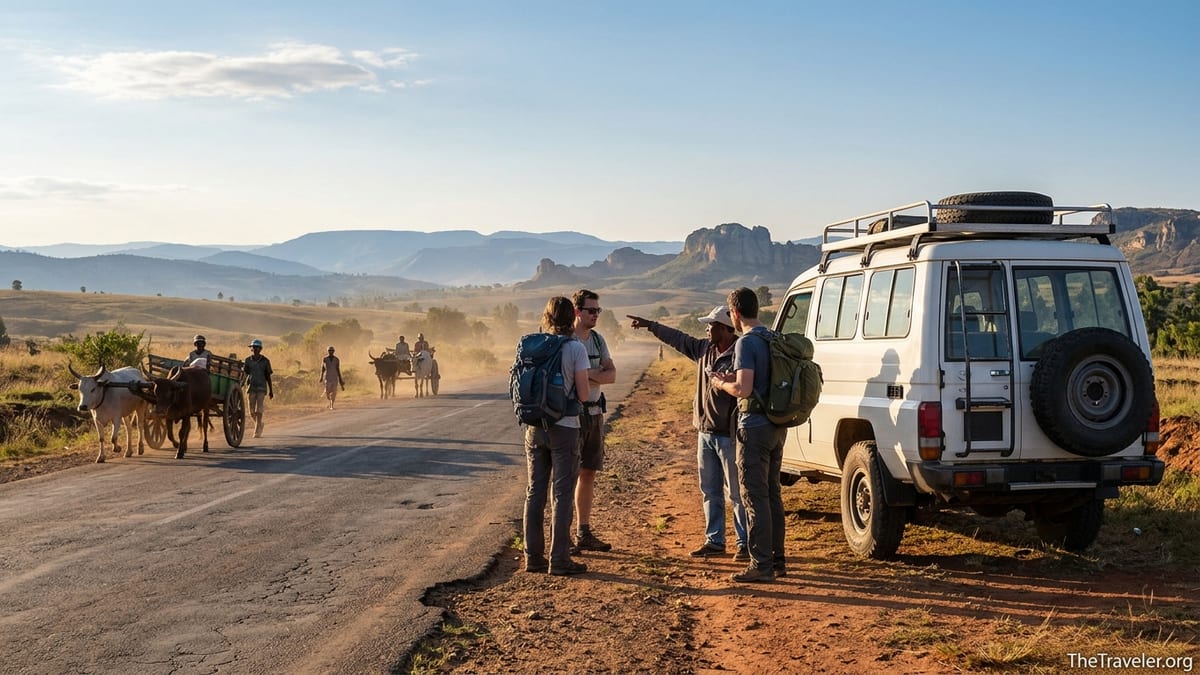
Road safety is one of the most serious risks in Madagascar. Even on main axes like the RN7 between Antananarivo, Antsirabe, Fianarantsoa, Isalo and Tulear, roads are often potholed, narrow and shared with pedestrians, zebu carts and livestock. Several governments note a significant risk when traveling by road, with limited emergency services and poorly maintained vehicles. Outside the capital, traffic lights and street lighting are rare, and long-distance trucks often drive at night to avoid daytime restrictions.
Attacks on vehicles by bandits have been reported on some national roads, especially at night. Local media in 2026 have carried reports of armed robberies affecting buses and private cars on stretches of RN7 and other routes in the central highlands and southwest. While tourists are not targeted systematically, traveling after dark on these roads increases your exposure to both crime and accidents. It is no coincidence that many embassies forbid their staff from driving between cities at night.
For first-time visitors, the safest option is almost always to hire a 4x4 with a professional driver through a reputable agency, particularly for the RN7, RN2 (to Andasibe) and any trip into more remote areas like the RN5 or tracks to Tsingy de Bemaraha. In 2025 and 2026, typical rates for a 4x4 with driver and fuel on main tourist routes are in the region of 60 to 90 euros per day, negotiated through local operators. A good driver knows where fuel is reliably available, how to handle police checkpoints and which stretches of road are currently considered risky after dark.
If you do choose to self drive, plan conservatively. A 250 kilometer leg that might take three hours on a European highway can easily take eight hours in Madagascar. Avoid leaving towns after lunchtime for long legs, because breakdowns or delays can leave you on unlit roads at night. Never wild camp by the roadside in your vehicle, and avoid giving rides to strangers on intercity journeys, however friendly they seem. When possible, join your route to local passenger schedules: for example, departing Antananarivo around 7 a.m. with your driver on the RN7 so you arrive in Antsirabe by midday and Fianarantsoa before dusk.
Antananarivo, tourist circuits, national parks and beaches: how risk levels differ
Antananarivo requires the most urban caution. Crowded central neighborhoods like Analakely, Isoraka and around the main bus stations see the most petty crime. Visitors typically arrive late at Ivato International Airport and face a 30 to 60 minute transfer into town. Arrange a pick up with your hotel or a known taxi company in advance rather than haggling with drivers outside the terminal at midnight. Many travelers now spend just one or two nights in Tana at the start or end of a trip, choosing guesthouses in relatively quiet and secure districts such as Ivandry or Isoraka rather than the most hectic downtown streets.
On the main tourist routes, risk tends to drop once you leave the capital and stay within established circuits. The classic RN7 itinerary from Antananarivo through Antsirabe, Ranomafana National Park, Isalo and down to the coast near Tulear is a good example. In the towns and parks along this route, visitors usually report feeling safe walking around during the day, especially in small centers like Ranomafana or Ranohira, where tourism is a key part of the local economy. Local guides and hotel staff are quick to share up to date advice, such as suggesting that you take a taxi rather than walk back from a restaurant after 9 p.m.
National parks and reserves, like Andasibe Mantadia, Ranomafana, Isalo, Ankarafantsika or Lokobe on Nosy Be, are generally considered among the safer places, as visits are usually organized with registered guides and sometimes with park rangers. You might, for example, join a small group hike in Andasibe at 8 a.m. with an official guide, pay your entry and guiding fees at the park office, then spend four to five hours on marked trails used only by visitors and staff. The main risks in parks are environmental rather than criminal: slips and falls on muddy paths, leeches in the rainy season, dehydration on hot days and getting lost if you stray from the guided routes.
Beach destinations are mixed. Nosy Be and its satellite islands, Sainte Marie (Nosy Boraha) and resort areas near Tulear such as Ifaty or Anakao have a long track record of receiving international visitors. Within established hotel zones, violent incidents involving tourists are rare, and daytime beach walks are normally relaxed. Problems are more likely late at night, particularly if alcohol is involved, or in isolated coves away from the main villages. Choose well reviewed guesthouses with secure rooms, avoid walking on dark stretches of beach with phones or cameras and ask staff which areas they consider safe to visit independently.
Remote areas, weather disruption and seasonal considerations
The further you move from main roads and tourist hubs, the more safety depends on up to date local advice. Remote regions in the south and west have seen longstanding problems with cattle rustling gangs, known as Dahalo, and related banditry. Governments specifically warn against travel in some districts in the south and southwest due to a combination of armed crime and weak state presence. In practice, most first time visitors do not need to approach these areas, and reputable tour operators will reroute itineraries away from them if the security situation deteriorates.
Weather is another key factor. Madagascar’s rainy and cyclone season typically runs from about November to April, with peak cyclone activity in mid season. In early 2024, for example, Cyclone Gezani brought destructive winds and flooding to parts of the island, damaging homes and roads and cutting off some communities for days. During heavy rains, landslides and river floods can make national roads impassable, particularly in the north and east. Even if your hotel is undamaged, you may find that the only road to the nearest airport has washed out or that a domestic flight has been canceled for several days in a row.
If you are visiting between May and October, you are less likely to face major storms, but nights in the highlands can be cold and some tracks may still be muddy. During the height of the dry season, bushfires can affect air quality and visibility in certain regions. Because infrastructure is fragile, seemingly small disruptions can have outsized effects. A minor bridge collapse can turn a five hour bus ride into a two day detour involving ferries and rough tracks, which raises both comfort and safety concerns, especially if you have to travel long distances after sunset to catch up.
To manage this, keep at least one full buffer day in your itinerary, especially if you are connecting to an international flight home. For example, if your return flight departs Antananarivo on a Sunday night, aim to be back in the capital by Friday evening and treat Saturday as a contingency day. When traveling to islands like Nosy Be or Sainte Marie, try to book the earliest flight of the day and expect that schedules might change at short notice. Some travelers now choose to combine one domestic flight with one long road leg, rather than stacking multiple domestic flights on a tight schedule.
Health preparation, clinics and practical medical concerns
Health infrastructure in Madagascar is limited and uneven. In Antananarivo, there are a handful of private clinics that expatriates and better off locals use for non emergency care. Outside the capital, facilities are basic, with frequent shortages of medicines and equipment. In an emergency, travelers with serious injuries or illnesses may require medical evacuation to another country. Travelers’ health agencies recommend comprehensive travel insurance that explicitly covers medical evacuation by air.
Malaria is present in many parts of Madagascar, especially at lower altitudes and along the coasts, although highland areas including much of Antananarivo have lower risk. Other mosquito borne diseases such as dengue can also occur. Before you travel, consult a travel medicine clinic about whether malaria prophylaxis is appropriate for your route, and make sure your routine vaccinations are up to date. Many visitors pack a basic medical kit with oral rehydration salts, antiseptic, bandages and any prescription medications sufficient for the whole trip, as specific brands can be hard to find outside Tana.
Water and food hygiene require attention. Tap water is generally not safe to drink. Most travelers buy bottled water or use a portable filter or purification tablets. Street food in busy markets can be tempting and is not always unsafe, but you reduce your risk by eating at stalls with high turnover and food cooked in front of you. In smaller towns, simple “hotely” eateries serve rice and stews for the equivalent of just a couple of euros, and many visitors eat there without incident. However, if you have a sensitive stomach or a short trip, sticking to hotel restaurants and busier local eateries may be wiser.
Finally, be aware of the physical demands of some routes. Hiking in parks like Isalo or Tsingy de Bemaraha can involve steep ascents in hot sun, and long 4x4 journeys can be physically tiring due to constant bumps and dust. If you have existing health conditions, build in rest days and choose itineraries that match your fitness. Always carry any critical medications in your cabin baggage rather than checked luggage, in their original packaging and with copies of prescriptions.
Using local guides, drivers and tour operators safely
Working with local professionals is one of the simplest ways to increase safety in Madagascar. In national parks, official guides are usually mandatory for good reason: they know the trails, can spot wildlife and act as a bridge with local communities. When you arrive at a park like Ranomafana or Andasibe, you will typically register at the park office, pay your entrance and guide fees, and be assigned a guide from an accredited association. Ask for a printed receipt and keep it until you leave the area.
For overland journeys, hiring a driver through a reputable agency or guesthouse helps you navigate not only potholes but also police checkpoints and occasional scams. Travelers in 2024 and 2025 commonly reported paying around 60 to 80 euros per day for a 4x4 with driver along the RN7, with fuel either included or billed separately. Check in advance whether your driver speaks French or English as well as Malagasy, and clarify who pays for the driver’s food and accommodation en route. A legitimate driver will expect you to stop for the night in established towns, not push on through isolated stretches after dark.
When choosing a tour operator, look for companies that are transparent about current conditions rather than promising that everything is easy and safe. Ask direct questions: whether they currently avoid any sections of RN7 or RN13 due to banditry, what backup plan they have if a domestic flight is canceled, and how they handle valuables during village visits or beach excursions. Read recent traveler reports and, if possible, confirm details with your own embassy’s travel advice. In Madagascar, an operator that is honest about challenges is often a safer bet than one that seems to gloss over them.
If you are on a tighter budget and plan more independent travel, consider mixing guided segments with self arranged time. For example, you might take a public taxi brousse from Antananarivo to Antsirabe, then join a locally organized cycling or hiking excursion with a guide, or travel independently to Morondava but join a guided trip for the sunset visit to the Avenue of the Baobabs and the more remote Kirindy Reserve. This gives you flexibility while still benefiting from local knowledge in the higher risk parts of your journey.
Practical precautions: money, transport, accommodation, phones, documents and emergencies
Money handling in Madagascar benefits from a low profile approach. The local currency is the ariary, and cash remains important outside major cities. ATMs for international cards are concentrated in Antananarivo, larger towns like Antsirabe, Fianarantsoa, Tulear and Diego Suarez, and on Nosy Be. Withdraw enough cash for several days in these hubs, then split it into different hiding places: a small wallet for daily expenses, a belt or inner pocket for backup cash, and perhaps a small reserve locked in your bag in your hotel room. Avoid counting large stacks of bills in public areas, including hotel lobbies.
For transport within cities, use official taxis or pre arranged transfers rather than informal motorbike taxis or unmarked cars. In Antananarivo, hotel staff can usually call a trusted taxi and give you an idea of the fare in advance. In coastal towns like Tulear or on Nosy Be, you may use tuk tuks or pousse pousse rickshaws for short hops during the day, but avoid them late at night or on isolated stretches of road. If you are taking domestic flights, keep your valuables and a change of clothes in carry on in case of baggage delays or disruptions.
Choose accommodation that takes security seriously. Many mid range guesthouses and small hotels frequented by international travelers have night guards, lockable rooms and safes at reception. Before booking, look at recent traveler feedback for comments on neighborhood safety and whether guests felt comfortable returning on foot after dinner. On arrival, note where fire exits are, how to lock balcony doors and where to store passports and spare cards. If your room does not have a safe, ask if reception can store passports and larger amounts of cash in their main safe and give you a written receipt.
Staying connected improves safety. Local SIM cards for major networks like Telma, Orange and Airtel are inexpensive and can usually be bought at the airport or in town with a passport. Having local data lets you share your live location with a friend, call your driver or guide if plans change and check weather or road updates. Keep phones and power banks in an inner pocket on the street; do not walk while texting in crowded areas. Before departure, write down or print key numbers: your hotel contacts, tour operator, travel insurer’s emergency line and your embassy or consulate. In an emergency, go first to the nearest open and reputable hotel or clinic, which can usually help you contact the police, your embassy or an on call doctor.
Finally, always cross check your plans with your own government’s latest travel advisory just before departure and again while you are in Madagascar. These advisories are updated when road banditry increases on a specific route, when political demonstrations flare in Antananarivo or when a cyclone or epidemic affects parts of the country. They will not tell you whether to visit a particular park or beach, but they will help you decide whether to postpone an isolated road journey, reroute from a higher risk region or allow extra buffer days to account for possible disruption.
The Takeaway
Madagascar in 2026 is a destination of contrasts: unforgettable wildlife and landscapes on one hand, and real constraints in security, transport and health infrastructure on the other. It is not a place to arrive unprepared with a backpack and a vague plan to hitchhike across the island. It is a country where choosing your routes carefully, traveling with local professionals on the longer stretches and keeping your nights on the road to a minimum makes a significant difference to your personal safety.
If you are willing to adapt to slow travel, accept basic comforts in some regions and take standard urban precautions seriously, you can visit most of the main tourist circuits with relatively low risk. The lemurs of Andasibe, the sandstone canyons of Isalo, the coral reefs of Nosy Be and the sunsets at the Avenue of the Baobabs remain accessible to first time visitors who prepare sensibly. The key is to treat Madagascar not as a casual beach break, but as an adventure that rewards planning, humility and respect for local realities.
Before you finalize any itinerary, read your own government’s latest travel advisory for Madagascar, check whether there are current warnings for the specific regions you plan to visit and discuss them openly with your tour operator or hosts. With up to date information and a cautious, flexible approach, Madagascar can be a challenging but deeply memorable journey rather than a risky gamble.
FAQ
Q1. Is Madagascar safe for solo travelers?
Solo travelers can visit Madagascar safely if they stick to established routes, avoid night travel between cities, use reputable guides or drivers and follow local advice in cities. It is not an ideal first ever solo trip abroad, but experienced independent travelers who are comfortable with basic conditions generally manage well.
Q2. Is Antananarivo safe to walk around?
Antananarivo is reasonably safe for daytime walks on main streets if you keep valuables out of sight and stay alert, but petty theft is common and walking at night is not recommended. Use registered taxis after dark and ask your hotel which nearby streets they consider safe.
Q3. Can I self drive in Madagascar?
Self driving is possible but challenging, with potholes, confusing signage and occasional security issues on remote roads. First time visitors are usually better off hiring a 4x4 with a local driver, at least for long legs like the RN7 or routes to remote parks.
Q4. How dangerous is road banditry for tourists?
Bandit attacks on vehicles tend to occur at night and in isolated areas, and most tourists avoid problems by traveling only in daylight on main routes. Still, you should monitor advisories for up to date warnings about specific roads and follow your operator’s routing decisions.
Q5. When is the safest time of year to visit Madagascar?
The drier months from roughly May to October usually bring fewer cyclones and less flooding, which improves road safety and reduces weather disruption. Even then, road conditions can be poor, so conservative planning remains important.
Q6. Are national parks in Madagascar safe?
National parks that require or encourage official guides, such as Andasibe, Ranomafana and Isalo, are generally safe for visitors. The main risks are environmental, like slips on muddy trails or dehydration, rather than crime, provided you follow park rules and stay with your guide.
Q7. How should I carry money and valuables?
Withdraw cash in larger towns, divide it between a small everyday wallet and hidden reserves, and keep passports and spare cards locked at your accommodation. Avoid showing large sums of money in public or leaving phones and cameras unattended at restaurants or on beaches.
Q8. What health precautions do I need for Madagascar?
Consult a travel clinic about malaria prophylaxis and vaccinations, bring a personal medical kit and drink only treated or bottled water. Travel insurance with medical evacuation cover is essential, since advanced medical care is limited, especially outside Antananarivo.
Q9. Is it safe to swim and enjoy the beaches?
Popular beach areas like Nosy Be and Ifaty are generally safe when you stay within established hotel zones and follow local safety advice. Be cautious of strong currents, avoid swimming alone at deserted beaches and take normal precautions with valuables on the sand.
Q10. What should I do in an emergency in Madagascar?
In an emergency, go to the nearest reputable hotel or clinic and ask for help contacting the police, your embassy or your tour operator. Keep your insurer’s emergency number, embassy contacts and key local phone numbers written down as well as stored in your phone.