


Reaching the end of Madagascar’s RN7 or landing in Toliara often comes with one big question: should you finish your trip on the beaches of Ifaty or head further south to Anakao. Both lie along the same turquoise stretch of the Mozambique Channel, both are Vezo fishing villages with coral reefs offshore, and both promise a slower, salt‑air finale to a demanding Madagascar itinerary. Yet the experience on the ground is quite different. This guide breaks down those differences, with concrete and up‑to‑date details, to help you decide which base fits your style, budget and priorities.
Overview: Two Very Different Beach Ends To The Same Journey
Ifaty (often combined with its neighbor Mangily) sits about 25 kilometers north of Toliara on the paved RN9. It is the classic and easiest beach extension at the end of the RN7, with a string of small hotels and restaurants along a long, gently curving bay protected by a barrier reef. The vibe is laid back and a bit more developed, with dive centers, beach bars and easy access to the famous Reniala spiny forest reserve just inland.
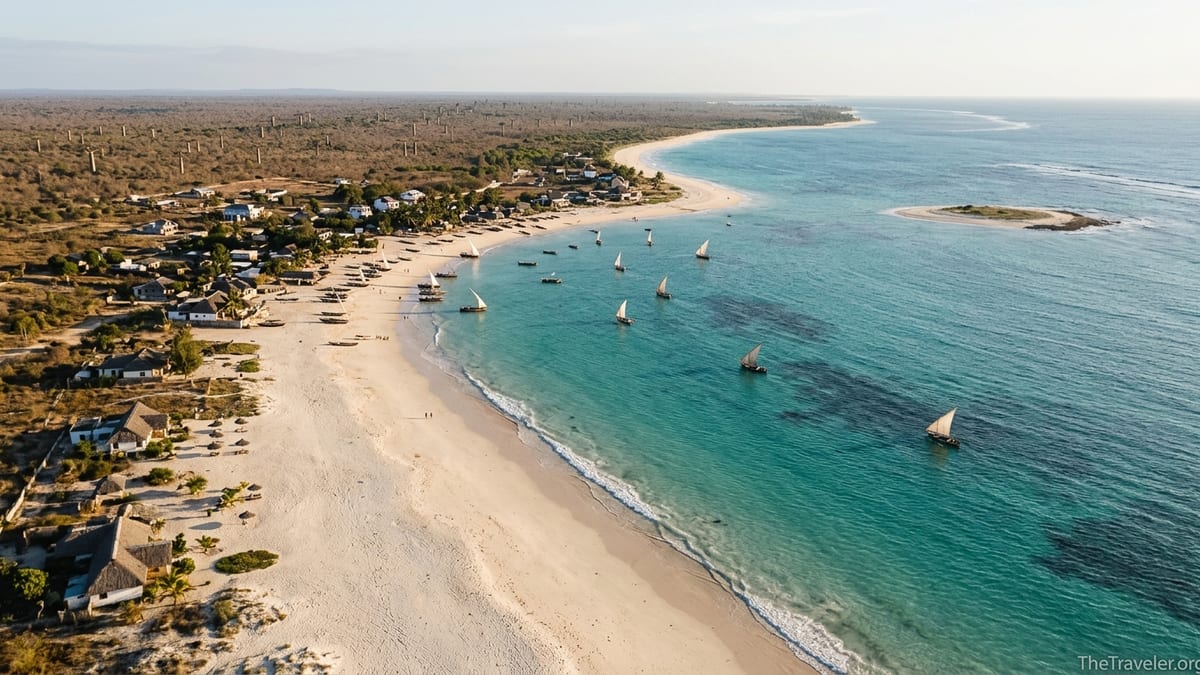
Anakao lies roughly 40 kilometers south of Toliara across the bay. You do not drive here from town in a normal sedan; instead, most travelers arrive by motorboat from the Toliara waterfront, skimming past Vezo pirogues to reach a stretch of bright white sand where there are far fewer buildings and more sense of wilderness. From Anakao, the coral island of Nosy Ve is visible just offshore and the wild landscapes of Tsimanampetsotsa National Park lie to the south, reached by 4x4 along sandy tracks.
In practice, Ifaty suits travelers who want a simple, low‑stress beach stop with more choices of accommodation and food, while Anakao appeals to those willing to trade convenience for better sand, a greater feeling of isolation, and direct access to some of the southwest’s most rewarding nature excursions. Both can work as a finale to the RN7 or a short break after flying into Toliara, but which one is better depends heavily on what you want from your last days in Madagascar.
Below, we compare beach quality, swimming, snorkeling and diving, atmosphere, infrastructure, excursions, logistics and traveler profiles, then end with clear, type‑by‑type recommendations to make your choice easier.
Beach Quality, Water & General Swimming Conditions
Ifaty’s beach runs along the Baie de Ranobe, a wide lagoon protected by a coral barrier reef. The sand is light in color but often mixed with coral fragments and shells, and the beach feels lived‑in: pirogues pulled up above the tide line, fishing nets drying, and village activity close to many hotel fronts. At high tide the water is usually calm and pleasant for a dip, but at low tide the sea retreats a long way, exposing seagrass and mudflats. For comfortable swimming right in front of your hotel, timing with the tide matters, and many visitors end up alternating between sea swims at high tide and the pool when the water pulls back.
Anakao’s main beach, by contrast, is generally whiter and softer, with clearer water close to shore and fewer rocks and coral chunks underfoot. You can usually wade in and swim at most states of the tide, and the color of the lagoon in good weather tends to be that classic pale turquoise many people picture when they think of Indian Ocean beaches. You still have Vezo pirogues and village life, but the beachfront between lodges is more open, and on many days you will find long stretches of sand with very few people.
The trade‑off is exposure. Ifaty’s bay and offshore reef shield it from some swell, so even in windier months the water inside the lagoon can be fairly placid, good for tentative swimmers and younger kids. Anakao faces more open water. On still winter mornings it can be glassy, but in the windy season waves sometimes make the shallows a bit choppier, though usually still manageable for confident swimmers. For non‑swimmers or those nervous in waves, Ifaty’s more protected lagoon is typically the safer feeling option.
In both places, remember that there is a strong tidal range and very limited lifeguard presence. Practical examples from recent travelers include needing to walk 100 to 200 meters over wet sand at mid‑tide in Ifaty before the water is deep enough for a proper swim, while in Anakao people often report being able to swim almost directly from the steps of their lodge except at very low tide. If you want “walk in, waist‑deep in a few steps” without worrying about tide tables, Anakao tends to deliver this more consistently.
Snorkeling, Diving & Marine Life Access
Both Ifaty and Anakao sit behind extensive coral reef systems, and both offer snorkeling and diving, but the feel and logistics differ. In Ifaty, the Baie de Ranobe lagoon is known for its long barrier reef. Dedicated operations such as Mangily Scuba offer PADI courses, intro dives and boat trips out to the reef for both snorkeling and diving. These typically involve a short pirogue or motorboat ride, with basic equipment rental available on site. The lagoon itself near shore is often cloudy from sand and seagrass, so the best snorkeling is almost always a boat trip away from the beach rather than off the hotel steps.
Water quality and coral health in the Ifaty lagoon are a mixed picture. Long‑time conservation projects in the bay have been trying to counteract overfishing and past damage, and recent traveler reports describe a decent variety of fish and some attractive coral heads, but it is not an untouched reef system. For many first‑time snorkelers and casual divers, though, boat trips from Ifaty provide exactly what they want: relatively shallow, warm water with colorful reef fish, a gentle introduction dive, and maybe a turtle sighting. Prices for half‑day boat snorkel trips tend to be moderate by international standards, though you should expect cash payments and relatively simple boats.
Anakao adds a different dimension because it is the jump‑off point for Nosy Ve and the protected marine area around it. Many lodges and local boatmen offer half‑day or full‑day trips to the island, usually combining a beach picnic and bird watching with snorkeling in clearer water than directly off the mainland beach. Divers based in Anakao can access offshore reefs on boat trips that take a bit longer than those from Ifaty but often reward with better visibility and healthier coral. Some operators also combine whale watching with snorkeling during the July to September humpback season, when conditions permit.
If snorkeling is a major priority and you are comfortable with boat outings, Anakao with Nosy Ve and surrounding marine sites edges ahead for water clarity and the overall “tropical lagoon” feel. If your group includes nervous swimmers or people who want structured PADI training with more infrastructure around, Ifaty’s established dive center and easy logistics make it attractive. For serious divers planning multiple tanks and courses, consult operators in both locations in advance, but be aware that equipment stocks and maintenance can be variable and you are far from big city dive shops in either case.
Atmosphere, Development Level & Number of Options
Ifaty and Mangily effectively blend into one beach strip, and over the years a small but noticeable tourist infrastructure has grown up here. There are several dozen accommodation options ranging from simple beachfront bungalows that cost roughly the equivalent of a budget guesthouse night in Antananarivo to midrange lodges with pools and landscaped gardens. A few places, such as long‑established beachfront hotels and newer eco‑lodges, cater to European tour groups finishing RN7 itineraries, so you may see a few small buses dropping guests in high season.
This relatively dense cluster of places means you can walk along the sand or the sandy village track and find multiple bars and restaurants, from basic seafood grills serving grilled zebu skewers and fresh fish for modest local prices to slightly more polished hotel restaurants offering set menus at higher but still moderate cost. There are often spontaneous opportunities to arrange massages, hire a pirogue, or join someone’s informal snorkeling trip without needing to pre‑book days ahead. The flip side is more noise in certain corners, with occasional late‑night music and a low‑key backpacker‑ish scene around some bars and cheap rooms.
Anakao remains less developed. There are a handful of established lodges, a couple of small midrange hotels, and then long stretches of beach backed only by Vezo houses and bush. Prices at the more comfortable lodges can be slightly higher than comparable rooms in Ifaty, in part because supplies must be brought in by boat and the seasonality of tourism is more pronounced. Outside those lodges, dining choices are limited mostly to your own accommodation and a small number of simple village eateries. Nights are quiet, with dark skies, the sound of surf, and not much organized nightlife beyond a few hotel bars.
For some travelers, the greater number of hotels and restaurants in Ifaty is a decisive advantage, especially at busy times like August when it is easier to find last‑minute rooms and to keep a group happy with varied food choices. For others, the ability to walk for twenty minutes along near‑empty beach in Anakao without passing another hotel is precisely the point. If your ideal end‑of‑trip vision includes bar‑hopping between beach shacks, choose Ifaty. If it is more about silence, stars and reading on a quiet veranda, Anakao may feel closer to what you imagine.
Access From Toliara, Transport & Boat Requirements
Getting to Ifaty from Toliara is straightforward by Madagascar standards. The paved RN9 heads north from the city, and taxis, private cars and tour vehicles regularly make the 25‑kilometer run to the Ifaty and Mangily area. In dry conditions this typically takes under an hour. Travelers finishing the RN7 often roll straight into town, refuel, then continue to Ifaty without switching vehicles. Public taxi‑brousses also serve the route, though they are slower and more crowded. The upshot is that if you land at Toliara airport in the afternoon you can usually be checking into a room in Ifaty before sunset with only a pre‑arranged car transfer.
Anakao is different. Although a rough track exists to the south, the standard way in is by boat. Most travelers arrange a motorboat transfer from Toliara’s port area or from a small pier south of town. Boats are typically scheduled once or twice a day, with extra departures when demand is high. Crossing time varies with the vessel and conditions but usually falls between one and one and a half hours. Expect to wade the last few meters to shore at both ends unless the tide is just right or a lodge has a simple jetty. Luggage is loaded by hand, and in windy weather the ride can be bouncy with spray.
Costs for the Anakao boat are significant compared to a taxi to Ifaty, especially for solo travelers or couples, as you are either paying for a seat on a scheduled boat or chartering one for your group. Families and small groups sometimes find that the per‑person cost balances out when shared, but it is still a line item you need to budget for. Weather can also affect schedules. Although outright cancellations are not constant, you should avoid planning a tight connection between your Anakao boat and an onward domestic flight from Toliara on the same day, as delays for wind or sea conditions are possible.
The difference in access has two practical consequences. First, Ifaty is far easier for last‑minute planners. You can land in Toliara, find a driver, and decide on your hotel on arrival if it is not peak season. Second, leaving Anakao requires more planning. If your RN7 itinerary already includes a hired 4x4 and driver, it is usually simplest to end by driving to Ifaty. If you specifically want Anakao, consider structuring your trip with at least one spare night in Toliara either before or after the Anakao segment to act as a buffer in case sea conditions change.
Signature Excursions: Reniala vs Nosy Ve & Tsimanampetsotsa
One of Ifaty’s biggest advantages is its immediate access to the Reniala Reserve, a privately managed spiny forest and baobab conservation area just inland from the beach. You can reach the entrance from most Ifaty and Mangily hotels in 10 to 20 minutes by zebu cart, push‑bike or short taxi ride, and many organized RN7 tours include a morning or late‑afternoon visit. On a typical guided walk of one and a half to two hours you see towering baobabs, strange octopus trees with their thorny branches, and a good variety of dry‑forest birds. Because the reserve is close, you can combine an early walk among baobabs with swimming or pool time the same day without feeling rushed.
Beyond Reniala there are other small reserves and community projects in the same area, plus boat trips along the lagoon to visit mangroves or nearby Vezo villages. These add modest variety without long travel times, which is particularly appealing to families with younger children or travelers who do not want more long drives after the RN7. Ifaty therefore works well for a two‑ or three‑night stay where you alternate beach lazing, reef boat trips and short nature excursions.
Anakao’s hallmark excursion is Nosy Ve. This low, sandy island, visible from shore, is both a Vezo sacred site and a protected bird refuge. Day trips typically leave Anakao after breakfast, with visitors ferried in small boats across the lagoon to land on the outer beach. Once there you can snorkel in clear water, walk the length of the island, watch red‑tailed tropicbirds nesting, and picnic under simple shade. In good conditions this experience feels like the classic remote‑island day, something Ifaty cannot really match. The sense of space and the intense color of sea and sky are a major draw for photographers and anyone craving that “edge of the world” atmosphere.
Further south again, Tsimanampetsotsa National Park is reachable from Anakao by 4x4 along sandy tracks, usually in a long day trip. The park centers on a milky soda lake that attracts flamingos in some seasons, with limestone caves, sinkholes and more spiny forest along its edges. It is remote and roads are slow, so you should go only with a reliable driver and accept that it will be a tiring but memorable outing. The landscape here feels dramatically different from anything along the RN7, so for those who still have energy for one more major nature day, Tsimanampetsotsa adds a real “off the map” highlight.
In short, Ifaty’s Reniala reserve is closer and easier, perfect when you want light activities around a beach base. Anakao’s Nosy Ve and Tsimanampetsotsa excursions are more ambitious, more logistically demanding, but arguably more unique. Choosing between them comes down to whether you still have appetite for long days and bumpy tracks at the end of your trip or prefer gentle, nearby walks and more time with your feet in the sand.
Isolation, Practicalities & Suitability By Traveler Type
In terms of isolation, Anakao feels significantly more remote than Ifaty. By the time you arrive by boat, with no road noise, limited electricity away from lodges and big gaps between buildings, you are very aware that you are on a small settlement at the edge of the Indian Ocean. This is a blessing if you want to disconnect from the world, wake up to nothing but surf and pirogues, and have dark, star‑filled nights. It is less ideal if you are the sort who likes to stroll a small town, visit different cafes, browse handicraft stalls and have multiple backup plans for dinner each night.
Ifaty, while hardly a big resort, offers more of those basic conveniences. There are small village shops where you can buy bottled water, snacks and basic toiletries, a bit of local nightlife in peak season, and a higher chance of meeting other travelers to share costs for excursions. Medical care is still limited and anything serious requires returning to Toliara, but you are close enough to the city that a taxi or transfer back is manageable the same day in most situations, an important consideration for families and older travelers.
For families with young children, Ifaty is usually the safer and simpler choice. Shorter transfers from Toliara, the protected lagoon, more flexible meal options and easy access to Reniala all favor minimizing stress. Parents can plan half‑day activities with predictable return times and retreat to hotel pools when kids are tired of sand. Anakao can still work for families, especially with older or water‑confident children who will enjoy the boat rides and remote‑island feel, but you need to be comfortable with the boat transfer, occasional choppier sea conditions and more limited backup options for food and supplies.
Couples and honeymooners divide more evenly. Those who picture a small lodge with a pool, massages, a reasonably sophisticated restaurant and the option to take a sunset drink at a neighboring bar are often happier in Ifaty. Those who want to step out of a beach bungalow directly onto near‑empty white sand, spend a day on Nosy Ve and watch the Milky Way without any village lights are likely to feel Anakao is more special, provided they accept the added logistics. Divers and keen snorkelers often lean toward Anakao for water clarity and access to protected marine sites, though many still choose Ifaty if they have already been active for weeks and now mainly want relaxed, easy dives close to a larger choice of hotels.
The Takeaway
If your priority after the RN7 or a domestic flight into Toliara is simplicity, shorter transfers and variety of infrastructure, then Ifaty is generally your better base. You can be on the beach within an hour of reaching town, choose from a cluster of hotels in different price brackets, arrange reef trips and spiny forest walks at short notice, and keep everyone in a mixed group fed and entertained without having to plan around a boat schedule.
If what you crave is softer sand, clearer water in front of your lodge and a real sense of being at the far edge of Madagascar, Anakao has the edge. The boat ride, the emptier beach, the day on Nosy Ve and the possibility of a long excursion to Tsimanampetsotsa make it an especially strong choice for travelers who still have energy for one more adventure and do not mind paying extra in time and money to get there.
For most travelers finishing a classic RN7, a practical rule is this: families with younger children, anyone anxious about sea crossings, and travelers on tighter budgets will usually do best base‑lining in Ifaty, perhaps adding an extra night to soak up the spiny forest and lagoon. Couples who value remoteness, keen divers and photographers, and returning visitors to Madagascar who have already stayed in Ifaty once might find that Anakao gives them the more memorable finale, especially if they build in a buffer night in Toliara on either side.
If time and budget allow, a few travelers even split their stay, doing two or three nights in Ifaty for Reniala and easy lagoon outings, then transferring by road back to Toliara and by boat to Anakao for two or three nights focused on Nosy Ve. For most, though, you will be choosing one base. Think carefully about your tolerance for boat logistics, how much energy you have left after long Malagasy roads, and whether your dream final days are about convenience and comfort or solitude and wild horizons. Your honest answers to those questions will point you clearly to either Ifaty or Anakao.
FAQ
Q1. Is Ifaty or Anakao easier to reach at the end of an RN7 trip.
Ifaty is much easier. You can drive there directly from Toliara on a paved road in under an hour, while Anakao almost always requires arranging a separate boat transfer across the bay.
Q2. Which beach is better for simple swimming without boat trips.
Anakao usually offers softer sand and clearer water right off the beach, so you can often swim at more states of the tide, while in Ifaty you need to time swims with high tide.
Q3. Where is the snorkeling and diving better overall.
Both have access to reefs, but Anakao generally has clearer water and offers trips to the marine area around Nosy Ve, while Ifaty has more established dive centers and easier logistics.
Q4. Which base is more suitable for families with young children.
Ifaty is typically better for families because it has a shorter transfer, a more protected lagoon, more hotel and restaurant choices and easier, shorter excursions such as Reniala.
Q5. Is Anakao too remote for a short three‑day stay.
It can work for three nights if you plan boat transfers carefully and accept some travel time, but if you have only two nights total it is often more efficient to base in Ifaty instead.
Q6. How many days should I plan in Ifaty or Anakao after the RN7.
Most travelers are happy with two to three nights in Ifaty or three to four nights in Anakao, which allows for at least one full day on the beach and one excursion day.
Q7. Can I visit both Ifaty and Anakao in one trip.
Yes, if you have five or more nights to spare, you can spend a few nights in each with a night in Toliara to connect between the road journey to Ifaty and the boat to Anakao.
Q8. Which location is better for budget travelers.
Ifaty generally suits tighter budgets better, with more simple bungalows and local eateries, plus cheaper road transfers compared with the mandatory boat ride cost for Anakao.
Q9. Where should divers and strong snorkelers base themselves.
Divers who prioritize visibility and access to protected offshore sites may prefer Anakao, while those wanting easy PADI courses and shorter boat rides might lean toward Ifaty.
Q10. Is it safe to rely on last‑minute bookings for these beaches.
Outside peak school holidays you can often find last‑minute rooms in Ifaty, but Anakao has fewer beds so advance booking is wise there, especially in July, August and September.