


Sainte-Marie, also known as Nosy Boraha, is one of the Indian Ocean’s most beguiling small islands: a slim strip of palm-fringed beaches, sheltered lagoons and a channel that fills each winter with migrating humpback whales. Choosing when to visit is not just about blue skies. The best months depend on whether you want to be out on the water with whales, lazing on dry beaches, or underwater on the reefs, all while keeping an eye on cyclone risk and room rates. This month-by-month guide breaks down what to expect through the year so you can time your trip to match your priorities.
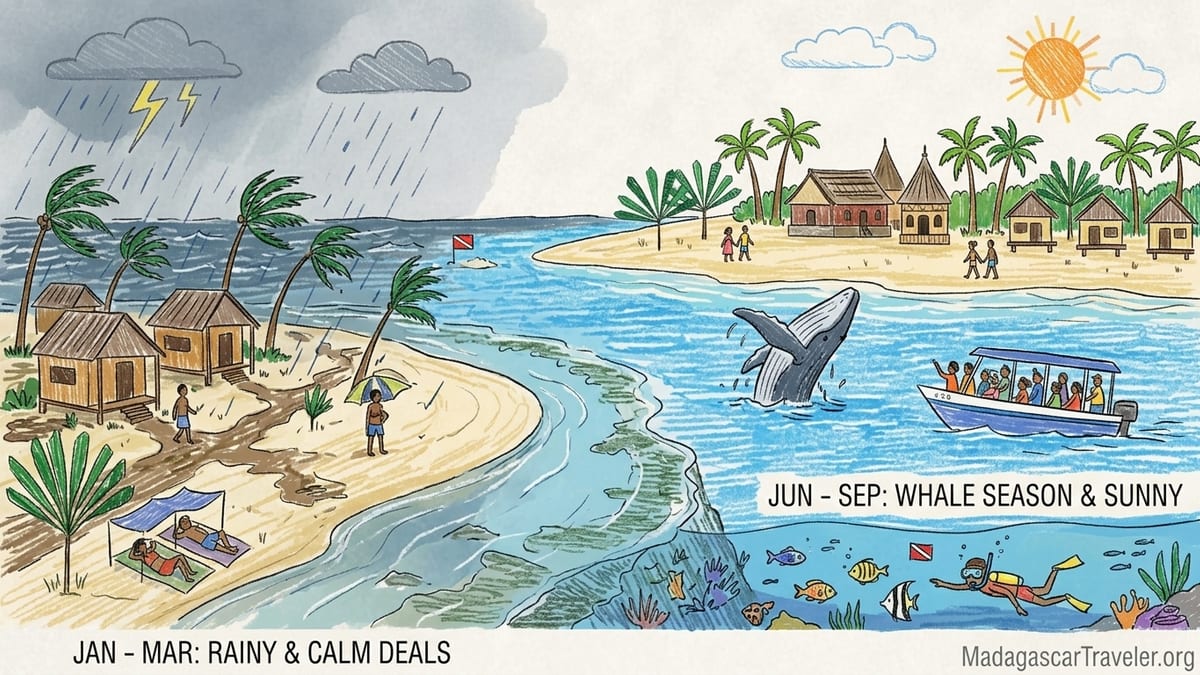
Understanding Sainte-Marie’s Seasons
Sainte-Marie sits off Madagascar’s northeast coast and shares the country’s basic pattern of a warm, rainy austral summer from roughly November to April and a cooler, drier winter from May to October. On this windward side of Madagascar the southeast trade winds push in a lot of moisture, so even the “dry” season can bring passing showers, but the long, soaking rains and most cyclone impacts are concentrated in the summer months. For travelers, that means a pronounced shift between a steamy, storm-prone half of the year and a milder, more stable half.
From June to September the narrow channel between Sainte-Marie and the mainland turns into one of the Indian Ocean’s prime nurseries for humpback whales. Operators based around Ambodifotatra on Sainte-Marie and on nearby Île aux Nattes run daily whale-watching trips in this period, often spotting mothers with calves and competitive groups of males. The 2026 Festival des Baleines ran from 11 to 19 July, underlining how central this migration has become to the island’s tourism calendar and how heavily demand spikes around these dates.
Beneath the surface, Sainte-Marie’s fringing reef and lagoon offer usable diving conditions most of the year. Water temperatures commonly sit in the mid-20s Celsius, and operators report regular visibility of 8 to 20 meters depending on wind, swell and recent rain. Reef sites in the sheltered lagoon are diveable even when the open channel is choppy, which is why local dive centers can stay open almost year-round, adjusting departure times and sites to the season.
Hotel pricing follows these natural rhythms. During the December to March wet season, many beachfront lodges and small guesthouses quietly discount rates or offer stay‑longer deals to fill rooms, especially on weekdays. In contrast, July and August, when European school holidays overlap with peak whale season, often bring fully booked midrange hotels, higher nightly rates and stricter minimum stays at small design-focused properties. Booking several months ahead for those weeks is a smart move.
January to March: Rains, Cyclone Risk and Quiet Deals
January, February and early March are the heart of the cyclone season in the southwest Indian Ocean, and the east coast of Madagascar is particularly exposed. While a direct landfall on Sainte-Marie is not guaranteed each year, regional storms can bring days of heavy rain, strong winds and rough seas that make crossings from the mainland unpredictable. In practice, travelers in these months should expect some ferry cancellations, muddy roads and the possibility of needing to adjust onward plans if a storm approaches.
On the ground, these months feel hot and muggy. Daytime highs often reach the upper 20s Celsius, with high humidity and frequent downpours, particularly in the afternoon and at night. The sea is warm, but the combination of river runoff and stirred-up sediment can reduce underwater visibility at the outer reefs. Many visitors who do come at this time lean into the slower rhythm: spending long mornings in a hammock under a thatched roof, reading while the rain drums on the palm leaves, and swimming in sheltered coves between showers.
Because January through March are firmly low season, hotel demand is the softest of the year. Simple beachfront bungalows that might go for mid-range prices in August can be significantly cheaper, and it is often possible to negotiate extras such as breakfast, airport transfers or late checkout included in the same nightly rate. Boutique lodges that typically fill with European families in July may have only a few rooms occupied, which appeals to travelers who value solitude and do not mind the weather risk.
Whale watching is essentially off the table at this time, since the humpbacks remain in Antarctic waters through the southern summer. Beaches can still be lovely on rain-free days, but the chance of long, uninterrupted sunbathing sessions is lower than at any other point in the year. If your primary goal is calm beach weather or marine wildlife, this is not the optimal window, but budget-conscious travelers who like dramatic skies and do not have fixed return dates sometimes find it rewarding.
April and May: Shoulder Season Calm and Improving Seas
By April the peak cyclone threat has typically passed and the rain begins to ease, although showers remain common, especially at night. Temperatures are still warm and humid, but the air feels less oppressive than in February. This transitional period can deliver extended stretches of gentle sunshine, interspersed with short, intense showers that green the island’s interior. The risk of serious weather disruption is lower, making it a more comfortable time to move around by boat or motorbike.
For divers, conditions start to improve as runoff from the mainland decreases. Visibility on the outer reefs off Sainte-Marie’s east coast often ticks up at this time, and the water is still relatively warm for long dives. Local dive centers may not be as busy as they are in August, which can translate into small-group trips and flexible schedules. This is a good time to focus on coral gardens and fish life rather than big pelagics, since the humpbacks have not yet arrived.
Hotel demand in April is generally modest, with a slight uptick around Easter if school holidays in Europe and South Africa line up. Resorts that will be packed in July and August often run quieter, and some may still be finishing seasonal maintenance. You are more likely to find last-minute availability at well-reviewed beachfront lodges and eco-bungalows at this time. Budget-minded travelers typically find double rooms at prices that sit comfortably below high-season peaks, especially outside holiday weekends.
Beach time in April and May can be very pleasant. The ocean is warm and, on many days, relatively calm, especially along the leeward western side of Sainte-Marie and around Île aux Nattes. You might find yourself walking along long stretches of beach near the pirate cemetery or in the south with very few other visitors around. If your priority is quiet beaches, reasonable diving and manageable heat without the crowds, this shoulder season has real appeal.
June to August: Peak Whales, Cool Dry Weather and High Demand
By June, Sainte-Marie moves into its cooler, drier winter and the first humpback whales begin appearing in the channel. Air temperatures drop a few degrees, making evenings breezier and more comfortable for walking or cycling. This is when the island’s tourism engine really starts to spin up. Local operators, from simple guesthouses to new boutique resorts, time their refurbishments to be ready for the season that runs through September.
July and August are the headline months. This is when whale activity is at its most reliable, with mothers and calves resting in the relatively protected waters between Sainte-Marie and the mainland and male whales breaching and tail-slapping in displays that can sometimes be seen from shore. Whale-watching boats typically leave Ambodifotatra or Île aux Nattes early in the morning to take advantage of calmer seas before the trade winds pick up in the afternoon. A typical three-hour excursion in season is not cheap by local standards, but visitors often describe multiple sightings in a single morning as excellent value.
For general beach weather, July and August are relatively dry with plenty of sunny days, although the southeast trade winds can make the east-facing beaches feel brisk and bring moderate swell. Many travelers base themselves along the more sheltered western coast or on Île aux Nattes, where lagoon waters are calmer and ideal for swimming or stand-up paddleboarding between whale trips. Evenings can feel cool enough for a light jacket, especially after spending hours out on the water.
Hotel prices reach their annual peak in this period. European school holidays, combined with the whale festival in mid-July and strong word-of-mouth about the quality of the sightings, mean rooms at popular midrange lodges and small luxury retreats are often booked out weeks or months in advance. Examples from recent seasons show oceanfront bungalows that might be affordable in March selling at noticeably higher nightly rates in August, sometimes with minimum three-night stays. Travelers looking at newer properties with only a handful of rooms may find that the only way to secure dates during the Festival des Baleines is to reserve as soon as bookings open.
September and October: Late Whales, Better Diving and Balancing Acts
September is a transitional month where visitors can often enjoy the best of several worlds. Many humpback whales remain in the Sainte-Marie channel through at least mid-September, and some operators report good sightings into late September in years when the season runs long. At the same time, the weather stays relatively dry and comfortably cool, and hotel demand starts to ease as European families head home at the end of school holidays. For travelers, that can mean more flexible whale-watching schedules and slightly softer rates on accommodation.
Divers in particular value September and October. With the wet season well behind and the strongest winter winds beginning to relax, underwater visibility at key sites tends to improve. Water temperatures are still in a comfortable range, and currents are manageable on many days. Local dive centers often recommend this period for visitors whose priority is reef life and better photography conditions rather than combining dives with whale watching, since dedicated whale dives and snorkels are more easily arranged in July and August.
By October, most humpbacks have left for their southward migration, and focus shifts back to beach life and underwater exploration. Skies are often clear, seas on the lagoon side are calm, and the island feels relaxed after the intensity of peak season. Snorkeling over coral patches close to shore, such as those near Nosy Nato and around some of the small islets off Sainte-Marie’s southern tip, can be particularly appealing. With fewer boats on the water, the sense of having the lagoon to yourself increases.
Hotel demand in September is moderate, then tapers in October as the whale season fades from traveler itineraries. Many midrange hotels reduce their rates slightly compared to August but keep them above deep low-season levels. This is a sweet spot for visitors who want reliable beach weather and good diving, along with a chance of late-season whale sightings in early September, without paying top-tier high-season prices or fighting for the last room at the most popular beachfront lodges.
November and December: Building Heat, Early Rains and Value
November marks the start of the austral summer, and the change is noticeable. Temperatures climb, humidity creeps up and afternoon clouds build more often over the green interior of Sainte-Marie. Early in the month, there can still be long sunny spells, making it an attractive option for travelers who tolerate heat and want to avoid the crowds and higher prices of mid-year. Sea temperatures are inviting for long swims and snorkeling sessions, and many visitors enjoy warm, calm mornings on the lagoon side of the island.
Rainfall becomes more frequent as November progresses into December. Showers can be intense but short-lived, especially at the start of the wet season, before some systems settle overhead for longer. Roads can become muddier and potholes fill with water, slowing transfers around the island. Cyclone risk begins to climb, though the absolute peak usually comes a little later in the season. Sensible planning in these months includes allowing extra buffer time between local boat transfers and any international flights.
From a diving perspective, November and early December can still offer good conditions, with warm water and reasonable visibility on many days, but early-season storms or persistent onshore winds can stir things up. Dive operators adjust their daily plans according to sea state, often favoring sheltered lagoon sites when swells rise outside. Without whales present, boat trips feel less dramatic but are more focused on reef fish, turtles and macro life.
Hotel prices in November and early December are generally closer to low-season than high. Some properties offer special shoulder-season packages to encourage pre-Christmas travel, such as free nights after a certain length of stay or bundled half-board deals. Around the Christmas and New Year period itself, demand can spike again as residents of the Malagasy mainland and regional travelers head to the coast, so anyone planning to be on Sainte-Marie in late December would still be wise to secure rooms in advance.
Matching Your Trip to Whales, Weather and Budget
If humpback whales are your primary reason for flying out to Sainte-Marie, focus on the window from late June through September, with July and August offering the most consistent sightings and festival energy. Visitors who timed their stay around the 2026 Festival des Baleines, for example, found the town buzzing with whale-themed cultural events, scientific talks and extra boat departures, in addition to the usual excursions. Plan to get out on the water at least twice to hedge against days when wind or swell might limit sightings.
Travelers who care more about classic beach weather and relaxation than whales may prefer May, September or October. In these months, rains are lighter than in the summer, yet the island feels less crowded and hotel rates are more forgiving than at the winter peak. Think long walks along the beaches south of Ambodifotatra when the light is soft, or quiet afternoons in a lagoon-front bungalow where you can swim directly from your deck. The trade-off is simply that you are unlikely to see a breaching humpback from your breakfast table outside the main season.
Divers should weigh their priorities. If the dream is to hear whale song underwater and maybe glimpse a distant tail flick during a safety stop, then July or August, when both whales and decent visibility are on the table, make sense. If, instead, top visibility, warmer surface conditions and slightly calmer logistics matter most, September, October and even early November can be better choices. In all cases, ask dive centers in Ambodifotatra or on Île aux Nattes for recent conditions before locking specific dates, as local weather patterns can shift year to year.
Budget travelers will find the deepest discounts and most negotiable rates from January to March, accepting higher rain and cyclone risk in exchange. Mid-budget visitors often target April, May or late October to early December, balancing lower prices with more stable conditions. High-season travelers coming in July or August should factor in that not only room rates but also flights, whale-watching trips and even onward transfers can cost more or sell out, so booking well ahead and being flexible on exact travel days can make a big difference.
FAQ
Q1. When is the absolute best time to see humpback whales in Sainte-Marie?
Mid-July to late August is generally the most reliable period for humpback whale sightings, although whales usually arrive from late June and can stay into September.
Q2. Which months have the driest and most pleasant beach weather?
The coolest and relatively driest months are from June to September, with May and October also offering many sunny days and good beach conditions.
Q3. When is the cyclone season around Sainte-Marie?
Cyclone risk in the region is highest from about January through March, with the broader wet season and associated storms usually running from November to April.
Q4. What months are best for diving conditions?
Divers often favor September and October for a balance of good visibility, manageable currents and comfortable water temperatures, with decent conditions extending into early November.
Q5. How do hotel prices change through the year?
Hotel prices are lowest from roughly January to March and rise to their annual peak in July and August, especially around school holidays and the whale festival.
Q6. Is it worth visiting Sainte-Marie outside the whale season?
Yes. Outside whale season you can enjoy quieter beaches, lower prices and solid diving and snorkeling, particularly from April to May and September to November.
Q7. Are July and August too windy for beach time?
The southeast trade winds can make east-facing beaches breezy in July and August, but the lagoon side and west coast are usually calmer and good for swimming.
Q8. How far in advance should I book for July and August?
For peak-season trips in July or August, especially around the Festival des Baleines, booking key hotels and whale-watching excursions several months ahead is advisable.
Q9. Can I dive with whales in Sainte-Marie?
Some operators offer specialized whale-focused dives or snorkel trips in season, but these are carefully regulated and focus on minimal disturbance rather than close interaction.
Q10. If I want both good weather and lower prices, what is the best compromise month?
May, September and October are strong compromise months, offering relatively good weather and more moderate hotel rates than the peak July and August period.