


Choosing when to visit Madagascar matters more than almost anywhere else in Africa. The same itinerary that feels effortless in August can turn into washed out tracks, closed national parks and cancelled domestic flights in February. This guide looks at the best time to visit Madagascar for wildlife, RN7 road trips, whales and beaches, month by month, with a focus on what you can realistically do on the ground.
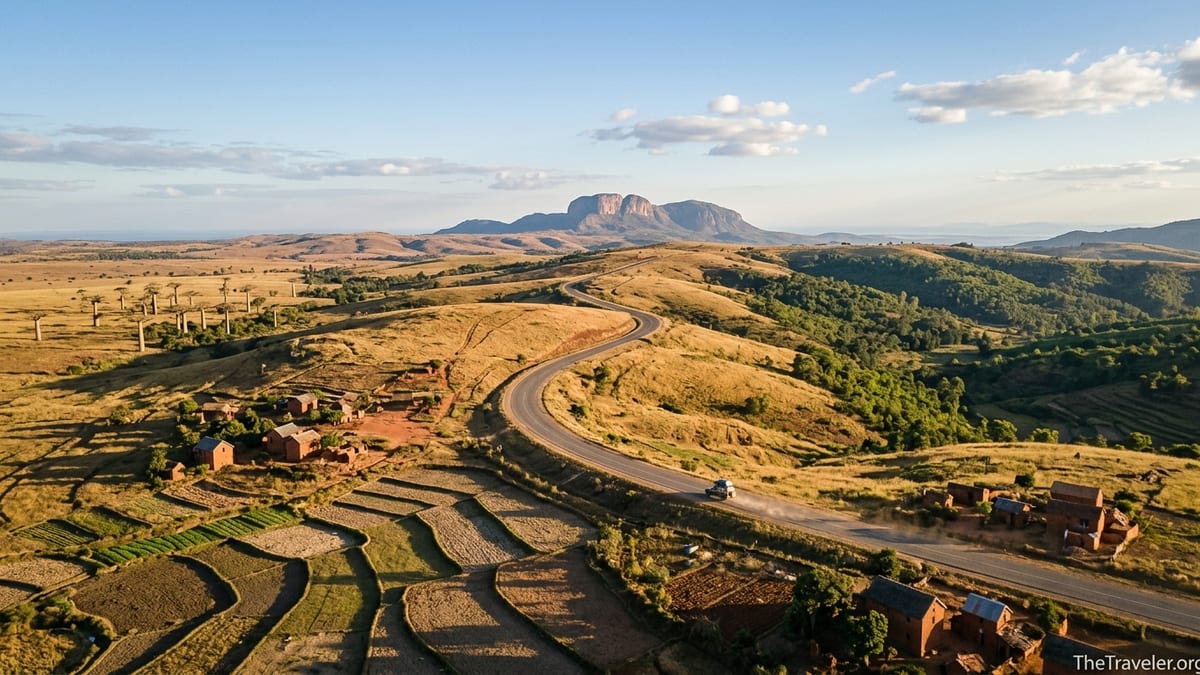
How Madagascar’s Seasons Shape Your Trip
Madagascar really has two main seasons rather than four. From roughly November to April, the country is hot, wet and storm prone, particularly on the east coast where Indian Ocean cyclones come ashore. From May to October, conditions are cooler and drier, roads are more reliable and most parks are at their best. Cyclone risk peaks around February and March, when washed out bridges and landslides can cut key routes and even isolate entire regions for days at a time.
Seasonality is uneven across the island. The highlands and RN7 corridor from Antananarivo to Toliara are cooler and less humid than the coast, which makes hikes in Andringitra or Isalo more pleasant in the austral winter months of June to August. The west, including Morondava and Tsingy de Bemaraha, is strongly seasonal, with tracks that become mud pits in the rains and a defined dry window when 4x4 access is possible again. The northwest around Nosy Be gets plenty of sun year round but still has a marked wet season with afternoon downpours.
Wildlife also has its own calendar. Lemur infants start appearing in many parks from roughly September into November. Reptiles and chameleons tend to be more visible at the start and end of the rains when it is warm and humid. Humpback whales arrive off the east coast, especially near Sainte Marie, around June and stay into September or early October, concentrating the best whale watching into the Southern Hemisphere winter. Birders often aim for the shoulder months of October and November, when breeding activity is high but many trails are still passable.
As you plan, it helps to think of Madagascar not as one destination but as several: the classic RN7 road trip through the south, the west with its baobabs and Tsingy, the east coast rainforests and whale islands, and the northern beach hubs of Nosy Be and its surrounding islets. Each has a slightly different “best” window, and this article breaks those windows into a practical month by month guide.
January to March: Rain, Cyclones and Limited Access
January, February and March form the heart of the wet season and the main cyclone window. Heavy rain is common across the island, and strong systems coming in from the Indian Ocean can bring storm surges and flooding to the east coast in particular. Inland, secondary roads become deeply rutted and unpaved approaches to parks such as Tsingy de Bemaraha are usually impassable, with operators in Morondava simply not running trips to Bekopaka at this time of year.
For an RN7 road trip, these months are the least convenient. The main highway between Antananarivo and Toliara is paved, but potholes widen in the rains and you can encounter temporary closures when culverts overflow. A traveler driving RN7 in February, for instance, might find sections south of Fianarantsoa passable only at reduced speed and witness roadside villages working knee deep in waterlogged rice paddies. Hiking trails in Ranomafana or Andringitra are often slick, with leeches in the rainforest and frequent cloud cover obscuring viewpoints.
Wildlife, however, does not stop. The rainforest is lush and bird activity is intense, with frogs calling loudly after dark. Guides in Andasibe or Ranomafana may point out bright green Parsons chameleons and boophis tree frogs active along night walks. On the downside, photography is more challenging in low light and many visitors find the humidity draining. Domestic flights, such as the Antananarivo to Sainte Marie or Nosy Be services, are more prone to weather delays or cancellations, which can disrupt tight itineraries.
If you have to travel in this period and want fewer crowds, you can still build a focused trip: perhaps a week split between Andasibe (for indri and other rainforest species) and a drier southern beach such as Ifaty or Anakao. Expect discounted hotel rates compared with August, be flexible with internal transport, and allow extra buffer days before any international departure in case a cyclone temporarily affects schedules.
April to June: Drying Roads, Emerging Trails and Early Whales
By April the heaviest rains usually start to ease, although showers are still common and some rivers remain high. This can be a rewarding shoulder season if you prioritise greenery over guaranteed blue skies. Along RN7, rice terraces around Antsirabe and terracotta villages near Ambositra are bright green, and the drive feels more atmospheric than in the brown of late winter. Road conditions generally improve each week, with fewer waterlogged sections, although you may still encounter occasional detours where a bridge has been recently repaired.
National parks begin to dry out. In Ranomafana, trails may still be muddy but waterfalls are full and the forest is at its most photogenic. In April you might hike in light rain in the morning and finish the day in filtered sunshine with low mist over the canopy. Lemurs are outside the main baby season but are still active, and you will often have viewpoints to yourself. In Isalo, the sandstone canyons are greener than later in the year, with permanent pools full enough for a cool swim after a hike to Piscine Naturelle.
The west slowly opens up. Tracks from Morondava to Tsingy de Bemaraha typically become driveable by mid to late April for high clearance 4x4s, though the park authority tends to officially open the main circuits between roughly mid April and mid November, with the famous Grand Tsingy via ferrata routes usually left until conditions are firmly dry in June. In practice, that means a May visitor might be able to reach the Little Tsingy and Manambolo Gorge by dugout canoe, while a June visitor can add the more technical Grand Tsingy circuits.
On the coasts, June is the first reliably good month for longer stays. Nosy Be settles into a pattern of sunny mornings and occasional afternoon showers, with sea conditions usually calm enough for day trips to Nosy Tanikely for snorkelling with turtles. Around Sainte Marie, the first humpback whales start to arrive sometime in June, and by late month small local operators begin running regular whale watching excursions from simple wooden boats fitted with four stroke outboards and lifejackets.
July to September: Peak Dry Season, RN7 and Whale Watching
July, August and September are the most popular months across Madagascar. The air is cooler, humidity is lower, and both road and trail conditions are at their easiest. This is prime time for RN7 itineraries, usually run as 10 to 14 day trips between Antananarivo and Toliara with stops in Antsirabe, Ranomafana, Isalo and a southern beach. Travelers at this time routinely report smooth driving days of 6 to 7 hours between major stops, with only occasional slowdowns for potholes or zebu carts.
Hiking conditions are especially good. In Andringitra National Park, the granite domes around Pic Boby can be tackled on two or three day treks with crisp nights and little risk of afternoon storms. Campers might wake up to frost in July at higher elevations but will enjoy clear summits. In Isalo, day hikes across the plateau are more comfortable without the intense sun of October, and guides can time walks so you descend into shaded canyons like Namaza just as the midday heat builds.
The west is fully open. The drive from Morondava to Bekopaka for Tsingy de Bemaraha still takes most of a day in a 4x4, including basic ferry crossings over the Tsiribihina and Manambolo rivers, but the laterite tracks are as firm as they get. Tour companies typically run scheduled departures in July and August, and lodges in Bekopaka such as midrange bungalows with plunge pools may fill weeks in advance. This is the ideal window for combining the Avenue of the Baobabs at sunset, a two day small pirogue trip on the Tsiribihina, and the full Grand Tsingy circuit with its ladders, harnesses and suspension bridges.
For whale enthusiasts, this is the moment to come. Off Sainte Marie, July and August see dense concentrations of humpback whales as adults sing, breach and nurse calves in sheltered channels. The island hosts a small whale festival in July, and even budget guesthouses can arrange half day outings with licensed crews and simple hydrophones to listen to whale song. By late August and into September, whale numbers remain high, and it is common to combine morning whale trips with lazy afternoons on the sandbar beaches off nearby Ile aux Nattes.
October and November: Lemur Babies, Reptiles and Shoulder Season
October and November bridge the end of the dry season and the start of the rains and are often described by local operators as the most rewarding overall, especially for wildlife. Temperatures climb, particularly on the coast and in lowland forests, but humidity has not yet peaked and most roads remain fully accessible. This is a sweet spot for travelers who want active lemurs, reptiles, and relatively fewer visitors than in August.
Lemur babies are the main draw. In parks like Andasibe Mantadia, Ranomafana and Isalo, guides point out ring tailed lemur infants clinging to their mothers’ bellies or riding piggyback in small family troops. Sifakas may be seen practicing their “dancing” hop with slightly wobbly juveniles. In practice, a traveler visiting in late October might spend a morning on the short circuit at Andasibe watching indri families groom in the canopy, with tiny faces peeking out from dense fur, then drive a few hours to a private reserve where habituated lemurs approach more closely for photography.
Reptiles and chameleons are also at their best. Warmer, more humid conditions flush out leaf tailed geckos, day geckos and a wide variety of chameleons, from diminutive Brookesia in the leaf litter to large Oustalet’s chameleons high in roadside trees. Night walks around park perimeters at this time can deliver an almost continuous sequence of eye shine, with guides using torches to pick out sleeping chameleons curled around branches. For photographers, this is a productive period because rain showers tend to be short and can leave attractive droplets on foliage.
From an access standpoint, October remains excellent for RN7 and western Madagascar. Operators regularly schedule late season trips to Tsingy de Bemaraha through October, with some stretching into early November depending on recent rainfall. By mid November, however, heavy showers can start turning sections of the Bekopaka track boggy again, and ferry crossings may be paused during sudden river level spikes. On the east coast, the official humpback season off Sainte Marie winds down by late September or early October, so October visitors should think of whales as a pleasant bonus rather than a guarantee.
December: Green Landscapes and Rising Storm Risk
December marks the visible start of the rainy season across much of Madagascar, although early in the month conditions can still be mixed, especially in the highlands. Hillsides along RN7 shift from dry brown to lush green as rice paddies flood and farmers start transplanting seedlings. Afternoon thunderstorms build more regularly, and steamy evenings become the norm at lower altitudes. By late December, it is prudent to plan for at least some full days of rain on any itinerary.
For wildlife, December is far from a write off. Forests are alive with insects, amphibians and birds taking advantage of new growth. In Ranomafana, this is a dynamic time for frogs, and you may find your night walk soundtrack dominated by croaks and whistles rather than insects alone. Lemur infants born earlier in the year are now more independent juveniles, often experimenting with bolder leaps and play fights. Photographers can capture vivid green backdrops that are impossible in July.
Access starts to become more complicated. The Tsingy de Bemaraha area is effectively closed once heavy rains settle in, and the dirt track from Morondava becomes increasingly risky even for experienced 4x4 drivers. Along RN7, the main road remains open but travel times lengthen as drivers slow for standing water and sections where potholes reappear. Domestic flights into smaller airstrips like Maroantsetra or Fort Dauphin can be affected by low cloud and storms, so anyone trying to combine the RN7 with remote eastern parks needs to build generous buffers.
For beach holidays, early December can still work in Nosy Be or around Toliara if you accept some rain and focus on relaxation rather than intensive diving schedules. Accommodation prices are generally lower than in July or August, apart from the Christmas and New Year period when both Malagasy families and international visitors fill popular hotels. If you are willing to embrace tropical downpours and do not need to tick off Tsingy or long unbroken road trips, this is a viable time for a greener, quieter Madagascar.
Best Months by Region and Travel Style
For classic wildlife focused trips that mix rainforests, highlands and a bit of beach, the strongest windows run from June to early November. June to September offers the easiest logistics and cooler temperatures, ideal if you prefer long hikes in Andringitra or Isalo and are happy to pack a fleece for highland evenings. October and early November tilt slightly more toward wildlife viewing, with infant lemurs and abundant reptiles, but also carry more heat and the first meaningful rains late in the period.
RN7 road trips are most comfortable from May through October. If you want quieter roads and softer light for photography, consider May or June, when rice terraces are green and there are fewer convoys of tour vehicles. Travelers driving themselves in a rental 4x4 between Antananarivo and Toliara in June, for example, often report having long stretches of highway almost to themselves between Antsirabe and Fianarantsoa, aside from local taxi brousse minibuses. July and August bring perfect driving conditions but also peak demand for drivers, guides and midrange hotels in Antsirabe, Ranomafana and Isalo, so advance booking is essential.
Western Madagascar, including Morondava, the Avenue of the Baobabs and Tsingy de Bemaraha, has a shorter practical season. For anything involving Tsingy, think mid April to mid November, with the bulk of visitors clustering between June and October when the Grand Tsingy circuits are open and the Manambolo River is calm enough for canoe trips. Outside this window, it is common for local agencies to simply refuse bookings because tracks become unsafe or impossible. The Avenue of the Baobabs itself remains accessible for longer, but heavy rains can still turn the last approach into a muddy mess.
Nosy Be and the northwest coast work for most of the year, with slightly different emphases. April to June and September to November balance good sea conditions with fewer crowds compared with the European summer holidays. Many visitors time their stay to coincide with events such as the Donia music festival, usually held around May or June, when Nosy Be’s beach bars and small venues host live performances. From December to March you can still enjoy the islands, but afternoon storms and rougher seas occasionally cancel outings to smaller islets.
Sainte Marie, by contrast, is sharply seasonal if whales are your priority. For reliable sightings, plan between early July and late August, with June and September on the shoulders offering reasonable chances. Outside these months, the island shifts into a quieter, more introspective mode, with empty beaches and more time spent in hammocks than in boats. Travelers seeking fewer crowds and not focused on whales may prefer May, June or late September, trading guaranteed whale encounters for warm water, relaxed guesthouse owners and easy last minute bookings.
Traveling With or Avoiding the Crowds
Madagascar never feels as busy as major safari destinations, but there is a marked difference between high and low season at key sights. In July and August it is normal to share the short circuits in Andasibe or Ranomafana with multiple groups, especially around mid morning when minivans from Antananarivo day tours arrive. At the Avenue of the Baobabs, a dozen 4x4s might line up at sunset, with tripods clustered around the classic backlit composition. On Sainte Marie during the whale festival, simple beachfront lodges can be fully booked, and whale watching boats may coordinate by radio to avoid crowding individual pods.
To avoid this, look to the shoulder months. May and June, and again October and early November, strike a balance between workable logistics and thinner crowds. In Ranomafana in May, for instance, you might only cross paths with a handful of other hikers on longer loops, and guides have more time to linger quietly at a bamboo patch waiting for a shy bamboo lemur to emerge. At Tsingy in June, groups on the Grand Tsingy via ferrata are still capped by the park authority, but there may be fewer tour groups overall compared with August, allowing a more solitary feel on the ladders and suspension bridges.
If your main objective is to be almost alone on the trails and you are comfortable with heat and occasional storms, the early wet season in late November or early December can also work. Accommodation prices in cities such as Antananarivo and coastal hubs like Toliara dip, and you may find last minute deals at higher end ecolodges that are hard to secure in August. You will need to accept muddy trails, a higher chance of leeches in rainforests, and less predictable transport, but your reward can be empty viewpoints and long night walks where the only other lights belong to guides’ headlamps.
Practical tricks help reduce perceived crowding even in peak months. On RN7, schedule early starts so you reach trailheads when they open at around 7 or 8 in the morning and finish hikes before the main groups arrive. In popular parks, ask your guide for longer or less frequented circuits rather than the standard short loop. At the Avenue of the Baobabs, consider visiting not just at sunset but also at sunrise, when local farmers walk their zebu carts between the trees and you may share the scene with only a handful of photographers.
FAQ
Q1. What is the single best month to visit Madagascar overall?
There is no universal “best” month, but October is often the strongest compromise, with dry roads, lemur infants visible in many parks, active reptiles and relatively manageable crowds.
Q2. When is the best time to drive the RN7 between Antananarivo and Toliara?
The RN7 is most comfortable from May to October, when rain is limited, daylight is long and both highland and canyon hikes are pleasant. June to August offer cooler temperatures, while May and October are slightly quieter.
Q3. Which months are best for seeing humpback whales in Madagascar?
The most reliable humpback whale sightings occur from early July to late August around Sainte Marie, with reasonable chances in June and September. Outside this window, whale encounters are possible but not guaranteed.
Q4. When can I visit Tsingy de Bemaraha National Park?
Tsingy de Bemaraha is typically accessible from mid April to mid November, with the full Grand Tsingy circuits normally opening once tracks and limestone surfaces have fully dried, often around June.
Q5. What is the best season for lemur babies and photography?
Lemur infants are most visible from roughly September through November in parks like Andasibe, Ranomafana and Isalo, making this period ideal for close up behavior and family group photography.
Q6. Are Nosy Be and the northwest good year round?
Nosy Be is visitable year round, but conditions are most appealing in April to June and September to November, when seas are generally calm and heavy afternoon storms are less frequent.
Q7. When should I avoid Madagascar because of cyclones?
Cyclone risk is highest from January to March, especially along the east coast. Travel is still possible, but you should allow extra time for potential delays and avoid planning complex multi region itineraries.
Q8. Is it worth visiting Madagascar in the rainy season?
Yes, if you accept more challenging logistics. Forests are lush, birdlife is intense and prices can be lower, but some regions, particularly the west and remote east, may be difficult or impossible to reach.
Q9. What is the best time for serious hiking in parks like Andringitra and Isalo?
June to September provide the best combination of stable weather, cooler temperatures and clear visibility for multi day treks and longer canyon hikes in the highlands and southern massifs.
Q10. When will I find the fewest crowds at major parks and beaches?
For fewer crowds, target May, June, October or early November, avoiding local school holidays and the European summer when both Malagasy and international visitor numbers are highest.