


Toliara is one of those places that many travelers skim past on their way to beaches like Ifaty or Anakao, but it quietly became one of the most memorable stops of my time in Madagascar. I used the city as a base across several visits spread over the dry season, staying in simple guesthouses near the waterfront and returning between trips up and down the coast. What follows is not a theoretical list of “top attractions,” but the specific Toliara experiences I actually did, paid for, sweated through and, in some cases, would happily repeat.
Wandering Toliara’s Waterfront And Back Streets On Foot
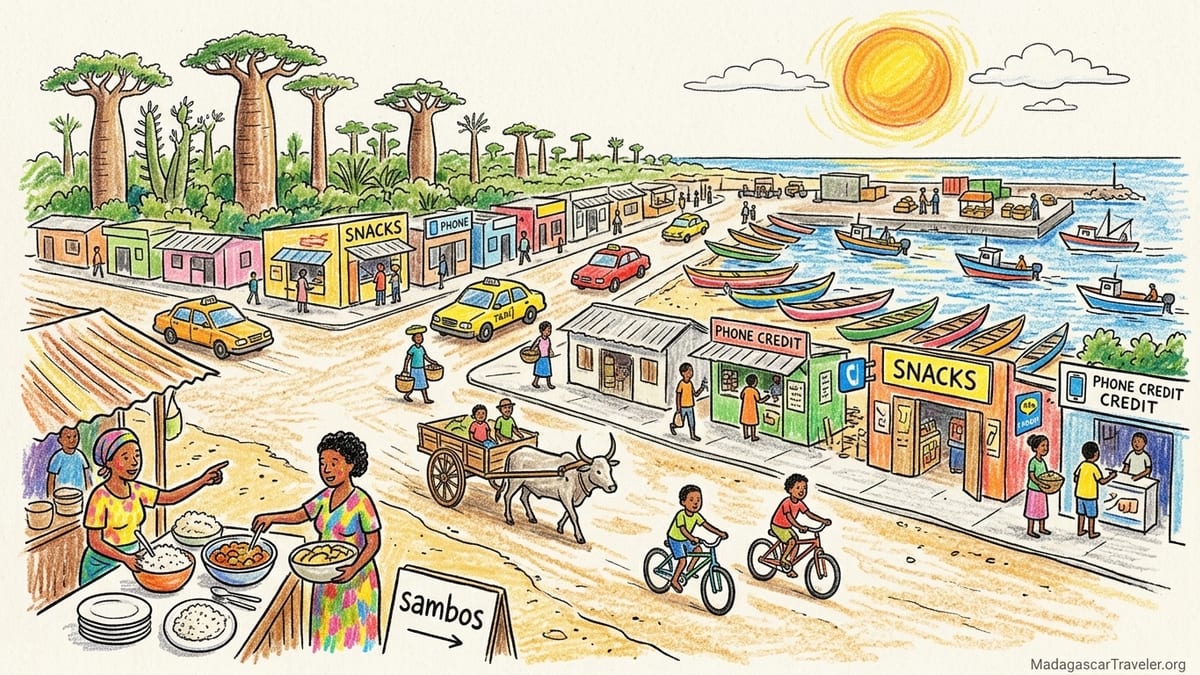
My first real sense of Toliara came from walking its waterfront on a hot, windy afternoon, when the canal and port were busy with pirogues heading in and out with catches of fish. I was staying in a basic hotel a few blocks inland from the sea and simply followed the main road toward the commercial port, where the pavement gives way to sand and the smell of salt and diesel. There was no entry fee, just the usual informal greetings from dockworkers and vendors. I spent about two hours wandering, taking care with pockets and camera, and felt comfortable as long as I stayed on the main paths and avoided flashing valuables.
From the waterfront I cut back into the grid of streets that make up central Toliara. I walked along the main avenue, where taxis honked constantly and zebu carts moved as slowly as the traffic. Side streets led to small markets selling secondhand clothes, phone credit, and fried snacks. I stopped at a stall for a triangle of sambos filled with minced zebu, paying the equivalent of a few thousand ariary in coins. There was nothing obviously “sightseeing worthy” in a conventional sense, but the mix of Malagasy pop music from shopfront speakers, the smell of grilling skewers, and kids dodging bicycles made this simple walk one of the most textured experiences of my stay.
I did this loop more than once and would absolutely repeat it, especially in late afternoon when the sun softens and the light slants across the sandy streets. I did not use a guide inside the city and did not feel one was essential, though asking hotel staff which areas to avoid after dark was useful. The main challenge was the wind, which can whip up dust; sunglasses and a scarf or buff made a big difference to comfort during longer walks.
Exploring Local Markets And Everyday Food Stalls
On my second day in Toliara I headed for the main market area near the center, walking from my guesthouse in about fifteen minutes. The market is not a single building but a dense area of stalls and alleys that unfold in every direction, selling everything from live chickens and sacks of rice to phone chargers and plastic buckets. There was no entrance fee, and I did not arrange a guide. Instead, I followed the flow of people and concentrated on staying out of the way, moving slowly and smiling often. I spent roughly three hours there across morning and midday, long enough for the heat to really build.
The most compelling part of the market for me was the food. One lunchtime I sat at a tiny stall where women were ladling rice and laoka into metal bowls for local workers. I pointed at what looked good, and ended up with a plate of rice, stewed zebu with ginger, and a side of leafy greens. I paid in cash in Malagasy ariary, with the total for the plate, a soft drink, and a coffee coming in at a modest amount compared with restaurant prices in the city center. There were no printed menus, no English, and no tourist markup that I could see, just the daily rhythm of people eating quickly and heading back to work.
I returned another morning to focus on produce and spices. Piles of tiny limes, tomatoes, onions, and hot chilies were stacked under makeshift awnings. I bought a small bag of dried chilies and vanilla pods after some friendly negotiation, giving myself time to adjust to the bargaining style. Here, patience and a sense of humor were more useful than fluent Malagasy or French. I would definitely repeat these market visits, both for stocking up on snacks before journeys along the coast and for the people-watching. A guide was not necessary, though going with one could help if you are nervous about bargaining or want more context on local products.
A Half Day At The Maritime And Mahafaly Museums
One morning when the coastal wind made the idea of a beach trip less appealing, I hopped into a city taxi to visit the cluster of small museums near the port. I asked the driver to take me first to the Maritime Museum, which sits on the way to the commercial docks. The ride from my central guesthouse took around ten minutes, and we agreed the fare in advance in Malagasy ariary, paid in cash on arrival. At the museum, there was a modest entry fee posted at the gate, which I paid directly to the staff before stepping inside.
The Maritime Museum itself was smaller than I expected. Inside, glass cases held shells, fossils, and model boats, along with some information about navigational history and local marine species. I spent about forty minutes reading the bilingual labels and examining the shell collections. A few exhibits felt dated, and there were times when I wished for more storytelling about how life on the southwest coast has been shaped by the sea. There were no guides on offer during my visit, and staff mostly stayed behind the desk, so the experience was largely self-directed.
From there, I continued by the same taxi to the Mahafaly Museum of ethnology, which focuses on the culture of the Mahafaly people and other groups in the region. Again there was a small entrance fee, paid in cash. This museum resonated more with me. Displays of carved funerary posts, household objects, and clothing, along with explanations in French and sometimes English, helped me connect what I had been seeing in villages along the road with their deeper cultural roots. I spent about one hour in the Mahafaly Museum before the exhibits began to repeat in theme.
In total, the museum morning took roughly three hours including taxi rides. I would repeat the Mahafaly Museum visit because it added context to the landscapes and villages I passed elsewhere in southwest Madagascar. I am less certain I would rush back to the Maritime Museum unless I had a particular interest in shells or wanted a short, inexpensive indoor activity between flights. A guide was not necessary for either, though travelers with limited French might appreciate going with a local fixer to help with any questions and to interpret some of the labels that lacked English translations.
Immersing In The Spiny Forest At Arboretum d’Antsokay
The one outing around Toliara that I recommend to almost every traveler I meet is the Arboretum d’Antsokay, a botanical garden set in the unique spiny forest about 12 kilometers southeast of the city. I first visited on a clear morning, arranging a car and driver through my hotel the day prior. The drive along the main road took about twenty minutes, passing dusty outskirts and small roadside villages before the entrance sign appeared on the left. At the gate I paid the posted entrance fee in Malagasy ariary and opted to join a guided tour rather than walk alone.
The guided circuit through the arboretum lasted around ninety minutes, following sandy paths among baobabs, Didierea plants, euphorbias, and other species adapted to the dry climate. My guide pointed out how many of these plants store water or protect themselves with remarkable spines, and he drew my attention to small reptiles and birds that I would likely have missed on my own. We stopped frequently in the shade of larger trees as he shared stories about medicinal uses of certain plants and how local communities collect firewood in surrounding areas.
Visiting with a guide was absolutely the right decision. While the paths are clearly marked and you could wander independently, much of the magic lies in understanding what you are looking at. Without someone explaining why a particular baobab species is rare or how a shrub is used to treat illness, the arboretum would have felt more like a pleasant walk than a deep experience. I tipped my guide at the end of the tour, grateful for both his knowledge and his patience with my questions in a mix of French and English.
I have since returned to Arboretum d’Antsokay on another trip, this time staying longer for lunch at the onsite restaurant and lingering on the terrace to watch the light shift in the surrounding dry forest. Both visits were highlights of my time around Toliara, and I would gladly repeat them. For travelers with limited time, a half day is enough, but if you have a particular interest in plants or photography, planning a full day with a leisurely lunch works very well.
Seafood Dinners And Simple Local Meals In Town
Using Toliara as a base meant eating many meals in the city, and those meals became as memorable as some of the excursions. On my first visit I tended to gravitate toward midrange restaurants near the main avenues that were used to serving travelers, where menus combined Malagasy staples with French-influenced dishes. One evening I ordered grilled fish caught that morning, served with rice and a side of sakay chili paste, along with a cold local beer. The bill for a full meal and drink was reasonable by international standards, paid in Malagasy ariary in cash, with a small tip left on the table.
Over time, I found myself drawn to simpler spots. Around lunchtime I often ate at tiny eateries that locals call hotely, a short walk from my guesthouse. Inside, long communal tables were crowded with workers on break. A typical plate might include rice piled high, laoka such as stewed chicken or beans, and a ladle of broth, with fresh fruit juice if available. There were no written menus, and I learned to listen for dish names, point, and accept what arrived. These meals usually cost noticeably less than dinner in tourist-oriented restaurants and felt more like being folded into the city’s daily routine.
One of my favorite Toliara memories is of a very simple meal shared at a hotely during a brief afternoon rain shower. The power flickered, everyone laughed, and the staff lit candles along the counter. I lingered over sweet coffee and chatted in basic French with a tablemate about football and the state of the road north. It was not a “must see” attraction, but I would repeat experiences like this without hesitation. No guide was needed for navigating these food spots, though asking hotel staff for a first recommendation helped me find places that balanced hygiene and authenticity.
If there was one eating experience I would probably not repeat often, it was an overly formal dinner at a hotel restaurant near the waterfront that catered primarily to tour groups. The prices were noticeably higher than elsewhere in town, and while the seafood platter looked impressive, it lacked the freshness and warmth of the simpler neighborhood grills. It was not a bad evening, but given limited nights in Toliara I would put my money into smaller, more local venues next time.
A Day Among The Mangroves Near Ambondrolava
On another visit, I used one of my Toliara days to explore the mangrove ecosystem near the village of Ambondrolava, where a community-based reserve works to protect and restore the forests that line the tidal channels. I arranged the outing through a local contact rather than a large tour company, and we left the city by car in the morning, driving south along the coast road for roughly half an hour before turning off toward the village. The final stretch was on sandy tracks, and I was glad to be in a vehicle with some clearance.
At the reserve office I met a local guide and paid a combined fee for the walk and pirogue excursion, in Malagasy ariary, recorded in a handwritten ledger. First we followed a raised boardwalk and dirt path through the mangroves themselves. The guide explained in simple terms how the trees trap sediment, protect the coastline from erosion, and provide nurseries for fish. Crabs darted between roots, and birds called from the mudflats. The walk lasted about an hour and ended at the edge of a channel, where a narrow wooden pirogue waited.
The boat section was both beautiful and a little uncomfortable. Sitting low in the pirogue, we glided between mangrove stands while the guide pointed out herons and kingfishers. The sun was fierce, and I was grateful for a hat and long sleeves. The ride took around another hour, including stops for photos and a short landing on a sandy bank. At the end we looped back to the village, where I bought a bottle of water and sat in the shade for a while before the drive back to Toliara.
I would repeat this mangrove outing because it provided a tangible sense of how coastal communities depend on and try to protect their environment. A guide here was essential; not only did he navigate the channels and boardwalks, he translated the conservation work into stories and examples. The only part that gave me pause was the relative cost compared with my daily budget in Toliara, as community-based excursions can feel expensive next to local prices. Even so, knowing that at least part of the fee supported the reserve made it feel like money reasonably spent.
Using Toliara As A Practical Base For Reef And Beach Trips
Most travelers, myself included, use Toliara less as a final destination and more as a jumping-off point for beaches and reefs along the southwest coast. During my stays I organized separate trips to Ifaty to the north and Anakao to the south, always returning to Toliara in between. While the details of those beach stays belong in another guide, the practicalities of using Toliara as a base are worth describing because they shaped several of my days in the city.
For Ifaty, I arranged a car and driver through my hotel, sharing the cost with another traveler I had met over breakfast. We left Toliara mid-morning, driving north along a potholed road that hugged the coast, passing small villages and salt flats. The journey took about two hours including a brief stop to buy fruit by the roadside. After a few days of snorkeling and walking in spiny forest reserves near Ifaty, I returned by the same route to Toliara, arriving midafternoon with enough time for a shower and a relaxed dinner in town. Those arrival and departure days were not full of attractions but still felt like part of the Toliara experience, especially the reentry into its slightly chaotic traffic after quieter beaches.
Reaching Anakao involved a different rhythm. I booked a seat on a motorboat that runs from Toliara’s beach south of town, with departure early in the morning depending on tides and weather. On the day of departure I woke before sunrise, shared a taxi to the beach, and waited with a small group of travelers and locals as cargo and fuel were loaded. The crossing took less than an hour in relatively calm seas, delivering us to the white-sand beach at Anakao. A few days later I did the trip in reverse, arriving back in Toliara by late morning and walking up from the landing area to find a taxi into town.
Would I repeat using Toliara as a base for Ifaty and Anakao? Absolutely. Each time I returned, I appreciated having familiar streets, known restaurants, and a guesthouse where staff remembered my name. No guide was needed for organizing these transfers, though local assistance was helpful for confirming departure times and arranging early-morning taxis. The only aspect that felt slightly overpriced was the boat fare compared with land transport, but considering the distance and the cost of operating boats, it seemed understandable. These in-between days, spent partly in transit and partly enjoying Toliara’s cafes and markets, became an integral layer of my southwest Madagascar trips.
Evenings With Local Music And Street Life
Some of my strongest memories of Toliara are from evenings when there was no formal plan beyond walking, listening, and occasionally sitting down for a drink. As the heat eased after sunset, I would leave my guesthouse and head toward streets where I had noticed bars or restaurants with music the night before. On certain nights, amplified Malagasy pop or salegy would spill out onto the pavement, and small groups would gather to watch local bands or recorded performances on televisions.
One evening I followed the sound of live guitars to a modest bar a short walk off the main avenue. Inside, a trio of musicians played upbeat tunes while a small crowd danced or clapped along. I ordered a drink at the counter, paying in cash, and took a seat at the back where I could see without intruding. No cover charge was requested, though I made a point of ordering more than one drink over the course of the set to support the venue. The session lasted a couple of hours, during which I struck up brief conversations with neighboring tables in French and shared a few laughs about my hesitant dance moves.
On other nights the entertainment was simply watching Toliara wind down. Street vendors set up grills selling brochettes and skewers of seafood, while children played in the side streets until called home. I sometimes bought a skewer or two as a light dinner or snack, especially when I had eaten a big lunch. Street food prices were usually low, part of the reason I felt comfortable trying several items over multiple nights rather than committing to a single big meal.
I would repeat these evenings of informal music and street life any time I return to Toliara. There was no need for a guide; if anything, being on my own or in a small group made it easier to drift from one place to another based on what sounded inviting. Basic street smarts were necessary, as in any city. I avoided walking back to my guesthouse very late at night and used a taxi instead when the streets had emptied. Still, the combination of live music, food smells, and warm night air made these unstructured hours some of the most satisfying in my Toliara stays.
The Takeaway
Across several visits, Toliara shifted in my mind from a dusty transit hub to a place worth slowing down for. None of my experiences there involved luxury or elaborate attractions. Instead, what has stayed with me are straightforward days: wandering the port and markets, getting a crash course in spiny forest ecology at Arboretum d’Antsokay, gliding quietly through mangroves near Ambondrolava, and eating unpretentious meals that tasted of the southwest coast.
Not everything was perfect. The Maritime Museum that guidebooks mention felt smaller and less engaging than I had hoped, and a few hotel restaurant meals were forgettable compared with what I found in simple hotely and street stalls. Some excursions, especially community-based nature trips, carried price tags that stood out next to daily city expenses. Yet even the mixed experiences taught me something about how tourism fits into local life and where my money could have the most positive impact.
If you plan to base yourself in Toliara, consider using the city itself as an experience rather than just a logistical waypoint. Walk its streets in the late afternoon light, learn to order lunch in a crowded hotely, set aside at least half a day for Arboretum d’Antsokay, and, if time and budget allow, visit the nearby mangroves. Use Toliara as a practical base for reaching Ifaty or Anakao, but give it at least a full day or two of its own. The reward is a more rounded picture of southwest Madagascar that extends beyond beaches and reef breaks to include the people, plants, and everyday rhythms that make this part of the island distinct.
FAQ
Q1. How many days should I spend in Toliara itself?
I found that two full days in Toliara, separate from time in places like Ifaty or Anakao, allowed for relaxed visits to the markets, museums, and Arboretum d’Antsokay without feeling rushed.
Q2. Is it easy to visit Arboretum d’Antsokay from Toliara without a tour group?
Yes. I arranged a car and driver through my guesthouse and paid the arboretum entrance and guide fee on arrival, which made for an easy half day trip.
Q3. Do I need a guide to walk around Toliara’s city center and markets?
I explored the waterfront and markets independently, asking my hotel for advice on which areas to avoid after dark. A guide is optional but can help with language and bargaining if you prefer more structure.
Q4. Are the Maritime and Mahafaly museums worth visiting?
The Mahafaly Museum gave me useful cultural context and was worth an hour or so. The Maritime Museum felt smaller and more specialized, so I would visit mainly if you have spare time or a strong interest in shells and maritime history.
Q5. How did you arrange the mangrove excursion near Ambondrolava?
I organized it through a local contact in Toliara, who arranged a car, driver, and local guide at the community-managed reserve. All payments were made in cash at the site and noted in a ledger.
Q6. Is street food in Toliara safe to try?
I ate grilled skewers and snacks from busy vendors and simple hotely where there was a fast turnover of food, and I had no issues, though I avoided anything that looked like it had been sitting out too long.
Q7. How did you get from Toliara to Ifaty and back?
I hired a car and driver through my hotel and shared the cost with another traveler. The drive took about two hours each way and doubled as a way to see villages along the coastal road.
Q8. What is the best time of day to explore Toliara on foot?
I preferred early mornings and late afternoons when the heat and sun were less intense, saving the middle of the day for museum visits, long lunches, or rest.
Q9. Is Toliara a good base for visiting Anakao?
Yes. I stayed in Toliara before and after my Anakao trip, using taxis to reach the beach departure point for the motorboat and returning to the same guesthouse when I came back.
Q10. Would you personally return to Toliara on a future Madagascar trip?
I would. I would plan at least a couple of nights again, revisit Arboretum d’Antsokay, walk the markets, and use the city as a familiar base for exploring more of the southwest coast.