


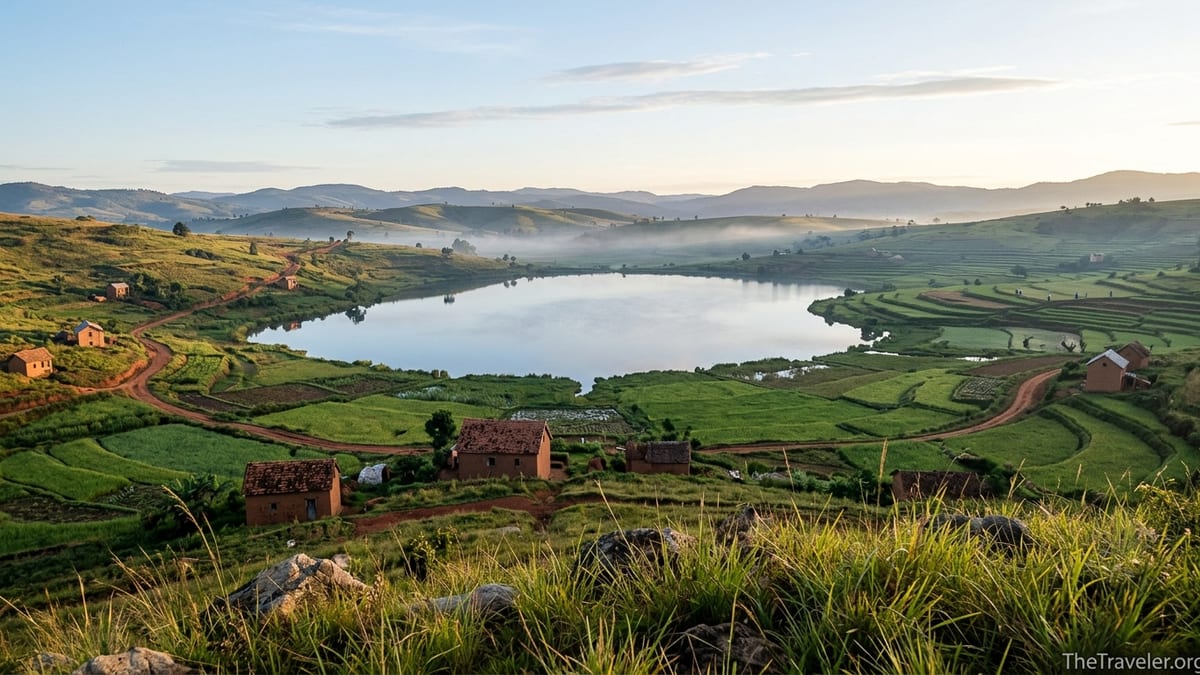
Madagascar’s Central Highlands are often treated as a transit zone between the capital and the coasts, yet they hide some of the island’s most rewarding landscapes and cultural experiences. Volcanic lakes, royal hilltop fortresses, artisan towns and granite massifs all lie within a few days’ journey of Antananarivo, and many can be combined along the same road. This guide focuses on the most worthwhile highlands stops for travelers: Antsirabe, Ampefy and Lake Itasy, Ambohimanga, Ambositra and the Zafimaniry area, Fianarantsoa, and the trekking paradise of Andringitra.
How the Highlands Fit Into a Madagascar Itinerary
The highlands stretch roughly from Antananarivo south along Route Nationale 7 toward Fianarantsoa and beyond, and westward toward Lake Itasy and Ampefy. Most visitors will already pass through this elevated plateau when moving between the capital and the southern parks or the west coast, which makes it relatively easy to work in one or two multi-day stops without rewriting an entire itinerary. For many, a classic arc links Antananarivo with Ampefy, Antsirabe, Ambositra, Fianarantsoa and on to Andringitra before dropping to the coast.
Distances can be deceiving. A 180 kilometer drive on RN7 between Antananarivo and Antsirabe can take about four hours by private car, longer by taxi-brousse, simply because of road conditions and traffic. Reaching Andringitra’s trailheads from Fianarantsoa can absorb another half day, with slow-going stretches and occasional informal roadblocks where local communities request small tolls. Planning realistic travel times is as important as choosing destinations.
For a one-week highlands trip from Antananarivo, a practical route might be two nights in Ampefy, two in Antsirabe, one in Ambositra and two in Fianarantsoa with a long day trip into Betsileo wine country. With ten to twelve days, you can add a three-day Andringitra trek and perhaps an overnight near Ambohimanga before or after your loop. Each of the key stops in this article can anchor at least a full day, and some merit far more.
Antsirabe: Volcanic Lakes and Thermal History
Antsirabe, about three to four hours south of Antananarivo on RN7, is known locally as the “city of water” because of its thermal springs and volcanic setting. The town sits on a high volcanic plateau shaped by the Ankaratra volcanic field, with numerous small cones and water-filled craters scattered across the surrounding countryside. This geothermal character has attracted visitors since the 19th century, when European settlers developed spa facilities around the naturally carbonated, mineral-rich waters that bubble up near town.
Today, travelers come less for formal spa cures and more for the cool climate and nearby lakes. Crater lakes such as Tritriva and Andraikiba lie within an hour’s drive of town, often visited by hiring a local driver or, for the energetic, cycling part of the way. At Lake Tritriva, a steep-sided, emerald pool fills an ancient volcanic vent, while at Andraikiba, families picnic along the shore and rent simple pedal boats. The landscapes are gentle rather than dramatic, with patchworks of potato and carrot fields, but when mist rises off the water in the early morning, the volcanic origins of the region are easy to imagine.
Antsirabe also tells a social story. The town’s broad, colonial-era avenues are filled with colorful pousse-pousse rickshaws, which double as an inexpensive way to tour local markets and artisan workshops. A short rickshaw circuit might cost only a few dollars, and drivers will often wait while you browse stalls selling embroidered tablecloths, recycled aluminum pots or local dairy products made from milk produced on surrounding highland farms.
Antsirabe deserves at least two nights if you want to see both the town and the lakes properly. One full day can be devoted to a lakes loop, with walks around Tritriva and Andraikiba and stops in small farming villages, and another to exploring the town itself. In terms of accessibility, Antsirabe is one of the easiest highland destinations: regular taxi-brousse services run from the capital, and private cars follow the main paved highway. This makes it a natural first stop when heading south toward Ambositra, Fianarantsoa and eventually Andringitra.
Ampefy & Lake Itasy: Waterfalls, Geysers and Rural Calm
West of the capital, the village of Ampefy sits on the shores of Lake Itasy, one of Madagascar’s largest lakes and a distinctly volcanic landscape in its own right. It lies roughly 120 kilometers from Antananarivo, usually a two to three hour drive by private vehicle. The approach runs through rolling hills dotted with fields and traditional mud-brick houses, before opening onto water views and low, rounded volcanic cones that frame the lake.
Ampefy’s main attractions are all outdoors. Lake Itasy itself invites slow exploration by canoe, with local boatmen offering short paddles out among reed beds where fishermen tend their nets. Just outside town, the Lily Waterfall plunges into a narrow gorge surrounded by cultivated terraces; local guides wait at the trailhead to lead you down to viewpoints or to a simple suspension bridge. Further afield, near Analavory, cold-water geysers spurt through mineral-encrusted ground, staining the surrounding rocks orange and white. Reaching the geysers typically involves a short detour on a dirt track that can be rough after heavy rain but is passable in the dry season for most vehicles.
Most visitors base themselves around Ampefy for a long weekend. Two nights allow one full day for the waterfall and geysers, and another for lakeside walking or easy hikes up low volcanic hills overlooking the water. Small guesthouses and lakeside lodges scattered around the shore offer simple rooms, often with local fish and rice on the menu. Budget-conscious travelers can eat cheaply at village eateries, where a plate of romazava stew and rice may cost only a few dollars, while mid-range lodges provide more European-style dishes at higher but still modest prices.
In trip planning terms, Ampefy works best as a standalone escape from Antananarivo or as an initial highland stop before looping back via the capital to head south along RN7. Because road connections to Antsirabe are indirect and can be slow, most travelers treat Ampefy and the RN7 highlands as two separate branches from Antananarivo rather than a single continuous circuit. For those with ten days or more, one pattern is a three-day Ampefy break followed by a return to the capital, then onward by road toward Antsirabe, Ambositra and Fianarantsoa.
Ambohimanga: Royal Heritage Above the Rice Fields
Just northeast of Antananarivo rises the Royal Hill of Ambohimanga, a forested granite ridge that shelters a fortified royal settlement, or rova. Recognized by UNESCO as a World Heritage Site, it is one of Madagascar’s most important cultural landmarks. From its hilltop palace compounds and stone gates, Merina kings once consolidated their control over the highlands before the monarchy shifted its capital to Antananarivo. Today, the site remains a place of pilgrimage for Malagasy pilgrims who come to honor ancestral rulers.
Visitors typically enter through massive stone gateways and walk steep paths up to wooden palace buildings, stone tombs and ceremonial courtyards. The structures are modest in scale but rich in symbolism, from sacred fig trees to ritual stones used in royal ceremonies. Information panels and local guides help explain how the site functioned as both a political center and a spiritual one, where decisions about war, diplomacy and succession intertwined with ancestor worship.
One of the greatest rewards of Ambohimanga lies not only in the architecture but also in its panoramic views. From the upper terraces, you look out over patchworks of rice paddies and scattered villages that still define the highland landscape. The proximity to Antananarivo, roughly 20 to 25 kilometers, allows most travelers to visit as a half- or full-day trip. Private taxis or pre-arranged drivers are common, while more adventurous visitors use local minibuses, though these can be crowded and take longer due to intermediate stops.
Ambohimanga fits naturally at the beginning or end of any highland itinerary, particularly for travelers who want at least one deeply cultural experience amid days of landscapes and trekking. It can be combined with a night in the capital before setting off toward Antsirabe, or slotted into a spare afternoon after returning from the south. Because the site is compact and paths can be steep in places, two to four hours on the hill are usually enough, making it a flexible element in otherwise tight schedules.
Ambositra & the Zafimaniry: Crafts and Intangible Heritage
South of Antsirabe on RN7, the town of Ambositra is known as Madagascar’s woodcarving capital and the gateway to Zafimaniry country. Workshops line the main streets, their open fronts stacked with carved boxes, inlaid furniture, wooden chess sets and delicate marquetry panels. Many of these pieces draw on the traditions of the Zafimaniry people, who live in forested highland villages southeast of town and whose woodcraft knowledge has been recognized by UNESCO as an element of Intangible Cultural Heritage.
In practice, this heritage means that a shopping stroll in Ambositra is also a cultural experience. In small, family-run ateliers in neighborhoods like the Vodihahy district, artisans use hand tools to cut and assemble tiny pieces of naturally colored woods into intricate geometric designs. Some workshops allow visitors to watch the process for a small fee or in exchange for a purchase, explaining the symbolic patterns that represent ideas like family, protection or fertility. A simple hand-carved box might cost roughly the equivalent of a restaurant meal, while larger furniture pieces can run into several hundred dollars, though shipping them home requires advance planning.
Ambositra also serves as a base for trips into Zafimaniry villages, where traditional wooden houses decorated with carved panels cling to steep hillsides above remnants of once extensive forests. Reaching these villages often involves a combination of rough tracks and footpaths, and local guides arranged in town can organize overnight stays with host families or in basic community lodges. Conditions are simple, with bucket showers and shared long-drop toilets, but the chance to sit by a cooking fire while artisans carve decorative doorframes or stools provides some of the most memorable highland encounters.
From a logistical perspective, Ambositra sits about four to five hours south of Antananarivo by road, two to three hours south of Antsirabe, and three to four hours north of Fianarantsoa. The town itself deserves at least one night, allowing half a day for workshop visits and another for a short excursion toward a nearby Zafimaniry village. Travelers interested in deeper village immersion or multi-day hikes among highland forests could easily spend three to four nights here. Ambositra combines naturally with Antsirabe to the north and Fianarantsoa to the south, forming the cultural core of an RN7-based highland itinerary.
Fianarantsoa: Architecture, Wine and Betsileo Culture
Fianarantsoa, often shortened to “Fianar,” lies further south along RN7 and acts as a gateway to both the southern highlands and the east coast. Built across a series of hills, the city’s upper town preserves historic stone houses, churches and a rova hill, reflecting the influence of both Betsileo culture and missionary-era architecture. Walking tours climb steep, cobbled lanes between closely packed houses, offering views across rice paddies and tea plantations in the valleys below.
The region around Fianarantsoa is Betsileo heartland, known for its finely terraced rice fields and careful land management in often steep terrain. Day trips from the city can include walks in surrounding villages, where visitors see how hillside terraces are planted and irrigated, or short tasting visits to small vineyards that produce some of Madagascar’s modest but distinctive wines. The experience might be as simple as sitting on plastic chairs in a courtyard, sampling a light red poured from a reused bottle while the producer explains seasonal challenges such as hail or drought.
Fianarantsoa also functions as a transit point. To the east, a winding road and sometimes-operational train line lead to the coastal town of Manakara, passing rainforest and steep ravines. To the south, the RN7 continues toward Ambalavao and on to the great sandstone massif of Isalo. Northbound travelers use Fianarantsoa as a final highland stop before climbing back toward Ambositra and Antsirabe. As a result, the city offers a wider range of services than smaller highland towns, including banks, markets and a choice of mid-range hotels.
For most travelers, Fianarantsoa warrants two nights, allowing one full day on foot in the upper town and nearby villages, and time to organize onward transport to destinations like Andringitra or Manakara. It combines particularly well with Ambositra to the north and Ambalavao to the south, either as part of a long RN7 traverse or as the southern anchor of a highland-focused itinerary that ends with several days of trekking.
Andringitra: Trekking Among Granite Peaks
South of Fianarantsoa and near the small town of Ambalavao rises the Andringitra massif, one of Madagascar’s most rewarding trekking areas. Within Andringitra National Park, granite peaks, deep valleys and high plateaus create a landscape unlike the gentler rolling hills further north. The highest accessible summit, often known as Pic Boby, draws experienced hikers keen to stand on one of the country’s loftiest points, while lower circuits cross high-altitude grasslands and river valleys where ring-tailed lemurs sometimes cling to cliffs.
Reaching the park involves some effort. From Fianarantsoa, travelers usually continue by road to Ambalavao, a journey of around three hours, then transfer to 4x4 vehicles for the rough track leading to park entry points. Community-managed trailheads and campsites are scattered along valley floors, and local guiding is compulsory inside the park, which helps support nearby villages. Multi-day treks generally include tent camping at simple sites with basic facilities, meals cooked by porters or guides on gas burners or open fires, and early starts to avoid afternoon cloud build-up.
A classic Andringitra itinerary might be a three-day, two-night trek combining high ridges with a summit attempt and a final descent past waterfalls and natural rock slides that double as improvised swimming pools in the dry season. Weather plays a big role. In the cool months of June to August, nights on the plateau can drop close to freezing, so warm layers and good sleeping bags are essential. During the rainy season, typically from December into March, trails can become slippery and river crossings rise, so travelers need to be comfortable with mud and variable conditions or consider postponing summit ambitions.
Andringitra works best for travelers who already plan to be in the southern highlands, especially those passing through Ambalavao or Fianarantsoa. A common pattern is to travel from Antananarivo down RN7 with stops in Antsirabe, Ambositra and Fianarantsoa, spend three or four days around Ambalavao and Andringitra, then continue either further south toward Isalo and the coast or loop back north. Because of the long access times and the physical demands of trekking, Andringitra generally deserves at least three nights in the area, including time in Ambalavao to prepare and recover.
Planning Routes and Combining Highland Destinations
With so many potential stops, choosing how to link the highlands depends on time, interests and tolerance for long drives. Travelers with only four or five days often focus on one axis: either head west from Antananarivo to Ampefy and Lake Itasy for a relaxed lake-and-waterfall break, or south to Antsirabe and Ambositra for volcanic lakes and crafts. Those with a week or more can combine both landscapes and culture by continuing farther south to Fianarantsoa and, for strong hikers, onward to Andringitra.
One practical eight-day itinerary might look like this. Day one: Antananarivo to Antsirabe with an afternoon lake visit. Day two: further exploration around Antsirabe. Day three: drive to Ambositra, stopping in villages along the way. Day four: woodcarving workshops and a short walk toward a nearby Zafimaniry village. Day five: onward to Fianarantsoa and an afternoon walking tour in the upper town. Day six: rural Betsileo villages or a vineyard visit. Days seven to eight: travel toward Andringitra for a two-day trek, then return to Ambalavao or begin the journey back north.
For travelers who value cultural immersion over trekking, another pattern swaps Andringitra for Ampefy and Ambohimanga. Start with a day trip to Ambohimanga from Antananarivo, then spend three days in Ampefy enjoying Lake Itasy and the Lily Waterfall. Return to the capital and continue south to Antsirabe and Ambositra for three or four days of markets, lakes and handicrafts. This balances urban history, rural highland life and volcanic scenery without requiring strenuous hikes or technical trekking gear.
Transport choices influence how many places you can realistically see. Public taxi-brousse services are inexpensive but slow and crowded, suitable for flexible travelers with time and patience. Private car hire with a driver, often arranged through guesthouses or local agencies, costs significantly more per day but allows early departures, scenic stops and more remote detours, such as rough access roads to Andringitra trailheads or isolated Zafimaniry villages. Sharing a vehicle among three or four people can make private transport far more affordable while still supporting local drivers.
The Takeaway
Madagascar’s Central Highlands reward travelers who slow down and treat the region as a destination rather than a corridor. Antsirabe’s crater lakes and thermal history, Ampefy’s volcanic lake and waterfalls, Ambohimanga’s royal hill and sacred relics, Ambositra’s workshops and Zafimaniry villages, Fianarantsoa’s architecture and Betsileo terraces, and the jagged peaks of Andringitra each offer distinct windows onto the island’s interior.
In practice, the question is not whether these highland stops are worth visiting, but how many you can fit into your schedule. Weekend visitors from the capital may be content with Ampefy or Antsirabe alone. Overlanders on the RN7 can punctuate long drives with cultural nights in Ambositra and Fianarantsoa. Trekkers build entire journeys around Andringitra, using the surrounding towns as staging posts. Whatever your style, grounding your plans in realistic travel times, local seasonality and the physical demands of hikes will help ensure that the highlands become a highlight rather than a blur between more famous parks and beaches.
Above all, the highlands offer a chance to see how Malagasy life unfolds away from the coasts: rice paddies rising in terraces up valley walls, artisans carving intricate patterns into doors and furniture, worshippers making quiet offerings on royal hills, and schoolchildren waving as your car winds past their villages. Spend a few extra days among these hills and lakes, and the story you tell about Madagascar will be richer, more layered and far more connected to the everyday realities of the island.
FAQ
Q1. How many days should I spend in Madagascar’s Central Highlands?
Most travelers benefit from at least five to seven days in the highlands, which is enough to visit Antsirabe, Ambositra and Fianarantsoa at a relaxed pace. With ten days or more, you can add Ampefy, Ambohimanga and a multi-day trek in Andringitra without feeling rushed.
Q2. Is it easy to travel between Antananarivo, Antsirabe and Ambositra?
These towns are linked by the main RN7 highway, and regular taxi-brousse services run the route, though they can be slow and crowded. Hiring a private car with a driver is faster and more flexible, especially if you want to stop in villages or visit crater lakes along the way.
Q3. Can I visit Ampefy and Lake Itasy on a day trip from Antananarivo?
It is possible as a long day trip, since the drive usually takes two to three hours each way by private car, but staying one or two nights allows time for the Lily Waterfall, the geysers near Analavory and relaxed walks or canoe rides on the lake.
Q4. Do I need a guide to visit Ambohimanga?
You are not strictly required to hire a guide, but doing so greatly enriches the experience by explaining the royal history, rituals and symbolism of the site. Guides are usually available at the entrance and their fees are modest by international standards.
Q5. How physically demanding is trekking in Andringitra National Park?
Andringitra offers routes from moderate day hikes to strenuous multi-day treks with steep ascents, rocky paths and cold nights at altitude. Anyone attempting summit routes should be comfortable walking several hours a day with significant elevation gain and should bring appropriate clothing and footwear.
Q6. Is it safe to travel by taxi-brousse in the highlands?
Taxi-brousses are the standard local transport and generally safe if somewhat uncomfortable, but they can be crowded and slow, and night travel is best avoided. Keep valuables close, choose reputable companies when possible, and be prepared for occasional delays due to road conditions or informal roadblocks.
Q7. When is the best time of year to visit the highlands?
The dry season, roughly from May to October, offers cooler temperatures, clearer skies and better road and trail conditions, which is ideal for trekking in Andringitra and visiting crater lakes. The rainy season brings greener landscapes but also muddy tracks, more difficult river crossings and occasional travel disruptions.
Q8. Can I visit Zafimaniry villages near Ambositra without camping?
Yes, some Zafimaniry villages can be reached on day hikes or short drives followed by walks, allowing you to return to Ambositra for the night. Deeper village experiences often involve simple homestays or basic community lodgings, which can be arranged through local guides or guesthouses in town.
Q9. Are there opportunities to see wildlife in the Central Highlands?
Wildlife densities are lower than in rainforest or coastal parks, but you may see birds around crater lakes, chameleons in village gardens and, in Andringitra, species such as ring-tailed lemurs or highland frogs along streams. Travelers primarily interested in wildlife usually combine the highlands with rainforest parks elsewhere in Madagascar.
Q10. How should I budget for accommodation and food in the highlands?
Budget guesthouses and simple hotels are widely available in towns like Antsirabe, Ambositra and Fianarantsoa, with mid-range options in larger centers and around popular areas such as Ampefy. Simple local meals in small restaurants typically cost only a few dollars, while mid-range hotel restaurants charge more for international dishes; trekking packages in Andringitra usually bundle guiding, porters, camping and food into a per-day rate agreed in advance.