


Anakao is where Madagascar’s southwest coast feels truly wild. Just an hour or so by boat from the busy port of Toliara, this sandy Vezo fishing village faces a turquoise lagoon, a string of offshore reefs and the tiny island of Nosy Ve. It is a place for barefoot days, simple bungalows and time dictated by the tide and the wind rather than by Wi-Fi or nightlife. This guide walks you through how to get there, what to do on and off the beach, and what you must organize in Toliara before committing to Anakao’s beautiful isolation.
Why Anakao Feels Different From Other Southwest Beaches
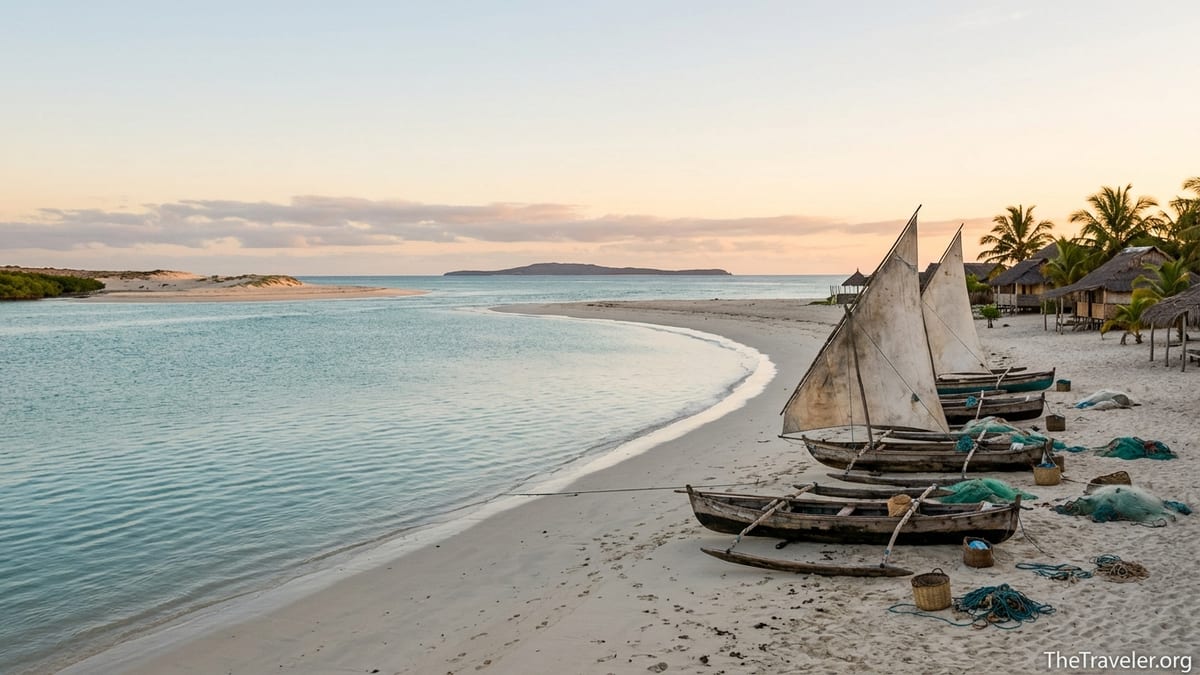
Most travelers reach the coast at Ifaty and Mangily, north of Toliara, where there are numerous hotels, beach bars and tour desks. Anakao, about 35 kilometers south of Toliara by sea, feels like a different world. The village stretches along a broad, pale sand beach, with traditional Vezo pirogues pulled up on the shore and a handful of low-key lodges spaced out along the water. There are no paved streets, no bank, no pharmacy and only patchy mobile reception. At night the village is mostly dark except for a few generator-lit restaurants and the glow of charcoal fires in family courtyards.
That sense of remoteness is precisely what draws people here. You wake up to the sound of surf and roosters, not motorbikes. Children play football in the sand at low tide. Fishermen head out at dawn, their sails catching the first light. Compared with Ifaty, where you can wander to multiple hotels to compare menus or arrange activities, Anakao requires more self-sufficiency and advance planning, but rewards you with a stronger feeling of being in a working coastal village rather than a resort strip.
The trade-off is comfort and choice. There are a few midrange and higher-end lodges offering en suite bathrooms and hot water, such as Anakao Ocean Lodge & Spa and a couple of beach bungalow properties, alongside very simple Malagasy-run guesthouses with bucket showers and fluctuating electricity. Prices fluctuate, but beachfront bungalows at established lodges often start in the rough range of 70 to 120 US dollars per night for two including breakfast, while basic thatched huts with shared facilities can be significantly cheaper. Whatever your budget, book ahead in high season, roughly July to October and around Christmas and New Year.
Because infrastructure is minimal, you will not find large supermarkets, foreign exchange desks or equipment rental shops on every corner. Those conveniences stop in Toliara. In Anakao you buy soft drinks from tiny kiosks with cool boxes, order fish that was caught hours earlier, and walk everywhere on sand. For many visitors, that is exactly the point.
Reaching Anakao From Toliara: Boats, Schedules and Sea Conditions
Most travelers reach Anakao from Toliara by boat. The crossing usually takes around one hour in a fast motor launch in calm conditions, slightly longer in slower boats or rougher seas. Transfers typically depart from the small fishing harbor area south of central Toliara early in the morning, often between 7:00 and 9:00, to take advantage of smoother seas and favorable winds. Wind tends to strengthen around midday, which can make afternoon crossings choppy and less comfortable.
There are a handful of established operators and hotels that run shared speedboats directly to their properties in Anakao. If you are staying at one of the main lodges, you can usually book the boat through them: they will confirm the departure time, advise where to meet in Toliara, and coordinate luggage loading. Expect to pay something in the region of 20 to 35 US dollars per person one way for a standard shared transfer, depending on the operator, season and fuel prices. Private charters, which might be useful for families or small groups with bulky dive gear or kitesurf equipment, cost more but give you flexibility over timing.
It is also possible to arrange transport in smaller local boats, including motorized pirogues. These are cheaper, but can be significantly slower and more exposed to waves and spray. Safety equipment varies, so if you are tempted by a budget option from the harbor, always check for lifejackets and that the engine appears in good working order. Sea conditions in the Mozambique Channel can change quickly. In the windy season, especially around August and September, large swells and strong crosswinds can make crossings uncomfortable or occasionally force cancellations.
Because there is no pier in the village itself, most boats land on the beach. Be prepared to wade through shallow water when disembarking, so wear sandals or shoes you do not mind getting wet and keep electronics in dry bags. On the Toliara side, tides may dictate exactly where you embark: sometimes you will walk along the beach to reach the boat, at other times small handcarts carry luggage over the sand. Your hotel or operator will give updated instructions the day before departure, so it is important to have a working phone number or email while you are in Toliara.
Life in a Vezo Fishing Village
Anakao is first and foremost a Vezo community. The Vezo are a semi-nomadic coastal people known across southwest Madagascar for their skill at sea. You see their slender wooden pirogues every day, painted in blues and greens, with triangular sails patched and repaired many times over. For generations, Vezo families have depended on the lagoon and offshore reefs for fish, octopus and sea cucumbers, which they sell in Toliara’s markets or dry outside their homes.
As a visitor, it is worth setting aside time simply to walk the village at different times of day. Early morning is busy with fishermen returning, shouting to each other as they haul the boats up onto the sand. Women and children sort the catch into plastic basins, while buyers walk from boat to boat negotiating prices. Late afternoon, after the heat has eased, people gather outside their houses, repair nets, pound cassava and play cards. You will likely be greeted with choruses of “salama” and curious smiles, especially from children.
Respectful behavior matters in such a small, tight-knit community. Always ask before photographing individuals, especially elders or religious sites. Dress modestly when you are away from the beach, covering swimwear with a T-shirt and shorts or a light dress. Many travelers buy simple sarongs or lambas in Toliara and wear them over swimwear while walking through the village. Alcohol is available in the lodges, but public drunkenness or loud late-night parties are not appreciated in a place where most residents rise before dawn to fish.
There are a few tiny shops selling basics such as bottled water, soft drinks, biscuits and phone credit, but supplies vary. Fresh fruit is more limited than in Toliara; you may see mangoes, bananas or coconuts in season, often sold by children along the beach. If dietary restrictions are important to you, it is worth speaking directly to your lodge before arrival to discuss what they can realistically provide, as most kitchens rely on what arrives by boat or is caught daily.
Beaches, Swimming and Snorkeling Around Anakao and Nosy Ve
The main beach at Anakao is wide and sandy, with shallow water at low tide and deeper channels at high tide. Swimming directly in front of the village is pleasant in calm weather, but currents can be strong and the passage of boats means you should always check with your lodge where it is safest to swim. Some properties mark out areas free of boat traffic. The lagoon is tidal; at very low tide you may need to walk over damp sand and seagrass flats before reaching swimmable depth.
For clearer water and better snorkeling, most visitors take a day trip to Nosy Ve, a small flat island about three kilometers offshore that forms part of a protected marine area. Boats leave in the morning from the beach, often organized by lodges, dive centers or local boatmen. The trip usually takes around 20 to 30 minutes. On arrival you typically anchor off one of several coral heads and snorkel directly from the boat or from the beach. Visibility is often excellent during the dry season, roughly April to November, and you can expect to see hard coral formations, parrotfish, butterflyfish, wrasse and, with luck, turtles or rays.
Most Nosy Ve excursions are relaxed affairs. A common arrangement is a half or full-day trip including boat, mask and snorkel rental, a simple grilled fish lunch on the beach and park or community fees for landing on the island. Prices vary with fuel and group size, but many travelers report paying in the ballpark of 25 to 45 US dollars per person for a shared excursion arranged through a lodge. Because the island is fragile and has sacred significance for local communities, landing areas may be restricted and you should follow your guide’s instructions carefully, staying on established paths and avoiding bird nesting zones.
Those with their own snorkeling gear have more flexibility, but fins, masks and snorkels are available for rent through certain lodges and dive centers in Anakao. Equipment quality can be variable, so if you are serious about snorkeling it is worth bringing at least your own mask. Sun protection is crucial: the reflection off the lagoon is intense, so long-sleeved rash vests, reef-safe sunscreen and a hat are essentials for any time on or in the water.
Diving, Surfing, Kitesurfing and Whale Watching
Anakao is a good base for water sports for different skill levels. Several operators and hotels either run or partner with small dive centers, which offer guided dives on the outer reef and around Nosy Ve. Dive sites typically feature sloping coral gardens, spur-and-groove formations and sandy patches where you might see stingrays. Common marine life includes angelfish, clownfish, groupers and sometimes larger pelagic species in season. Visibility is usually best during the dry season months, especially from June to October, when water temperatures are cooler but still comfortable with a short wetsuit.
If you are a certified diver, you can expect to find basic but competent operations that run morning two-tank dives, with afternoon shore dives or snorkeling trips on request. Introductory dives and training courses may be available, though infrastructure is more limited than in larger resort hubs elsewhere in Madagascar. It is wise to email ahead to confirm whether the center will be operating on your dates, whether nitrox is available if you need it, and what kind of rental gear they stock in your size.
Surfing and kitesurfing are both possible thanks to the consistent trades that blow across the lagoon. Kitesurf schools and rental outfits in Anakao offer lessons for beginners and gear rental for experienced riders, often using small powerboats to reach sandbanks and reef passes with stronger wind and cleaner swell. The most popular periods for kitesurfing are the windier months, generally from May to September, when afternoons can bring steady cross-shore winds. Surf spots are mostly reef breaks that require boat access and local knowledge, so do not attempt to paddle out alone without arranging a guide who understands the tides and channels.
Between roughly June and September, humpback whales migrate along Madagascar’s southwest coast. When conditions are right, local operators run whale watching trips from Anakao, often combining them with snorkeling or visits to Nosy Ve. Boats maintain a safe distance, and you watch for spouts and breaches against the horizon. Sightings can never be guaranteed, but it is one of the highlights of visiting in the austral winter. Ask in advance whether your lodge can arrange outings and what guidelines they follow for responsible encounters.
Mangroves, Lagoons and Access Toward Tsimanampetsotsa
South of Anakao, the coastline becomes even more sparsely populated, with stretches of dunes, mangrove creeks and shallow lagoons. Some local guides offer half-day or full-day excursions by pirogue or motorboat into nearby mangrove areas. These trips typically involve gliding along narrow channels at high tide, watching for herons, egrets and kingfishers, and learning how local communities rely on mangroves for fish nurseries and wood while trying to protect them from overharvesting. It is a peaceful counterpoint to the open lagoon, best undertaken in the early morning or late afternoon to avoid the strongest sun and to see more birdlife.
For many travelers, Anakao is also a stepping stone toward Tsimanampetsotsa National Park, a protected area about two hours south by 4x4 track from the coast. The park is known for its shallow, mineral-rich lake that often appears milky turquoise, baobab-studded limestone plateaus, caves and colonies of endemic birds such as flamingos in season. The route from Anakao generally follows sandy, corrugated tracks that can become difficult in the rainy season, so a high-clearance 4x4 with an experienced local driver is essential.
There are a few ways to arrange visits. Some travelers book multi-day itineraries through agencies in Toliara that combine Anakao and Tsimanampetsotsa, including transport, park fees, guide services and simple accommodation near the park boundary. Others organize day or overnight trips once in Anakao through their lodge, which either has its own vehicles or works with local drivers who know the route. Costs vary depending on group size and the exact program, but because of fuel, vehicle wear on rough roads and park entry charges, you should expect Tsimanampetsotsa outings to be one of the more expensive excursions of your stay.
Services around the park are minimal, which makes planning from Toliara and Anakao crucial. You should not attempt to reach Tsimanampetsotsa independently in a normal rental car without detailed, up-to-date advice on conditions. Ask your accommodation in Anakao to confirm whether tracks are passable and whether park offices are open during your visit, as opening hours and staffing can vary.
Accommodation, Food and What To Arrange Before Leaving Toliara
Anakao’s accommodation scene is compact. The better-known lodges and hotels usually sit a little way from the central village, with clusters of thatched bungalows facing the sea, maybe a small pool and a restaurant open to non-guests by reservation. In the middle category you might find a solid bungalow with a fan, mosquito net, private bathroom and a terrace with hammocks. At the top end, a few places layer on extras such as spa treatments or air-conditioned rooms, though power availability and generator schedules can limit air conditioning hours.
Budget options are much simpler: huts constructed from local wood and palm, sometimes with sand floors and shared facilities. Electricity might come from solar panels or small generators, usually turned off during parts of the day or night. Hot water is not guaranteed. For all categories, it is wise to bring a reliable torch or headlamp, a power bank and a universal adapter. Do not assume there will be plentiful plugs in your room or 24-hour power for charging cameras and phones.
Restaurants are almost entirely attached to lodges or family-run guesthouses. Menus lean heavily on the day’s catch: grilled fish with rice, seafood skewers, calamari, lobster when in season, and simple pasta or zebu beef dishes for variety. Vegetarian options can be limited to vegetable rice, omelettes, salads and whatever fresh produce is available, so communicate your needs in advance. Meals at lodge restaurants are often priced as set menus or a la carte dishes that might range from the equivalent of 5 to 15 US dollars, depending on the ingredient and the venue. Many travelers opt for half-board or full-board packages because there are few alternative places to eat within walking distance.
There are several things you should organize before leaving Toliara. First, cash: there are no ATMs in Anakao and card payments, if available at all, can be intermittent and carry surcharges. Estimate your total spending on food, drinks, activities and tips, then add a buffer for surprises. Bring small-denomination local currency for village purchases and tipping boat crews or guides. Second, supplies: stock up on sunscreen, basic medicines, insect repellent, reusable water bottles, snacks and any special dietary items in Toliara’s supermarkets or pharmacies. Third, communications: if you rely on mobile data, buy or top up a local SIM card in town; coverage in Anakao can be patchy and slow, but having credit helps for confirming transfers.
Finally, reconfirm all your transfers both ways. It is easier to adjust boat times, arrange vehicle pick-ups and coordinate internal flights while you still have good connectivity and direct access to offices in Toliara. Ask for clear instructions on what happens if the sea is too rough to travel on your planned departure day and whether there are backup dates or partial refunds. Travel plans along this part of the coast sometimes need flexibility; you will enjoy Anakao more if you build a little slack into your itinerary.
The Takeaway
Staying in Anakao is less about ticking off a long list of sights and more about settling into the rhythm of a Vezo village by the sea. The combination of beach life, excursions to Nosy Ve, snorkeling on the reef, seasonal whale watching, and adventures farther south toward Tsimanampetsotsa delivers a lot of variety, but always against a backdrop of sand underfoot and sails on the horizon. It suits travelers who appreciate nature, do not mind a bit of logistical roughness around the edges, and are comfortable with quiet evenings under a starry sky rather than bars and nightlife.
If you take time in Toliara to organize boats, cash and essentials, choose accommodation that matches your expectations for comfort, and respect the village’s customs once you arrive, Anakao can be one of the most rewarding stops on a journey through Madagascar. It is a place where you can swim before breakfast, watch fishermen glide into the lagoon on the evening breeze and, with luck, spot a whale breaching beyond the reef. The rest of the world feels far away, which is exactly what makes this sandy corner of the southwest coast so special.
FAQ
Q1. How long does the boat from Toliara to Anakao take?The fast boat crossing usually takes around one hour in calm conditions, although slower boats or rough seas can extend the journey slightly.
Q2. Is Anakao suitable for families with children?Yes, provided parents are comfortable with basic infrastructure. The wide beach and shallow areas of the lagoon are appealing, but close supervision is essential around boats and in the water.
Q3. Do I need to book accommodation in Anakao in advance?Booking ahead is strongly recommended, especially from July to October and during holiday periods, because the number of lodges and guesthouses is limited.
Q4. Can I pay by card in Anakao?Some higher-end lodges may accept card payments, but connections can be unreliable. It is safer to arrive with enough cash for your stay and activities.
Q5. What is the best season for snorkeling and diving in Anakao?The dry season, roughly from April to November, generally offers calmer seas and better underwater visibility, with peak conditions often from June to October.
Q6. Is it possible to visit Tsimanampetsotsa National Park as a day trip from Anakao?Yes, in dry conditions you can usually arrange a long day trip by 4x4 with a driver and guide, though some travelers prefer an overnight to avoid rushing.
Q7. Are there medical facilities in Anakao?There is no full-service clinic in the village. For anything more than very basic first aid you would need to return to Toliara, so bring personal medications.
Q8. Can beginners learn to kitesurf in Anakao?Yes, several local operators offer beginner lessons in the lagoon during the windier months, along with equipment rental for more experienced riders.
Q9. Is Anakao more remote than Ifaty?Yes. Ifaty has more accommodation, restaurants and services, while Anakao feels more like an isolated fishing village with fewer facilities and limited nightlife.
Q10. Do I need a guide to visit Nosy Ve?Yes, you will need a boat and a local guide, usually arranged through your lodge or a dive center, both for safety and to respect local rules on the island.