


The Canal des Pangalanes is often described in brochures as a dreamy chain of lagoons stretching down Madagascar’s east coast, with Toamasina as a convenient northern gateway. On paper it sounds almost mythical. In reality, my boat trip from Toamasina was much more workaday, occasionally magical, and above all a very real slice of life along one of the country’s most distinctive waterways. This is what the journey was actually like, from booking a seat on a motorised canoe to watching village life unfold at a very slow speed.
Starting From Toamasina’s River Port
My day on the Canal des Pangalanes started not at a polished marina but at Toamasina’s modest river port, a short drive inland from the main commercial harbor. The city functions as the principal northern gateway to the canal system, and most regular boats bound for the southern lakes and villages depart from wharves on the Ivondro River and the first stretches of canal. When I arrived shortly after 7 a.m., the light was pale and hazy, and the air smelled of diesel, wood smoke and the faint iodine of the nearby Indian Ocean.
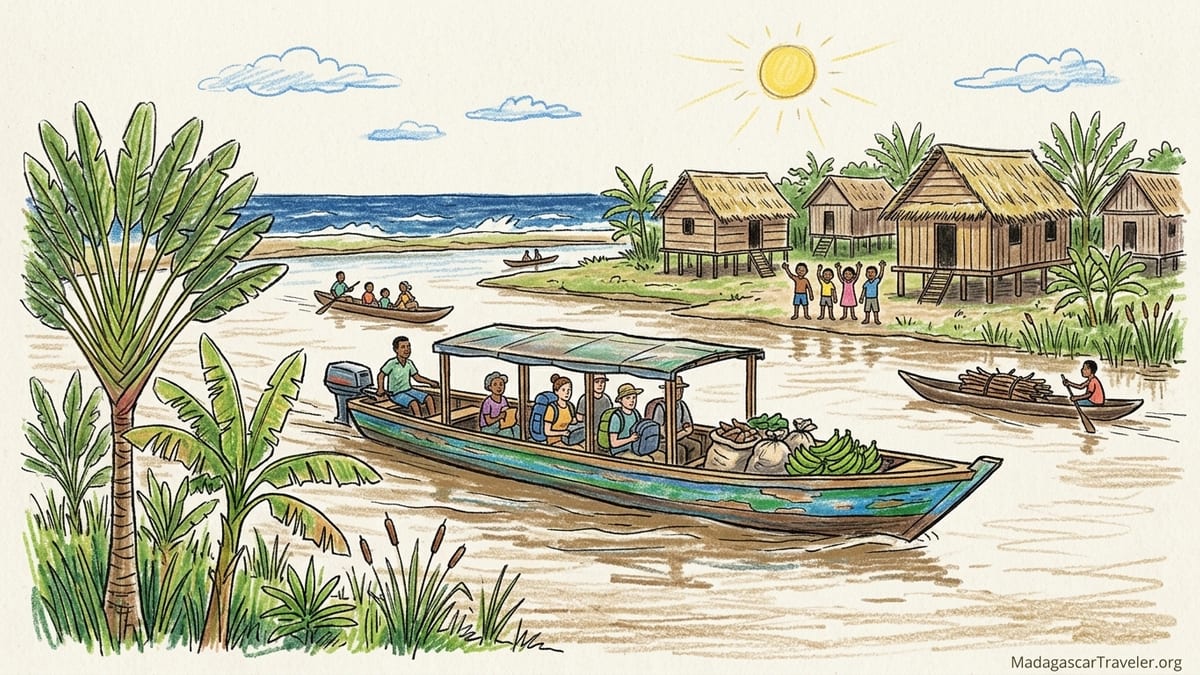
Rather than a large tourist boat, I had arranged a place on a long, narrow motorised canoe, the type local operators use for both passengers and light cargo. Similar vessels appear in current itineraries offered by small agencies in Toamasina and by lodges further south, which typically describe transfers “by motor boat” or “motor canoe” from Toamasina along the Pangalanes. The hull on my boat was wooden, painted in peeling blue and green, with two rows of bare wooden benches and a simple tarpaulin roof stretched over a frame. At the stern, a stocky pilot in a baseball cap tended a 40‑horsepower outboard engine.
I booked through a Toamasina-based agency that sells day trips and transfers on the canal to villages and lakeside lodges. Agencies and lodges currently advertise similar excursions, including one-day outings that leave Toamasina in the morning, follow the canal south and return by afternoon, and longer transfers to the Palmarium area near Akanin’ny Nofy. For a shared day trip, I paid the equivalent of about 55 to 65 US dollars per person, which included the boat, a local guide, simple lunch in a village and hotel pick-up inside the city. Prices vary by operator and whether you negotiate directly at the port or book in advance through a tour company, but this range matched what other travellers on recent routes reported paying for comparable outings.
The arrangement was semi-private. Our group was limited to six people, plus the pilot and guide, much smaller than the “collective excursions” that sometimes serve cruise-ship passengers calling at Toamasina. This made a noticeable difference to the atmosphere on board. We could spread out our daypacks, lean against the gunwales and move around to take photographs without bumping into a large group following a loudspeaker-wielding escort.
Boat, Guide, Luggage and the Shape of a Day Trip
Because I was only out for the day, luggage was simple: a small backpack with a light jacket, sunblock, insect repellent, a liter and a half of water, camera, and a dry bag for wallet and phone. Travelers using the canal as a transfer route to lakeside lodges or to the Palmarium reserve typically bring full duffel bags or suitcases. Those heavier bags are usually loaded toward the bow inside plastic sheeting, and several agencies make clear in their trip notes that big luggage is fine for overnight journeys as long as it is fairly compact and can survive occasional spray.
Our guide introduced himself in French and workable English, explaining that we would spend about two and a half to three hours heading south on the canal, stopping in at least one Betsimisaraka village along the way, taking a break at a lakeside beach, and then reversing the journey after lunch. Including transfers from my guesthouse and time ashore, the outing ran from roughly 7 a.m. to 4:30 p.m. It was very much a day built around the rhythm of the boat, not a series of quick photo stops stitched together by a bus.
The boat itself was built for function, not comfort. The wooden benches grew hard after the first hour, and the tarpaulin roof flapped and rattled as the wind picked up over open sections of water. On the positive side, the low profile and open sides of the canoe kept us close to the water. I could trail my fingers through the canal at slow speeds and hear conversations from passing canoes without the sound being drowned out by our own engine. There was a single, small, improvised toilet stop during the day in a village, which meant planning ahead and being realistic about comfort levels.
The guide’s role turned out to be crucial. He translated casual conversations with villagers at the small riverside shops, pointed out different species of pandanus and traveler’s palm lining the banks, and explained which stretches of the canal were natural rivers and which had been dredged or straightened. He also quietly coordinated with the pilot to slow down at times when the light was best for photography or when we passed traditional dugout canoes loaded with produce.
Water, Weather and the Feel of the Canal Itself
Leaving Toamasina behind, the canal narrowed and widened in slow succession. The surface of the water was the first surprise. Rather than postcard turquoise, it was the color of milky coffee, stained by river sediment and organic material from the surrounding wetlands. In the morning calm, it lay almost glassy, broken only by the V-shaped ripples of our bow and the occasional circle of a fish breaking the surface.
The farther south we went, the more the waterway felt like a long, lazy river. Banks were thick with reeds, pandanus, screw pines and the distinctive fan shapes of traveler’s palm. Here and there, banana trees leaned over the canal, their leaves shredded by trade winds that roll in from the nearby Indian Ocean. On narrower sections, the vegetation felt close enough to touch, with spiders’ webs catching droplets of spray and the smell of damp earth drifting off the banks.
Traffic on the water changed as we left the industrial outskirts of Toamasina. Early on, we passed a couple of larger, boxy metal boats that serve as river taxis, stacked with sacks of rice and passengers crouched in the shade. These are the “bush boats” and taxi-brousse equivalents that regional itineraries describe as carrying both people and cargo along the Pangalanes. Later, most of what we saw were slender wooden dugouts paddled by one or two people, often loaded low with green bananas, bundles of firewood or plastic jerrycans of fuel. At midday, one dugout held a family returning from market, the children waving vigorously as we overtook them with a low wake.
The pace of travel was deliberately slow. The pilot opened the throttle in the broader, deeper lagoons but dropped to a crawl in narrower sections where aquatic vegetation pinched the channel. The hum of the outboard settled into a background vibration, occasionally overlaid by birds calling from the reeds or a rooster crowing in a waterside yard. When we crossed wider, wind-ruffled lakes, the bow slapped against small chop, sending up spray that tasted faintly of tannin and salt.
Villages, Landscapes and Everyday Life Along the Banks
Most of the scenic marketing images of the Pangalanes focus on palm-fringed sandbars and empty lagoons. Those exist, but much of what we saw from Toamasina on a simple day trip was more textured and lived-in. Wooden houses on stilts clustered close to the banks, their walls of woven bamboo or rough planks, roofs of dried ravenala leaves or corrugated metal. Laundry hung on lines above the water. Children splashed in the shallows or practiced paddling miniature dugouts carved from single logs.
Our first stop was a Betsimisaraka village that maintains regular boat links with Toamasina. We tied up to a simple wooden jetty, sharing space with a canoe that had just unloaded sacks of cassava. The soundscape ashore shifted immediately: chickens scratching under houses, radios playing tinny music inside dark doorways, and the hollow thunk of pestles pounding rice in wooden mortars. The guide led us past small shops selling rice, tinned sardines and soap, and on to a sandy path that reached a low dune. A few hundred meters beyond, the surf of the Indian Ocean pounded onto a broad, empty beach, separated from the calm canal by only a narrow band of land.
Back at the canal, the village’s relationship with the water was obvious. Women knelt on flat stones to wash clothes. Men repaired nets and handlines for fishing in the nearby lakes. Canoes came and went constantly, some heading toward Toamasina loaded with produce, others sliding off into side channels that locals use to reach more distant hamlets. One prominent lakeside lodge further south, accessible only by these waterways, often uses similar village jetties as intermediate stops, and our guide made a point of explaining that many of the canal’s communities see tourism as a modest but growing source of income on top of fishing and agriculture.
As we continued south, the landscape opened into broader lagoons framed by low, forested shores. Tall eucalyptus and native trees rose behind the palms, and in places you could glimpse small hills in the distance. Cattle grazed on higher, drier patches, while simple pirogues sat pulled up on the sand. Even the quiet stretches felt inhabited. Smoke curls marked where people were burning brush or cooking lunch, and the distant thump of music sometimes carried across the water long before we saw the speakers.
Wildlife Actually Seen From the Boat
The Pangalanes canal system runs through rich wetlands and forest, and some multi-day itineraries that include reserves like Palmarium promise lemurs, chameleons and night walks. A day trip from Toamasina, limited to daytime boat travel and a village visit, is more modest in terms of wildlife. What I saw was genuine but not spectacular, and expectations should match that reality.
Birdlife was the clear highlight. Along reedy banks we spotted herons and egrets fishing in the shallows, including a grey heron that lifted off as we approached, its wingbeats slow and heavy. White egrets stalked the mud near village washing stones. A kingfisher flashed electric blue across our bow and perched briefly on a low branch, drawing a quiet whistle from the pilot. Over wider lagoons, small flocks of black and white terns skimmed low over the surface, picking at insects.
Mammals were much more elusive. I did not see lemurs from the boat on this short excursion, and neither did anyone else in our group. The guide explained that while it is sometimes possible to hear or glimpse them in forested sections, they are easier to find on foot inside private reserves or national parks inland. He pointed out a patch of forest that a nearby lodge uses for night visits to see the nocturnal aye-aye, but that was well beyond the radius of our day outing.
Reptiles and aquatic life appeared in fleeting glimpses. A small, pale-green chameleon clung to a low shrub near one of our rest stops, visible only because the guide spotted it first. Fish rippled under the surface in calmer pools, and I occasionally saw small silver bodies flash in our wake. The relative lack of dramatic wildlife on this day trip underlined an important point. From Toamasina, a single day on the canal is more about landscape and culture than it is about ticking off animal sightings.
How Much Was Transport, How Much Sightseeing
At first glance, our itinerary looked like a sightseeing cruise: out along the canal, village visits, a beach stop, then back. In practice, much of the day felt like participating in the region’s transport network. The same waterway that carried us also carried schoolchildren, sacks of cloves and bananas, bundles of charcoal and the long-distance boats connecting lakeside lodges to Toamasina. That dual role is one of the defining characteristics of travel on the Pangalanes.
Roughly half of the hours we spent on the water were simply transit between points of interest. There were long stretches where nothing “happened” beyond the slow change of vegetation and the comings and goings of other boats. For some travelers, that can feel like dead time. For others, it is the essence of the experience: watching the same banks that local people watch every week as they go to market or visit relatives.
The sightseeing elements were woven into that rhythm. The guided walk through the village, the short stroll to the ocean beach, and an unhurried lunch of grilled fish, rice and tomato salad under a palm-thatched shelter broke up the navigation in natural ways. Our guide did not flood us with commentary. Instead, he translated questions and brief conversations, stepped back to let us watch daily life and only occasionally pointed out features of the canal’s construction or history.
For anyone used to fast-paced tours that optimize every minute for photographs, this balance between transport and sightseeing might feel skewed. To me, the long, contemplative stretches were the most revealing. They made it clear that the canal is still a working artery, not a theme park, and that even day trips from an important hub like Toamasina are built on top of pre-existing boat traffic and local routines.
Day Trip Versus Overnight: What Felt Missing
By the time we turned back toward Toamasina in the early afternoon, the light had changed. The sun sat higher, flattening the textures of the water and pushing most villagers into the shade of their houses. The return leg retraced our route, and fatigue from the hard benches set in. It was at this point that I started to think seriously about whether a day trip from Toamasina is enough, or whether an overnight journey would have been more rewarding.
The strongest argument for going beyond a simple day outing is the chance to experience dusk and early morning on the canal. Lodges south of Toamasina, including those around lakes near Akanin’ny Nofy, market their setting very heavily on that softer light and the chorus of frogs and insects that rises after dark. Travellers who shared recent experiences described night excursions to see nocturnal lemurs on small forested islands, dawn birdwatching trips in the reeds and the sense of being fully enveloped by the landscape, something a single daylight dash cannot provide.
Another factor is distance. From Toamasina, an overnight journey allows boats to push further into the chain of lakes and waterways without the pressure of returning the same day. Several current itineraries split the travel into manageable legs, such as a first day from Toamasina to a lakeside lodge and a second day continuing by boat or combining another short navigation with overland transfers. This avoids the backtracking that defines most day trips while also opening up quieter stretches of canal beyond the reach of regular port-based excursions.
That said, a day trip does deliver a coherent, self-contained experience. In eight to nine hours, I saw the contrasts between industrial port city and rural canal, visited a real working village, watched commerce unfold on the water and sampled the landscapes that make the Pangalanes so distinct. For travelers with limited time in Toamasina or those hesitant about committing to rustic lakeside accommodation, this can be a satisfying compromise. If I returned, I would treat the day trip as a first taste and plan at least one night further down the canal to deepen the experience.
Navigability in 2026 and the Need to Double-Check Routes
One practical theme ran through my conversations in Toamasina: the canal is not a static attraction. Its navigability changes with seasons, storms and ongoing rehabilitation work. The waterway as a whole extends for well over 600 kilometers along Madagascar’s east coast, and recent government announcements and reports in Malagasy and international media have highlighted dredging and cleaning projects aimed at improving navigation between Toamasina and towns further south.
Local guides and agencies in Toamasina mentioned that renewed dredging and debris removal work had been underway in parts of the canal in 2026, including stretches where sandbars and silt had previously forced larger boats to detour or run very light. Some skippers talked about temporary slow zones where machines were working, and minor route adjustments when channels were partially obstructed. They also pointed out that strong seasonal rains can change conditions quickly, choking narrower sections with floating vegetation or causing banks to slump into the water.
For travelers, this has two immediate consequences. First, timetables and advertised routes are approximations rather than fixed schedules. An itinerary that promises a direct transfer from Toamasina to a particular lakeside lodge may in practice involve slightly longer navigation or a short overland link if dredging operations or low water levels intervene. Second, it is vital to confirm details shortly before traveling. Agencies, lodges and independent skippers in Toamasina all stressed that they adjust departure times, boat sizes and exact routes based on the most recent information, especially while rehabilitation work continues along key sections.
If you are planning to replicate or extend my journey, this is not a reason to avoid the canal. It is a reminder that you should treat older guidebook descriptions as a broad sketch rather than a precise map, and that a phone call or in-person visit to a local operator in the days before departure is worth far more than an outdated brochure. In 2026, Toamasina remains the logical starting point for exploring the northern portion of the Canal des Pangalanes, but the exact lines your boat traces on the water will be shaped by ongoing efforts to keep that canal navigable.
The Takeaway
Travel writing about the Canal des Pangalanes often leans into romance: still lagoons, untouched palm-fringed shores, a sense of drifting back in time. Setting out from Toamasina on a simple motorised canoe, my reality was less polished and more interesting. The day was built around a working waterway, one that still moves cassava and charcoal as well as the occasional group of camera-toting visitors.
From the river port in Madagascar’s main east coast city, we threaded through coffee-colored water bordered by reeds and traveler’s palms, passed dugout canoes low in the water with market produce, and walked through a Betsimisaraka village where laundry lines, radio music and the smell of wood smoke framed the canal. Wildlife came mostly in the form of birds, with herons and kingfishers providing flashes of movement against the steady backdrop of villages and vegetation. Hours on hard benches underscored that this was not a luxury cruise, but also that much of the canal’s character reveals itself only at a slow, unhurried pace.
Was a single day enough? For an introduction, yes. It connected the abstract idea of a 600‑plus kilometer chain of waterways to the very concrete reality of Toamasina’s role as a gateway, and of the communities that line the banks. If I were advising a friend planning a trip in 2026, I would suggest exactly what I now wish I had done: keep a day trip in the plan for orientation, but if time and budget allow, add at least one overnight further down the canal to catch dusk and dawn, explore quiet side channels and, perhaps, finally spot lemurs in the surrounding forest.
FAQ
Q1. Where do most Canal des Pangalanes day trips from Toamasina actually start?
They usually begin at the river and canal port a short drive from central Toamasina, where local motorised canoes and small boats depart south along the first stretches of the canal.
Q2. What type of boat should I expect from Toamasina?
Most operators use long, narrow motorised canoes or small open motorboats with wooden benches and a simple canopy, rather than large sightseeing vessels or luxury cruisers.
Q3. How much does a day trip from Toamasina on the canal cost?
Recent examples for shared day trips with a guide and lunch generally fall in the range of roughly 55 to 65 US dollars per person, though prices vary by operator and season.
Q4. Is a day trip enough, or should I plan an overnight on the canal?
A day trip offers a solid introduction to the landscapes and village life, but an overnight stay further south gives you dusk and dawn on the water and access to quieter stretches and more wildlife-focused activities.
Q5. What should I bring if I am only going for the day?
Pack light: a small daypack with sun protection, insect repellent, a water bottle, camera, light rain layer, and a dry bag for valuables is usually sufficient.
Q6. Will I definitely see lemurs from the boat on a day trip?
Not usually. Birdlife is common, but lemurs are more reliably seen on foot in reserves or during night walks near canal-side lodges reached on longer, overnight itineraries.
Q7. How rough are the water and weather conditions on the canal?
The canal water is generally calm, with only small chop on wider lakes. Rain showers and wind are possible, especially in the wet season, but conditions are usually manageable for small boats.
Q8. Are there toilets on board the boats from Toamasina?
Most small motorised canoes do not have toilets on board. Operators typically arrange simple toilet stops in villages along the way, so be prepared for basic facilities.
Q9. How much of the experience feels like transport rather than sightseeing?
A significant part of the day is spent in transit between villages and viewpoints, which is also when you see real canal traffic and everyday life unfolding along the banks.
Q10. Do I need to check canal conditions and dredging works before booking?
Yes. Because dredging and cleaning projects and seasonal changes can affect routes and travel times, it is important to confirm current conditions and navigation options with local operators shortly before your trip.