

Toamasina is not a city where you can ignore hotel details and hope for the best. The port traffic, constant humidity and frequent rain mean that air flow, drainage and backup power end up mattering more than glossy booking photos. In this guide I will walk through the hotel characteristics that actually counted during my own recent stays in Toamasina, plus a few clearly marked research-only alternatives where I have done the homework but not slept overnight.
Why Toamasina Hotels Feel Different Once You Arrive
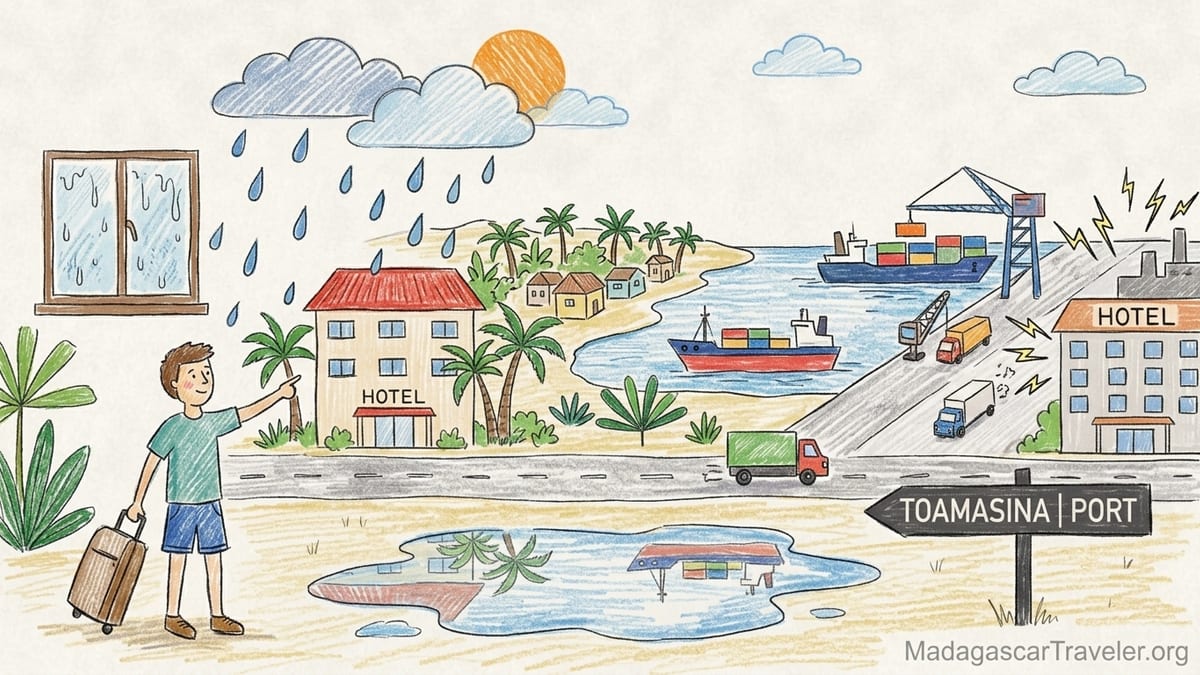
Toamasina sits on Madagascar’s east coast, facing the Indian Ocean and serving as the country’s main commercial port. That location gives it a warm, tropical rainforest climate with high humidity through most of the year and heavy rainfall spread across many months. Long-term climate data puts average temperatures in the mid-20s Celsius, with relative humidity commonly above 80 percent and annual rainfall well over 2,000 millimeters. In practice, that means rooms can feel damp even when the air temperature is comfortable, and anything that does not dry quickly starts to smell musty fast.
Because of that climate, the gap between booking photos and reality can be wider than in drier destinations. A room that looks bright and minimalist online may feel clammy if the windows barely open or if the air-conditioning struggles to keep up. In several properties I visited, the pictures showed crisp white bedding and sleek tiles, but what I noticed on arrival was condensation on the window frames and a faint smell of humidity in the wardrobe. None of that was obvious from the images.
The port itself also shapes the experience. Toamasina’s main harbor handles container traffic and coastal shipping, and trucks move in and out at odd hours. If your hotel faces a major access road or sits close to the docks, you can expect low-frequency rumbling from engines, horns and occasional late-night movements. Bookings sites rarely mention this directly. During my time in the city, choosing a room away from the main street and checking for double-glazed windows mattered almost as much as star rating.
Power and water are the final wildcards. Planned and unplanned outages happen, and water pressure in some older buildings can drop to a trickle at peak times. In Toamasina’s humidity, even a short loss of air-conditioning during the afternoon can turn a room uncomfortably sticky. When I evaluate hotels here, I now look as closely at their generator capacity and plumbing as at their pool and restaurant.
Best Central Stay I Actually Slept In: Calypso Hotel & Spa
For a central base in Toamasina that balanced comfort and city access, the hotel that worked best for me was the Calypso Hotel & Spa, located a short walk inland from the main boulevard and within a few minutes’ drive of the port area. It is a modern, mid-rise property that local reviewers often describe as one of the better downtown options. I stayed in a standard double room in the main building and used it as my base for several days of meetings and port visits.
The room size felt generous by city standards, with enough floor space for a large double bed, a working desk and an armchair without feeling cramped. The mattress leaned toward the firm side, with a supportive base and a simple, non-pillow-top finish. Bedding was cotton rather than synthetic, which made a noticeable difference in the humid nights. Mosquito protection came from both a wall-mounted spray provided by housekeeping and intact window screens; there was no canopy, but I did not see gaps where insects could easily enter if the windows stayed closed.
Climate control and bathroom performance were the two areas where this hotel justified its price. My room had a split-unit air-conditioner that cooled the space quickly and, importantly, ran quietly enough to leave on overnight. Even when daytime temperatures were in the low 30s Celsius with sticky air outside, I could maintain a stable, dry-feeling interior. The bathroom was compact but functional, with tiled walls and a walk-in shower. Water pressure was strong, and hot water arrived within a minute even at early-morning shower times. Over several days I did not experience any meaningful fluctuation in temperature or pressure.
Wi-Fi in my room and in the lobby was stable, with speeds good enough for video calls in the evening. The hotel operates a generator, and during one short grid outage, power in the building switched over within a few seconds. Lights flickered once, the air-conditioner restarted itself after a pause and the Wi-Fi came back within a couple of minutes. That kind of resilience matters in Toamasina, particularly for business travelers who cannot afford long interruptions. Noise levels were moderate; rooms facing the internal courtyard felt quieter than those near the street. I requested a higher-floor, courtyard-facing room and slept without earplugs on most nights.
The in-house restaurant turned out to be more important than I expected. Toamasina’s traffic and unpredictable downpours sometimes make going out in the evening less appealing, and having a reliable on-site option counts. At Calypso the restaurant served a mix of Malagasy and international dishes with portions big enough to share. Breakfast was buffet-style with eggs, bread, fruit and basic hot items. It is not a destination restaurant, but it was consistently convenient and hygienic. Parking is available in a small lot in front of the building, guarded at night, and the reception desk readily arranged taxi transfers to the port and airport at reasonable local rates.
Best For Work Trips and Longer Stays: Research-Only Streamliner Hotel Apartment
The property that often comes up in discussions of longer stays and work trips in Toamasina is the Streamliner Hotel Apartment. I need to be clear that I have not stayed overnight here, so everything in this section is based on research from traveler reports, recent booking data and direct inquiries with the property rather than personal experience. I include it because many business visitors compare it to Calypso when choosing a base, and its apartment-style layout fills a different niche.
The Streamliner offers apartment-style units with kitchenettes and more living space than a standard hotel room. Photos and floor plans show separate seating areas, work desks and either one or two bedrooms in many units. For travelers who spend a week or more in Toamasina, that extra room can be valuable, especially when humidity and frequent showers make it less tempting to be outside all day. Several recent guests note that the building has a pool, a small fitness center and spa services, which can be appealing when workdays are long.
In terms of the checklist that matters in Toamasina, reports suggest that air-conditioning is standard in bedrooms and living areas, Wi-Fi is reasonably reliable and a generator provides backup power during outages. Bathrooms appear modern, with walk-in showers and good tiling, and multiple guests mention adequate hot water and pressure. However, without having tested the room personally, I cannot vouch for details such as actual noise levels at night or how quickly the rooms dry after heavy rain.
Service-wise, online reviews describe professional staff who can help organize port transfers and local excursions, including visits to the nearby beaches and the Ivoloina zoological park inland from the city. Parking is available on site, which helps those arriving in private vehicles from Antananarivo. If you prioritize the ability to cook for yourself, spread out and work from a living room rather than a desk in the corner of a bedroom, the Streamliner is worth shortlisting. Just treat my comments here as research-based guidance rather than firsthand endorsement.
Waterfront and Beachfront Stays: What I Learned to Check
Many travelers arrive in Toamasina expecting a classic tropical beach break, but it is first and foremost a working port. There are, however, accommodations along the coast and slightly outside the urban core that market themselves as beach or waterfront stays. Even where I did not sleep overnight, inspections and conversations with other guests taught me specific checks that make a difference on the water’s edge in this climate.
First, sea-facing rooms are often the noisiest. The sound of waves is rarely the issue; it is the vehicles on coastal roads, fishermen leaving in the early hours and, in some areas, informal gatherings on the sand. During one visit to a modest beachfront guesthouse north of the main city, I sat in a seafront room in the late evening and could clearly hear music from a bar several hundred meters away, plus the occasional motorbike. The garden-facing rooms at the back felt much calmer, even though their marketing photos looked less dramatic.
Second, salt air and humidity together are hard on buildings. At a coastal property I inspected, metal fixtures on balconies showed visible rust, and the sliding door frames had minor corrosion. Inside, the room looked acceptable but felt damper than comparably priced rooms slightly inland. In this environment, sealed window frames, efficient air-conditioning and a dehumidifying function do more for comfort than direct sea views. If you are strongly set on being on the water, consider asking the hotel specific questions about their last major room renovation and whether they run the air-conditioning between guests to keep humidity in check.
One research-only example is Hôtel Marina Beach, which sits directly on the waterfront and advertises a private beach area and garden. Booking data shows it positioned itself in the midrange category with sea-facing rooms and basic resort-style facilities. Reviews highlight the ocean view and beach access as the main draws, while some mention that the property feels a little weathered. That pattern fits what I have seen elsewhere along this coast and underlines the tradeoff: in Toamasina, you often choose between newer hardware set a few blocks away from the water and more atmospheric sea views in buildings that work harder against the elements.
What Actually Matters in Toamasina’s Humid Climate
After a string of nights in different rooms, a pattern emerged in what truly mattered in Toamasina, beyond the obvious star ratings or pool photos. The first factor was air movement. Air-conditioning is important, but so are ceiling fans or at least a fan option if you do not want cold air blowing on you all night. In one simple guesthouse, the air-conditioner was underpowered, but a strong ceiling fan set to a medium speed kept the room comfortable. In another, the fan blades were decorative and barely moved air, so the same temperature felt far more oppressive.
Mosquito protection moved quickly up my priority list. Toamasina’s surrounding wetlands and frequent rain mean standing water is common, and mosquitoes follow. Rooms with intact window screens, tight door seals and either bed canopies or wall-mounted mosquito nets felt immediately more restful. At Calypso, I relied on closed windows and air-conditioning, supplemented by the spray provided; in a smaller inland lodge I used both a net and plug-in repellent. Booking photos almost never show the state of window screens or the quality of netting, so this is worth asking about in advance, especially if you are staying with children.
Bathroom ventilation and drainage are the next hidden essentials. Showers that drain slowly or bathrooms without extraction fans leave surfaces wet for hours, inviting mold and increasing that ever-present musty smell. In one otherwise charming older property, the combination of a weak extractor and a shower lip that trapped water meant the bathroom floor stayed damp well into the afternoon. At Calypso, a simple but effective exhaust fan and proper slope toward the drain meant the bathroom dried within an hour, even after a long hot shower.
Finally, backup power and water systems separate a smooth stay from a frustrating one. During my time in Toamasina, I experienced several short power cuts in the city. In hotels with robust generators, these interruptions became minor blips. In smaller places without backup, air-conditioning units stopped, Wi-Fi went dark and, in one case, water pressure dropped enough that the shower reduced to a trickle until the grid returned. Given Toamasina’s high humidity and reliance on electric pumps, I now consider a functioning generator and water storage tanks as important as the presence of a pool or spa.
Value, Families and Couples: Matching Hotels to Your Trip
If you are traveling on a tighter budget, value in Toamasina often comes from slightly older midrange hotels or guesthouses set a few blocks back from the busiest streets. These properties rarely have the polished marketing of the big names, but when they prioritize fundamentals like strong fans, decent mattresses and reliable water, they can feel more comfortable than a flashier but under-maintained alternative. During one stay in a modest mid-block hotel, my room had tiled floors, basic furnishings and a bathroom that had clearly seen years of use. Yet the bed was comfortable, the fan and air-conditioner both worked and the staff took obvious care with cleaning. For the price, it was a solid choice, especially for solo travelers who spend most of the day out.
For families, room size and noise levels outweigh many other features. Sharing one compact double room with an extra bed in this climate quickly becomes cramped, especially when wet clothes and rain gear need space to dry. Larger family rooms or interconnecting units, like some of those available at Calypso and other city hotels, give parents and children separate sleeping areas and extra storage. Checking whether windows have secure child locks and whether the property offers cots or extra beds suitable for younger children is also worthwhile. Staff willingness to help arrange car seats for transfers or recommend child-friendly activities, such as a visit to Parc Ivoloina, turned out to be more useful than a decorative kids’ corner in the lobby.
Couples often ask about higher-end or more atmospheric stays. In Toamasina that usually means either a business-style hotel with a good pool and spa, or a smaller coastal property with more greenery and sea views. For a romantic stay focused on comfort and privacy, I would lean toward a well-maintained central or near-coastal hotel with solid soundproofing, a comfortable king bed, on-site dining and perhaps a spa treatment menu rather than chasing perfect beach seclusion near the port. Being able to retreat to a reliably cool, quiet room after a day in the humid air did more for my mood than being directly on the sand with iffy infrastructure.
In all of these cases, staff attitude makes a bigger difference in Toamasina than in many destinations. Because you are more likely to need help handling downpours, arranging last-minute transport or adjusting plans around weather, having a reception team that knows local drivers, understands port schedules and can improvise is invaluable. At Calypso, the front desk team quickly became the bridge between my schedule and the city’s changing conditions, from shifting meeting times during heavy rain to finding a driver at short notice when a coastal road briefly flooded.
The Takeaway
Choosing a hotel in Toamasina is less about chasing a single “best” property and more about matching your priorities to the realities of a wet, humid port city. My own stays taught me that a solidly built, centrally located hotel with good air-conditioning, reliable water pressure and a functioning generator delivered far more value than an imperfect beachfront room with postcard views. Calypso Hotel & Spa was my most consistently successful stay in the city center, especially for work trips and short visits where I needed strong Wi-Fi and predictable comfort.
At the same time, I came to appreciate that different travelers genuinely need different things here. Long-stay visitors and those traveling with families may find apartment-style setups like the Streamliner Hotel Apartment, even considered only from research, better suited to their routines. Beach-focused travelers willing to accept older hardware may still prefer coastal properties for their direct access to the water and palm-fringed views, provided they ask the right questions about maintenance and climate control.
What mattered far more than any marketing label of boutique, luxury or budget were a few simple checks. Is the air in the room moving and dry? Will the bathroom drain and ventilate quickly after a shower? Does the hotel have a generator and enough water storage to cope with outages? Are the mattresses comfortable and the mosquito defenses effective for your tolerance level? And perhaps most importantly in a city where weather can turn suddenly, is the staff prepared to help you adapt when plans change.
If you approach Toamasina’s hotel scene with these questions in mind, you can turn what might otherwise feel like a challenging, sticky stopover into a surprisingly comfortable base for exploring Madagascar’s east coast. Focus less on perfect photos and more on the infrastructure behind them, and you will be far closer to a stay that actually works for you.
FAQ
Q1. Is air-conditioning essential in Toamasina hotels, or is a fan enough?
In the cooler months a strong ceiling fan can be acceptable, but for most of the year the combination of high humidity and warm temperatures makes air-conditioning very helpful, especially if your room faces the sun or you are not used to sleeping in sticky conditions.
Q2. How important is a hotel generator in Toamasina?
Power cuts do occur, and without a generator you can lose air-conditioning, Wi-Fi and sometimes water pressure. In a humid city like Toamasina this quickly affects comfort, so for business travel or longer stays I strongly recommend choosing a property with reliable backup power.
Q3. Are waterfront hotels in Toamasina much noisier than inland options?
They can be, mainly because of traffic on coastal roads, early-morning fishing activity and occasional nightlife along the shore. Inland or courtyard-facing rooms typically experience less noise and may offer better sleep, even if they sacrifice direct sea views.
Q4. What should families with children prioritize when choosing a hotel?
Look for larger rooms or interconnecting units, effective mosquito protection, secure window locks and staff who can help arrange safe transfers and suggest family-friendly outings. Extra space matters more than decorative touches when you are drying clothes and managing early bedtimes in a humid climate.
Q5. Is it better to stay near the port, the beach or in the city center?
For business and short stays, being in or near the city center with good road access to the port usually makes life easiest. Beachfront locations suit those prioritizing sea views and relaxation, but they may involve more weathering of buildings and sometimes more noise from coastal activity.
Q6. How reliable is hotel Wi-Fi in Toamasina?
Wi-Fi quality varies by property, but better-established city hotels typically provide stable connections suitable for email and video calls, with short interruptions during power changes. In smaller guesthouses, speeds can be slower and coverage less consistent, so confirm with the hotel if you depend on connectivity for work.
Q7. Do Toamasina hotels usually offer help with airport or port transfers?
Many midrange and higher-end properties can arrange transfers with trusted drivers for both the airport and port areas, often at fixed local rates. This service is especially useful during heavy rain or in the evening, when finding a taxi on the street can be less straightforward.
Q8. What kind of breakfast can I expect at midrange hotels?
Most midrange hotels offer a simple buffet with bread, pastries, eggs, fruit and hot drinks, sometimes with Malagasy dishes included. It is usually more about convenience and a basic, reliable start to the day than about elaborate gourmet presentation.
Q9. Are higher-end hotels in Toamasina truly “luxury” by international standards?
Even the best-rated properties here feel more like solid upper-midrange business hotels than international five-star resorts. You can expect clean, comfortable rooms, decent pools and helpful staff, but not the extensive amenities or ultra-polished finishes of flagship luxury brands in larger cities.
Q10. What is the single most important question to ask a hotel before booking in Toamasina?
If you can ask only one, ask whether all guest rooms have effective air-conditioning and how the hotel handles power cuts. Their answer will tell you a lot about both comfort and how seriously they take the practical realities of the local climate.