


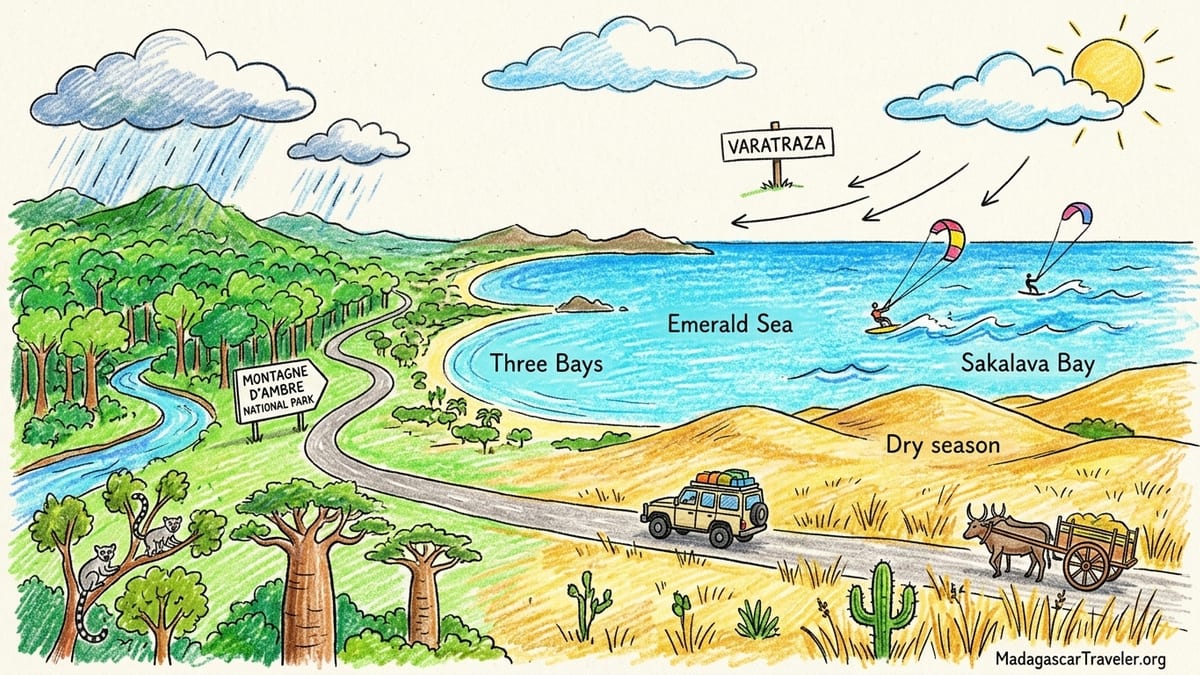
Antsiranana, still widely known as Diego Suarez, sits at the northern tip of Madagascar where dry trade winds, warm seas and a dramatic bay create one of the country’s best regions for outdoor travel. Choosing when to come is less about temperature, which stays warm year-round, and more about rainfall, wind and sea conditions. From the dry, windy months of May to October to the wetter cyclone season that peaks around January and February, timing your trip will shape everything from how clear the water is at the Emerald Sea to whether trails in Montagne d’Ambre National Park feel pleasantly firm or muddy and leech filled.
Climate Basics: Dry Trade Winds and Warm Tropical Seas
Antsiranana has a tropical savanna climate with two broad seasons: a wetter, cyclone-prone stretch roughly from December to March and a long, markedly drier period from about April or May through October. Average highs hover around 29 to 32 degrees Celsius across the year, so you are never really escaping heat. What changes most is rainfall and wind. Long-term climate records show that the bulk of annual rain falls between December and March, with February typically the wettest month, while May to October sees very little rain and many months with only a handful of wet days.
The city and surrounding bays are shaped by a strong, regular trade wind known locally as the Varatraza. It blows predominantly from the southeast and east for much of the year and really strengthens from about May through September. This wind is why areas such as Sakalava Bay and the Emerald Sea have become international kitesurfing destinations, with dedicated kite lodges, IKO-certified instructors and rental centers operating full-time through the main season. At the same time, the persistent breeze keeps the air in Antsiranana itself feeling drier and fresher than in many other Malagasy coastal towns.
Sea temperatures change less dramatically than rainfall, staying warm enough for swimming and snorkeling year-round. Data from regional marine monitoring services shows average water temperatures around 28 to 29 degrees Celsius from December through May, then dipping only to about 25 to 26 degrees between July and September. That means you can snorkel the coral reef protecting Sakalava Bay without a wetsuit in any month, though some divers prefer a thin 3 mm suit during the coolest period in August and September.
For most outdoor-focused travelers, the prime window is from roughly late May through October. Those months combine low rainfall, plenty of sun and strong but usually manageable winds, making it easier to count on excursions to Montagne d’Ambre, the Three Bays, Ramena Beach and the Emerald Sea running as scheduled. Lodge owners in Ramena and kite schools at Sakalava Bay will often describe June, July and August as their most reliable months for clear skies and consistent Varatraza winds.
January to March: Wet Season, Cyclone Risk and Lush Forests
January, February and March bring the tail end of the South-West Indian Ocean cyclone season to northern Madagascar. Antsiranana itself sits somewhat sheltered in a vast bay, but the wider region can still feel the influence of passing systems in the form of heavy rain bands, swell and short-lived port closures. Historical climate summaries for the city show monthly rainfall totals that can exceed 200 millimeters in January and February, with humidity often above 75 percent. Afternoon downpours are common, and consecutive wet days are more likely than at any other time of year.
On the water, conditions are mixed in this period. Sea temperatures are at their warmest, often around 28 to 29 degrees Celsius, and visibility on the outer reefs can be excellent between weather systems. However, strong squalls and choppy seas can cause local operators in Antsiranana and Ramena to reschedule Emerald Sea trips and snorkeling excursions at short notice. For example, small pirogues that usually cross the shallow turquoise lagoon may be replaced by larger motorized boats on days with bigger swell, or trips may be postponed entirely if the harbourmaster issues advisories.
For kitesurfers, January and February fall outside the main trade-wind season. The Varatraza is present but less consistent, and many specialized kite camps in Sakalava Bay reduce operations or close for annual maintenance. Independent riders who visit anyway often treat wind as a bonus rather than a guarantee, using windless days for day trips to Montagne d’Ambre or visiting the colonial-era architecture of Antsiranana itself.
Hiking in nearby montane forests can still be rewarding. Montagne d’Ambre National Park, about 30 kilometres south of Antsiranana, is at its greenest in this period, with waterfalls in full flow and amphibian life active. Trails, however, can be muddy and leeches more common. Local guides in Joffreville, the gateway village, will usually recommend early morning starts to avoid the heaviest afternoon rain. Road access along the paved highway from Antsiranana typically remains open, but severe storms can occasionally cause temporary delays, so travelers on tight cruise ship schedules or short layovers should build in flexibility.
April and May: Transition to Dry, Rising Reliability
April marks a transition as the wet season eases and the dry period begins to assert itself. Monthly rainfall drops sharply compared with February and March, and sunshine hours increase. April can still see some showers, especially early in the month, but they tend to be shorter and more localized. Outdoor tour operators in Antsiranana and Ramena usually start running a more regular schedule of excursions during April, and some kitesurfing schools reopen or ramp up operations towards the end of the month in anticipation of the strengthening Varatraza.
The sea remains very warm in April and May, with typical surface temperatures still close to 28 degrees Celsius. This makes late April and May particularly good for combining diving or snorkeling with light hiking. Dive centers that work the reefs around the Emerald Sea and the outer islands off the bay often report good underwater visibility at this time, as the reduction in heavy rainfall means less sediment washing out from the mainland rivers into the bay.
By May, rain becomes minimal. Some climate summaries for the Diego Suarez area describe May through October as an exceptionally dry block, with several of those months frequently recording only a few millimeters of rain. On the ground, that translates into firm hiking trails in Montagne d’Ambre and nearby Ankarana National Park, less chance of washed-out dirt tracks to Sakalava Bay, and fewer interruptions for day trips to Ramena or the Three Bays circuit. Tour companies based in Antsiranana typically restart multi-day itineraries that combine these parks in May because river levels in Ankarana’s canyons start to recede.
Wind for kitesurfing in late April and May becomes more dependable. Veteran instructors based at Sakalava Bay describe this period as the start of the Varatraza season, with steady side-onshore winds often in the 15 to 25 knot range on many afternoons. For first-time kitesurfers booking beginner lessons at one of the bay’s lagoon-side schools or at a beachfront lodge near Babaomby, May offers a good balance between reliable wind and slightly smaller crowds than in the July school-holiday peak.
June to August: Prime Dry Season for Hiking and Kitesurfing
June, July and August are generally regarded as the best all-round months to visit Antsiranana if your priorities include kitesurfing, hiking and dependable excursion schedules. Rainfall is at or near its annual minimum in these months, with some climate datasets showing totals of only 10 to 20 millimeters per month. Days are warm but not oppressive; average daytime highs dip slightly to around 29 to 31 degrees Celsius, and nights in the city can feel comfortably cooler, especially with the breeze.
For kitesurfers, this is peak Varatraza season. Long-running kite lodges in Sakalava Bay and the Emerald Sea area often advertise April to November as the broader wind window but highlight June through September as the months with the most consistent daily wind. In practice, that means many afternoons with 20 to 30 knot side-shore or side-onshore winds suitable for both advanced riders and intermediate guests. Schools typically schedule beginner lessons in the mornings when the wind is a little lighter and reserve the stronger late afternoon sessions for experienced kiters who want to ride small surf or practice jumps.
On land, June to August are excellent for visiting Montagne d’Ambre National Park and, slightly further afield, Ankarana National Park. Trails are at their firmest, leech activity is low, and cloud cover is often limited to brief afternoon build-ups. A common real-world itinerary sees travelers base themselves one night in Antsiranana, then transfer by paved road to Joffreville for two nights, using a local guide to explore viewpoints, crater lakes and lemur-rich forest by day and conducting a short guided night walk along the park access road. Day trips sold through hotels in Antsiranana at this time of year frequently combine Amber Mountain with an afternoon stop at the red Tsingy formations, confident that roads are dry enough for minibuses or 4x4s.
Beach conditions around Ramena and the Three Bays are usually inviting in this mid-year period, though the stronger trade winds can create wind chop in the afternoon. Many visitors choose to swim or snorkel in the mornings when the sea is calmer and the light is good for underwater photography, then enjoy kite or windsurf sessions, sailing, or simply watch the colourful kites over Sakalava Bay later in the day. Boat trips from Ramena to the Emerald Sea operate on a near-daily basis in July and August, as skippers can count on both good visibility and very low risk of rainouts.
September and October: Dry, Sunny and Slightly Warmer Seas
September and October maintain the overall dryness of the preceding months while temperatures and sea warmth begin to climb again. Average daytime highs edge back up to around 30 to 32 degrees Celsius, and humidity gradually increases, though conditions remain far less sticky than in the heart of the wet season. Rainfall in these months remains very low, with some long-term records indicating only around 10 to 20 millimeters, spread over just a few days.
These months are particularly appealing for travelers who prioritize snorkeling and general beach time over kitesurfing performance. Sea temperatures typically climb from their coolest point in August to around 26 to 27 degrees Celsius by October, making long swims in the Emerald Sea lagoon or along Ramena Beach comfortable without any thermal protection. Local boat crews routinely organize full-day Emerald Sea trips that include snorkeling on the outer reef, grilled fish lunches on simple sandbar camps and relaxed sandbank lounging, with very little chance of weather-related cancellation.
Wind remains strong and generally reliable in September and into October, keeping kitesurf schools at Sakalava Bay busy. However, the character of the wind can shift slightly, with some days of strong gusts as the trade-wind pattern starts to transition. Intermediate riders often enjoy these months because the water is a little warmer than in July and August but the bays are still less crowded than in European and South African summer holidays. Some lodges offer shoulder-season discounts in late October before the more humid build-up to the rains.
On the hiking side, September and October are still very good months for visiting Montagne d’Ambre and Ankarana, though afternoon heat on exposed sections of trail becomes more noticeable. Park authorities sometimes extend opening hours slightly in peak months to allow early morning starts, and guides will usually suggest carrying more water than in July. Wildlife viewing remains strong, with lemurs active and birdlife easier to spot around remaining water sources. Tour companies based in Antsiranana rarely cancel trips in this period for weather reasons, making it a safe bet for tightly planned itineraries.
November and December: Building Humidity and Early Rains
By November, the first meaningful showers of the new wet season begin to appear, particularly later in the month. Rainfall increases compared with October but is still moderate, and many days remain dry and sunny. December typically sees a more noticeable jump in both humidity and rainfall, though there can still be long, hot, clear spells between storms. Average highs reach around 31 to 32 degrees Celsius, making midday sightseeing in the city feel quite hot if the breeze drops.
Kitesurfing in early November can still be good, especially in the first half of the month when the Varatraza retains much of its strength. Some kite lodges around Sakalava Bay keep operating full schedules until mid or even late November, closing only when the wind becomes less reliable and the risk of storms rises. November can therefore work as a late-season bargain for flexible travelers willing to accept a slightly higher chance of no-wind days in exchange for lower room rates and quieter beaches.
By December, the focus shifts more toward cultural and city-based experiences in Antsiranana and relaxed time on Ramena Beach between showers. Sea temperatures are very warm again, favouring casual swimming and snorkeling on days when visibility remains decent. However, heavier downpours can briefly reduce underwater clarity near river outlets, so divers often choose offshore sites reached by larger boats that can navigate around localized sediment plumes.
Montagne d’Ambre remains accessible in November and December, and the forest becomes progressively greener. Some wildlife such as chameleons and frogs are particularly visible with the arrival of the rains. Trails may start to get slick, especially on steep sections, and leeches become more common in December. Tour operators often adjust itineraries by choosing loop walks with less steep descent or recommending walking poles and proper hiking shoes rather than the sneakers that are adequate in July.
Practical Planning: Matching Your Interests to the Calendar
If you are traveling primarily for kitesurfing, the safest window is from June to September, when the Varatraza trade winds are at their most dependable and specialized infrastructure is in full swing. Booking into a dedicated kite lodge at Sakalava Bay or on the Emerald Sea shore during these months gives you direct beach access, on-site gear rentals and rescue boats, as well as the chance to join downwinders organized between different bays. For intermediate or advanced riders who want to maximize water time, many local operators suggest staying at least seven to ten days to hedge against the occasional lighter-wind spell.
For hikers and wildlife enthusiasts, late May through October brings the driest trail conditions in Montagne d’Ambre and Ankarana. A typical mid-range budget might see you pay a daily park entrance fee plus a local guide fee, arranged through your guesthouse in Joffreville or Antsiranana. Guided night walks along the access road at Montagne d’Ambre are especially productive in the dry months, with good chances of seeing leaf-tailed geckos and mouse lemurs in the forest edge. Because rain is rare, simple rain jackets rather than full waterproof kits are usually enough in this period.
Travelers focused on beaches, snorkeling and general relaxation can choose between the cooler, breezier mid-year months and the shoulder seasons of April, May, September and October. Families may favour July or August for their combination of dependable sunshine, calm mornings for swimming at Ramena or Andovokonko Bay and active afternoon scenes at kite spots. Couples looking for quieter beaches and warm water often opt for late October or early November, when there are fewer school-holiday crowds but resort facilities are still fully open.
If your main goal is lush green landscapes and you are willing to accept more rain and some disruption risk, consider late March or April. By then the heaviest cyclone threat has usually passed, but the forests around Montagne d’Ambre remain dense and vibrant. Accommodation prices outside of Easter can be lower than in July and August, and you are more likely to find last-minute availability at popular lodges. Just be prepared for occasional muddy trails, bring a lightweight poncho, and build a buffer day into your schedule in case a storm front temporarily suspends boat trips or road excursions.
The Takeaway
Antsiranana rewards travelers who time their visit to match the region’s pronounced rhythm of rain, wind and sea. Temperatures stay warm all year, but the character of the trip changes markedly between the very dry, windy months from May to October and the wetter, more humid period from December to March. For most visitors who want reliable hiking, daily beach outings and a high chance that excursions to the Emerald Sea or Montagne d’Ambre will run exactly as planned, June through September are the stand-out months.
Yet there is no single “perfect” time that suits every traveler. Dedicated kitesurfers may happily trade a little comfort for stronger wind in August, while photographers might prefer April’s combination of clear air and lingering greenery. Divers and snorkelers who prioritize warm water and can tolerate some rain might choose late March or November. The key is to decide whether your priority is wind, dryness, or lushness, then use this month-by-month guide as a framework to organize flights, lodge bookings and park visits.
Whichever dates you pick, Antsiranana’s mix of dramatic bay scenery, offshore reefs, dry savanna hills and cool evergreen forest makes it one of Madagascar’s most varied regions in a compact radius. With realistic expectations about weather and road conditions, and a bit of flexibility built into your itinerary, you can plan a trip that makes the most of this corner of the island’s unique climate and outdoor possibilities.
FAQ
Q1. What is the best month overall to visit Antsiranana?
The most reliable all-round months are June, July and August, when rain is rare, trade winds are strong for kitesurfing and trails in nearby national parks are firm and accessible.
Q2. When is the best time for kitesurfing around Sakalava Bay and the Emerald Sea?
The core kitesurfing season runs from June to September, within a broader wind window from roughly April to November. In those peak months, the Varatraza trade wind is usually strong and consistent enough for daily riding.
Q3. Which months are best for hiking in Montagne d’Ambre National Park?
Late May through October offers the driest conditions, with firm trails, fewer leeches and low chances of heavy downpours. June, July and August are especially good for combining day hikes with night walks to see nocturnal wildlife.
Q4. When is the sea warmest for snorkeling and diving?
Sea temperatures are warmest from about December through May, often around 28 to 29 degrees Celsius. March and April are particularly pleasant for long snorkel sessions at the Emerald Sea or reef dives off the bay.
Q5. Is the cyclone season a reason to avoid Antsiranana entirely?
The main cyclone period is roughly January to March. Direct hits on Antsiranana are not frequent, but passing systems can still bring heavy rain, rough seas and temporary disruptions to boat trips, so many travelers prefer to avoid these months if they have limited time.
Q6. Are boat trips to the Emerald Sea reliable year-round?
Trips from Ramena to the Emerald Sea are most reliable from May through October, when rain is scarce and visibility is often excellent. In the wettest months, especially January and February, skippers sometimes postpone or cancel outings because of swell or storms.
Q7. What is the best time to combine Antsiranana with Ankarana National Park?
The driest months from June to September are ideal, since lower river levels and dry tracks in Ankarana make access to its canyons and limestone formations easier. Many tour operators design combined itineraries specifically for this mid-year window.
Q8. Are April and November good compromise months?
Yes. April often brings declining rain with very warm seas, while November offers lingering dry-weather benefits early in the month before the rains build. Both months work well for travelers seeking fewer crowds and a balance between beach time and light hiking.
Q9. Is it possible to visit on a tight schedule without losing days to weather?
If your schedule is fixed, aim for the core dry period between June and September. In those months, it is comparatively rare to lose a whole day to rain or storms, and excursions to key sites generally operate as planned.
Q10. Do I need special gear for the different seasons?
In the dry season, sturdy walking shoes, sun protection and a light windbreaker for boat trips are usually enough. In the wetter months, add a compact rain jacket, quick-drying clothing and dry bags for electronics if you plan boat excursions or forest hikes.