


Nosy Be has quietly grown into one of the Indian Ocean’s most rewarding dive hubs, with local tourism officials now promoting it as one of Madagascar’s major centers for scuba and snorkeling. Between the protected reefs of Nosy Tanikely, sharky outer sites, wrecks carpeted in soft corals and long days spent searching for turtles and rays, the real challenge is deciding which type of tour is right for you. This guide breaks down the main options, compares operators and helps you choose between easy intro dives, certified packages, reef snorkeling and full-day marine excursions.
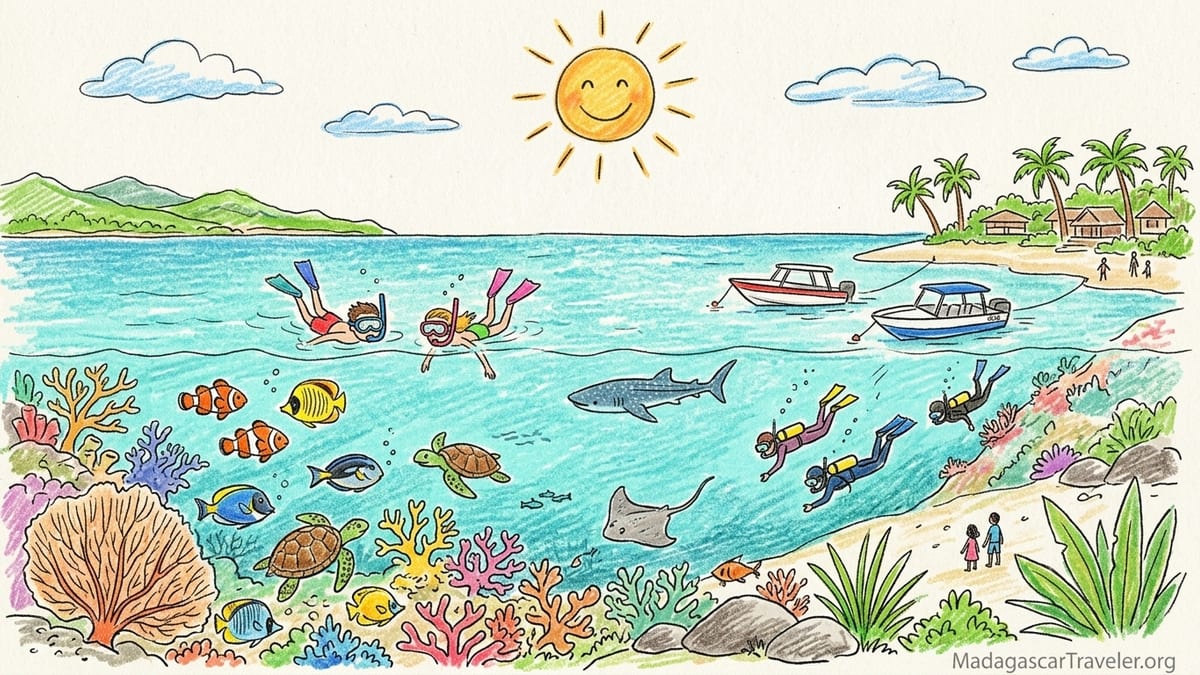
Why Nosy Be Works So Well for Divers and Snorkelers
Nosy Be sits off Madagascar’s northwest coast in the Mozambique Channel, surrounded by small islands, coral reefs and channels that funnel clear, warm water across the archipelago. Local and regional tourism offices highlight the area for turtles, rays, reef sharks, wrecks and gorgonian gardens, and visiting divers often describe the region as a “natural aquarium,” especially around the Nosy Tanikely marine reserve. The island’s sheltered bays and short boat rides make it well suited both to beginners and to experienced divers looking for long, multi-dive days offshore.
Several established dive centers based around Ambatoloaka, Madirokely and Andilana run daily boats that fan out to more than 20 named sites, including walls, pinnacles, wrecks and shallow coral gardens. Typical half-day trips include two dives or a mix of one reef dive plus time snorkeling at anchor. Full-day excursions push farther, for example combining Nosy Tanikely with another island such as Nosy Komba or stopping at deeper offshore reefs and gorgonian plateaus. Because the distances are moderate, surface intervals are often spent drifting in bays or on small beaches rather than pinned to a rocking boat offshore.
Water temperatures around Nosy Be are generally warm, often in the mid-to-high 20s Celsius for much of the year, which keeps conditions comfortable for long snorkel sessions and back-to-back dives. Visibility is highly variable but is often described by operators as “good to excellent” at outer reefs during the dry season, while Tanikely’s clear, shallow slopes are frequently used for both beginner courses and underwater photography. The combination of ease of access, friendly temperatures and wide marine biodiversity is what increasingly draws travelers to tag a few dive or snorkel days onto a broader Madagascar itinerary.
If you are planning travel between roughly October and December, another layer of appeal appears offshore. Several Nosy Be operators offer seasonal snorkeling or diving encounters with whale sharks and, at other times of year, humpback whales transiting the Mozambique Channel. These big-animal trips are often sold as separate excursions but can be combined with reef or wreck diving for confident swimmers who want one of the region’s signature experiences.
Nosy Tanikely: The Natural Aquarium for Intro Dives and Snorkeling
Nosy Tanikely Marine Reserve is the easiest place to understand why Nosy Be has such a strong reputation. This tiny island, set roughly a short boat ride south of Nosy Be, is encircled by a protected coral reef with shallow plateaus and gentle slopes. Tourism and park information regularly describe it as an open-air aquarium, with clear water, bright hard corals, clouds of reef fish and regular sightings of green and hawksbill turtles grazing along the reef and in nearby seagrass beds.
For first-time divers, Tanikely is often the primary recommendation. Local centers use its three main sites for introductory dives and first open-water dives because most areas are between about 5 and 18 meters, with minimal current and easy access from sandy beaches or sheltered moorings. Visibility can be excellent on calm days, which reassures nervous beginners, and there is plenty to see without needing to descend deep: clownfish, parrotfish, butterflyfish, moray eels and occasional rays or small reef sharks on the outer slope. Introductory dives here usually last around 25 to 40 minutes, with one instructor for a small group, and are commonly bundled into half-day excursions.
Snorkelers do just as well at Nosy Tanikely and, in many ways, may see as much as divers. Operators and local guides often brief guests using simple reef maps, explaining that turtles are frequently seen along the northern side while broad plate corals and dense fish schools dominate the southern shallows. On arrival, guests typically step off the beach or the back of a small speedboat into waist-deep water, then follow their guide along the reef crest. Many tours include buoyancy aids or life vests, plus shorty wetsuits for added comfort. Because this is a heavily visited site, good practice is to choose a company that talks explicitly about reef-safe sunscreen, distance from turtles and not touching corals.
A typical commercial example many travelers encounter is the combined Nosy Komba and Nosy Tanikely day trip sold by island tour offices and beach kiosks. The morning is spent visiting Nosy Komba’s village and lemur sanctuary, then the boat continues to Tanikely for a few hours of snorkeling or an optional introductory scuba dive. Prices vary with group size and season, but this sort of shared excursion often lands in a moderate bracket that is accessible even for families, and it represents one of the simplest ways to get a taste of Nosy Be’s underwater life without committing to a full dive course.
Reef Sites, Wrecks, Gorgonian Forest and Shark Point
Certified divers looking beyond the marine reserve will find a spread of reefs, channels and wrecks within daily reach of Nosy Be. Local operators describe more than 20 regular sites, with additional occasional spots visited in ideal conditions. Some reefs are closer in, with sloping coral gardens suitable for open-water divers, while others fall away into deeper walls and drop-offs where currents can be stronger and sightings of pelagic species more common. Eastern fringing reefs and offshore banks often host sponges, table corals and large schools of fusiliers and surgeonfish, with macro life such as nudibranchs and ghost pipefish tucked into the structure.
Several operators promote wreck dives, sometimes referred to generically as Abyss or similar names, where sunken vessels rest in deeper water and attract schooling fish, groupers and patrolling trevallies. Depths at these sites can reach into the 30-meter range, making them most appropriate for advanced-certified divers or those completing deep-dive training. Wreck structures in the Nosy Be region are commonly draped in soft corals, with resident moray eels, lionfish and, occasionally, encounters with larger animals in the blue water around the hull. Because of depth, dive centers usually limit bottom time conservatively and may require recent experience at comparable depths.
Gorgonian Forest, often called a garden of giant sea fans in marketing materials, is representative of Nosy Be’s classic deeper reef plateaus. Here, divers hover over fields of large gorgonians and black corals, watching anthias and chromis weave between the branches while searching for small creatures like longnose hawkfish and seahorses. These areas typically sit between about 25 and 35 meters, though operators may choose routes that keep less experienced divers slightly shallower on the upper edge of the plateau. Consolidated coral heads and sand patches around the fans can hide garden eels, shrimp gobies and other sand-plain specialists, offering photographers both wide-angle and macro subjects in a single dive.
Shark Point has become one of the more talked-about advanced sites near Nosy Be, especially for divers comfortable with current and blue-water descents. Unlike lagoon-like Tanikely, Shark Point is often characterized by more dynamic conditions and a layered ecosystem. Reports describe a densely colonized reef structure, where divers can see hard and soft corals on the plateau, while the surrounding water attracts jacks, barracuda and occasional grey reef or whitetip sharks. Rays, including eagle rays and stingrays, may also pass through. Because this is an offshore point, local centers typically time dives with tides for manageable currents, and they reserve the site for confident, certified divers who are used to negative entries and mid-water safety stops.
Choosing Between Intro Dives, Certified Diving and Reef Snorkeling
For many travelers, the first decision is whether to book an introductory dive, stick to snorkeling or commit to a certified dive package. An intro dive around Nosy Tanikely or a similar sheltered reef suits visitors who have never tried scuba, are unsure about equalizing or simply want to experience breathing underwater once. There is no certification issued, and the experience is carefully controlled, usually with the instructor managing buoyancy and keeping depth quite shallow. In practical terms, this is a one-off “try dive” that creates a memorable highlight without tying up several days of vacation time.
Snorkeling tours, by contrast, are more flexible. They work well for mixed groups that include children, non-swimmers who are happier in a life vest and experienced free-divers who want to duck down to photograph turtles. Nosy Tanikely, Nosy Sakatia and some closer fringing reefs offer coral gardens in less than three meters of water, which means you do not need scuba gear to see much of the marine life promoted by the Nosy Be tourism office. Shared snorkel excursions to these sites often include park fees, guide services and a simple beach barbecue, making them simple to slot around other land-based activities.
Certified divers can of course join these same boats but should think about what they most want out of the region. If the priority is calm coral gardens, two-dive morning outings close to Nosy Be or Nosy Tanikely will be more than enough. If you are drawn by mentions of wrecks, gorgonian forests and Shark Point, it makes sense to budget for at least two or three days of diving, so you can combine local sites with one or two more advanced offshore dives when conditions are right. Divers traveling specifically for big animals might focus their budget on seasonal whale shark or manta ray excursions and then add a smaller number of reef dives before or after those trips.
Certification requirements differ clearly between these options. Intro dives seldom require any prior training, although most operators insist on a basic health questionnaire and minimum age. Certified dives require at least an open-water certification from an agency such as PADI or SSI, with advanced cards often requested for deeper wrecks or Shark Point. Reef snorkeling usually comes with no formal requirements beyond safety briefings, though responsible companies ask about swimming ability and offer flotation for those who need it. Reflecting honestly on your comfort in open water and your recent experience with diving is more important in Nosy Be than chasing the most technically demanding site names on a map.
Full-Day Marine Excursions and Multi-Site Combos
Travelers with a full day to spare can book longer marine excursions that combine several highlights into one itinerary. A typical example is a full-day tour that leaves Nosy Be in the morning, stops at Nosy Tanikely for snorkeling or diving, continues to another island such as Nosy Komba or Nosy Sakatia for lunch and a beach break, then returns in the late afternoon. For divers, this can translate into two boat dives plus a relaxed snorkel in the shallows. For non-divers, it is an all-day island-hopping trip with time both in and out of the water.
More committed divers sometimes upgrade to specialized day trips such as Radama Archipelago outings, which push farther into the Mozambique Channel to reach less-visited walls, banks and coral gardens. These days typically involve an early departure from Nosy Be, several hours at sea and two or three dives spread across different sites. Operators that run such trips usually require a minimum number of participants, solid recent dive logs and comfort in open-ocean conditions. In return, guests may be rewarded with encounters with pelagic schools of tuna or jacks, healthier coral due to lower visitor pressure and, in the right season, passing whale sharks or humpbacks seen from the boat.
When comparing full-day reef excursions against shorter outings, it is worth thinking about how you tolerate time at sea. Nosy Be’s day boats are often open or semi-covered speedboats with limited shade and simple bench seating. While they are adequate for the short crossing to Tanikely, some travelers find hours of tropical sun and spray tiring on longer offshore routes. Those sensitive to motion sickness or heat may prefer to book several half-day dive or snorkel trips instead, allowing them to return to their hotel pool and air conditioning between outings. Families with young children often find shorter excursions less disruptive to naps and meal times.
Budget also plays a role. In practice, a single full-day excursion that includes multiple sites, a basic lunch and park entry fees can trim costs compared with booking separate half-day dives and island tours on consecutive days. On the other hand, back-to-back full days on the water can be demanding for those not used to equatorial sun and salt, so a balanced itinerary often mixes marine excursions with inland visits to places like Lokobe National Park or Nosy Be’s volcanic lakes.
Equipment, Boats, Visibility and Marine Life: What to Expect
Dive operators around Nosy Be generally supply standard tropical gear: masks, fins, snorkels, short wetsuits, BCDs, regulators and aluminum tanks. For certified divers, rental equipment is typically included in dive-package pricing, with surcharges for extras such as dive computers or underwater lights. Snorkel-only tours may offer simpler gear and life vests, so if you care about mask quality or fit, consider bringing your own. Because maintenance standards vary, it is reasonable to ask when regulators and BCDs were last serviced, and to test everything thoroughly during your pre-dive check.
Boats range from small fiberglass speedboats that take six to ten divers, up to larger covered vessels used by some resort-based centers for full-day trips. Most are equipped with ladders for easy re-entry, tank racks and shaded areas. For Tanikely and nearby reefs, ride times are often under an hour; for Shark Point, outer wrecks or the Radama Archipelago they can be considerably longer. On busy days, boats may carry both divers and snorkelers, which can be convenient for couples or families with mixed interests but may mean staggered entries and shared briefings.
Visibility can swing significantly with tides, recent rain and plankton levels. Nosy Be’s dry season often brings clearer water to offshore reefs, with reports of bright conditions on walls and plateaus where sunlight reaches deep coral structure. Inshore, especially around river mouths or after storms, visibility may drop to more moderate levels. Tanikely is frequently praised for its clarity, particularly in the shallows where sand and coral reflect light upward, creating the luminous conditions snorkel photos from the region often show. This variability is one argument in favor of booking more than one day on the water if diving is a priority, so that poor visibility on a single day does not define your entire impression.
Marine life on a typical Nosy Be reef day can include octopus, scorpionfish, lionfish, batfish, barracuda, trevallies, and a carousel of damselfish, fusiliers and wrasses, with turtles and rays occurring regularly at certain sites. Tourism materials and operator briefings also reference seasonal appearances of whale sharks and manta rays, particularly in the later months of the year, along with humpback whales that may be seen from boats during migration periods. Smaller highlights such as nudibranchs, pipefish and shrimp gobies reward slower, macro-focused dives, while outer points and wrecks tend to draw in larger schooling species and the occasional shark sighting.
Dive-Focused Hotel or Normal Resort: Where to Base Yourself
One of the more practical decisions for marine-focused travelers is whether to stay at a dive-focused hotel or a more general resort and commute to the dive center. Nosy Be now offers both models. Dedicated dive lodges or hotels attached to established centers appeal to serious divers who want to roll out of bed and step directly onto the boat each morning. They may offer early breakfast times, dedicated gear rooms, rinse tanks and flexible scheduling for additional shore dives or night dives. Staff at such properties tend to be used to questions about nitrox, camera rinse buckets and logbook stamps.
General beach resorts, by contrast, cater to a broader audience that might include families and non-diving partners. These hotels sometimes host an on-site dive desk operated by an independent center, or they arrange transfers to a nearby shop. The advantage is a wider range of room categories, pools, spa facilities and non-marine excursions. For many travelers who plan only one or two days of diving or snorkeling, this is the more balanced choice; the hotel feels like a standard Indian Ocean resort holiday, with marine experiences as one of several available activities.
Location matters as well. Accommodation clusters such as Ambatoloaka and Andilana offer relatively easy access to multiple operators and to departure points for Tanikely and nearby islands. More remote lodges on islands like Nosy Sakatia can offer almost private house-reef snorkeling straight from the beach and a quieter atmosphere, but they may rely on a single in-house dive operation and have fewer dining or nightlife options. Browsing recent traveler discussions, you will see frequent mentions of guests choosing a Sakatia lodge because they can snorkel with turtles just off shore, then taking a boat across to the main island or to Tanikely for additional variety.
As a rule of thumb, if diving is the central reason for your trip, a dive-focused hotel attached to a reputable center will maximize convenience and water time. If you are primarily a general traveler who wants to add a couple of reef days to a broader Madagascar journey that includes lemur forests and culture, a regular resort with either an on-site or nearby dive partner is usually sufficient. In both cases, it is worth checking that the hotel’s schedule aligns with your planned excursions, especially if you hope to join early starts for whale shark safaris or longer full-day runs to outer reefs.
The Takeaway
Nosy Be’s reputation as one of Madagascar’s standout marine destinations rests on a straightforward combination: accessible reefs, reliable local operators, a spread of sites from gentle to advanced and a seasonal cast of charismatic animals. Nosy Tanikely delivers the classic “natural aquarium” experience for intro divers and snorkelers, while deeper reefs, wrecks, gorgonian gardens and Shark Point reward certified divers willing to travel farther offshore. Layer on seasonal whale shark and humpback sightings, and it is easy to understand the island’s growing appeal for ocean-focused travelers.
Choosing between an introductory dive, certified packages, reef snorkeling and full-day excursions comes down to comfort, experience and priorities. Non-divers and families will likely be happiest booking shared snorkel days to Tanikely or Sakatia, perhaps with a single try dive. Certified divers should think in terms of at least two or three days of two-tank outings to sample both nearby reefs and one or two of the signature advanced sites. Those who want to keep logistics simple can base themselves in a dive-focused hotel, while others might opt for a regular resort and treat the marine side as just one strand of a wider Nosy Be stay.
Whichever path you choose, a little planning pays off. Checking equipment standards in advance, being honest about your comfort in currents, and timing your trip with the dry season or whale shark window will all improve your chances of clear water and memorable encounters. Add in Nosy Be’s relaxed, island-time atmosphere back on shore, and it becomes not just a place to tick off a dive log, but somewhere to settle into a rhythm of early boat departures, long saltwater days and sunset dinners with the sound of the surf in the background.
FAQ
Q1. Do I need to be a certified diver to enjoy Nosy Be’s marine life?
Certification is not required for reef snorkeling or introductory dives at places like Nosy Tanikely, so non-divers can still see turtles, rays and colorful corals.
Q2. Is Nosy Tanikely better for snorkeling or scuba diving?
Nosy Tanikely works very well for both, with shallow coral gardens ideal for snorkelers and slightly deeper slopes used by dive centers for intro and training dives.
Q3. What certification level do I need for wrecks, Gorgonian Forest and Shark Point?
These deeper or more advanced sites are usually reserved for open-water divers with experience at 20 meters, with many operators preferring advanced certification for the deepest profiles.
Q4. How many dive days should I plan in Nosy Be?
If diving is a priority, plan at least two or three days of two-tank outings to experience local reefs, plus one or two of the more remote or advanced sites when conditions allow.
Q5. What is visibility like around Nosy Be?
Visibility is often good on offshore reefs, especially in the dry season, while Nosy Tanikely’s shallow reef typically has clear water that suits both snorkelers and beginner divers.
Q6. When is the best time to see whale sharks and other big animals?
Operators commonly focus whale shark snorkeling trips on a seasonal window in the later months of the year, with manta rays and humpback whales also appearing in certain months.
Q7. Should I stay in a dive-focused hotel or a regular beach resort?
Dive-focused hotels suit visitors who plan to dive most days, while regular resorts work well for travelers who want only one or two water-based excursions alongside other activities.
Q8. Can families with children join Nosy Be snorkeling tours?
Yes, many shared excursions to Nosy Tanikely or Nosy Sakatia welcome families, offering life vests, easy entries from the beach and flexible time in the water for different comfort levels.
Q9. What kind of boats and equipment do operators use?
Most centers run small speedboats or mid-sized day boats and provide standard rental gear; it is reasonable to ask about servicing and to test-fit masks and regulators before departure.
Q10. Is it possible to combine diving with land-based activities on Nosy Be?
It is common to alternate dive or snorkel days with visits to Lokobe National Park, island hikes or cultural excursions, especially for travelers staying a week or more.