


Nosy Be has become the classic base for exploring Madagascar’s northwest islands, and the choice of tours has exploded in the last few years. Today most marketplaces and local agencies list 25 to 35 or more excursions, with Nosy Iranja and the Nosy Komba plus Nosy Tanikely combo especially prominent. With so many options, it is easy to double book similar experiences or underestimate how long a “full day” on the water really feels. This guide compares the key trips on offer and shows how to mix and match them, using real tour examples and current inclusions to help you build the ideal Nosy Be itinerary.
Understanding the Main Types of Nosy Be Tours
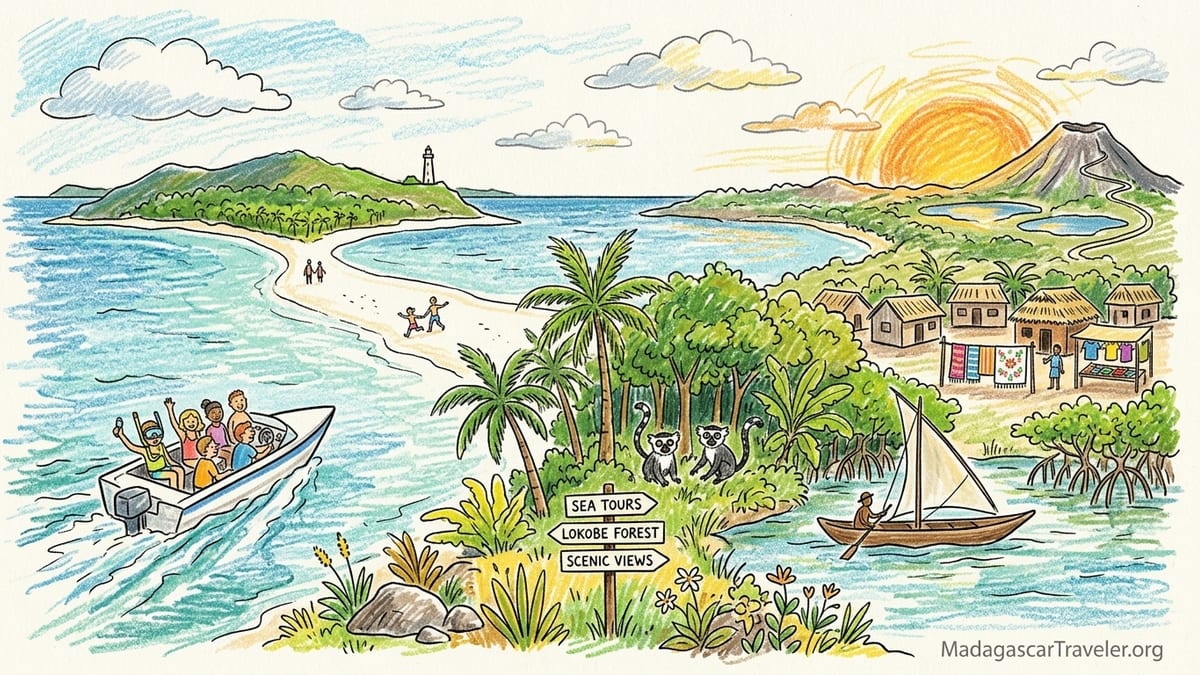
Most Nosy Be excursions fall into three broad categories: island hopping by speedboat, nature and wildlife walks, and land-based scenic circuits. Island hopping covers Nosy Iranja, Nosy Komba, Nosy Tanikely and Nosy Sakatia, usually by shared speedboat leaving from Ambatoloaka or Madirokely around 8:00 or 8:30 in the morning. Nature walks focus on Lokobe, the last primary forest on Nosy Be, accessed by road and traditional canoe. Scenic circuits include full-island tours by car and late afternoon trips to Mont Passot for sunset views over the crater lakes.
Across these categories, you will see the same inclusions repeated. Many one-day sea excursions include hotel pickup from the main beaches, boat transfers, a Malagasy-style lunch and drinking water. Typical shared outings to Iranja or Komba plus Tanikely often advertise prices in the region of 60 to 90 euros per person depending on the operator, season and whether park fees and snorkel gear are included. Private boat charters for the same routes usually start closer to 350 to 450 euros per boat for up to 8 to 10 guests, with details like upgraded speedboats, shaded decks and more flexible schedules built into the higher rate.
Understanding what you are actually paying for matters more than finding an absolute lowest price. A day on the water from Nosy Be to Iranja, for example, means roughly 1 hour 30 minutes each way by speedboat. Operators that charge a little more often invest in more powerful engines, better safety gear and an experienced skipper who knows how to read the sandbanks and currents. These details can make the difference between a relaxed island day and a tiring or delayed return in choppy afternoon seas.
Nosy Iranja: The Iconic Sandbank Day Trip
Nosy Iranja is the poster image of Nosy Be tourism, famous for two emerald islands joined by a white sandbar that appears at low tide. Standard day trips leave Nosy Be around 8:00, reach Iranja after a 1.5 hour speedboat ride, and return by about 16:30. On many current itineraries, the day includes a welcome drink, snorkeling stop near the reef, free time on the sandbank, a walk up to the lighthouse village view point, and a grilled fish lunch served under casuarina trees. Some operators also provide kayaks or beach games as extras on quieter sections of the beach.
Shared Nosy Iranja excursions typically cost around 70 to 110 euros per person in 2026 depending on season, with hotel pickup from Ambatoloaka or similar beaches included. In these group trips, boats might carry 12 to 20 guests. Lunch, water and a local guide are usually provided, but snorkeling gear, towels and park-style fees are not always included, so it is important to check the fine print when booking. At least one well-reviewed hotel excursion desk near Ambatoloaka currently lists an Iranja day at a flat 450 euros per boat for 1 to 10 people as a private option, illustrating how much pricing shifts when you move from per-person to per-boat rates.
For many travelers, Iranja is the one outing in Nosy Be that feels truly unique. The sandbank scenery and the feeling of being far from the main island do not really repeat on other tours. That is why it usually deserves a dedicated day in almost any itinerary, even for visitors with only three or four nights on Nosy Be. Where you need to be careful is stacking Iranja with too many other long sea days back-to-back, since the early departures and hours of sun can leave you tired by day three.
Nosy Komba & Nosy Tanikely: Classic Combo or Overlap?
The most heavily promoted combo from Nosy Be is the Nosy Komba plus Nosy Tanikely day trip. This sea excursion usually starts with a visit to Nosy Komba, a volcanic island with steep green slopes, small fishing villages and a locally managed lemur park or forest walk. Expect a short landing on the beach, then a guided walk through villages and forest fragments where you can often see semi-habituated black lemurs, chameleons and village craft stalls selling embroidered tablecloths and carved masks. After lunch, the boat typically continues to Nosy Tanikely Marine Park for snorkeling over shallow coral gardens.
Nosy Tanikely is widely regarded by local dive centers as one of the best snorkeling spots around Nosy Be, with coral starting just 20 to 30 meters from the main beach. Regular sightings include parrotfish, clownfish, rays and sea turtles. A few tours reverse the order, snorkeling in Tanikely during the clearer morning hours and stopping at Komba for the afternoon village visit. Either way, this is a full day on the water, often priced in the same band as Iranja, roughly 60 to 100 euros per person for a shared speedboat excursion with lunch.
In terms of overlap, the Komba plus Tanikely combo sits somewhere between Iranja and Sakatia. Tanikely and Sakatia are both snorkeling-oriented, but Tanikely has a more established marine park feel, while Sakatia emphasizes turtle encounters and a quieter island ambiance. The Komba portion, with its lemurs and crafts, partly overlaps with land-based lemur parks on Nosy Be, but the boat transfer and island atmosphere give it a different character. For travelers short on time, one good strategy is to choose Iranja plus the Komba–Tanikely combo, and then skip additional half-day snorkeling outings that might feel repetitive.
Lokobe Reserve: Primary Forest and Night Wildlife Potential
Lokobe Reserve protects the last primary forest on Nosy Be and is the go-to choice for travelers who want to see rainforest species in a relatively compact area. Reaching Lokobe often involves a 40-minute drive from the main beaches to the village of Ambatozavavy, followed by about 45 minutes in a traditional dugout canoe through mangroves. Many tours include a local lunch, usually rice, fish and coconut-based dishes cooked by village families, before or after a guided forest walk looking for panther chameleons, leaf-tailed geckos, snakes and the black macaco lemur.
Full-day Lokobe outings currently appear in price lists from around 45 to 80 euros per person in small groups. The lower end of that range often assumes a minimum number of participants and might exclude the official park entrance fee, which agencies sometimes ask you to pay in cash on arrival. Higher-end operators highlight small-group guiding, insurance, better rain gear and sometimes the option of a slightly longer forest circuit for active guests. Note that trails can be muddy when it rains, so closed shoes and a lightweight rain jacket are strongly recommended.
Lokobe overlaps partly with Nosy Komba in terms of seeing lemurs and chameleons, but the experience is quite different. On Komba, lemurs are usually fed and move close to visitors. In Lokobe, sightings feel more like a classic forest walk, which appeals to wildlife enthusiasts who prefer natural behavior and less crowding. Lokobe also pairs well with sea-based excursions because it uses very different muscles and energy. If you plan three or more days in Nosy Be, combining Lokobe with one or two boat days helps balance your time and avoid too much sun exposure.
Nosy Sakatia, Full-Island Tours & Mont Passot
Nosy Sakatia sits just off the west coast of Nosy Be and has built a quiet reputation for snorkeling with green turtles in sea grass meadows. Most Sakatia excursions leave from beaches near Ambatoloaka or from small lodges facing the island, with a short boat crossing that takes around 15 to 30 minutes. Recent snorkeling offers show half-day turtle outings with time to relax on Sakatia’s beach, while full-day versions add an island walk or extended lunch under shade trees. Operators often describe Sakatia as ideal for guests who prefer a calmer day on the water compared with the longer run to Iranja.
Because it is closer, Sakatia trips can also be cheaper. Some current rate sheets list Sakatia full-day excursions slightly below the price of Komba plus Tanikely or Iranja, especially when booked through small hotels that group their guests onto one shared boat. The main overlap for Sakatia is with Tanikely. Both focus on marine life, but Tanikely has more varied coral structures and fish life, while Sakatia specializes in turtles over seagrass and a more village-like atmosphere on shore. For many travelers, doing both in one short visit can feel repetitive, so a choice often comes down to whether you value the marine park coral gardens of Tanikely or the turtle encounters and nearby location of Sakatia.
On land, full-island tours and Mont Passot excursions deliver a change of pace from the sea. A typical full-island circuit by taxi or minibus might stop at ylang-ylang distilleries, small markets in Hell-Ville, beaches like Andilana and scenic viewpoints, often including Mont Passot for sunset. Some local providers price this as an 8-hour private tour with driver and picnic lunch, while others sell a shared minibus version that leaves from Ambatoloaka in late morning. Mont Passot on its own is usually offered as a half-day or sunset trip, and even travelers arranging their own scooter or taxi often time their visit for the late afternoon when golden light reflects in the crater lakes.
Shared vs Private Excursions: Boats, Comfort & Inclusions
Shared excursions remain the backbone of Nosy Be tourism. Travelers staying in popular beach areas like Madirokely or Ambatoloaka can often join a group to Iranja, Komba plus Tanikely, Lokobe or Sakatia almost any day in high season simply by booking through their accommodation the day before. These shared trips help keep prices accessible and can be sociable for solo travelers, but they come with trade-offs. Boats may depart only when enough participants are confirmed, and timing tends to be rigid. You also have less control over how long you spend at each stop.
Private excursions, on the other hand, are usually sold by boat or by small group. A family of four might charter a speedboat for Iranja, paying a flat rate that works out similar to or slightly less than four seats on a high-end shared excursion, but gaining the freedom to adjust departure times and avoid the busiest sandbank hours. Private departures to Nosy Tanikely or Sakatia are also popular with keen snorkelers who want more time in the water and fewer people around. Higher prices often reflect not just exclusivity but also better boat quality. Newer speedboats tend to have twin engines, more shade, and dry storage for cameras and bags, all of which become very noticeable on an all-day crossing.
Inclusions vary by operator and should never be assumed. Some hotel-based agencies explicitly include masks, snorkels and fins in their day trips, while others charge a small rental fee per set or expect you to bring your own. A number of current brochures list lunch, mineral water and hotel pickup as standard on all major excursions, but snorkeling equipment, towels, alcoholic drinks and official park entrance fees are highlighted as exclusions. Travelers who book online before arrival should verify what is covered to avoid surprise cash payments on the beach or in the forest.
How to Combine Tours Without Too Much Overlap
With roughly 25 to 35 bookable tours on most marketplaces, the real art is not finding trips, but stitching together a plan that feels varied. The main overlaps to keep in mind are between snorkeling-focused islands and between lemur experiences. Nosy Tanikely and Nosy Sakatia both deliver strong snorkeling, while Lokobe and Nosy Komba both deliver lemur sightings. Booking all four in a four-day stay can leave you feeling that you repeated yourself.
For a three-night stay in Nosy Be, a balanced approach might look like one long sea day to Nosy Iranja, one nature day in Lokobe, and one flexible afternoon for Mont Passot or a short Sakatia turtle outing. In this mix, Iranja gives you the iconic sandbar and open-sea crossing, Lokobe gives you forest wildlife, and Mont Passot or Sakatia add either a land-based sunset or a gentle marine experience. Travelers with five or six nights might add the Komba plus Tanikely combo or a full-island circuit by car, but would still usually choose between Tanikely and Sakatia rather than doing both.
Multi-day boat combinations are increasingly marketed to visitors who want a soft adventure feel. For example, some sailing itineraries spend a first day snorkeling at Tanikely and anchoring near Komba, a second day at Sakatia, and a third pushing further to Iranja before returning to Nosy Be. These cruises blur the lines between individual day trips, but the underlying logic remains the same: vary your stops between coral gardens, turtle meadows, village visits and wild forest, instead of repeating the same type of activity each day. When reviewing such packages, ask for a clear breakdown of where the boat actually moors each night and which island visits are included, so you can compare them fairly to stand-alone day tours.
Practical Details: Hotel Pickup, Lunches, Gear & Duration
Hotel pickup is a common selling point in Nosy Be, but it usually has boundaries. Many sea excursions include transport from accommodations around Ambatoloaka, Madirokely, Ambondrona or sometimes Andilana, while more remote lodges might pay a small surcharge or arrange their own transfer to the departure beach. Pickup times are typically around 7:30 to 8:00 for full-day tours, with guests collected in small minibuses or 4x4 vehicles and dropped at the beach where boats are waiting. In some cases, you may be asked to walk the last stretch along the sand to board via the shallows.
Lunch is included on almost all full-day tours to Iranja, Komba, Tanikely, Sakatia and Lokobe. Expect grilled fish or chicken, rice, salads, zebu brochettes and tropical fruit. Vegetarian options are usually possible but should be requested at least a day in advance. On some low-cost shared tours, lunch quality can be basic, so travelers with dietary restrictions or higher expectations sometimes prefer private outings where they can coordinate a menu directly with the operator or pay a supplement for seafood platters.
Duration descriptors like “half day” and “full day” deserve close reading. A full-day sea excursion normally leaves around 8:00 and returns between 16:00 and 17:30, with actual time on the islands averaging six hours depending on weather and sea conditions. A half-day Sakatia or Mont Passot trip might run four to five hours in total, which can be ideal on arrival or departure days. Lokobe, while listed as a full day, spreads its effort differently, with travel by road and canoe plus a two to three hour forest walk. Sensitive travelers should plan at least one lighter day between the longest boat trips, especially if visiting during hot months when the sun is intense on the water.
FAQ
Q1. How many Nosy Be tours should I book for a 4-night stay?
For four nights, most travelers are comfortable with two or three full-day excursions. A common mix is one long sea day to Nosy Iranja, one nature day in Lokobe Reserve, and either a Nosy Komba plus Nosy Tanikely combo or a sunset visit to Mont Passot, leaving at least one lighter day to relax on the main island.
Q2. Is it worth doing both Nosy Tanikely and Nosy Sakatia?
It can be, but only if you are very focused on snorkeling. Tanikely offers classic coral gardens and reef fish in a marine park setting, while Sakatia is better known for calm turtle encounters over sea grass and a quieter beach atmosphere. If you have limited time, choosing one usually gives enough marine life variety without feeling repetitive.
Q3. What is the main difference between Lokobe and Nosy Komba for seeing lemurs?
On Nosy Komba, lemurs are accustomed to visitors and often come quite close during village-based visits, which can feel interactive and easy. Lokobe is a protected primary forest where sightings happen on longer, guided walks and animals behave more naturally. Travelers who enjoy forest trekking and bird or reptile watching tend to prefer Lokobe, while families with younger children often find Komba more straightforward.
Q4. How far in advance should I book Nosy Iranja tours?
In high season from roughly July to October and again around December holidays, it is wise to reserve Nosy Iranja at least a few days in advance, especially if you want a private boat or have a specific date in mind. Outside peak periods, many visitors successfully book through their hotel one or two days ahead, as several operators run Iranja trips multiple times per week.
Q5. Do I need to bring my own snorkeling gear?
It depends on the operator. Some excursion desks clearly include masks, snorkels and fins in the tour price, while others charge a small rental fee or expect guests to bring their own equipment. If you snorkel frequently or are sensitive about mask fit, bringing your own set is recommended, and you should confirm inclusions when you reserve.
Q6. Are shared boat tours safe in Nosy Be?
Most established operators use licensed boats, life jackets and experienced skippers, and shared tours to Iranja, Komba, Tanikely and Sakatia run almost daily in season. As with any sea outing, conditions matter, so trips may be delayed or rescheduled if winds or swell increase. Checking that your chosen provider uses life vests for all passengers and has a clear safety briefing before departure is a sensible precaution.
Q7. What should I budget for a typical full-day tour?
As a broad guide in 2026, shared full-day excursions to top sites start around 60 to 90 euros per person, depending on distance and inclusions, while private boat charters often range from roughly 350 to 500 euros per boat for small groups. Lokobe and some shorter Sakatia or Mont Passot outings can be a little cheaper, particularly when booked locally rather than through international platforms.
Q8. Can I visit Mont Passot without a tour?
Yes. Many travelers hire a local taxi or scooter to reach Mont Passot independently, timing their visit for late afternoon to catch the sunset over the crater lakes. Organized excursions can still be convenient because they include a driver, simple guiding at viewpoints, and sometimes a drink or picnic, but independent visits are perfectly feasible if you are comfortable arranging transport.
Q9. Are multi-day boat trips around Nosy Be a good idea?
Multi-day sailing or motorboat itineraries can be excellent for travelers who enjoy life on the water and want to visit several islands without returning to the main island each night. Typical routes might include Nosy Tanikely, Nosy Komba, Nosy Sakatia and Nosy Iranja over two or three days. These trips are usually more expensive than separate day tours but offer quieter anchorages and more flexible timing at each site.
Q10. How should I plan around weather and sea conditions?
Sea conditions are usually calmer in the morning, which is why most tours depart early. If your schedule allows, plan the longest crossing, such as Nosy Iranja, for a day with a good forecast and leave shorter or land-based excursions like Lokobe or Mont Passot for days when wind or swell might be higher. Staying flexible and discussing the week’s conditions with a trusted local operator on arrival can help you avoid cancellations and make the most of clearer days.