


Nosy Be in northwest Madagascar has quietly become one of the most reliable places on earth to snorkel with whale sharks in warm, clear water. Yet sightings are highly seasonal and conditions can change day to day. If you want to maximize your chances of a life‑changing encounter and choose a responsible operator, it pays to plan your dates, budget and boat carefully.
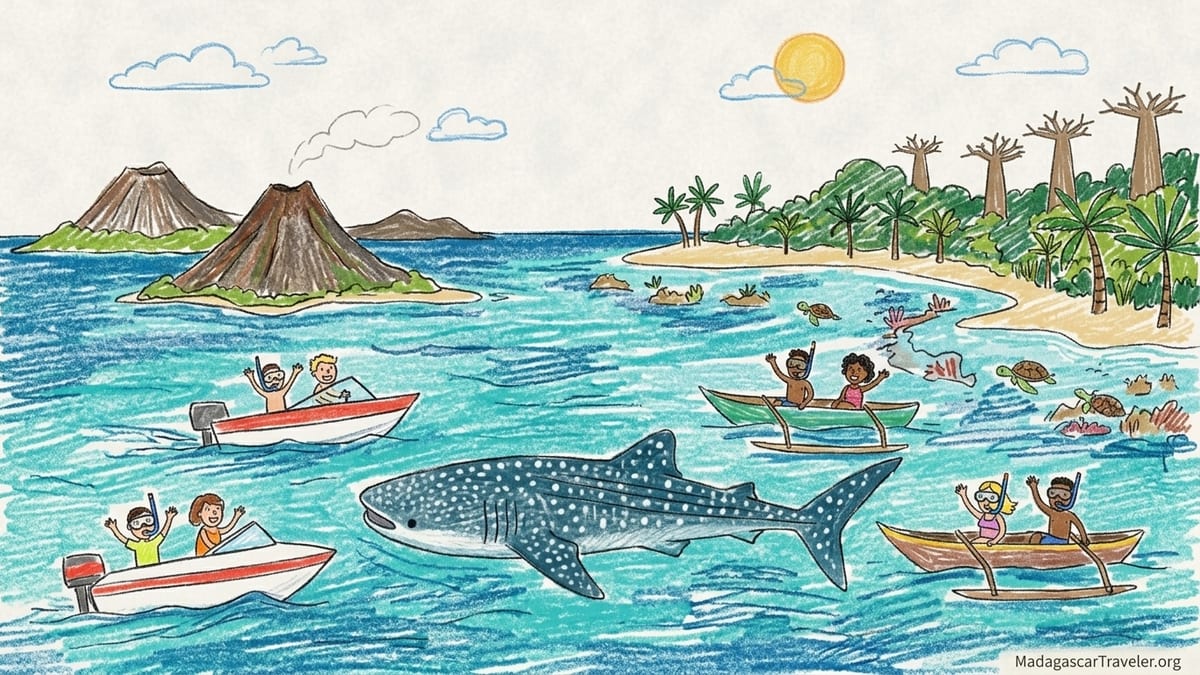
Whale Shark Season in Nosy Be: When Sightings Are Most Reliable
Whale sharks visit the waters around Nosy Be to feed on plankton and small fish carried by currents in the Mozambique Channel. Scientific surveys and local operators converge on a broad peak season from early austral spring into the start of summer, rather than year‑round presence. In practice, that means roughly September to December most years, with October and November consistently described as the core months when multiple encounters in a single day are common.
Local wildlife guides and tour companies that specialize in whale shark safaris typically open dedicated trips around mid or late September and wind them down towards late December. Some operators, such as dive centers based on Nosy Be’s west coast, market whale shark snorkeling specifically from mid‑October to mid‑December, reflecting when they see the most predictable aggregations offshore. Others describe a longer window from September through January but still emphasize that October and November deliver the highest probability of success in an average year.
Outside this peak period, encounters become more opportunistic. You might see a solitary animal while diving or on a general wildlife cruise in March or April, but you should not book a dedicated whale shark excursion in those shoulder months and expect the same hit rate you would in October. If your travel dates are flexible and this experience is a priority, aim to be in Nosy Be between mid‑October and late November, and book at least two dedicated days on the water to buffer for weather or slow days.
It is also important to factor in sea and weather patterns. September typically brings calmer seas and slightly cooler water at the start of the season, while November and December can be hotter and a little choppier in the afternoons. Sea temperatures usually sit somewhere around the mid‑20s Celsius during peak season, warm enough to snorkel comfortably in a shorty wetsuit or rash vest, but you will still feel cooler on long days in the water with wind on the boat ride home.
How Whale Shark Excursions Work: Half‑Day vs Full‑Day
A typical whale shark tour from Nosy Be runs either as a half‑day trip of around four hours or as a full‑day outing of six to eight hours. The basic structure is similar: an early morning briefing at the marina or beach, a run out to known feeding areas where spotters scan for dorsal fins and shadows, then multiple drops where small groups slide quietly into the water ahead of the sharks’ path. However, the length of trip you choose affects your chances, comfort level and overall cost.
Full‑day excursions are the standard among specialist operators whose main focus is whale sharks. Prices commonly fall in the region of the equivalent of 70 to 120 euros per person, depending on the boat, inclusions and whether you are booking directly with a local company or via a lodge. These days often include transfers from your hotel, snorkel gear if needed, light breakfast on board, lunch, soft drinks and sometimes an extra stop at a nearby island reef for a relaxing snorkel with turtles or reef fish in the afternoon.
Half‑day trips, often advertised by general excursion outfits that also run island hopping or turtle trips, are cheaper and more compact. You might see prices closer to 40 to 70 euros per person, with snacks rather than a full lunch and a tighter schedule. For travelers on a budget or those prone to seasickness, this can be attractive, but you must accept that you have fewer hours to search, and a late start, patchy plankton, or a turn in sea conditions can eat into your time with the animals.
For most visitors whose main goal is a successful whale shark encounter, a full‑day format on at least one or two days is worth the extra cost. The longer window allows the captain and guide to work around wind shifts, wait out squalls, and move between offshore zones if sharks are not where they were the day before. If your itinerary is short, a useful strategy is to book a full day on your first available date, then keep a second day in reserve that you can confirm locally if conditions or your first day’s sightings were not ideal.
Small‑Group or Private Boats: Choosing the Right Experience
Boat size and group composition shape your in‑water experience more than many people realize. On Nosy Be, you will find everything from large day boats carrying 15 or more guests to small speedboats taking six to eight snorkelers plus crew. Private charters are also possible, ranging from basic fiberglass skiffs to comfortable catamarans used by liveaboard operators and boutique lodges.
Small‑group shared trips, usually limited to around 6 to 10 participants, strike the best balance for most travelers. They keep the per‑person price at a reasonable level while limiting the number of people entering the water at any one time. That makes it easier to maintain responsible distances from the animals and improves your chances of unhurried, clear views. A good guide will also stagger entries so that two or three swimmers at a time slip off each side of the bow rather than everyone crowding the same space.
Private boats command a noticeable premium, but they come with clear advantages. Families with young teenagers, photographers carrying large camera housings, or travelers who want to set their own pace often find the extra cost worth it. On a private charter you can stay longer with a cooperative shark, take more snack and shade breaks, or tailor the afternoon to a quiet turtle reef instead of another open‑water search if the group is getting tired. You are also free to politely decline dropping in when a shark is already accompanied by several other boats, choosing to wait for a less crowded opportunity.
Larger, cheaper group boats may look tempting if advertised outside beach hotels, but their economics rely on volume. That can translate into 12 or more snorkelers dropping in with the same shark again and again, with higher risk of people accidentally blocking each other’s view or drifting too close. If your budget allows, prioritize operators that clearly limit group size and mention codes of conduct in their pre‑trip information.
Responsible Snorkeling Rules and Approach Distances
Madagascar has adopted codes of conduct for whale shark encounters, and conservation groups working in Nosy Be encourage operators and guests to respect specific approach distances. While exact figures may vary slightly between guidelines, the consistent message is to keep several meters away from the shark’s body and especially its powerful tail, never touch or ride the animal, and avoid blocking its path.
In practical terms, responsible operators will brief guests to maintain at least a few meters from the head and flanks of the shark and a wider buffer behind the tail. The safest approach is from the side, swimming calmly parallel to the animal at the surface. This allows the shark to see you, continue feeding or cruising without feeling boxed in, and adjust its path freely. Splashing, diving down repeatedly in front of the head, or trying to intercept the shark from above can cause it to dive abruptly and end the encounter for everyone.
Snorkelers should also listen closely to instructions about the number of people in the water at any time. Many boats adopt a rotation system where small sub‑groups take turns. When your guide calls you back to the boat, respond promptly and without argument so that others can enter the water and the captain can safely maneuver. Remember that boats themselves must keep a safe distance and speed around the animals to avoid propeller strikes, so sudden, unsignaled swimming away from your group makes everyone’s job harder.
Finally, treat whale sharks as wild animals in their own environment, not as theme‑park attractions. Never attempt to feed them, hold onto their fins, or deliberately block their course for a photograph. Resist the temptation to push your camera close to the gills or eyes. Good operators will discourage any such behavior and may end swimming opportunities early if guests ignore repeated warnings. Choosing companies that support local research or are members of regional responsible‑tourism collectives is one of the most effective ways to reward best practice.
Prices, Deposits, Cancellations and Sea Conditions
Costs for whale shark tours around Nosy Be vary widely according to the standard of boat, group size and inclusions, but real‑world examples provide a useful benchmark. Simple full‑day wildlife excursions that include whale shark searching alongside other snorkeling, run by local outfits with modest but safe boats, may advertise prices starting from the equivalent of about 50 to 70 euros per person. More specialized whale shark days run by established dive centers or marine‑life operators, with higher staff ratios and better catering, often sit between roughly 80 and 120 euros per person for a full day.
Half‑day options, typically four hours or so and focused just on a morning or afternoon window, are naturally cheaper. Visitors sometimes report paying around 40 to 60 euros per person for these shorter trips, especially when booked informally through small beach kiosks or guesthouses. If a price seems far below this range, ask careful questions about safety equipment, guiding experience, fuel surcharges and what happens if no whale sharks are seen; there are always trade‑offs.
Deposits and cancellation terms vary, but many reputable operators now request an advance payment for high‑season dates in October and November, particularly for small‑group or private boats. You may see policies that allow free cancellation until a set number of days before departure, a partial refund window after that, and full refund or rebooking if the captain cancels due to weather or unsafe sea conditions. Because most whale shark searching happens in exposed blue water, trips are more likely to be called off on days with strong winds, big swell or poor visibility. Booking two separate days during your stay gives you leeway if one is lost to weather.
Sea conditions themselves are a key part of the experience. In the early part of the season, around September and early October, mornings are often calm with light breezes, and chop typically builds after lunch. By November, hot, hazy days with more variable wind are common. Sensitive travelers should consider motion‑sickness tablets, sit near the stern, and avoid heavy breakfasts. Even in choppy water, however, whale shark spotting continues, and some of the most memorable encounters happen under slightly gray skies when the surface is quieter and there are fewer boats out.
Combination Trips: Turtles, Reefs and Multi‑Day Adventures
One of the attractions of Nosy Be is the range of marine life that shares the same waters as the whale sharks. Many day trips blend open‑water searching with stops at nearby islands and reefs where you can snorkel with turtles, reef fish and healthy coral. Well‑known islands such as Nosy Tanikely and Nosy Sakatia, often called “turtle island” by local operators, feature clear shallows where green and hawksbill turtles graze seagrass or cruise along drop‑offs with schools of tropical fish.
Some operators design specific “whale sharks and turtles” days, where the morning is dedicated to offshore searching and the afternoon is spent in more sheltered bays. This format suits mixed groups where not everyone is comfortable with repeated blue‑water entries or where younger children are along. You may drift above a whale shark in the morning, then spend the afternoon finning slowly over a reef, watching anemonefish and lionfish while an older relative relaxes on the boat.
Multi‑day itineraries are also an option, especially through liveaboard catamarans and small yacht charters based in Nosy Be. These trips, which can last anywhere from two nights to a full week, combine whale shark encounters with visits to outlying islands, mangroves and quiet beaches unreachable on day boats. They tend to be significantly more expensive on a per‑day basis, but they spread your chances of seeing whale sharks over a longer period and integrate the experience into a broader exploration of the archipelago.
If you are planning to combine whale sharks with land‑based wildlife, it is feasible to spend three or four nights in Nosy Be focused on the sea, then continue to mainland parks in northern Madagascar to see lemurs and chameleons. Build a little flexibility into your schedule so that if your first planned whale shark day is lost to swell or rain, you can adjust your other activities rather than leaving disappointed.
How and When to Book: Practical Planning Tips
Because whale shark encounters in Nosy Be are so seasonal, availability is concentrated into a tight window. For travel in October or November, especially over school holidays or around the end of year, it is wise to secure your preferred operator and at least one boat day several months in advance. If you are aiming for a specific small‑group outfit or private charter and have limited dates, consider confirming as soon as your international flights are booked.
For September or early December visits, or for travelers staying a full week with multiple potential sea days, it is often possible to be more relaxed and arrange trips once you have arrived. Many lodges with marine focuses work directly with independent captains or dive centers and can advise, day by day, which operator has space and what the latest sightings look like. In years when plankton blooms or local conditions shift, this local intelligence can be invaluable, as it helps you target the best days rather than locking everything in far ahead of time.
Before you pay a deposit, ask prospective operators clear, practical questions. Inquire about maximum group size, whether they follow a written whale shark code of conduct, what safety gear is on board, and whether a dedicated in‑water guide accompanies snorkelers. Clarify what is included in the price, from snorkel gear to lunch and transfers, and what happens in the event of no sightings. Few companies offer strict “no shark, no pay” guarantees, because wildlife is unpredictable, but some may offer discounted repeat days if your first outing is entirely blank.
Finally, prepare yourself physically. Whale shark trips are not technically demanding, but you will get more from them if you are comfortable floating and breathing through a snorkel in open water. Practice in a pool or shallow bay before your first offshore day, and bring or request fins that fit properly. A long‑sleeved rash vest, reef‑safe sunscreen and a hat will make hours on the equatorial ocean significantly more comfortable.
FAQ
Q1. When is the best month to see whale sharks in Nosy Be?
Most operators and recent reports point to October and November as the most reliable months, within a broader season that often runs from September into December.
Q2. Can I see whale sharks in Nosy Be outside the main season?
Occasional sightings do happen outside peak months, but they are less predictable, so it is unwise to plan a dedicated whale shark trip in, for example, March or April.
Q3. Do I need to be an experienced swimmer to join a whale shark tour?
You do not need to be an expert, but you should be comfortable swimming short distances in open water with a mask, snorkel and fins, and able to follow guide instructions.
Q4. Are half‑day whale shark trips worth it?
Half‑day trips can work if your time or budget is tight, but a full‑day tour usually offers better chances by giving the crew longer to search and adapt to conditions.
Q5. How close can I get to a whale shark while snorkeling?
Responsible guidelines ask swimmers to keep several meters from the shark’s body and an even wider margin behind the tail, never touching or blocking its path.
Q6. What happens if the weather is bad on my booked day?
If conditions are unsafe, reputable operators will cancel or postpone, usually offering a new date or refund according to their policy, which you should confirm before paying.
Q7. Are children allowed on whale shark excursions from Nosy Be?
Many boats accept older children who are confident in the water, but minimum ages and rules vary, so discuss your family’s swimming ability with the operator in advance.
Q8. Can I combine whale shark trips with turtle or reef snorkeling?
Yes, many day tours blend morning whale shark searches with afternoon snorkeling around islands such as Nosy Tanikely or Nosy Sakatia where turtles are common.
Q9. Do tours provide snorkeling equipment, or should I bring my own?
Most operators supply masks, snorkels and fins, but fit and comfort are better with your own gear, so bring it if you already have well‑fitting equipment.
Q10. Is feeding or touching whale sharks ever allowed on tours?
No. Feeding, touching or riding whale sharks is strongly discouraged and may be illegal; it stresses the animals and goes against responsible wildlife tourism practices.