


Nosy Be, the “perfume island” off northwest Madagascar, is a year-round tropical destination, but conditions change dramatically with the seasons. From May to November you can expect classic Indian Ocean beach weather, while marine life peaks at different times for humpback whales, whale sharks and turtles. Understanding how weather, seas, wildlife and hotel prices line up month by month is the key to getting the trip you want, whether that is lazy days on Nosy Be’s beaches or serious time underwater around Nosy Komba, Nosy Sakatia and Nosy Tanikely.
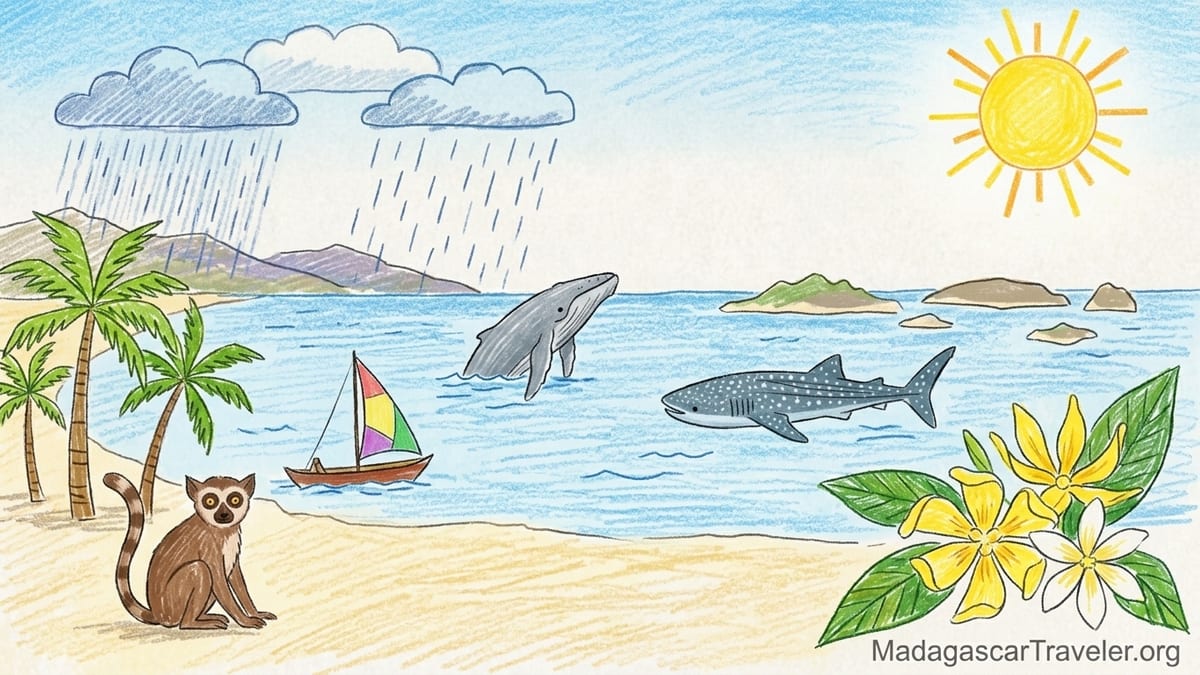
Nosy Be’s Seasons in a Snapshot
Nosy Be sits just off Madagascar’s northwest coast and has two broad seasons: a cooler, drier period roughly from May to November and a hotter, wetter period from December to April. Daytime temperatures stay around 28 to 31 degrees Celsius for most of the year, but rainfall and humidity vary a lot. In January and February the island can receive more than ten times the rain it does in July and August, and short but intense tropical downpours are common. By contrast, mid-year often brings long spells of clear blue sky and calmer seas that make island-hopping boat trips easy.
For beach-focused travelers, the best overall window is typically late May through October, when the air is less muggy, the sea is calm and the risk of tropical storms is low. This is when most European visitors arrive, and the feel on the ground around Ambatoloaka or Madirokely is of a busy but relaxed seaside resort. For wildlife, the calendar is more nuanced: humpback whale watching is strongest from roughly July to September, while whale shark encounters are typically best between about October and early December, with some operators also reporting sightings earlier in September and as late as January.
Dive visibility tends to follow the same rhythm as the weather. From about May or June, the sea around Nosy Be usually clears up, with many divers reporting 20 to 30 meters of visibility on offshore reefs such as those near Nosy Tanikely or the Mitsio archipelago. During the heart of the rainy season, heavy runoff can reduce visibility closer to shore, and boat trips can be more frequently cancelled due to storms or rougher seas, especially in January and February.
Hotel prices and availability track these patterns. Boutique lodges on Nosy Sakatia and Nosy Komba, for example, often quote their highest rates for July, August and the Christmas and New Year period, with more moderate pricing in May, June, September, October and November and significant discounts in the wettest months. If you are willing to accept some showers, late April or early May can be a particularly good compromise between cost, crowds and weather.
Dry Season: May to November Beach Weather
From May to November, Nosy Be moves into what many guides now describe as the ideal window for classic beach holidays. By May, the heaviest rains have usually eased, daytime temperatures hover in the high twenties Celsius and humidity is more manageable. Resorts along the west coast, such as the stretch between Ambondrona and Andilana, begin operating more boat excursions to nearby islands as seas flatten out. Snorkeling trips to Nosy Tanikely, where sea turtles cruise above coral gardens, are less likely to be disrupted by weather.
June, July and August are the heart of the cool, dry season. It rarely feels cold, but evenings can be pleasantly fresh and you may want a light layer on late-night walks along Madirokely beach or when riding a tuk-tuk back from dinner in Hell-Ville. This is peak time for European school holidays, so beachfront rooms can fill quickly and prices at popular mid-range hotels often rise. An ocean-view room that might go for a moderate rate in May can cost noticeably more in August, particularly at properties with good house reefs or easy dive-center access.
By September and October, the weather often becomes slightly warmer, but seas are still usually calm and the skies predominantly clear. Many travelers consider these two months the sweet spot: they combine laid-back beach conditions with the crossover of humpback whale encounters in early September and the arrival of whale sharks around October. In practice, that can mean a week at a lodge such as one on Nosy Sakatia where you might see humpback tails slapping in the Mozambique Channel one day and head out with a local operator to look for whale sharks the next.
November is officially still part of the drier, cooler pattern, but heat and humidity begin to climb and short afternoon showers become more common, especially late in the month. For many visitors, though, it remains an excellent time to come. Frangipani and ylang-ylang trees are in bloom, island plantations are fragrant, and many hotels that were full in August have space again. It can be a good month to secure a beachfront bungalow at a more upscale eco-lodge for less than peak-summer prices while still enjoying reliable sea conditions.
Rainy Season and Cyclone Risk: December to April
Nosy Be’s hot, wet season usually runs from December through April, with the peak of rainfall around January and February. In practice this means heavier, more frequent downpours, often in late afternoon or at night, and a steamy feel during the day. Travelers in Ambatoloaka at this time of year often describe sudden tropical storms that sweep in, soak the streets and then clear within an hour, leaving bright sun again. The island is largely functional during this season, but excursions can be more sporadic and some smaller businesses close briefly for maintenance.
Cyclone risk for the wider northwest Madagascar region is highest between about January and March, though systems can occasionally occur slightly earlier or later. Nosy Be itself is somewhat sheltered compared to the country’s east coast, but storms tracking through the Mozambique Channel can still bring high winds, very heavy rain and rough seas. In practical terms, this can mean cancelled transfers to offshore islands such as Nosy Iranja, lower visibility for diving and sometimes several grey, windy days in a row instead of the classic blue-sky postcard weather many visitors expect.
On the positive side, the rainy season is when Nosy Be is at its greenest. Lokobe Reserve’s lowland rainforest feels particularly lush, with frogs calling and geckos active along the trails, and the island’s waterfalls are at full flow. If your priority is land-based wildlife and you are flexible about getting wet, late March or April can offer a rewarding combination of bright, clear days between storms and much lower prices. Many hotels reduce rates significantly in January, February and early March, and you may find yourself almost alone on long stretches of beach near Andilana or along the quieter east coast.
Divers and snorkelers visiting at this time should be prepared for changeable sea conditions. Nearshore visibility can drop after heavy rain, particularly around Nosy Be’s main port of Hell-Ville where runoff enters the bay. Offshore reefs in deeper water may still offer decent conditions on calm days, but operators sometimes shorten trips or choose more sheltered sites. If you plan a dedicated dive holiday that includes farther-flung spots like the Radama Islands, it is usually wiser to aim for the drier months.
Month-by-Month Planning Guide
January and February are the wettest, stormiest months. Expect intense humidity, regular heavy showers, and occasional multi-day spells of bad weather if a cyclone passes nearby. Boat trips to Nosy Iranja or for diving can be cancelled at short notice, and some smaller island lodges temporarily close. In exchange, hotel rates are often at their lowest, and if you stay at a mid-range beachfront hotel near Madirokely you may get a sea-view room for what a garden-view costs in August.
March and April are transitional. Rain gradually eases, seas start calming, and travel logistics become easier. Late March can still see strong storms, but by April many operators resume more regular excursions. The island’s interior is vibrant green, making it one of the best times to visit ylang-ylang plantations or explore Lokobe’s forest without the high-season crowds. Prices edge up from their January lows but remains relatively favorable compared with the European summer period.
May and June mark the reliable beginning of the dry season. Skies are often clear, humidity drops and evenings become pleasantly cool. This is an excellent time for relaxed beach holidays, snorkeling and introductory dives, especially around accessible reefs at Nosy Tanikely and Nosy Sakatia. Many French and Italian visitors have not yet begun their main summer holidays, so you might find more availability and slightly better rates even at popular properties like small boutique hotels on Nosy Komba that offer house reefs suitable for casual snorkeling right from the beach.
July and August bring the peak of the traditional high season. Families on school holidays fill many of the better-known resorts and there is a buzz along the Ambatoloaka waterfront in the evenings, with restaurants serving grilled zebu steaks and fresh seafood to packed terraces. This is prime time for humpback whale watching offshore, especially on day trips that combine snorkeling at Nosy Tanikely with open-ocean searches for blows and tail slaps. Expect higher prices and a need to book early for both hotels and specialist activities such as multi-day dive cruises departing from Nosy Be’s marinas.
September and October are often regarded by diving and wildlife operators as the most balanced months of the year. Seas are generally calm, visibility underwater is strong, and marine life is diverse. Early September can still deliver humpback sightings in the Mozambique Channel, while from late September or October the first whale sharks usually arrive, attracted by plankton blooms. If you stay a week at an eco-lodge on Nosy Sakatia in October, for example, a typical program might include two days of reef diving, one dedicated whale shark excursion and an evening paddleboard session along a quiet mangrove-fringed bay.
November and December straddle the shift back to the rainy season. November is warm and comparatively dry, but afternoon showers increase toward month’s end. It is often highlighted by local operators as superb for whale shark encounters, with multiple boats leaving from Ambatoloaka most mornings in search of these gentle giants. Early December can still be very attractive, with warm water and active marine life, but by late December, holiday demand pushes prices up. Christmas and New Year weeks bring a second high-price period even as humidity and the chance of heavy downpours start to climb.
Diving Conditions, Visibility and Marine Life
Nosy Be is one of Madagascar’s main diving hubs, with several PADI and CMAS centers based around Ambatoloaka and on islands such as Nosy Sakatia. Typical recreational dive sites range from shallow coral gardens to drop-offs and pinnacles, and there are liveaboard itineraries that head to the Mitsio and Radama archipelagos. Visibility and sea conditions are critical for enjoying these sites and are closely tied to the seasonal cycle of rain and wind.
From roughly May to October, cooler, drier conditions on land usually translate into more stable seas and clearer water. Divers often report 20 to 30 meters of visibility on many offshore sites during this period, particularly around June to September. This is an excellent season for general reef diving: expect hard and soft corals, reef fish, and regular sightings of turtles. On a two-tank boat trip from a Nosy Be dive center in July, for instance, you might explore a sloping reef at 18 to 25 meters in the morning, followed by a shallower coral garden with schooling fusiliers in the afternoon, both in comfortable water temperatures around 26 to 27 degrees Celsius.
From about November into April, higher rainfall and warmer water lead to more suspended particles in the shallower layers, especially near the main island after strong storms. Visibility can still be good on certain days and sites, but divers need to be more flexible. In exchange, this is the period when pelagic encounters such as whale sharks and some tuna become more likely, particularly from October to early December. A common pattern for operators in that period is to run morning whale shark or pelagic-focused snorkeling trips, then shift to reef dives in more sheltered waters once the midday sun has passed.
For new divers or those planning training courses such as Open Water or Advanced Open Water, the drier months also tend to be more forgiving. Surface conditions in August, for instance, are often calm enough for beginner-level skills practice close to shore at protected sites off Nosy Sakatia, while advanced divers may join deeper dives or drift dives further out. During the wettest months, training is still possible but sessions may be rescheduled around storms or limited to less exposed areas.
Whale Sharks, Humpbacks and Other Wildlife Seasons
Nosy Be is particularly well-known for its seasonal whale shark aggregations and its position along a humpback whale migration route in the Mozambique Channel. These two headline wildlife experiences do not peak at the same time, which is crucial for planning. Humpback whales are generally most reliably observed from around July to September, occasionally stretching into early October. During this period, specialist operators depart from Nosy Be or Nosy Iranja, scanning for breaches and blows. A typical day on the water in August might involve listening for humpback songs with a hydrophone and, subject to regulations and animal behavior, cautiously approaching a pod for surface viewing.
Whale sharks, by contrast, are typically associated with the warmer, plankton-rich waters of spring and early summer, roughly from late September or October through November and sometimes into December or January, depending on conditions. Boats leave early from Ambatoloaka, Nosy Komba or Nosy Sakatia to search known feeding areas where whale sharks cruise near the surface. Tourists snorkel alongside under the guidance of trained spotters who manage group size and distance. Many visitors time trips specifically for late October or November to maximize their chances, choosing accommodations that work closely with research-focused operators so that on-water decisions are guided by recent sightings.
Beyond these megafauna highlights, Nosy Be supports year-round marine life. Green and hawksbill turtles are frequently seen at Nosy Tanikely and Nosy Sakatia, with certain beaches used as nesting sites at different times of year. Reef fish, moray eels, octopus and occasionally rays or small sharks are part of most dive logs regardless of month. On land, the smaller islands host lemurs that are easy to spot even during the wetter months, and Lokobe Reserve offers guided walks where you may see nocturnal mouse lemurs, chameleons and endemic frogs after dark.
If your primary motivation is wildlife, it is worth choosing your month accordingly. For humpback whales plus comfortable weather, a late July or August trip makes sense. For whale sharks and vibrant reef life with still largely good sea conditions, late October or early November is often ideal. Travelers with a strong focus on turtles or land-based fauna may have more flexibility, as these species are less tied to the exact timing of offshore plankton blooms.
Crowds, Hotel Prices and Booking Strategy
Crowds in Nosy Be follow a pattern driven by European holidays, local events and wildlife seasons. July and August are generally the busiest months, with high occupancy at both budget-friendly beach hotels around Ambatoloaka and upmarket lodges on Nosy Komba and Nosy Sakatia. Christmas and New Year bring a second mini-peak from mid-December to early January when domestic visitors and expatriate families join international tourists, again pushing rates higher.
From a pricing perspective, the most expensive windows tend to be July and August, plus the festive season, when nightly rates in well-located beachfront properties can be significantly higher than in shoulder months. For example, a sea-view bungalow at a mid-range ecolodge on Nosy Sakatia that might list at a moderate rate in May or October can be priced noticeably higher in August, with minimum-stay requirements. Diving packages and whale-watching excursions also book out further in advance, and some operators add small seasonal surcharges to cover higher fuel and staffing costs.
Shoulder months such as May, June, September, October and November usually offer a more favorable balance of cost and conditions. In May or June, you might secure a package that includes half-board accommodation and several dives at a competitive price, while in late October some hotels bundle whale shark excursions with stays of five nights or more. At the other end of the spectrum, January to March can deliver striking value: travelers willing to accept unsettled weather may find four-star pools and ocean views at prices comparable to three-star stays in peak season.
As for booking strategy, those targeting humpback whales in July or August or whale sharks in late October and November should plan several months ahead, particularly if they want smaller boutique lodges or specific dive centers known for responsible practices. If flexibility is more important than a particular species, booking only flights and the first few nights and then arranging the rest on the ground is more realistic in shoulder periods like June or early November, when there is usually more last-minute availability.
Best Time by Travel Style
For travelers whose main goal is classic beach weather, the standout period is from late May through October. Within this range, June and September are strong all-rounders: you get dry, sunny days, calm seas, comfortable temperatures and slightly fewer visitors than in the July and August peak. Families with school-age children often favor July or August, when children’s clubs and activity programs are in full swing at larger resorts, but couples or solo travelers seeking a quieter vibe may be happier in June or September, when sundowner bars along Madirokely beach feel lively but not packed.
For divers and snorkelers whose priority is water clarity and easy conditions rather than a specific animal, the window from June to early October is generally most appealing. Visibility is usually good, currents are manageable on many sites, and wind is less of an issue than in some other parts of Madagascar. A two-week dive-focused stay in mid-September might include several days on local reefs, a boat trip or overnight to the Mitsio or Radama Islands, and at least one whale shark search day, all with a high chance of calm seas.
For wildlife-focused trips centered on humpback whales, July to September is the top recommendation, with a preference for August if your dates are flexible. For whale sharks, late October and November stand out, though there can be overlap. A traveler determined to experience both in one visit might look at a trip spanning late September into mid-October, accepting that humpback sightings may be tapering off as whale shark encounters build. Those balancing wildlife with lower costs might choose late June for whales and general marine life or early November for whale sharks combined with more moderate hotel prices.
Budget-conscious travelers and long-stay digital nomads often favor the shoulder seasons of May to early June and late October to early December. During these weeks, it is common to negotiate monthly rental rates for self-catering apartments near Ambatoloaka or for simple bungalows on Nosy Komba. The weather may not be as perfectly predictable as in high season, but there are still plenty of bright, warm days to work from a terrace with sea views in the morning and swim or snorkel in the afternoon.
The Takeaway
Nosy Be rewards travelers who match their timing to their priorities. For straightforward beach relaxation in stable weather, aim for the core of the dry season between late May and October, skewing toward June or September if you prefer fewer crowds and manageable hotel prices. If your dream is to glide alongside whale sharks or watch humpbacks breach against a backdrop of far-off islands, focus instead on the specific seasonal windows when those animals are most likely to be present and build some flexibility into your schedule.
Divers and snorkelers should weigh the trade-off between crystal-clear water and the peak of big-animal action. While mid-year often brings the best visibility, the richest pelagic encounters concentrate around spring and early summer. Meanwhile, travelers drawn to lush landscapes, quiet trails and discounted rooms may find late March or April surprisingly rewarding despite the risk of showers. With careful month-by-month planning, Nosy Be can deliver very different but equally memorable experiences, from serene dry-season sunsets over Andilana beach to adrenaline-filled offshore days spent searching for the world’s largest fish.
FAQ
Q1. What is the best month for overall beach weather in Nosy Be?
For most visitors, June and September offer the best balance of dry, sunny days, calm seas and manageable crowds, within a broader May to October dry-season window.
Q2. When is the best time to see humpback whales around Nosy Be?
Humpback whales are most reliably seen from about July to September, with occasional sightings in June and early October depending on annual migration patterns.
Q3. When is whale shark season in Nosy Be?
Whale sharks typically appear from late September or October, with the peak running through November and often into early December, sometimes extending to January in good years.
Q4. Is January a bad time to visit Nosy Be?
January falls in the wettest part of the rainy season, with higher cyclone risk and more trip cancellations, but it also brings lush landscapes and some of the lowest hotel prices.
Q5. What months have the clearest diving visibility?
Divers usually find the clearest water between about June and October, when lower rainfall and calmer seas around Nosy Be, Nosy Tanikely and the outer islands favor 20 to 30 meters of visibility.
Q6. How far in advance should I book for humpback whale season?
For July and August, it is wise to book preferred hotels and specialist whale-watching or dive operators several months ahead, especially for smaller lodges and peak school holiday dates.
Q7. Are hotel prices much higher in peak season?
Yes, July, August and the Christmas to New Year period usually bring the highest rates, while shoulder months such as May, June, September, October and November offer better value.
Q8. Can I combine humpback whales and whale sharks in one trip?
It is possible but not guaranteed; a stay from late September into mid-October offers the best chance of overlapping sightings, though humpback numbers may be declining as whale sharks arrive.
Q9. Is Nosy Be still enjoyable in the rainy season?
Nosy Be remains enjoyable for flexible travelers in the rainy months, with vivid green scenery and fewer people, but you must accept more showers, humidity and occasional disrupted boat trips.
Q10. Which months are best for a budget-friendly stay?
Late March, April, May, early June and late October to early December typically provide lower hotel rates and good conditions, especially if you avoid the December holiday peak.