


Choosing between Nosy Be in Madagascar and Zanzibar in Tanzania is not really about which island is "better". It is about which one matches the kind of Indian Ocean trip you want. Nosy Be is smaller, quieter and far more focused on wildlife encounters, from lemurs in lowland rainforest to whale sharks in cobalt-blue water. Zanzibar is larger and more developed, with extensive beaches, historic Stone Town, lively nightlife and very easy connections to world-class safaris on the mainland. This guide walks through the key differences so you can decide where your time and budget will go furthest in 2026.
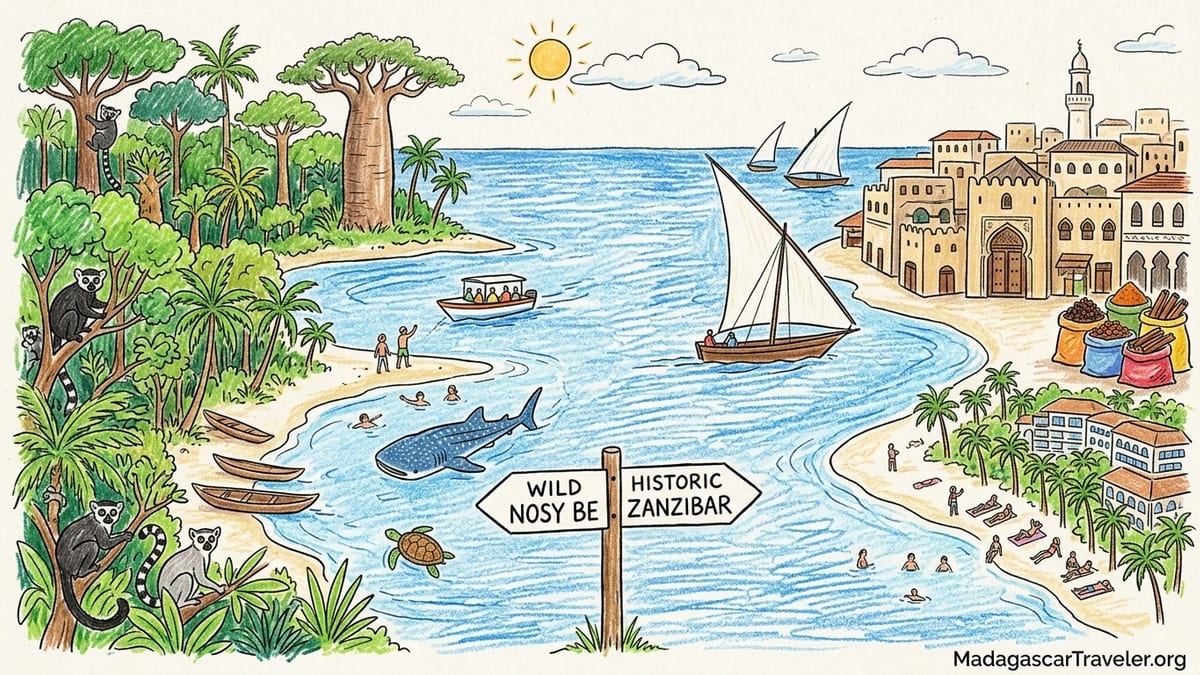
Overall Vibe: Wild Madagascar vs Historic Swahili Coast
Nosy Be sits just off Madagascar’s northwest coast, ringed by smaller islands like Nosy Komba, Nosy Tanikely and Nosy Sakatia. It feels like a classic tropical backwater in the best sense: small harbors full of wooden pirogues, sandy tracks rather than highways, and a pace that is dictated by tides and fishing boats rather than resort timetables. Even in the main beach area of Madirokely/Ambatoloaka, evenings are low-key once the beachfront bars thin out. You are in Madagascar first and foremost, and the island’s identity is tightly bound to nature and local Sakalava culture.
Zanzibar, by contrast, is a full Indian Ocean hub. Its main island, Unguja, has dozens of beach areas from Nungwi and Kendwa in the north to Paje, Jambiani and Michamvi on the east and southeast coasts. Stone Town, the UNESCO-listed historic quarter, is a dense maze of carved wooden doors, mosques and merchant houses. The tourism footprint is much larger than in Nosy Be: think everything from simple hostels near Paje’s kite-surfing lagoon to high-end villas near Matemwe and family-friendly resorts in Nungwi. You feel plugged into the wider East African travel circuit, with visitors coming straight from safari in Serengeti or Nyerere National Park.
In short, Nosy Be feels like a remote, wildlife-driven outpost where you plan around the ocean and forest. Zanzibar feels like a full-scale beach-and-culture destination where you can fold in nightlife, history and extensive excursions without sacrificing comfort and infrastructure.
Beaches and Water: Quiet Coves vs Long Swathes of Sand
Nosy Be’s beaches are beautiful but relatively compact. The main tourist strip at Madirokely and Ambatoloaka offers a curving golden bay studded with small guesthouses, mid-range hotels and a few beach bars. The real postcard scenes, however, are on the surrounding islets. Nosy Tanikely, a national marine park south of Nosy Be, combines a small, blindingly white beach with clear shallows and fringing reef just meters from the sand. Nosy Iranja, often featured in Madagascar brochures, has a double island linked by a sandbar that appears at low tide; boat trips from Nosy Be typically include hours on its near-flawless beach.
Zanzibar’s coastline is far more extensive. Nungwi and Kendwa in the north have broad, swimmable beaches that are minimally affected by tides, which is why many large resorts are clustered there. On the east coast, places like Paje, Jambiani and Matemwe have wide, powdery beaches backed by palms and shallow lagoon-like water created by the offshore reef. The trade-off is that tides pull the sea far out for part of the day, which kitesurfers love but some swimmers dislike. South of Stone Town, quieter stretches like Kizimkazi and Pingwe combine small coves and fishing villages with a handful of boutique lodges.
If you prioritize long walks on the sand, large choices of beachfront hotels and the ability to pick your ideal stretch of coast, Zanzibar wins. If you prefer quieter, smaller beaches and are happy to use boat trips to reach spectacular sandbars and tiny islands, Nosy Be offers a more intimate, less developed coastline.
Marine Wildlife, Whale Sharks and Diving
For big marine encounters, Nosy Be is the more focused choice. The waters around the island are recognized as a seasonal hotspot for whale sharks, with most operators describing the peak period as roughly mid-September to mid-December. During these months, day trips head out from Nosy Be or Nosy Komba to scan the Mozambique Channel and channels between islands such as Nosy Sakatia and Nosy Tanikely, entering the water when a shark is calmly feeding at the surface. Local operators typically run respectful, small-boat excursions that follow Madagascar’s code of conduct, with guests asked not to touch or block the animals. A full-day whale shark trip often costs somewhere in the region of 70 to 150 US dollars per person depending on the boat, inclusions and whether you are arranging through a lodge or direct with a specialist guide.
Diving around Nosy Be is also a major draw. Reefs around Nosy Tanikely marine park and off Nosy Komba, as well as further-flung islands like the Mitsio archipelago, feature hard and soft corals, turtles, schools of reef fish and regular encounters with pelagics, plus seasonal humpback whale song in the background. Water visibility can be excellent in the dry season, and operators on Nosy Be and Nosy Komba cater to both beginners and experienced divers, with two-tank outings or full-day trips typically starting around 80 to 120 US dollars including gear. Snorkelers can join boat trips for lower rates and still see plenty of life in shallow areas.
Zanzibar has good snorkelling and solid, though generally less celebrated, diving. Popular sites include Mnemba Atoll off the northeast coast, with clear water and reef fish, and spots near Kendwa, Nungwi and the Menai Bay Conservation Area. Dolphin excursions run out of Kizimkazi, though responsible travelers will want to seek operators who avoid chasing or crowding pods. Whale sharks are far less predictable around Zanzibar than Nosy Be, so if swimming with them is central to your plans, Madagascar is more reliable. Typical day trips in Zanzibar for dolphin watching, snorkeling or the well-known “Safari Blue” sandbank and lagoon excursion run around 75 to 200 US dollars per person depending on the level of comfort and whether you book privately or on a shared boat.
In summary, both islands deliver warm, clear water and good reef life, but Nosy Be is the more serious marine wildlife destination, while Zanzibar’s waters are part of a broader menu of beach, culture and activities.
Lemurs, Forests, Culture and Nightlife
Nosy Be’s standout land-based wildlife lies in its forests and small reserves. Lokobe National Park on the southeast of the island protects lowland rainforest where you can spot black lemurs, mouse lemurs, chameleons and endemic birds with a local guide. Boat-and-hike tours to Lokobe are widely offered and usually fill a half or full day. Nearby Nosy Komba is known for tame populations of black lemurs around village-run sanctuaries, giving many visitors an easy, close-up lemur experience, albeit not as wild-feeling as mainland parks like Andasibe. Birdwatchers also come for coastal wetlands and mangroves that shelter herons and kingfishers, and the broader Nosy Be channel has even attracted scientific interest for sightings of elusive whales such as Omura’s whale.
Culturally, Nosy Be is predominantly Malagasy with strong Sakalava traditions, Catholic churches and a scattering of Hindu temples reflecting Indo-Malagasy links. The small town of Hell-Ville, the island’s main port, has a traditional market, colonial buildings and rum distilleries that can be visited on day tours. Nightlife is limited to a handful of beach bars and small clubs around Ambatoloaka and Madirokely, which can be lively on weekends but remain modest compared with Zanzibar’s party scenes. Outside this pocket, evenings are generally quiet, especially if you stay on Nosy Komba or smaller islands where electricity and light pollution are minimal.
Zanzibar offers a richer blend of culture and more developed nightlife. Stone Town, once a key hub in the Indian Ocean spice and slave trades, combines Swahili, Arab, Persian and Indian influences. Wandering through its alleys reveals carved wooden doors, mosques, churches, bazaars and crumbling palaces converted into museums or boutique hotels. Food stalls at Forodhani Gardens, especially in the evening, serve grilled seafood, Zanzibar pizzas and sugarcane juice. Spice farm visits in the countryside show off cloves, cinnamon, vanilla and tropical fruits that underpin the island’s nickname as the “Spice Island.”
On the beaches, nightlife ranges from chilled beach bars in Jambiani to lively sunset parties in Kendwa and DJ-driven nights in Nungwi and Paje. While Zanzibar is no Ibiza, it is far more social than Nosy Be, with backpacker-friendly hostels, rooftop bars in Stone Town and a steady calendar of events, particularly in high season and around festivals such as Sauti za Busara.
Accommodation, Infrastructure and Getting Around
Nosy Be’s infrastructure is still developing. Flights arrive into Fascene Airport from Madagascar’s capital Antananarivo and a small number of regional hubs, though schedules can shift and delays are not unusual. Once on the island, roads connect the main areas but can be potholed away from core routes. Public transport consists mainly of shared taxis and minibuses; most visitors rely on private taxis arranged by hotels or local drivers. To reach smaller islands like Nosy Komba or Nosy Tanikely, you will use local boats or organized excursions.
Accommodation on Nosy Be spans simple bungalows to upscale boutique lodges. Around Ambatoloaka and Madirokely, you will find budget guesthouses in the region of 25 to 60 US dollars per night, mid-range hotels in the 80 to 150 dollar range, and a few higher-end beach properties and eco-lodges that climb from around 200 dollars upward. Smaller islands such as Nosy Komba offer intimate lodges with a handful of bungalows, often including meals and boat transfers in nightly rates that can exceed 300 dollars in peak season. Power cuts and spotty wifi are still common outside better-equipped resorts, which is worth factoring in if you need to work remotely.
Zanzibar benefits from a much more mature tourism infrastructure. Zanzibar International Airport receives direct or one-stop connections from major African hubs like Dar es Salaam and Nairobi, as well as regular scheduled or seasonal links from Europe and the Middle East. Short flights from Dar es Salaam to Zanzibar generally take around 20 minutes, and there is also a frequent passenger ferry between Dar and Stone Town. On the island, paved roads link Stone Town with most main beach areas; taxis and private transfers are easy to arrange and widely priced per vehicle rather than per person, which keeps costs manageable for couples and groups.
In terms of accommodation, Zanzibar covers almost every budget level. There are hostels and simple beach bungalows starting from roughly 15 to 40 dollars per night, countless mid-range hotels and guesthouses in the 70 to 200 dollar range, and a significant number of high-end resorts and villas where nightly rates can easily top 400 or 500 dollars in peak season. Areas like Nungwi, Kendwa, Paje and Jambiani each have their own mix of backpacker spots, kiters’ lodges, boutique hotels and full-service resorts, meaning you can tailor your stay more finely than in Nosy Be.
Food, Costs and Practical Budgeting
Nosy Be’s food scene leans heavily on seafood and Malagasy-French fusion. Beachfront cafes and small restaurants serve grilled fish, prawns, zebu steak, coconut curries and simple rice dishes. In local eateries and markets, a plate of rice with fish or meat might cost the equivalent of a few US dollars, while a main course in a tourist-oriented restaurant often sits around 8 to 20 dollars. Imported wine and spirits can be comparatively expensive, but Malagasy rum is both affordable and locally produced. Because the island is smaller and less visited than Zanzibar, there are fewer ultra-high-end dining options, but also fewer aggressively tourist-priced venues.
Overall daily costs in Nosy Be remain relatively moderate once you have absorbed the airfare. A couple staying in a mid-range guesthouse, eating mainly in local restaurants and taking a few organized activities might see a daily spend around 120 to 220 dollars excluding flights, with big-ticket excursions like whale shark outings, longer diving days or private boat charters pushing the total upward when added.
Zanzibar has a broader and more varied culinary scene. In Stone Town you can eat for a few dollars at local cafeterias, sample grilled seafood skewers at Forodhani Gardens, or dine at atmospheric restaurants in restored merchant houses. On the beaches, many resorts offer half-board or all-inclusive plans, but there are also independent beach restaurants specializing in octopus curry, Swahili pilau, Italian-style pizza, Indian dishes and international menus. Daily food costs can be low if you stick to local places, but prices in resort areas and at famous spots such as certain overwater restaurants can rival those in Southern Europe.
Travelers’ reports from 2025 and 2026 suggest that while you can still keep a mid-range budget in Zanzibar, tourist pricing has climbed, particularly around busy periods and in popular beach zones. A realistic daily estimate for a mid-range couple including accommodation, meals in a mix of local and tourist restaurants, a couple of drinks, shared transfers and one or two paid activities might run from about 180 to 300 dollars, again excluding flights. Budget travelers who choose dorms or simple guesthouses and use public transport where possible can spend less, while high-end stays with private excursions will increase costs significantly.
Flights and Combining Each Island with a Mainland Safari
Nosy Be is technically connected to Madagascar’s wider network of wildlife destinations, but it is less straightforward than Zanzibar when it comes to classic safari-style trips. International visitors typically fly into Antananarivo and then take a domestic flight to Nosy Be, or in some seasons use limited direct services from regional airports such as Reunion or Mayotte. From Nosy Be, there are no simple same-day links to East Africa’s well-known savanna parks; instead, combining Nosy Be with Madagascar’s own protected areas usually means flying back via Antananarivo and then connecting onward to parks like Andasibe, Ranomafana or Ankarafantsika, often requiring extra overnight stops and longer internal travel.
For travelers dreaming specifically of lemurs, rainforest and other endemic Malagasy species, this is still very worthwhile, but it will not feel like the traditional jeep-based safari you might associate with the Serengeti or Maasai Mara. Costs also mount quickly as each domestic flight and vehicle hire day is added. As a result, many visitors treat Nosy Be itself as their main wildlife base, focusing on marine experiences, Lokobe National Park and nearby islands for a trip of roughly one to two weeks.
Zanzibar is one of the easiest beach destinations in the world to combine with a classic African safari. Dozens of operators sell packages that include flights from Zanzibar or Dar es Salaam to parks such as Serengeti, Tarangire, Ngorongoro Crater and Nyerere (formerly Selous), with durations ranging from quick 2- or 3-day fly-in safaris to week-long itineraries. Domestic carriers such as Flightlink and other regional airlines run scheduled light-aircraft services linking Zanzibar or Dar es Salaam with popular airstrips in the parks, and tour companies frequently bundle these flights into safari-and-beach packages.
In practical terms, it is common in 2026 to see itineraries with a few nights in Arusha or directly on safari, followed by a short flight to Zanzibar for four to seven nights of beach time. Budget ranges vary widely, but a realistic ballpark figure from recent traveler reports puts a shared mid-range four or five day safari plus several days in Zanzibar for a couple somewhere in the low to mid four-figure range in US dollars, excluding international flights. Going private or choosing luxury lodges can push that into the high four or five figures. The key advantage over Nosy Be is simplicity: once you are in Tanzania, safari and Zanzibar dovetail smoothly with limited backtracking.
Who Should Choose Nosy Be vs Zanzibar?
Nosy Be suits travelers who rank wildlife, nature and a quieter atmosphere over nightlife and choice of amenities. If your dream trip involves waking early to head out on a small boat in hopes of swimming beside whale sharks, paddling into mangroves, hiking through rainforest to look for lemurs and ending the day in a low-key beach lodge with few distractions, Madagascar’s island is a strong fit. It is particularly appealing to divers, snorkelers and repeat Africa travelers who have already done classic safaris and now want a more marine-focused, slightly off-the-radar experience.
Zanzibar is ideal for travelers seeking a broader mix: warm beaches, historic towns, lively but not overwhelming nightlife, a range of accommodation from hostel to five-star resort, and seamless extensions to mainland safaris. It works extremely well for first-time visitors to East Africa who want the iconic safari-plus-beach combination, as well as for couples or families with differing priorities where some want culture and comfort and others want water sports and relaxed days in the sun.
If your main goal is a once-in-a-lifetime safari with a few recuperative days at the sea, the logistics and range of options strongly favor Zanzibar. If, instead, you are drawn to Madagascar as a destination in itself, and you want an island stay that foregrounds endemic species and a wilder feel, then Nosy Be delivers something that Zanzibar cannot replicate.
The Takeaway
Nosy Be and Zanzibar both promise warm seas, palm-fringed shores and that particular slow rhythm of island life. Yet for travelers choosing in 2026, they answer quite different versions of the “Indian Ocean dream.” Nosy Be is the choice for a wildlife-heavy Madagascar adventure: whale sharks and humpback whales in season, lemurs in coastal rainforest, small-scale lodges, and evenings where the loudest sound might be waves breaking and geckos chirping in the rafters.
Zanzibar, on the other hand, is the larger, more developed beach-and-culture destination. You trade some sense of remoteness for easier flights, better roads, more diverse menus and a richer mix of history and nightlife. Crucially, it also plugs directly into Tanzania’s safari network, turning the idea of wildebeest crossings one day and white sand the next into a straightforward itinerary rather than a logistical puzzle.
Neither island is objectively “better.” The right choice depends on whether your priority is wild encounters in a less-developed setting or a more rounded beach holiday with deep cultural layers and effortless access to world-class game reserves. Clarify that priority, and the decision between Nosy Be and Zanzibar usually makes itself.
FAQ
Q1. Is Nosy Be or Zanzibar better for whale sharks?
Nosy Be is generally more reliable for whale sharks, with a defined season from roughly mid-September to mid-December when focused tours run several times a week in good conditions.
Q2. Which island is cheaper overall, Nosy Be or Zanzibar?
Day-to-day costs on the ground in Nosy Be can be slightly lower, especially for food and local accommodation, but flights to Madagascar can be pricier. Zanzibar offers more price tiers, from hostels to luxury resorts, so your total spend depends heavily on where you stay and how many excursions you add.
Q3. Where will I find better beaches, Nosy Be or Zanzibar?
Zanzibar has far more long, continuous beaches and a bigger variety of coastal areas to choose from. Nosy Be has smaller main beaches but access to spectacular sandbars and islets like Nosy Tanikely and Nosy Iranja on boat trips.
Q4. Which destination is easier to reach from Europe or North America?
Zanzibar is usually easier. Many international flights connect to Zanzibar directly or via Dar es Salaam or Nairobi, and onward connections to safari parks are straightforward. Nosy Be typically requires routing through Antananarivo or using limited regional services.
Q5. Can I combine Nosy Be with a classic African safari?
Not easily in the traditional sense. You can combine Nosy Be with mainland Madagascar parks for lemurs and rainforest, but linking it to savanna safaris in Tanzania or Kenya involves extra flights, time and cost compared with starting in Zanzibar.
Q6. Which island has better nightlife?
Zanzibar offers more going on at night, especially in Stone Town, Nungwi, Kendwa and Paje, where you will find rooftop bars, beach parties and live music in high season. Nosy Be has a handful of lively bars around Ambatoloaka, but most of the island remains quiet after dark.
Q7. Is Nosy Be or Zanzibar better for families?
Zanzibar usually works better for families who want easy logistics, a wide choice of family-friendly resorts, pools and medical facilities, plus a range of gentle activities. Nosy Be suits families focused on nature and comfortable with more basic infrastructure.
Q8. How many days do I need on each island?
For Nosy Be, many visitors spend five to seven nights, enough for Lokobe, one or two whale shark or diving days in season, and a couple of relaxed beach days. In Zanzibar, a week to ten days lets you combine Stone Town, at least one beach area and a day or two of excursions.
Q9. Which destination is safer and easier for solo travelers?
Both islands see solo travelers, but Zanzibar is more established, with hostels, social beach towns and plenty of group tours, which can make it feel easier and more sociable. Nosy Be is safe in most areas but feels quieter and more spread out, so planning ahead matters more.
Q10. If I want a once-in-a-lifetime trip, which should I choose?
If your dream is big-game safari plus beaches and historic towns, Zanzibar combined with Tanzania’s parks is hard to beat. If you want something more offbeat and wildlife-heavy with endemic species and whale sharks as a focal point, a Madagascar itinerary anchored on Nosy Be is the more distinctive choice.